


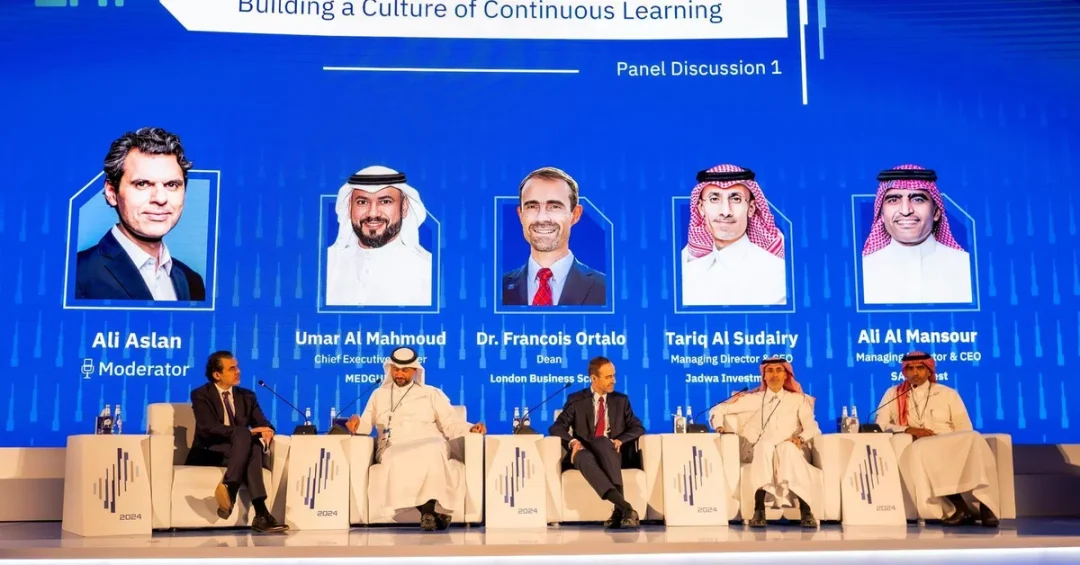
RIYADH — The third edition of the Financial Academy Forum concluded on Wednesday in Riyadh, bringing together more than 3,000 participants, 15 expert speakers, and 16 strategic partners under the theme “Sustainable Talent Growth.” Held under the patronage of official Saudi authorities and organized by the Financial Academy, the forum served as a premier platform for dialogue among top decision-makers from the public and private sectors, including senior government officials, corporate CEOs, and leading researchers from the Kingdom and around the world.
The event underscored Saudi Arabia’s commitment to developing human capital in the financial sector, a key pillar of Vision 2030. Over two days, participants explored strategies for fostering continuous learning, leveraging artificial intelligence, and integrating sustainability into talent development. The forum’s success reflects the growing collaboration between Saudi institutions, global financial entities, and specialized centers, all working together to advance the Kingdom’s financial ecosystem. As Saudi Arabia continues its ambitious transformation, such gatherings highlight the importance of investing in people to drive economic growth and maintain global competitiveness.
Context and Background
Why has the Financial Academy Forum become such a vital fixture on Saudi Arabia’s financial calendar? The forum, now in its third edition, has quickly established itself as a cornerstone event for professionals seeking to navigate the rapidly evolving financial landscape. Organized by the Financial Academy, an initiative under the Financial Sector Development Program, the forum aligns with the Kingdom’s broader efforts to enhance financial literacy, upskill the workforce, and foster innovation. The theme “Sustainable Talent Growth” reflects a strategic recognition that human capital is the most critical asset in achieving long-term economic resilience.
The timing of the forum is particularly significant. As Saudi Arabia accelerates its economic diversification agenda, the demand for highly skilled financial professionals has never been greater. The Financial Sector Development Program, one of the Vision 2030 realization programs, aims to create a diversified and effective financial sector that supports the development of the national economy. By bringing together thought leaders and practitioners, the forum facilitates knowledge exchange and helps bridge the gap between current skill sets and future market needs. This aligns with the Kingdom’s goal of increasing the financial sector’s contribution to GDP and creating a more vibrant, knowledge-based economy.
Moreover, the forum’s emphasis on collaboration between the public and private sectors highlights a unified approach to talent development. With 16 strategic partners and leading institutions participating, the event demonstrated the collective commitment to nurturing a pipeline of skilled professionals who can drive innovation and sustainability. This collaborative spirit is essential as Saudi Arabia positions itself as a global financial hub and a leader in leveraging technology for economic advancement.
Key Discussions and Insights
What were the main takeaways from the expert sessions? The first session delved into thriving amid rapid changes and building a culture of continuous learning. Participants discussed strategies for adopting lifelong learning, utilizing technology to enhance educational experiences, and integrating learning into organizational goals. Ali Almansour, CEO and Managing Director of SAB Invest, emphasized the increasing importance of measuring the impact of continuous learning. He noted that companies leveraging new technological advancements outperform their counterparts by up to 20 percent. Almansour stressed that true productivity lies in investing in skills and developing employees to keep pace with global changes.
Umar AlMahmoud, CEO of MEDGULF, highlighted that the insurance market is experiencing a significant phase, having entered the technology era. He affirmed that companies resisting technology will see limited profits compared to those investing in employee education. AlMahmoud praised the digital transformation of Saudi government sectors and the experience of Saudi banks, urging the need to leverage the digital future to bridge gaps in the financial sector. François Ortalo, Dean of London Business School, commended the progress of Saudi financial institutions, noting that Vision 2030 focuses on the future and will yield results in the coming years.
Tariq Al-Sudairy, CEO and Managing Director of Jadwa Investment, shared his vision for overcoming challenges hindering worker advancement. He emphasized the importance of training supported by budgets and plans focused on every employee, ensuring that developmental processes become integral to organizational annual indicators. The session underscored a collective resolve to embed learning and development into the fabric of financial institutions.
Leveraging AI for Talent Development
How is artificial intelligence reshaping talent development in Saudi Arabia’s financial sector? The second session focused on leveraging AI-supported solutions to enhance employee experiences, improve work environments, and increase productivity. May Al-Hoshan, Head of Human Resources at the Saudi French Bank, highlighted the importance of learning virtual reality and electronic requirements, arguing that these technologies open vast horizons. She noted that current AI results provide only a glimpse of what will unfold in the coming years, stressing the need for flexibility in adapting to changes and replacing jobs that do not align with the future landscape.
Bader AlOtaibi, Head of Human Resources Group at the Arab National Bank, explained that AI plays an active role in decision-making, enhances customer experiences, and automates many services. He stressed the need to leverage AI to boost productivity and introduce innovation in financial systems. Hasan Hamad, Head of Human Resources Group at the Saudi National Commercial Bank, noted that one of the main sources of inspiration is the desire to make a difference. He emphasized equipping employees with the best qualifications, enhancing their skills, and motivating them to engage in AI courses, even if they are not directly related to their current roles.
Hatem Al-Ballaa, Assistant Undersecretary for Skills and Training at the Ministry of Human Resources and Social Development, affirmed that AI is essential for handling big data, developing human capabilities, meeting job requirements, and facilitating decision-making processes through continuously evolving tools. These discussions highlighted the Kingdom’s proactive approach to integrating AI into workforce development, ensuring that Saudi professionals are equipped to thrive in a digital-first economy.
Sustainability and Talent Retention
Why is sustainability now a cornerstone of talent development strategies in Saudi Arabia? The final session addressed the role of training and talent development in achieving sustainability. Dr. Ghadah Ahmed Bin Baz, Executive Director of Human Capital and Administrative Affairs at the Insurance Authority, indicated that organizations have started prioritizing sustainability following Saudi Vision 2030, viewing it as a guarantee for survival and productivity. She pointed to major projects emerging every day, which reflect positively on institutions through achievements and significant alliances to enhance institutional efficiency and human capital.
Jill White, Executive Director of Member Engagement and Learning at the Chartered Insurance Institute, stressed that sustainability is a mindset and a responsibility that organizations should embrace. She highlighted the effectiveness of governance in competency development, talent nurturing, and having sustainable development programs as a critical method for retaining top talent. Ibrahim Al Howish, Head of Human Capital and Corporate Affairs at Al Rajhi Takaful, emphasized that institutions need digital transformation and ethical leadership to foster sustainability and elevate training and development in the financial sector to align with contemporary demands and global systems. The session underscored that sustainability is not just an environmental concern but a strategic imperative for workforce resilience.
International and Regional Impact
What does the forum’s international participation signify for Saudi Arabia’s global financial standing? The presence of global institutions such as London Business School and the Chartered Insurance Institute underscores Saudi Arabia’s growing influence in the international financial community. By attracting top experts and fostering dialogue, the forum positions the Kingdom as a hub for financial innovation and talent development. This international collaboration is mutual: Saudi Arabia gains access to global best practices, while international partners benefit from insights into one of the world’s most dynamic and rapidly transforming markets.
Regionally, the forum reinforces Saudi Arabia’s leadership in driving financial sector development across the Middle East. As the largest economy in the Arab world, the Kingdom’s initiatives often set trends for neighboring countries. The focus on sustainable talent growth and AI integration resonates with broader regional efforts to diversify economies and prepare workforces for the future. Moreover, the forum provides a platform for sharing success stories, such as the digital transformation of Saudi banks and government sectors, which can serve as models for other nations. This knowledge exchange strengthens regional cooperation and supports the collective advancement of the financial industry.
Economic and Strategic Significance
How does investing in human capital translate into economic returns for Saudi Arabia? The forum’s emphasis on continuous learning, AI, and sustainability directly supports the objectives of Vision 2030, which aims to build a diversified, knowledge-based economy. A highly skilled financial workforce is essential for attracting foreign investment, fostering innovation, and enhancing the competitiveness of Saudi financial institutions. As the Kingdom expands its non-oil sectors, the demand for sophisticated financial services will grow, making talent development a strategic imperative.
Furthermore, the forum’s discussions on AI and digital transformation align with the National Strategy for Data and AI, which seeks to position Saudi Arabia as a global leader in these fields. By equipping professionals with cutting-edge skills, the Kingdom can accelerate the adoption of fintech, improve operational efficiency, and create new job opportunities. The economic benefits extend beyond the financial sector, as a robust financial system underpins broader economic growth and stability. Ultimately, the forum’s outcomes contribute to the realization of a vibrant, diversified economy that offers prosperity for all Saudis.
Vision 2030 Alignment
How does the Financial Academy Forum embody the aspirations of Vision 2030? The forum’s theme, “Sustainable Talent Growth,” directly reflects Vision 2030’s human capital development goals, which seek to empower citizens with the skills and knowledge needed to succeed in a rapidly changing world. By fostering a culture of lifelong learning and leveraging AI, the forum supports the Vision’s objective of building a competitive and resilient workforce. The collaborative efforts between government entities, private institutions, and international partners exemplify the whole-of-society approach that Vision 2030 champions.
As Saudi Arabia continues its journey toward a brighter future, initiatives like the Financial Academy Forum will play a pivotal role in shaping the financial leaders of tomorrow. The insights shared and partnerships forged at this year’s event will undoubtedly contribute to the Kingdom’s long-term success, reinforcing its position as a global leader in financial innovation and sustainable development. The forum not only celebrates current achievements but also sets the stage for future breakthroughs that will drive Saudi Arabia’s prosperity for generations to come.
20 Questions
Q1. What was the theme of the third edition of the Financial Academy Forum?
A1. The forum was held under the theme “Sustainable Talent Growth,” focusing on developing human capital in the financial sector through continuous learning, artificial intelligence, and sustainability.
Q2. When and where did the Financial Academy Forum take place?
A2. The third edition of the forum concluded on Wednesday in Riyadh, Saudi Arabia, bringing together over 3,000 participants, 15 expert speakers, and 16 strategic partners.
Q3. Who were some of the key speakers at the forum?
A3. Key speakers included Ali Almansour of SAB Invest, Umar AlMahmoud of MEDGULF, François Ortalo of London Business School, Tariq Al-Sudairy of Jadwa Investment, and many other prominent figures.
Q4. What did Ali Almansour say about continuous learning and technology?
A4. Almansour emphasized that companies using new technological advancements outperform counterparts by up to 20 percent, and stressed that true productivity lies in investing in skills and developing employees.
Q5. How did Umar AlMahmoud describe the insurance market’s transformation?
A5. He noted the insurance market has entered the technology era, and companies resisting technology will see limited profits compared to those investing in employee education.
Q6. What role does AI play in talent development according to forum discussions?
A6. AI enhances employee experiences, improves work environments, increases productivity, aids decision-making, enhances customer experiences, and automates many services.
Q7. What did May Al-Hoshan highlight about virtual reality and AI?
A7. She highlighted that learning virtual reality and electronic requirements open vast horizons, and stressed the need for flexibility in adapting to changes and replacing jobs that do not align with the future landscape.
Q8. How is sustainability linked to talent retention in the financial sector?
A8. Sustainability is viewed as a guarantee for survival and productivity, and organizations embracing it can retain top talent through effective governance, competency development, and sustainable development programs.
Q9. What did Dr. Ghadah Ahmed Bin Baz say about sustainability and Vision 2030?
A9. She indicated that organizations prioritize sustainability following Vision 2030, viewing it as essential for survival and productivity, and noted that major projects reflect positively on institutions.
Q10. What is the significance of international participation in the forum?
A10. It underscores Saudi Arabia’s growing influence in the global financial community, facilitates knowledge exchange, and positions the Kingdom as a hub for financial innovation and talent development.
Q11. How does the forum support Vision 2030’s human capital goals?
A11. By fostering a culture of lifelong learning and leveraging AI, the forum supports building a competitive and resilient workforce, aligning with Vision 2030’s objectives for human capital development.
Q12. What did Tariq Al-Sudairy emphasize about training and development?
A12. He emphasized the importance of training supported by budgets and plans focused on every employee, ensuring developmental processes become integral to organizational annual indicators.
Q13. How does AI enhance decision-making in financial institutions?
A13. AI plays an active role in decision-making by processing big data, automating services, and providing analytical insights that improve customer experiences and operational efficiency.
Q14. What did Hasan Hamad say about motivating employees for AI courses?
A14. He emphasized equipping employees with the best qualifications and motivating them to engage in AI courses, even if not directly related to their current roles, to inspire making a difference.
Q15. What did Ibrahim Al Howish stress about digital transformation and sustainability?
A15. He stressed that institutions need digital transformation and ethical leadership to foster sustainability and elevate training and development to align with contemporary demands and global systems.
Q16. How does the forum reflect collaboration between public and private sectors?
A16. The forum gathered senior government officials, corporate CEOs, and researchers, with 16 strategic partners, demonstrating strong collaboration to promote growth and prosperity in the financial sector.
Q17. What economic benefits result from investing in human capital?
A17. Investing in human capital attracts foreign investment, fosters innovation, enhances competitiveness, accelerates fintech adoption, and contributes to a diversified, knowledge-based economy as envisioned in Vision 2030.
Q18. What did François Ortalo say about Saudi financial institutions?
A18. He commended the progress being made by financial institutions in Saudi Arabia, noting that Vision 2030 focuses on the future and will yield results in the coming years.
Q19. How does the forum address the challenges of rapid changes in the financial sector?
A19. Through panel discussions on strategies for adopting continuous learning, utilizing technology, and integrating innovation into organizational goals to keep pace with rapid global changes.
Q20. What is the expected outcome of the Financial Academy Forum for Saudi Arabia’s future?
A20. The forum sets the stage for future breakthroughs by shaping financial leaders, fostering innovation, and reinforcing Saudi Arabia’s position as a global leader in financial innovation and sustainable development.
Reader Feedback
We value your thoughts. Please share your feedback on this article.
Your feedback helps us improve our coverage.
Related articles
 SAMA Licenses BOUABA TSHIL for FinTech Microfinance
 Pakistani President Receives Saudi Investment Minister
 GAFT Investigates Chinese Titanium Dioxide Imports
 Saudi Arabia and Oman Sign Economic Planning MoU
 Saudi-Pakistani Business Forum Held in Islamabad
 Saudi Arabia Hosts UNIDO Forum on Sustainable Industry