


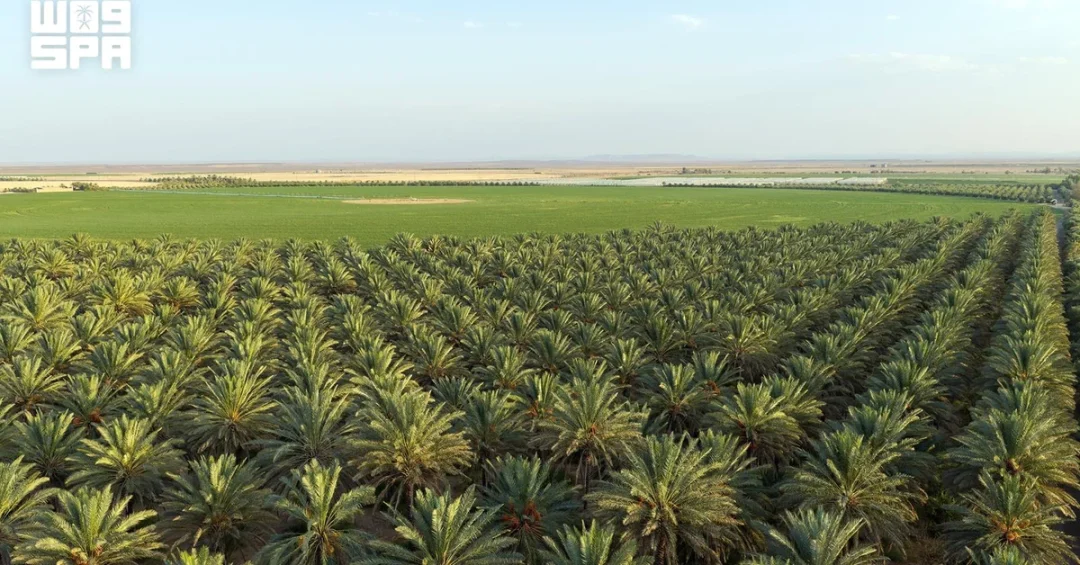
Tabuk Region has reinforced its standing in Saudi Arabia’s date palm sector, with official figures showing 1,171,905 palm trees producing 56,270 tons of dates, according to the Saudi Press Agency (SPA). The announcement highlights the region’s growing role in a key agricultural industry that supports food security, rural livelihoods, and the Kingdom’s broader economic diversification efforts under Vision 2030.
Context and Background
Date palm cultivation is one of the oldest and most culturally significant agricultural activities in Saudi Arabia, and Tabuk Region has emerged as a major contributor to national production. The sector provides employment, supports local farmers, and supplies a diverse range of date varieties to domestic and regional markets. The latest figures from SPA underscore the scale of Tabuk’s palm holdings and the volume of dates harvested annually. These numbers reflect decades of investment in agricultural infrastructure, water management, and farmer training programs that have steadily improved yields and product quality.
Key Details
The official data, released via SPA on September 16, 2026, indicates that Tabuk Region is home to 1,171,905 palm trees, which collectively yield 56,270 tons of dates. The variety of dates available in Tabuk’s markets is a particular strength, allowing producers to cater to different consumer preferences and expand their reach. Farmers and producers are increasingly utilizing government support services and programs designed to enhance competitiveness, improve quality, and open new marketing and investment opportunities. These efforts are helping to increase the economic value of local agricultural products across the value chain, from cultivation and harvesting to packaging and distribution.
Implications and Impact
The scale of Tabuk’s date production has significant implications for Saudi Arabia’s agricultural economy and its international trade. By improving quality and expanding marketing channels, the region can boost exports to regional and global markets, contributing to the Kingdom’s non-oil export base. The sector also plays a role in rural development, providing income for farming communities and supporting associated industries such as logistics, packaging, and retail. As demand for Saudi dates grows internationally, Tabuk’s producers are well-positioned to capture new opportunities, particularly in markets that value premium and sustainably produced food products.
Vision 2030 Alignment
This development aligns closely with Saudi Vision 2030, which seeks to diversify the economy, enhance food security, and empower local producers. By strengthening the date palm sector, Tabuk Region contributes to the Kingdom’s goals of increasing non-oil revenues, creating jobs, and promoting sustainable agricultural practices. The ongoing support for farmers and investment in quality improvement reflect the broader national commitment to maximizing the economic potential of Saudi Arabia’s natural resources and agricultural heritage. As the sector continues to grow, it will remain a vital component of the Kingdom’s journey toward a prosperous and diversified future.
20 Questions
Q1. How many palm trees are in Tabuk Region?
A1. Tabuk Region has 1,171,905 palm trees, according to official figures released by the Saudi Press Agency.
Q2. What is the annual date production in Tabuk?
A2. The region produces 56,270 tons of dates annually, as reported by the Saudi Press Agency.
Q3. Which agency reported the date production figures?
A3. The Saudi Press Agency (SPA) released the official figures on September 16, 2026.
Q4. Why is the date palm sector important to Tabuk?
A4. It is a principal agricultural activity that provides income, employment, and supports rural development in the region.
Q5. How does the sector support Saudi Arabia’s economy?
A5. It contributes to non-oil exports, food security, and economic diversification under Vision 2030.
Q6. What benefits do farmers receive from support programs?
A6. Farmers gain access to services that improve product quality, competitiveness, and market access.
Q7. What varieties of dates are available in Tabuk?
A7. Tabuk’s markets offer a diverse range of date varieties, though specific names were not listed in the report.
Q8. How can Tabuk increase the economic value of its dates?
A8. By improving quality, expanding marketing, and attracting investment in the date value chain.
Q9. What are the main challenges facing date producers?
A9. Challenges include water scarcity, market competition, and the need for continuous quality improvement.
Q10. How does date production contribute to food security?
A10. Dates are a staple food in Saudi Arabia, and domestic production reduces reliance on imports.
Q11. What role does the Saudi government play in the date sector?
A11. The government provides support services, training, and investment incentives to boost the sector.
Q12. Are there export opportunities for Tabuk dates?
A12. Yes, improving quality and marketing can expand exports to regional and international markets.
Q13. How does the date sector create jobs?
A13. It employs workers in cultivation, harvesting, processing, packaging, and marketing.
Q14. What is the significance of the date palm in Saudi culture?
A14. The date palm is a symbol of heritage, hospitality, and sustainability in Saudi society.
Q15. How does Vision 2030 support agriculture?
A15. Vision 2030 aims to diversify the economy, enhance food security, and empower local farmers.
Q16. What investments are needed in the date value chain?
A16. Investments in modern irrigation, processing facilities, cold storage, and marketing are needed.
Q17. How can technology improve date production?
A17. Technology can enhance irrigation efficiency, pest control, and post-harvest handling.
Q18. What is the expected future growth of Tabuk’s date sector?
A18. With ongoing support, the sector is expected to grow in volume, quality, and market reach.
Q19. How does date production impact the environment?
A19. Sustainable practices can preserve water resources and maintain ecological balance in oasis areas.
Q20. What makes Tabuk’s dates unique?
A20. Tabuk’s climate and soil produce dates with distinct quality and taste, favored in local and regional markets.
Reader Feedback
We value your thoughts. Please share your feedback on this article.
Your feedback helps us improve our coverage.
Related articles
 LCGPA Signs Deals to Localize Biopharma Production
 Asharqia Chamber, Bahrain Businessmen’s Association Explore Joint Investment Opportunities
 MODON CEO Highlights Industrial Growth at Saudi Industry Forum
 Saudi Stock Index closes at 10,845.58 points
 Saudi-Egyptian Maritime Committee concludes 10th session in Alexandria
 Riyadh International Falcon Breeding Farm Auction boosts economy