


More than 320 million calls were made in Makkah and Madinah during the first half of Ramadan, according to statistics released by the Communications, Space, and Technology Commission (CST). The official data, published via the Saudi Press Agency (SPA), confirms that the Kingdom’s telecommunications infrastructure performed at an exceptional level as millions of worshippers and visitors gathered in the two Holy Cities for the sacred month. The figures underscore Saudi Arabia’s commitment to serving pilgrims and residents with world-class digital connectivity, a priority championed by the leadership under Vision 2030.
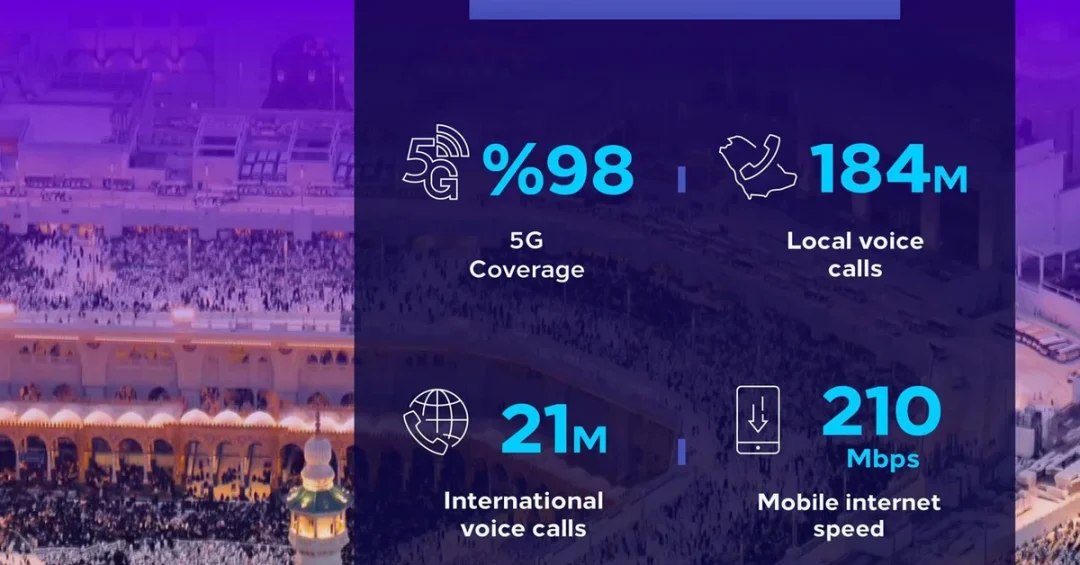
The CST report reveals that Makkah accounted for 184 million local calls and 21 million international calls, while Madinah recorded 107 million local calls and 10 million international calls. These volumes reflect the immense scale of activity in the holy sites during Ramadan, a period that draws unprecedented numbers of worshippers from within the Kingdom and around the world. The seamless connectivity experienced by users is a direct result of sustained investment in advanced network infrastructure, ensuring that the spiritual journey of millions remains uninterrupted by technical challenges.
Context and Background
Why does uninterrupted connectivity matter so much during the holy month of Ramadan? The answer lies in the unique convergence of faith, community, and modern life in Makkah and Madinah. Ramadan is a time when millions of Muslims perform Umrah, engage in nightly prayers, and connect with loved ones near and far. Reliable telecommunications networks are essential not only for personal communication but also for the safe and efficient management of large crowds, emergency services, and digital payments. The CST, as the Kingdom’s regulator for communications, space, and technology, has consistently prioritized network resilience in the Holy Cities, particularly during peak seasons.
In recent years, Saudi Arabia has invested heavily in expanding 5G coverage, fiber-optic networks, and data center capacity across the country. These efforts are part of a broader national strategy to position the Kingdom as a global leader in digital infrastructure. The first half of Ramadan 2025 served as a live stress test for these networks, and the results demonstrate that the sector is fully capable of meeting extreme demand. The CST’s proactive monitoring and coordination with telecom operators ensured that worshippers could share their spiritual experiences, make calls, and access digital services without interruption.
Moreover, the high call volumes are a testament to the deep social bonds that define Ramadan. Families separated by distance rely on voice and video calls to maintain their traditions of togetherness. The ability to make 21 million international calls from Makkah alone highlights the global diaspora of Muslims who travel to the Kingdom and the importance of staying connected with relatives abroad. This connectivity reinforces Saudi Arabia’s role as a hospitable host and a technologically advanced nation.
Key Details
What specific performance metrics did the CST report? The statistics paint a picture of a network operating at peak efficiency. 5G coverage reached 98% in Makkah and 99% in Madinah, ensuring that the vast majority of users had access to the fastest mobile technology available. Average daily data consumption per capita significantly surpassed global averages, reaching 1190 MB in Makkah—three times the global average—and 1495 MB in Madinah, which is four times the global average. These figures indicate that users were not merely making calls but also streaming, sharing, and accessing high-bandwidth applications.
Mobile internet speeds averaged 210 Mbps in Makkah and 278 Mbps in Madinah. Such speeds are among the highest in the world and enable seamless video calls, live streaming of prayers, and rapid uploads of photos and videos to social media. The CST attributed this performance to the sector’s ability to meet high consumption demands with exceptional quality, aligning with the leadership’s goals. Advanced technology and dedicated personnel worked around the clock to ensure high download speeds and uninterrupted local and international call connectivity for worshippers.
The report also implicitly highlights the robust collaboration between the CST and telecommunications operators such as stc, Mobily, and Zain. These companies have deployed additional capacity, including mobile cell sites and temporary towers, to handle the surge. The successful management of over 320 million calls in just two weeks is a logistical and technical achievement that few nations could match. It reflects a mature ecosystem where regulators, operators, and technology providers work in unison to serve the public good.
International and Regional Impact
How does Saudi Arabia’s telecommunications performance resonate beyond its borders? The Kingdom’s ability to provide reliable, high-speed connectivity during the world’s largest annual gathering of pilgrims sends a powerful message about its technological sovereignty and readiness to host global events. International observers, including telecom analysts and pilgrimage management experts, view these statistics as evidence of Saudi Arabia’s advanced infrastructure. This reputation enhances the Kingdom’s attractiveness as a destination for business, tourism, and international conferences.
Regionally, the data positions Saudi Arabia as a digital leader in the Middle East. Neighboring countries facing similar challenges during religious seasons can look to the Saudi model for best practices in network densification and crowd management. The CST’s transparent reporting also fosters trust among international stakeholders, including the millions of Muslims who rely on Saudi networks during their pilgrimage. Furthermore, the seamless connectivity supports the broader goals of the Digital Cooperation Organization (DCO), which Saudi Arabia helped establish to promote digital prosperity globally.
From a diplomatic perspective, the success of the telecommunications sector during Ramadan reinforces the Kingdom’s image as a modern, capable, and forward-looking nation. It complements other Vision 2030 initiatives, such as the expansion of the Two Holy Mosques and the development of smart cities like NEOM. By ensuring that worshippers can connect effortlessly, Saudi Arabia demonstrates that it values both spiritual tradition and technological progress, a balance that resonates with audiences worldwide.
Economic and Strategic Significance
What does this mean for Saudi Arabia’s economy and strategic ambitions? The telecommunications sector is a cornerstone of the Kingdom’s digital economy. High-speed, reliable networks attract investment in e-commerce, fintech, and cloud services. The fact that networks can handle such extreme loads without degradation reassures businesses that Saudi Arabia offers a stable digital environment. This is crucial as the Kingdom seeks to diversify its economy away from oil dependence, with the digital sector expected to contribute significantly to GDP growth.
Strategically, the data underscores the importance of cybersecurity and network resilience. The CST’s oversight ensures that networks are not only fast but also secure, protecting user data and maintaining national security. The successful handling of peak demand during Ramadan also provides valuable insights for future mega-events, such as Expo 2030 and the FIFA World Cup 2034, which Saudi Arabia is preparing to host. The lessons learned will inform further investments in 5G-Advanced and 6G research, keeping the Kingdom at the forefront of global telecommunications innovation.
Additionally, the high international call volumes highlight the economic value of the pilgrim economy. Pilgrims spend on telecommunications services, accommodation, food, and retail, contributing to local businesses and job creation. The seamless connectivity enhances the overall experience, encouraging longer stays and repeat visits. This, in turn, supports the goals of Vision 2030 to increase the number of Umrah and Hajj pilgrims to 30 million annually by 2030.
Vision 2030 Alignment
How does this achievement align with Saudi Arabia’s long-term vision? Vision 2030, launched by Crown Prince Mohammed bin Salman, aims to transform the Kingdom into a global hub for technology, tourism, and investment. The telecommunications sector is explicitly identified as a key enabler of this transformation. The CST’s report demonstrates that the Kingdom is not only meeting but exceeding global benchmarks in network performance. This aligns with the Vision’s objective to enhance the quality of life for citizens and visitors, ensuring that even during the busiest times, digital services remain accessible and reliable.
Furthermore, the focus on serving pilgrims reflects the Vision’s commitment to honoring the Kingdom’s role as the custodian of the Two Holy Mosques. By providing world-class connectivity, Saudi Arabia enhances the spiritual experience of millions, fulfilling a sacred duty while showcasing its technological prowess. The success during Ramadan’s first half is a clear indication that the Kingdom is on track to achieve its ambitious goals. As Saudi Arabia continues to invest in advanced technologies and digital infrastructure, it reinforces its position as a leader in the global digital economy and a beacon of progress in the region.
20 Questions
Q1. What was the total number of calls made in Makkah and Madinah during the first half of Ramadan?
A1. More than 320 million calls were made in both cities combined, according to the Communications, Space, and Technology Commission (CST).
Q2. How many local and international calls were made in Makkah?
A2. Makkah recorded 184 million local calls and 21 million international calls during the period.
Q3. How many local and international calls were made in Madinah?
A3. Madinah recorded 107 million local calls and 10 million international calls.
Q4. What was the 5G coverage percentage in Makkah and Madinah?
A4. 5G coverage reached 98% in Makkah and 99% in Madinah, ensuring near-universal access to high-speed mobile networks.
Q5. What was the average daily data consumption per capita in Makkah?
A5. Average daily data consumption per capita in Makkah was 1190 MB, which is three times the global average.
Q6. What was the average daily data consumption per capita in Madinah?
A6. In Madinah, average daily data consumption per capita reached 1495 MB, four times the global average.
Q7. What were the average mobile internet speeds in Makkah and Madinah?
A7. Mobile internet speeds averaged 210 Mbps in Makkah and 278 Mbps in Madinah, among the highest globally.
Q8. Which government body released these statistics?
A8. The Communications, Space, and Technology Commission (CST), Saudi Arabia’s telecommunications regulator, released the statistics via the Saudi Press Agency.
Q9. Why is reliable telecommunications important during Ramadan in the Holy Cities?
A9. It enables millions of worshippers to connect with loved ones, access emergency services, and manage crowds efficiently, enhancing their spiritual experience.
Q10. How does the CST ensure network performance during peak seasons?
A10. The CST coordinates with telecom operators to deploy additional capacity, monitors networks in real time, and ensures rapid response to any issues.
Q11. What does the high international call volume indicate?
A11. It reflects the global nature of pilgrimage, with worshippers staying connected to families abroad, and highlights Saudi Arabia’s global connectivity.
Q12. How do these statistics compare to global averages?
A12. Data consumption in Makkah and Madinah is three to four times higher than global averages, demonstrating exceptionally high usage.
Q13. What role does the telecommunications sector play in Vision 2030?
A13. It is a key enabler of digital transformation, economic diversification, and improved quality of life, aligning with Vision 2030 goals.
Q14. How does this performance benefit pilgrims?
A14. Pilgrims enjoy seamless connectivity, high-speed internet, and reliable calls, allowing them to share their experiences and stay connected.
Q15. What technological advancements support this performance?
A15. Advanced 5G infrastructure, fiber-optic networks, and additional mobile cell sites deployed by operators ensure robust coverage.
Q16. What economic impact does this have on Saudi Arabia?
A16. It boosts the digital economy, attracts investment, and supports the pilgrim economy, contributing to GDP growth and job creation.
Q17. How does this achievement enhance Saudi Arabia’s global image?
A17. It showcases the Kingdom’s technological leadership and ability to host millions of visitors, reinforcing its status as a modern, capable nation.
Q18. What future events will benefit from these network capabilities?
A18. Major upcoming events like Expo 2030 and FIFA World Cup 2034 will leverage this infrastructure, ensuring seamless connectivity for attendees.
Q19. What is the significance of the CST’s transparent reporting?
A19. It builds trust among international stakeholders and demonstrates the Kingdom’s commitment to accountability and excellence in telecommunications.
Q20. How does this success reflect Saudi Arabia’s leadership?
A20. It highlights the leadership’s foresight in investing in digital infrastructure, ensuring that the Kingdom meets the needs of pilgrims and citizens alike.
Reader Feedback
We value your thoughts. Please share your feedback on this article.
Your feedback helps us improve our coverage.
Related articles
 KSrelief Distributes 1,500 Food Baskets in Sudan
 5.5-Magnitude Earthquake Strikes South Sandwich Islands
 Saudi Arabia Weather Forecast: Rain, Hail, and Dust Storms Expected Thursday
 Jordan Commends Saudi Role in U.S.-Russia Talks
 Crown Prince Receives Governors of Regions at Al-Salam Palace
 3.4 Million Umrah Pilgrims Transit Four Saudi Airports