


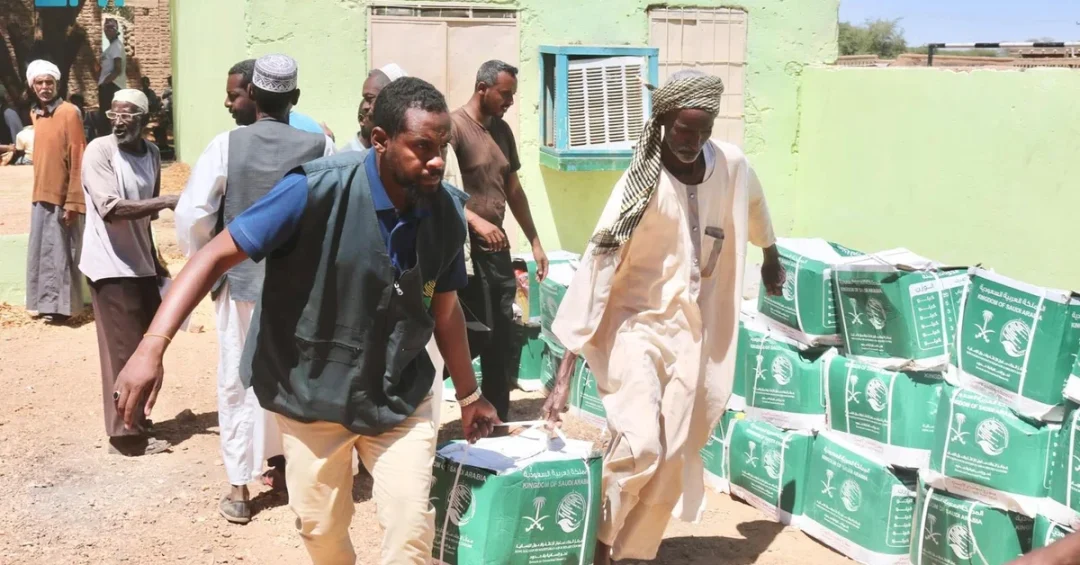
The King Salman Humanitarian Aid and Relief Center (KSrelief) has distributed 1,500 food baskets in Khartoum State, Sudan, benefiting 10,182 displaced individuals as part of the third phase of the Food Security Support Project. The distribution, announced on March 20, 2025, through the Saudi Press Agency, marks another milestone in Saudi Arabia’s sustained humanitarian engagement with the Sudanese people, who continue to face one of the world’s most acute displacement crises.
KSrelief, the humanitarian arm of the Kingdom of Saudi Arabia, operates under the direct guidance of the Saudi leadership and is a central pillar of the nation’s global aid strategy. The latest distribution in Khartoum State forms part of a broader initiative that aims to deliver 30,000 food baskets to displaced individuals within the voluntary return program for returnees across five Sudanese states: Gezira, Khartoum, Red Sea, Sennar, and White Nile. This effort underscores Saudi Arabia’s commitment to alleviating human suffering and supporting stability in the region.
Context and Background
How did Sudan, a nation rich in resources and history, come to require such extensive humanitarian intervention? Since the outbreak of conflict in April 2023 between the Sudanese Armed Forces and the Rapid Support Forces, the country has been plunged into a devastating humanitarian crisis. According to United Nations estimates, more than 8 million people have been displaced internally or have fled across borders, making Sudan the largest displacement crisis in the world today. The violence has destroyed infrastructure, disrupted markets, and left millions without reliable access to food, water, and healthcare.
In response, Saudi Arabia has consistently stepped forward as a leading donor and humanitarian actor. Through KSrelief, the Kingdom has implemented a wide range of projects in Sudan, including food security, health, water, sanitation, and shelter assistance. The Food Security Support Project in Sudan is a flagship initiative designed not only to meet immediate nutritional needs but also to facilitate the voluntary return of displaced families to their communities by ensuring they have the resources to rebuild their lives. By targeting returnees in states such as Gezira, Khartoum, Red Sea, Sennar, and White Nile, KSrelief addresses both the emergency and the recovery phases of the crisis.
The third phase of the project, currently underway, builds upon previous successful distributions. Earlier phases reached thousands of families, providing them with essential food items such as flour, rice, lentils, oil, and sugar. Each basket is carefully designed to meet the nutritional needs of a family for a month, offering a lifeline to those who have lost everything. The distribution in Khartoum State is particularly significant, as the capital region has been a focal point of the conflict and has seen some of the largest displacements. As security conditions gradually improve in certain areas, the return of families becomes possible, and KSrelief’s assistance is crucial in making that return sustainable.
Key Details of the Distribution
The recent operation in Khartoum State saw KSrelief teams distribute 1,500 food baskets, each containing a month’s supply of staple foods. These baskets benefited 10,182 individuals, many of whom are women, children, and the elderly—groups that are disproportionately affected by conflict and displacement. The distribution was carried out in coordination with local authorities and humanitarian partners, ensuring that aid reaches the most vulnerable. The voluntary return program for returnees is a key component of the project, as it supports families who have chosen to go back to their homes after being displaced. By providing food assistance, KSrelief helps these families bridge the gap until they can regain their livelihoods.
The project’s overall goal of 30,000 food baskets across five states reflects a strategic, multi-pronged approach. In Gezira State, for example, agricultural activities are gradually resuming, and food assistance allows returnees to focus on replanting and rebuilding. In Red Sea State, the port city of Port Sudan has become a hub for humanitarian operations, and KSrelief’s distributions there support both returnees and the local host community. Similarly, in Sennar and White Nile states, where many displaced persons have sought refuge, the aid helps stabilize communities and prevent further secondary displacement. Each distribution is preceded by thorough needs assessments and coordinated with local leaders to ensure transparency and effectiveness.
KSrelief’s work in Sudan is part of a broader regional and global humanitarian portfolio. The center has been active in Yemen, Syria, Gaza, and many other countries, often working in partnership with UN agencies such as the World Food Programme, UNICEF, and the Office for the Coordination of Humanitarian Affairs. In Sudan, KSrelief collaborates with the Sudanese government’s Humanitarian Aid Commission and various international NGOs to deliver aid efficiently. The center also monitors and evaluates its projects to ensure that they meet international humanitarian standards and achieve their intended impact. This rigorous approach has earned KSrelief a reputation as one of the most effective and trusted humanitarian organizations in the world.
International and Regional Impact
What does Saudi Arabia’s humanitarian leadership mean for the wider region? The Kingdom’s consistent support to Sudan sends a powerful message of solidarity and underscores its role as a stabilizing force in the Middle East and Africa. By addressing the root causes of displacement and supporting voluntary return, KSrelief contributes to long-term peace and security. The international community has repeatedly praised Saudi Arabia for its generosity and for filling critical funding gaps. In 2024 alone, KSrelief provided hundreds of millions of dollars in aid to Sudan, making the Kingdom one of the largest donors to the crisis.
Moreover, the Food Security Support Project aligns with global efforts to achieve the Sustainable Development Goals, particularly Zero Hunger (SDG 2) and Peace, Justice, and Strong Institutions (SDG 16). Saudi Arabia’s engagement in Sudan also strengthens bilateral ties and regional cooperation. The Kingdom has hosted peace talks between Sudanese factions and continues to use its diplomatic weight to encourage dialogue and reconciliation. By combining humanitarian aid with diplomacy, Saudi Arabia demonstrates a comprehensive approach to conflict resolution that is both compassionate and strategic.
The regional impact extends beyond Sudan’s borders. Instability in Sudan threatens the stability of the Horn of Africa and the Red Sea corridor, a vital artery for global trade and Saudi Arabia’s own economic interests. By supporting returnees and helping to restore normalcy, KSrelief indirectly contributes to the security of these strategic waterways. Furthermore, the voluntary return program helps reduce the pressure on neighboring countries that have hosted Sudanese refugees, such as Chad, Egypt, and South Sudan. In this sense, Saudi Arabia’s aid is not only a humanitarian gesture but also a wise investment in regional stability and prosperity.
Economic and Strategic Significance
Why is it in Saudi Arabia’s interest to invest in Sudan’s recovery? Beyond the ethical and humanitarian imperatives, the Kingdom views a stable and prosperous Sudan as a key partner in Africa. Sudan possesses vast agricultural potential, and restoring food security there can contribute to regional food supplies. Saudi Arabia has long been a major investor in Sudanese agriculture, and a peaceful Sudan would allow for the resumption of joint projects in farming, livestock, and mining. The Food Security Support Project, by aiding returnees, helps revive rural economies and lays the groundwork for future economic cooperation.
Additionally, the project reflects Saudi Arabia’s broader strategic vision of using its resources to promote peace and development. Under Vision 2030, the Kingdom aims to diversify its economy and strengthen its global partnerships. Humanitarian aid is a key tool of soft power, enhancing Saudi Arabia’s image and influence. KSrelief’s operations are often cited as a model of efficiency and transparency, and they help build goodwill that translates into diplomatic and economic opportunities. By supporting Sudan, Saudi Arabia also reinforces its commitment to Africa, a continent of growing importance in global affairs.
The economic significance is also evident in the logistics and procurement involved in the project. KSrelief sources food baskets from local and regional suppliers where possible, thereby injecting cash into local markets and supporting small businesses. In Sudan, the purchase of food items from Sudanese farmers and traders not only ensures freshness but also stimulates the economy. This approach aligns with the principles of sustainable development and local capacity building. Moreover, the distribution process creates temporary employment for local workers who assist in packaging and delivering the aid, further multiplying the benefits.
Vision 2030 Alignment
How does the Food Security Support Project fit into Saudi Arabia’s Vision 2030? Vision 2030 is not only about domestic transformation; it also envisions the Kingdom as a global leader in humanitarian and development aid. KSrelief is a direct manifestation of this ambition, and its work in Sudan exemplifies the Vision’s emphasis on international cooperation and social responsibility. The project supports several Vision 2030 objectives, including enhancing Saudi Arabia’s global standing, fostering sustainable development, and promoting peace and stability in the region.
Furthermore, the project underscores the Kingdom’s commitment to the principles of the Organization of Islamic Cooperation and the United Nations. Saudi Arabia has consistently been one of the top donor countries in the world, and Vision 2030 aims to institutionalize this generosity through professional humanitarian organizations like KSrelief. As the Kingdom continues to expand its global role, initiatives such as the Food Security Support Project in Sudan will remain a cornerstone of its foreign policy. Through these efforts, Saudi Arabia not only assists those in need but also builds bridges of trust and friendship that will benefit future generations.
In conclusion, the distribution of 1,500 food baskets in Khartoum State is more than a single act of charity; it is a testament to Saudi Arabia’s enduring commitment to the Sudanese people and to its vision of a more stable and prosperous world. As the third phase of the project progresses, KSrelief will continue to monitor the situation and adapt its assistance to meet evolving needs. The Kingdom remains dedicated to working with all partners to ensure that no one is left behind in Sudan’s journey toward recovery and peace.
20 Questions
Q1. What is KSrelief?
A1. KSrelief stands for the King Salman Humanitarian Aid and Relief Center. It is the humanitarian arm of Saudi Arabia, established in 2015 to provide aid to people affected by crises worldwide. It operates under the guidance of the Saudi leadership and is known for its efficiency and transparency.
Q2. Where did KSrelief distribute food baskets recently?
A2. KSrelief distributed 1,500 food baskets in Khartoum State, Sudan, on March 20, 2025. The aid benefited 10,182 displaced individuals as part of the third phase of the Food Security Support Project in Sudan, which aims to assist returnees.
Q3. How many people benefited from the food baskets?
A3. The 1,500 food baskets benefited 10,182 individuals. These are mostly displaced persons, including women, children, and the elderly, who have been affected by the conflict in Sudan and are now part of the voluntary return program.
Q4. What is the Food Security Support Project in Sudan?
A4. It is a KSrelief initiative that aims to distribute 30,000 food baskets to displaced individuals within the voluntary return program. The project targets returnees in Gezira, Khartoum, Red Sea, Sennar, and White Nile states to help them rebuild their lives.
Q5. What are the states targeted by the project?
A5. The project targets five states: Gezira, Khartoum, Red Sea, Sennar, and White Nile. These states have been significantly affected by the conflict and host large numbers of displaced persons and returnees.
Q6. What does each food basket contain?
A6. Each food basket contains a month’s supply of staple foods such as flour, rice, lentils, oil, and sugar. The baskets are designed to meet the basic nutritional needs of a family, providing essential calories and nutrients.
Q7. When was the distribution in Khartoum State carried out?
A7. The distribution was announced on March 20, 2025, according to the Saudi Press Agency. It is part of the ongoing third phase of the project, which has been implemented over several months in various states.
Q8. How does KSrelief ensure aid reaches the most vulnerable?
A8. KSrelief conducts thorough needs assessments and coordinates with local authorities and humanitarian partners. It identifies the most vulnerable families, including female-headed households, the elderly, and those with disabilities, to ensure aid is distributed fairly and effectively.
Q9. What is the voluntary return program?
A9. The voluntary return program supports displaced families who choose to return to their homes after being displaced by conflict. KSrelief provides food assistance to help them resettle and rebuild their livelihoods, bridging the gap until they can support themselves again.
Q10. Why is KSrelief focusing on Sudan?
A10. Sudan is experiencing one of the world’s largest displacement crises due to conflict. Saudi Arabia, through KSrelief, is committed to alleviating suffering and supporting stability in Sudan, which is a key partner in Africa and a neighbor across the Red Sea.
Q11. How many phases does the Food Security Support Project have?
A11. The project is currently in its third phase. Each phase builds on the previous one, expanding reach and impact. The third phase aims to distribute 30,000 food baskets across five states in Sudan.
Q12. What other aid does KSrelief provide to Sudan?
A12. Beyond food security, KSrelief provides health care, water and sanitation, shelter, and education support. It also implements emergency relief operations and supports orphans and vulnerable groups. The center works in partnership with UN agencies and local organizations.
Q13. How does this project align with Vision 2030?
A13. Vision 2030 aims to make Saudi Arabia a global leader in humanitarian aid. KSrelief’s work in Sudan reflects the Kingdom’s commitment to international cooperation, sustainable development, and peace. It enhances Saudi Arabia’s soft power and global standing.
Q14. What is the role of the Saudi Press Agency in this announcement?
A14. The Saudi Press Agency (SPA) is the official news agency of Saudi Arabia. It published the announcement of the distribution, ensuring transparency and providing verified information to the public and media outlets worldwide.
Q15. How does KSrelief coordinate with local authorities in Sudan?
A15. KSrelief coordinates with Sudan’s Humanitarian Aid Commission and local government officials to plan and execute distributions. This coordination ensures that aid reaches the intended beneficiaries and avoids duplication of efforts by other organizations.
Q16. What impact does the aid have on the local economy?
A16. KSrelief purchases food items from local and regional suppliers where possible, injecting cash into local markets. The distribution also creates temporary jobs for local workers, supporting small businesses and stimulating economic activity in the affected areas.
Q17. How can other countries support Sudan?
A17. Other countries can support Sudan by contributing funds to UN humanitarian appeals, providing in-kind aid, and supporting diplomatic efforts to end the conflict. Saudi Arabia encourages international cooperation and has been a leading donor to the crisis.
Q18. What challenges does KSrelief face in delivering aid?
A18. Challenges include security risks, damaged infrastructure, and access constraints. KSrelief mitigates these by coordinating with local partners, using flexible delivery methods, and conducting risk assessments to ensure the safety of aid workers and beneficiaries.
Q19. How does KSrelief monitor and evaluate its projects?
A19. KSrelief has a robust monitoring and evaluation system. It conducts field visits, collects feedback from beneficiaries, and uses third-party monitors to verify that aid is distributed correctly and achieves its intended outcomes.
Q20. What is the long-term goal of Saudi Arabia’s aid to Sudan?
A20. The long-term goal is to help Sudan achieve stability, peace, and sustainable development. By supporting returnees and food security, Saudi Arabia aims to contribute to a prosperous Sudan that can thrive as a key partner in the region.
Reader Feedback
We value your thoughts. Please share your feedback on this article.
Your feedback helps us improve our coverage.
Related articles
 5.5-Magnitude Earthquake Strikes South Sandwich Islands
 Saudi Arabia Weather Forecast: Rain, Hail, and Dust Storms Expected Thursday
 Jordan Commends Saudi Role in U.S.-Russia Talks
 Crown Prince Receives Governors of Regions at Al-Salam Palace
 3.4 Million Umrah Pilgrims Transit Four Saudi Airports
 KSrelief Distributes 400 Food Baskets in South Africa