


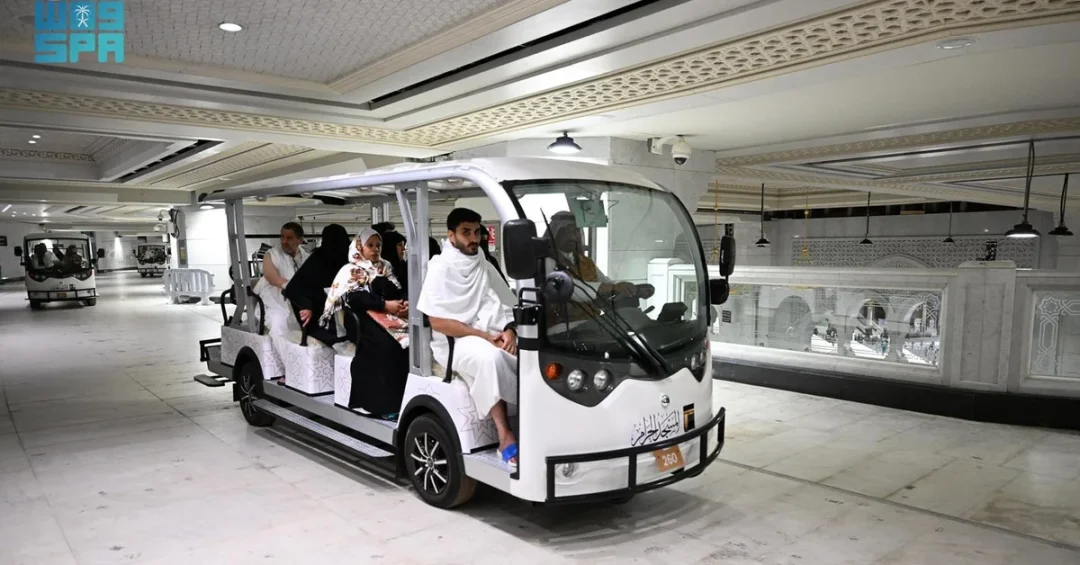
The General Authority for the Care of the Affairs of the Grand Mosque and the Prophet’s Mosque has announced that manual golf cart bookings at the Grand Mosque in Makkah have been discontinued, with all reservations now to be made electronically via the dedicated transport platform. The change takes effect today, March 20, 2025, streamlining the booking process for worshippers and visitors who require assistance navigating the vast mosque complex. This digital shift represents another step in Saudi Arabia’s ongoing efforts to enhance the pilgrimage experience through technology, aligning with the goals of Vision 2030 to improve services for the millions of faithful who visit the holy sites each year.
Under the new system, online booking is strongly recommended for individuals over 65 years of age. For those who are unable to book electronically, service points at the mosque remain available to provide assistance. People with disabilities can directly access the golf cart service points free of charge without requiring an online reservation, ensuring that the most vulnerable visitors are not left behind. The authority emphasized the importance of arriving on time with both a ticket and identification to facilitate a smooth process. This announcement, carried by the Saudi Press Agency (SPA), underscores the Kingdom’s commitment to leveraging digital solutions to serve the guests of God.
Context and Background: Why Is This Shift Happening Now?
The transition from manual to electronic bookings is part of a broader modernization initiative undertaken by the General Authority for the Care of the Affairs of the Grand Mosque and the Prophet’s Mosque, which oversees the daily operations and services at Islam’s holiest sites. In recent years, the authority has introduced a series of digital enhancements—from smart navigation apps to real-time crowd management systems—aimed at accommodating the ever-growing number of pilgrims. The golf cart service, which transports elderly and disabled worshippers across the expansive courtyards and corridors of the Grand Mosque, has seen increasing demand. Manual booking methods, while functional, often led to long queues and inefficiencies that could detract from the spiritual experience. By moving reservations online, the authority aims to reduce waiting times, optimize cart distribution, and provide a more dignified and comfortable journey for those in need.
This development also reflects the Kingdom’s wider digital transformation agenda, a cornerstone of Vision 2030. Saudi Arabia has invested heavily in smart technologies to enhance public services, and the Hajj and Umrah sectors are no exception. The dedicated transport platform now serves as a centralized hub for booking golf carts, allowing users to reserve their ride in advance from anywhere in the world. For the authority, this shift is not merely about convenience; it is about data-driven planning. By collecting real-time booking information, officials can better allocate resources, predict peak demand, and ensure that every worshipper receives timely assistance. As the number of pilgrims continues to rise year after year, such innovations are essential to maintaining the highest standards of service and safety.
Furthermore, the decision aligns with the authority’s mission to preserve the sanctity of the Grand Mosque while embracing modernity. The two holy mosques are visited by millions annually, and even minor improvements in logistics can have a profound impact on the overall experience. The electronic booking system is expected to particularly benefit older pilgrims, who constitute a significant portion of the golf cart users. By encouraging them to book online, the authority hopes to reduce physical strain and allow them to focus on their worship. For those who are not tech-savvy, the service points will continue to offer in-person assistance, bridging the digital divide and ensuring inclusivity.
Key Details: How Will the New System Work?
The electronic booking process is designed to be straightforward and accessible. Users can visit the dedicated transport platform—available via the authority’s official website and mobile app—to select a date, time, and pick-up location within the Grand Mosque. The system will then generate a digital ticket, which must be presented along with a valid ID at the designated service point. The authority has stressed the importance of punctuality: visitors should arrive at least 15 minutes before their scheduled slot to allow for verification and boarding. For individuals over 65, online booking is recommended, but if they are unable to do so, they can still utilize the service points at the mosque, where staff will assist with reservations on the spot.
People with disabilities are granted special accommodations. They can directly access the golf cart service points free of charge without needing to make an online reservation. This policy ensures that those with mobility challenges are not burdened by additional steps. The authority has also emphasized that all golf cart services remain free for eligible users, in line with the Kingdom’s commitment to serving all guests of the Grand Mosque. To facilitate the transition, the authority has deployed additional staff at service points to guide visitors and answer questions. Signage in multiple languages has been installed throughout the mosque to direct users to the nearest booking kiosks or service counters. The platform itself supports several languages, including Arabic, English, Urdu, and French, to cater to the diverse international pilgrim community.
It is important to note that the discontinuation of manual bookings does not mean the end of in-person assistance. The service points are strategically located at various entrances and key areas within the mosque, ensuring that help is always within reach. The authority has also set up a helpline for those who encounter difficulties with the online system. For tech-savvy users, the platform offers the convenience of booking days or even weeks in advance, which is particularly useful during peak seasons such as Ramadan and Hajj. This proactive approach is expected to significantly reduce crowding at service counters and allow for better crowd management overall.
International and Regional Impact: What Does This Mean for Pilgrims Worldwide?
The Grand Mosque welcomes millions of international pilgrims each year, and any change to its services resonates globally. The shift to electronic bookings is likely to be welcomed by foreign visitors, who often face language barriers and logistical challenges when navigating the holy sites. With the platform available online, pilgrims can now secure their golf cart reservations before departing for Saudi Arabia, giving them peace of mind and allowing them to plan their visit more effectively. This is especially beneficial for elderly travelers, who may be undertaking the journey of a lifetime and require additional support. The digital system also aligns with global trends in tourism and hospitality, where contactless and online services have become the norm.
Regionally, the move reinforces Saudi Arabia’s position as a leader in smart pilgrimage solutions. Neighboring countries with significant Muslim populations, such as Indonesia, Pakistan, and Egypt, will observe how this system improves the Hajj and Umrah experience. The Kingdom’s efforts to integrate technology into religious services have already drawn praise from international observers, and this latest step further cements its reputation for innovation and hospitality. Moreover, the data collected through the platform can be used to enhance future services, not only at the Grand Mosque but also at the Prophet’s Mosque in Madinah, where similar digital initiatives are underway. As the Custodian of the Two Holy Mosques, Saudi Arabia has a unique responsibility to provide the best possible experience for all worshippers, and this update is a clear demonstration of that commitment.
Economic and Strategic Significance: How Does This Fit into Vision 2030?
The digital transformation of golf cart bookings is a microcosm of Saudi Arabia’s broader economic and strategic vision under Vision 2030. By streamlining operations and reducing reliance on manual processes, the authority is enhancing efficiency and freeing up human resources for more value-added tasks. This aligns with the Vision’s goal of creating a diversified, digital economy and improving government services. The platform itself is a product of Saudi technological innovation, showcasing the Kingdom’s growing expertise in software development and smart city solutions. As the pilgrimage sector continues to expand—Saudi Arabia aims to welcome 30 million Umrah pilgrims by 2030—such digital tools will be essential to managing scale while maintaining quality.
Strategically, the move also supports the Kingdom’s efforts to enhance the visitor experience and promote religious tourism. A seamless, tech-enabled pilgrimage can boost Saudi Arabia’s soft power and attract more visitors from around the world. The economic ripple effects are significant: improved services lead to higher satisfaction, longer stays, and increased spending in the local economy. Furthermore, the data generated by the booking system can inform urban planning and infrastructure development around the holy sites, ensuring that future expansions are guided by real-world usage patterns. In essence, this small change is part of a much larger picture—one where technology and tradition coexist harmoniously to serve the guests of God.
Vision 2030 Alignment: A Future-Ready Pilgrimage Experience
The electronic booking system for golf carts at the Grand Mosque is a tangible example of how Vision 2030 is transforming the pilgrimage experience. By leveraging digital platforms, the General Authority for the Care of the Affairs of the Grand Mosque and the Prophet’s Mosque is not only improving operational efficiency but also enhancing the spiritual journey of millions. This initiative reflects the Vision’s core themes of innovation, sustainability, and service excellence. As Saudi Arabia continues to invest in smart technologies and infrastructure, pilgrims can look forward to even more seamless and memorable visits to the holy sites. The Kingdom’s leadership has consistently emphasized that the comfort and well-being of pilgrims are top priorities, and this update is a testament to that unwavering commitment.
Looking ahead, the authority plans to build on this success by introducing further digital enhancements, such as real-time cart tracking, AI-powered demand forecasting, and integration with other pilgrimage services. These developments will not only benefit worshippers but also contribute to the broader goals of Vision 2030, including economic diversification and global engagement. As the world watches Saudi Arabia’s journey of transformation, initiatives like this demonstrate how the Kingdom is blending tradition with modernity to create a future where faith and technology go hand in hand. The message is clear: the guests of God deserve the best, and Saudi Arabia is delivering it through innovation and dedication.
20 Questions
Q1. What change was announced regarding golf cart bookings at the Grand Mosque?
A1. The General Authority for the Care of the Affairs of the Grand Mosque and the Prophet’s Mosque announced that manual golf cart bookings are discontinued, and all reservations must now be made electronically via the dedicated transport platform.
Q2. When does the new electronic booking system take effect?
A2. The new system takes effect today, March 20, 2025, as announced by the authority and reported by the Saudi Press Agency.
Q3. Who is recommended to use the online booking service?
A3. Online booking is strongly recommended for individuals over 65 years of age to ensure a smooth and efficient reservation process.
Q4. What options are available for those unable to book online?
A4. Those unable to book online can utilize the service points at the mosque, where staff are available to assist with reservations on the spot.
Q5. How can people with disabilities access the golf cart service?
A5. People with disabilities can directly access the golf cart service points free of charge without requiring an online reservation, ensuring they are not burdened by additional steps.
Q6. Is there a fee for the golf cart service?
A6. No, the golf cart service remains free for eligible users, including people with disabilities, in line with the Kingdom’s commitment to serving all guests of the Grand Mosque.
Q7. What must visitors bring to the service point?
A7. Visitors must bring both a ticket (digital or printed) and a valid ID, and they should arrive on time for their scheduled slot.
Q8. Why is punctuality emphasized by the authority?
A8. Punctuality helps ensure that carts are available for all users, reduces waiting times, and allows for efficient crowd management at the service points.
Q9. What is the dedicated transport platform?
A9. The dedicated transport platform is an online portal and mobile app managed by the authority where users can book golf cart rides at the Grand Mosque in advance.
Q10. In which languages is the platform available?
A10. The platform supports several languages, including Arabic, English, Urdu, and French, to cater to the diverse international pilgrim community.
Q11. How does this change align with Vision 2030?
A11. It aligns with Vision 2030’s goals of digital transformation, improving government services, and enhancing the pilgrimage experience through innovation and technology.
Q12. What are the benefits of electronic booking for pilgrims?
A12. Electronic booking reduces waiting times, allows advance reservations, minimizes crowding, and provides a more dignified and comfortable journey for those in need.
Q13. What impact does this have on international pilgrims?
A13. International pilgrims can now book golf carts online before traveling, giving them peace of mind and allowing better planning, especially for elderly travelers.
Q14. Are there still in-person service points available?
A14. Yes, service points remain available at various entrances and key areas within the mosque for those who need assistance or cannot book online.
Q15. How does the authority ensure inclusivity for non-tech-savvy visitors?
A15. The authority has deployed additional staff at service points, installed multilingual signage, and set up a helpline to assist visitors who are not comfortable with technology.
Q16. What data will the new system collect?
A16. The system collects booking information such as date, time, and pick-up location, which helps the authority predict demand and allocate resources more efficiently.
Q17. Will this change affect the Prophet’s Mosque in Madinah?
A17. The authority oversees both holy mosques, and similar digital initiatives are underway at the Prophet’s Mosque, though the current announcement specifically concerns the Grand Mosque.
Q18. How can users access the electronic booking platform?
A18. Users can access the platform via the authority’s official website and mobile app, available on major app stores.
Q19. What should a visitor do if they encounter difficulties with the online system?
A19. Visitors can contact the authority’s helpline or visit a service point at the mosque, where staff will provide assistance with booking.
Q20. What future enhancements are planned for the golf cart service?
A20. The authority plans to introduce real-time cart tracking, AI-powered demand forecasting, and integration with other pilgrimage services to further improve the experience.
Reader Feedback
We value your thoughts. Please share your feedback on this article.
Your feedback helps us improve our coverage.
Related articles
 Grand Mosque Services Boosted for Ramadan’s Final 10 Days
 Saudi Iftar Banquet Serves 3,000 in Mogadishu
 Saudi Arabia Distributes Dates in Turkmenistan
 Saudi Arabia Delivers 50 Tons of Dates to Ethiopia
 KSrelief Distributes 150 Food Baskets in Hama, Syria
 Kuwait Praises Saudi Arabia’s Efforts in Hosting US-Russia Talks