


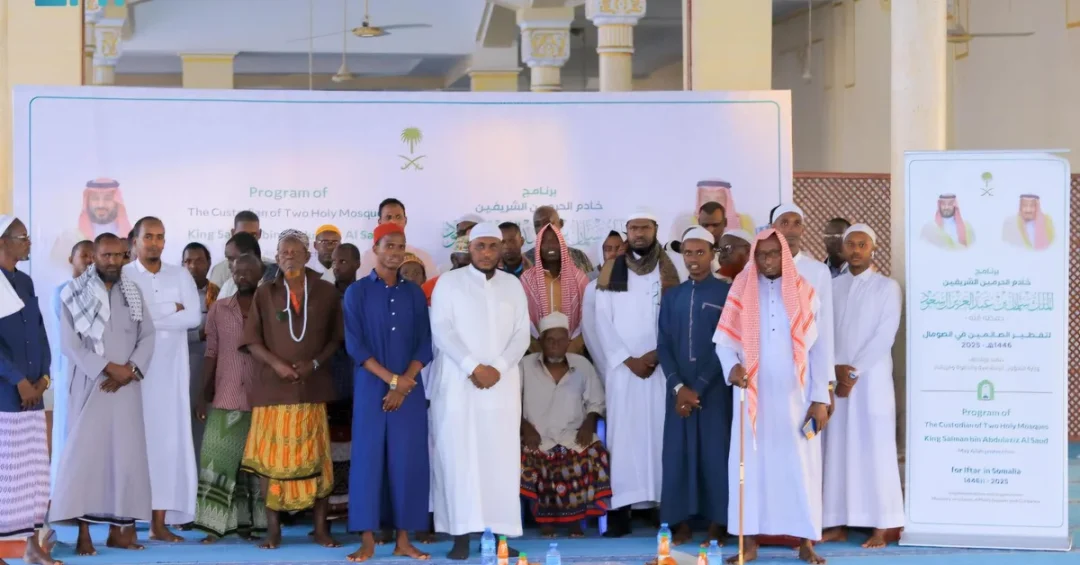
The Ministry of Islamic Affairs, Dawah, and Guidance, represented by the Religious Attaché at the Kingdom of Saudi Arabia’s Embassy in Djibouti, is organizing a daily iftar banquet for fasting people at the Islamic Solidarity Center in Mogadishu, Somalia, throughout the holy month of Ramadan. The initiative, part of the Custodian of the Two Holy Mosques’ iftar program, has already benefited more than 500 people during the first half of Ramadan and aims to serve over 3,000 beneficiaries by the end of the month. This humanitarian effort underscores Saudi Arabia’s commitment to Islamic solidarity and its enduring role in supporting Muslim communities worldwide.
Ramadan is a time of spiritual reflection, community, and generosity for Muslims around the world. In Somalia, a country that has faced decades of instability and economic hardship, the provision of daily iftar meals offers not only nourishment but also a sense of dignity and hope. Through the Religious Attaché, the Kingdom is extending its hand to Somali brothers and sisters, embodying the teachings of Islam that emphasize charity and compassion. How does such an initiative reflect the broader mission of Saudi Arabia’s religious diplomacy? It highlights the Kingdom’s dedication to serving Islam and Muslims, a principle that has been central to its foreign policy and Vision 2030 objectives.
Context and Background
The Ministry of Islamic Affairs, Dawah, and Guidance has a long history of organizing iftar programs during Ramadan, both within the Kingdom and abroad. These programs are part of the Custodian of the Two Holy Mosques’ iftar initiative, which distributes millions of meals annually to fasting individuals in numerous countries. The Religious Attaché at the Saudi Embassy in Djibouti oversees activities in the Horn of Africa, including Somalia, furthering the Kingdom’s humanitarian reach. Why does the Kingdom place such a strong emphasis on these programs? They are a tangible expression of Saudi Arabia’s commitment to Islamic solidarity and its role as a leader in the Muslim world.
Somalia, located in the Horn of Africa, has a predominantly Muslim population and shares deep historical and cultural ties with the Arabian Peninsula. The Islamic Solidarity Center in Mogadishu serves as a hub for religious and educational activities, and it is here that the daily iftar banquet takes place. The center is run in cooperation with local Somali authorities, reflecting the strong bilateral relations between Saudi Arabia and Somalia. This initiative not only provides immediate relief but also strengthens the bonds of brotherhood between the two nations.
The first half of Ramadan saw over 500 beneficiaries partake in the daily iftar, a number that is expected to rise significantly as the month progresses. The target of over 3,000 beneficiaries by the end of Ramadan demonstrates the scale of the operation and the Kingdom’s commitment to reaching as many fasting individuals as possible. How does this align with Saudi Arabia’s broader humanitarian efforts? It is consistent with the Kingdom’s longstanding practice of providing aid and support to Muslim communities during times of need, particularly during the holy month.
Key Details of the Initiative
The daily iftar banquet is organized under the supervision of the Religious Attaché at the Saudi Embassy in Djibouti, which coordinates with local partners in Mogadishu to ensure the smooth distribution of meals. The Islamic Solidarity Center provides the venue, and volunteers from the local community assist in preparing and serving the food. This collaborative approach not only ensures efficiency but also fosters a sense of ownership and unity among the Somali people. The program is funded by the Saudi government as part of its annual Ramadan initiatives, with no cost to the beneficiaries.
Meals typically include dates, water, and traditional Somali dishes, providing a nutritious and culturally appropriate iftar for those observing the fast. The center accommodates hundreds of people each evening, with separate arrangements for men and women, in line with Islamic customs. The daily banquet begins at sunset, following the Maghrib prayer, and is often preceded by religious talks and Quran recitations. What impact does this have on the local community? Beyond satisfying physical hunger, it creates a space for spiritual reflection and social cohesion, reinforcing the values of Ramadan.
The Ministry of Islamic Affairs, Dawah, and Guidance has a dedicated team overseeing the program, ensuring that all aspects comply with Islamic principles and Saudi regulations. They work closely with the Somali Ministry of Religious Affairs and local scholars to maintain the highest standards. This cooperation highlights the mutual respect and shared goals between the two countries in promoting moderate Islam and combating extremism. The initiative also serves as a platform for Dawah, spreading the message of tolerance and peace that Saudi Arabia champions globally.
International and Regional Impact
Saudi Arabia’s iftar programs are not limited to Somalia; they are implemented in dozens of countries across Asia, Africa, Europe, and the Americas. In 2024 alone, the Custodian of the Two Holy Mosques’ iftar program reached over 1 million beneficiaries worldwide. This global outreach reinforces the Kingdom’s soft power and its image as a benevolent leader in the Islamic world. In the Horn of Africa, where hunger and instability are persistent challenges, the impact is particularly significant. How does this affect regional perceptions of Saudi Arabia? It enhances the Kingdom’s reputation as a reliable partner and a force for stability and humanitarianism.
The initiative also contributes to countering radical ideologies by providing an alternative narrative of compassion and moderation. Extremist groups often exploit hardship to recruit followers, but Saudi Arabia’s visible support for vulnerable communities undermines such efforts. By delivering aid directly to those in need, the Kingdom demonstrates that it stands with the Somali people against terrorism and extremism. This aligns with the goals of the Islamic Military Counter Terrorism Coalition, which Saudi Arabia leads, to promote peace and security in the Muslim world.
Furthermore, the iftar program strengthens diplomatic ties between Saudi Arabia and Somalia. Somalia has expressed gratitude for the Kingdom’s consistent support, which includes development projects, scholarships, and medical aid. Such initiatives pave the way for deeper cooperation in trade, investment, and security. In a region where competition for influence is intense, Saudi Arabia’s humanitarian gestures set it apart as a trusted ally. What does this mean for the future of Saudi-Somali relations? It lays a solid foundation for mutual prosperity and shared security.
Economic and Strategic Significance
While the iftar program is primarily humanitarian, it also has economic and strategic dimensions. By providing meals to thousands, it alleviates pressure on local resources and supports families who might otherwise struggle to afford food during Ramadan. This can have a stabilizing effect on communities, reducing the risk of unrest and fostering goodwill. In the long term, a more stable and prosperous Somalia benefits Saudi Arabia’s interests in the Horn of Africa, including secure trade routes and counterterrorism cooperation.
The program also showcases Saudi Arabia’s logistical capabilities and its ability to execute large-scale humanitarian operations efficiently. The Ministry of Islamic Affairs, Dawah, and Guidance coordinates with the Saudi Fund for Development and other agencies to ensure that aid reaches those in need. This integrated approach reflects the Kingdom’s commitment to effective and transparent charity, a key pillar of Vision 2030. How does this align with Vision 2030? It supports the goal of enhancing Saudi Arabia’s global humanitarian role and promoting moderate Islam, while also strengthening partnerships with African nations.
Moreover, the initiative provides an opportunity for Saudi businesses and investors to explore opportunities in Somalia. As the security situation improves, the Kingdom can play a role in rebuilding Somalia’s economy, particularly in sectors such as agriculture, livestock, and infrastructure. The goodwill generated by the iftar program creates a favorable environment for such engagements. Thus, the program is not only a charitable act but also a strategic investment in regional stability and economic growth.
Vision 2030 Alignment
Vision 2030, Saudi Arabia’s ambitious plan to diversify its economy and enhance its global standing, places great importance on humanitarian and religious diplomacy. The iftar program aligns with the vision’s objectives of strengthening the Kingdom’s role as a leader in the Islamic world, promoting moderate Islam, and fostering international partnerships. By serving those in need, Saudi Arabia demonstrates the values of generosity and compassion that are central to its identity and its vision for the future.
Under Vision 2030, the Kingdom aims to increase its humanitarian aid and development assistance to Muslim countries, using its resources to promote stability and prosperity. The iftar program in Mogadishu is a prime example of this commitment, directly impacting the lives of thousands while also building goodwill and strengthening ties. As Saudi Arabia continues to modernize and open up to the world, its humanitarian initiatives will remain a cornerstone of its foreign policy, reflecting the enduring principles of Islam and the aspirations of its people.
20 Questions
Q1. What is the iftar banquet organized by the Ministry of Islamic Affairs, Dawah, and Guidance?
A1. The Ministry, through the Religious Attaché at Saudi Arabia’s Embassy in Djibouti, organizes a daily iftar banquet at the Islamic Solidarity Center in Mogadishu, Somalia, providing meals to fasting individuals throughout Ramadan as part of the Custodian of the Two Holy Mosques’ iftar program.
Q2. How many people benefited from the iftar initiative in the first half of Ramadan?
A2. More than 500 people benefited from the daily iftar banquet during the first half of Ramadan, according to the Saudi Press Agency. The program aims to serve over 3,000 beneficiaries by the end of the holy month.
Q3. Where is the iftar banquet taking place?
A3. The banquet is held at the Islamic Solidarity Center in Mogadishu, the capital of Somalia. This center serves as a venue for religious and community activities and is well-suited to host large gatherings for iftar.
Q4. Which Saudi entity is responsible for organizing the iftar program?
A4. The Ministry of Islamic Affairs, Dawah, and Guidance is responsible, represented by the Religious Attaché at the Kingdom’s Embassy in Djibouti. This attaché oversees religious affairs in the Horn of Africa, including Somalia.
Q5. What is the Custodian of the Two Holy Mosques’ iftar program?
A5. It is a global initiative by Saudi Arabia to provide iftar meals to fasting Muslims during Ramadan. It operates in many countries, reflecting the Kingdom’s commitment to Islamic solidarity and humanitarian service.
Q6. How many total beneficiaries are targeted by the end of Ramadan?
A6. The program aims to reach over 3,000 beneficiaries by the end of Ramadan. This target demonstrates the scale of the initiative and the Kingdom’s dedication to serving as many fasting individuals as possible in Mogadishu.
Q7. What types of meals are served at the iftar banquet?
A7. The meals typically include dates, water, and traditional Somali dishes, providing a nutritious and culturally appropriate iftar for those observing the fast. The food is prepared with care to meet local tastes and dietary needs.
Q8. Who benefits from the iftar program in Mogadishu?
A8. The program benefits fasting individuals in Mogadishu, particularly those in need, including the poor, displaced persons, and travelers. It is open to all Muslims observing the fast, regardless of background.
Q9. How does the iftar program reflect Saudi Arabia’s Vision 2030?
A9. It aligns with Vision 2030 by enhancing Saudi Arabia’s role as a leader in the Islamic world, promoting moderate Islam, and strengthening international partnerships. It also showcases the Kingdom’s commitment to humanitarian aid and global stability.
Q10. What is the role of the Religious Attaché at the Saudi Embassy in Djibouti?
A10. The Religious Attaché oversees the implementation of the iftar program in Somalia, coordinating with local authorities and ensuring that the initiative runs smoothly and in accordance with Saudi regulations and Islamic principles.
Q11. Why is the iftar program important for Somalia?
A11. Somalia faces economic challenges and food insecurity, so the iftar program provides essential nourishment during Ramadan. It also fosters a sense of solidarity and hope, demonstrating that the global Muslim community stands with the Somali people.
Q12. How does the program promote moderate Islam?
A12. By providing humanitarian aid and promoting the true values of Islam—compassion, generosity, and tolerance—the program counters extremist narratives. It showcases Saudi Arabia’s commitment to moderate Islam and peaceful coexistence.
Q13. Are there similar iftar programs in other countries?
A13. Yes, the Custodian of the Two Holy Mosques’ iftar program operates in dozens of countries worldwide, reaching over a million beneficiaries annually. It is a flagship humanitarian initiative of the Kingdom of Saudi Arabia.
Q14. Who funds the iftar banquet in Mogadishu?
A14. The program is funded by the Saudi government as part of its annual Ramadan initiatives. It is provided free of charge to beneficiaries, reflecting the Kingdom’s charitable spirit and commitment to serving Muslims.
Q15. What is the Islamic Solidarity Center?
A15. The Islamic Solidarity Center is a facility in Mogadishu that hosts religious, educational, and community activities. It serves as the venue for the daily iftar banquet, accommodating hundreds of people each evening.
Q16. How does the program strengthen Saudi-Somali relations?
A16. By providing tangible support to the Somali people, the program builds goodwill and trust. It strengthens diplomatic ties and paves the way for further cooperation in areas such as trade, investment, and security.
Q17. What is the significance of Ramadan for this initiative?
A17. Ramadan is a month of fasting, prayer, and charity. The iftar program embodies the spirit of Ramadan by providing meals to those in need, fostering community bonds, and allowing Muslims to break their fast together in a blessed atmosphere.
Q18. How can other organizations support similar initiatives?
A18. Organizations can partner with Saudi humanitarian agencies or local groups to sponsor iftar meals. They can also contribute funds or volunteer time to help expand the reach of such programs during Ramadan and beyond.
Q19. What impact does the iftar program have on the local economy?
A19. The program injects resources into the local economy by purchasing food and supplies from Somali vendors. It also creates temporary employment opportunities for cooks, servers, and coordinators, providing an economic boost during Ramadan.
Q20. How does the iftar program reflect Saudi Arabia’s global humanitarian role?
A20. It demonstrates Saudi Arabia’s leadership in providing aid to Muslim communities worldwide. Through such initiatives, the Kingdom showcases its commitment to Islamic solidarity, peace, and prosperity, reinforcing its position as a global humanitarian leader.
Reader Feedback
We value your thoughts. Please share your feedback on this article.
Your feedback helps us improve our coverage.