


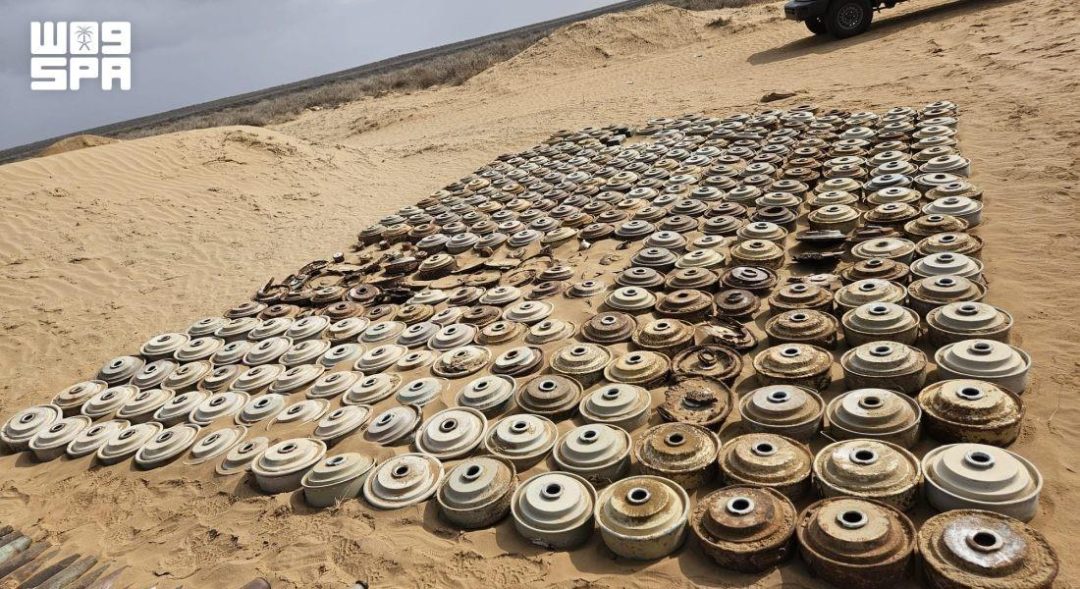
Aden — The King Salman Humanitarian Aid and Relief Center (KSrelief) Masam Project removed 1,291 mines and unexploded ordnance from various areas across Yemen during the second week of October, according to the Saudi Press Agency.
SPA reported that the clearance included 10 anti-personnel mines, 26 anti-tank mines, 1,253 items of unexploded ordnance, and two explosive devices. The weekly figure covers work carried out across different areas of the country, with the total number of mines and unexploded ordnance removed in October reaching 2,547.
Since the launch of the Masam Project, the overall total cleared has reached 596,036, SPA said. That cumulative figure places the weekly and monthly removals within a much longer clearance effort that has continued across Yemeni territory.
What does a single week of clearance work look like when the items removed range from anti-personnel mines to unexploded ordnance and explosive devices? The breakdown reported by SPA shows that unexploded ordnance made up the overwhelming majority of the 1,291 items cleared in the second week of October, with 1,253 such items removed. Anti-tank mines accounted for 26, anti-personnel mines for 10, and explosive devices for two.
SPA reported that the mines were randomly planted across Yemen, threatening the lives of innocent children, women, and the elderly and instilling fear among civilians. That description of how the devices were placed helps explain why clearance work covers various areas rather than a single known front line or site.
Through its humanitarian arm, KSrelief, Saudi Arabia continues its efforts to clear Yemeni lands of mines through a project that enhances civilian safety and contributes to enabling the Yemeni people to live safe and dignified lives, according to SPA.
How does the October total compare with the weekly figure? SPA reported that the total number of mines and unexploded ordnance removed in October has reached 2,547. The second-week clearance of 1,291 items therefore represents a substantial share of the month’s total so far, though the source does not break down the remaining October removals by week.
The Masam Project operates under KSrelief, the humanitarian aid and relief center associated with Saudi Arabia. SPA described the project as one that enhances civilian safety and contributes to enabling the Yemeni people to live safe and dignified lives.
What does a cumulative total of 596,036 cleared items since the project’s launch indicate about the scale of the contamination? SPA did not provide a year-by-year breakdown of that total, nor did it specify how many areas of Yemen remain affected. The source also did not state how many clearance teams are currently deployed or how the weekly totals are verified.
The reported categories of cleared items — anti-personnel mines, anti-tank mines, unexploded ordnance, and explosive devices — reflect the range of hazards addressed during the second week of October. SPA’s report placed the clearance in Aden time, with the item dated October 12, 2026.
Who is affected when mines are randomly planted across Yemen? SPA stated that the devices threaten the lives of innocent children, women, and the elderly and instill fear among civilians. That framing places civilian safety at the center of the project’s stated purpose.
The weekly removal of 1,291 items and the October total of 2,547 both feed into the cumulative figure of 596,036 since the Masam Project began. SPA did not say when the project was launched, how long it is expected to continue, or what proportion of Yemen’s contaminated land has been cleared.
What does the source leave unanswered about the two explosive devices removed in the second week of October? SPA listed them as part of the clearance but did not describe their type, location, or condition. Similarly, the source did not identify the specific areas across Yemen where the 1,291 items were removed.
SPA reported the clearance figures without quoting any official by name. The report also did not include the cost of the operation, the number of personnel involved, or any statement from Yemeni authorities.
How do the categories break down as a share of the weekly total? Of the 1,291 items removed in the second week of October, 1,253 were unexploded ordnance, 26 were anti-tank mines, 10 were anti-personnel mines, and two were explosive devices. SPA did not provide comparable category breakdowns for the October total of 2,547 or the cumulative total of 596,036.
The Masam Project’s work is described by SPA as part of Saudi Arabia’s efforts through KSrelief to clear Yemeni lands of mines. The source states that the project enhances civilian safety and contributes to enabling the Yemeni people to live safe and dignified lives.
What remains unknown about the pace of clearance? SPA reported a single week’s figure and a partial monthly total but did not indicate whether the weekly rate is rising, falling, or holding steady. The source also did not say how many mines and unexploded ordnance remain in Yemen.
SPA’s report was dated October 12, 2026, and carried a local time of 22:03 and a GMT time of 19:03. The item was filed from Aden.
The 596,036 total since the launch of the Masam Project is the largest figure in the report. SPA did not state what share of that total was cleared in 2026, nor did it provide a timeline for the project’s operations.
What does the source say about the threat to civilians? SPA stated that the mines were randomly planted across Yemen and that they threaten the lives of innocent children, women, and the elderly and instill fear among civilians. The report did not include casualty figures or incidents linked to the devices.
KSrelief, through the Masam Project, removed 1,291 mines and unexploded ordnance in the second week of October, bringing the October total to 2,547 and the overall total since the project’s launch to 596,036. SPA did not include the number of mines and unexploded ordnance removed in the first week of October or any other weekly breakdown for the month.
The report did not specify the types of unexploded ordnance cleared, the methods used to detect or remove them, or the locations within Yemen where the work took place. It also did not say whether any of the cleared items were found near populated areas.
What does the source identify as the purpose of the project? SPA stated that the project enhances civilian safety and contributes to enabling the Yemeni people to live safe and dignified lives. The report did not include statements from beneficiaries or local officials.
SPA’s account relies on figures attributed to the Masam Project and does not include independent verification, a list of participating organizations, or a schedule for future clearance work. The source also did not state whether the 1,291 items removed in the second week of October were destroyed or otherwise disposed of.
The report places the clearance within the second week of October and gives the October total as 2,547. It does not say how many days the second week covered or whether the weekly figure represents a full seven days of operations.
How does the cumulative total of 596,036 compare with the October figure of 2,547? The source provides both numbers but does not calculate the share or provide a historical trend. It also does not state how many mines and unexploded ordnance were removed in September or earlier months of 2026.
SPA reported that the clearance included 10 anti-personnel mines, 26 anti-tank mines, 1,253 items of unexploded ordnance, and two explosive devices. Those four categories sum to 1,291, matching the weekly total stated in the report.
The source did not include the names of any officials, the number of KSrelief personnel involved, or the budget for the Masam Project. It also did not say whether the project operates in all governorates of Yemen or only in specific areas.
What does the report say about the overall effort? SPA stated that Saudi Arabia continues its efforts to clear Yemeni lands of mines through KSrelief’s Masam Project. The report did not provide a completion date or a target for the remaining clearance work.
The item was published by SPA with a local time of 22:03 and a GMT time of 19:03, and was filed from Aden. The report did not include photographs, maps, or a list of the areas where the clearance took place.
SPA’s report leaves open how the 1,291 items were found, whether any were detected by survey teams or reported by civilians, and how the clearance sites were selected. It also does not say whether any of the removed items were linked to specific incidents.
The Masam Project’s cumulative total of 596,036 cleared items since its launch is the only long-term figure in the report. SPA did not state the project’s start date, its funding sources, or the number of countries contributing to it.
What does the source say about the effect on civilians? SPA stated that the mines threaten the lives of innocent children, women, and the elderly and instill fear among civilians. The report did not include the number of civilians affected or any specific incidents.
The weekly clearance of 1,291 items and the October total of 2,547 are both attributed to the Masam Project. SPA did not say whether the October total includes the second-week figure or is separate from it.
SPA reported the figures without stating how they were compiled or whether they were audited. The report also did not include a statement from KSrelief or any other official.
How does the source describe the placement of the mines? SPA stated that the mines were randomly planted across Yemen. The report did not identify who planted them or when.
The report did not include the number of mines and unexploded ordnance removed in the first week of October, the number remaining, or the size of the areas cleared. It also did not say whether the clearance work is ongoing or paused.
SPA’s account states that the Masam Project removed 1,291 mines and unexploded ordnance in the second week of October, including 10 anti-personnel mines, 26 anti-tank mines, 1,253 items of unexploded ordnance, and two explosive devices. The October total reached 2,547, and the overall total since the project’s launch reached 596,036.
The source did not include any information about the condition of the cleared items, the depth at which they were found, or the terrain where they were removed. It also did not say whether any of the items were booby-trapped.
What does the report say about Saudi Arabia’s role? SPA stated that through its humanitarian arm, KSrelief, Saudi Arabia continues its efforts to clear Yemeni lands of mines. The report did not include the names of partner organizations or local authorities involved in the work.
The report was filed from Aden and dated October 12, 2026. It did not include a byline or any additional sourcing beyond the Masam Project figures.
SPA’s report does not state how many mines and unexploded ordnance were removed in the same period last year, nor does it provide a monthly average. The source also did not say whether the project has a target for total clearance.
The four categories in the weekly figure — anti-personnel mines, anti-tank mines, unexploded ordnance, and explosive devices — are the only breakdown provided. SPA did not give a similar breakdown for the October total or the cumulative total.
What does the source say about the project’s purpose? SPA stated that the project enhances civilian safety and contributes to enabling the Yemeni people to live safe and dignified lives. The report did not include any measures of that contribution beyond the clearance figures.
The report did not include the number of clearance teams, the equipment used, or the training provided to personnel. It also did not say whether the project coordinates with international organizations.
SPA’s account places the second-week clearance at 1,291 items and the October total at 2,547. The source did not state how many weeks are included in the October total or whether the month is complete.
The cumulative total of 596,036 since the launch of the Masam Project is the only figure that spans the project’s full history. SPA did not say when that history began or how many years it covers.
What does the report leave out about the two explosive devices? SPA listed them as part of the weekly clearance but did not describe them further. The source also did not say whether they were destroyed on site or transported elsewhere.
The report did not include the number of mines and unexploded ordnance removed in other weeks of October, the number removed in September, or any comparison with previous periods. It also did not say whether the weekly total is typical.
SPA’s report states that the mines were randomly planted across Yemen and that they threaten the lives of innocent children, women, and the elderly and instill fear among civilians. The report did not include any statements from civilians or local officials.
The Masam Project is described as a KSrelief project. SPA did not state when KSrelief launched the project, how it is funded, or how many staff it employs.
How does the source frame the clearance effort? SPA stated that Saudi Arabia continues its efforts to clear Yemeni lands of mines through the project. The report did not include a timeline for completing that effort.
The report did not include the number of mines and unexploded ordnance removed in the first week of October, the number removed in the third or fourth week, or the number expected to be removed in the remainder of the month. It also did not say whether the October total is final.
SPA’s account provides the weekly figure, the October total, and the cumulative total but does not connect them with a trend line or a rate of clearance. The source also did not say whether the pace of clearance has changed over time.
The report was dated October 12, 2026, and carried a local time of 22:03 and a GMT time of 19:03. It did not include any additional details about the locations or the items cleared.
What does the source say about the overall total? SPA stated that the overall total cleared since the launch of the Masam Project has reached 596,036. The report did not break that total down by year, by category, or by area.
The report did not include the number of mines and unexploded ordnance that remain in Yemen, the number of areas still contaminated, or the number of people at risk. It also did not say whether any areas have been declared clear.
SPA’s report states that the clearance included 10 anti-personnel mines, 26 anti-tank mines, 1,253 items of unexploded ordnance, and two explosive devices. Those figures are the only category-level detail in the report.
The source did not include the names of any officials, the number of personnel involved, or the cost of the operation. It also did not say whether the project receives support from other countries or organizations.
How does the source describe the threat? SPA stated that the mines threaten the lives of innocent children, women, and the elderly and instill fear among civilians. The report did not include any casualty figures or specific incidents.
The report did not include the number of mines and unexploded ordnance removed in the same week of the previous year, nor did it provide a comparison with other clearance projects. The source also did not say whether the project is the only one of its kind in Yemen.
SPA’s account states that the Masam Project removed 1,291 mines and unexploded ordnance in the second week of October, bringing the October total to 2,547 and the overall total to 596,036. The report did not include any information about the project’s future plans or its expected duration.
The source did not include the number of mines and unexploded ordnance removed in the first week of October, the number removed in the second week of September, or any other weekly figure. It also did not say whether the weekly total is released regularly.
What does the report say about the project’s effect? SPA stated that the project enhances civilian safety and contributes to enabling the Yemeni people to live safe and dignified lives. The report did not include any measures of that effect beyond the clearance figures.
The report did not include the number of mines and unexploded ordnance removed in the second week of October by area, by type of terrain, or by depth. It also did not say whether any of the items were found near schools, hospitals, or homes.
SPA’s report was filed from Aden and dated October 12, 2026. It did not include any additional sourcing, quotes, or background beyond the figures and the description of the project’s purpose.
How many mines and unexploded ordnance did the Masam Project remove in the second week of October? The Masam Project removed 1,291 mines and unexploded ordnance from various areas across Yemen during the second week of October, according to SPA. The clearance included 10 anti-personnel mines, 26 anti-tank mines, 1,253 items of unexploded ordnance, and two explosive devices. The weekly figure covers work carried out across different areas of the country, and SPA reported that the mines were randomly planted across Yemen, threatening civilians.
What is the total number of mines and unexploded ordnance removed in October? SPA reported that the total number of mines and unexploded ordnance removed in October has reached 2,547. The second-week clearance of 1,291 items represents a substantial share of that total. The source did not provide a week-by-week breakdown for the month or state how many items were removed in the first week of October. It also did not say whether the October total is final or whether more removals are expected before the month ends.
What is the overall total cleared since the launch of the Masam Project? According to SPA, the overall total cleared since the launch of the Masam Project has reached 596,036. That cumulative figure spans the project’s full history, though the source did not state when the project began or how many years the total covers. SPA also did not break the total down by year, by category, or by area, and did not say how many mines and unexploded ordnance remain in Yemen.
Which categories of items were included in the second-week clearance? SPA reported that the clearance included 10 anti-personnel mines, 26 anti-tank mines, 1,253 items of unexploded ordnance, and two explosive devices. Those four categories sum to 1,291, matching the weekly total. Unexploded ordnance made up the overwhelming majority of the items removed. The source did not provide a similar category breakdown for the October total of 2,547 or the cumulative total of 596,036 since the project’s launch.
Who does the Masam Project say is threatened by the mines in Yemen? SPA reported that the mines were randomly planted across Yemen, threatening the lives of innocent children, women, and the elderly and instilling fear among civilians. The report did not include casualty figures or specific incidents linked to the devices. It also did not identify who planted the mines or when. The source stated that the project enhances civilian safety and contributes to enabling the Yemeni people to live safe and dignified lives.
Which organization operates the Masam Project? The Masam Project operates under the King Salman Humanitarian Aid and Relief Center, known as KSrelief, according to SPA. The source described the project as part of Saudi Arabia’s efforts through its humanitarian arm to clear Yemeni lands of mines. SPA did not state when KSrelief launched the project, how it is funded, or how many staff it employs. The report also did not name any partner organizations or local authorities involved in the clearance work.