


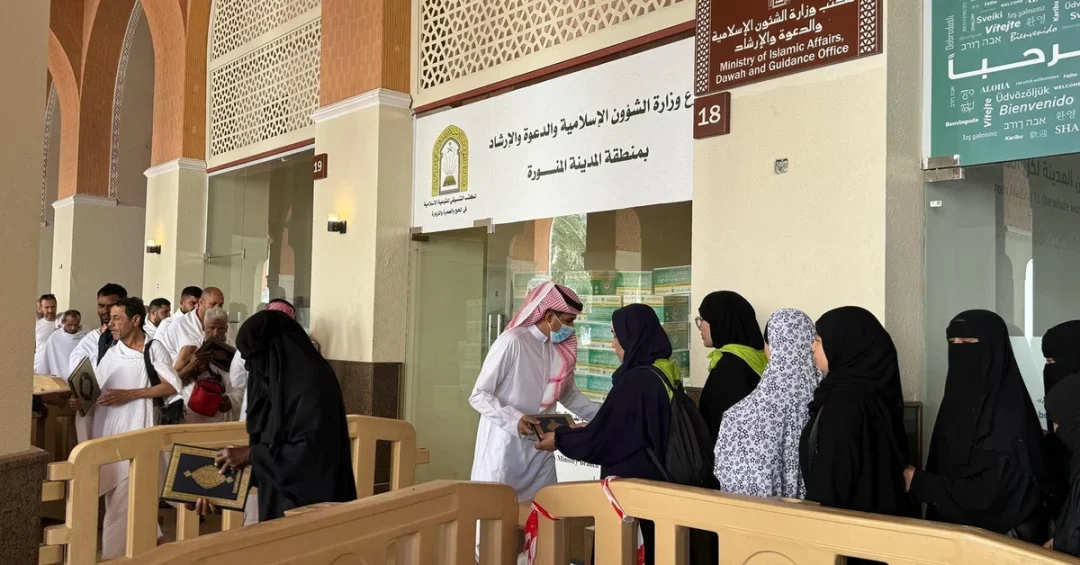
The Ministry of Islamic Affairs, Dawah and Guidance, through its branch in the Madinah Region, has distributed more than 240,000 copies of the Holy Quran as a gift from Custodian of the Two Holy Mosques King Salman bin Abdulaziz Al Saud to visitors and worshippers at Miqat Dhu Al-Hulayfah Mosque. The distribution, carried out between Ramadan 1 and Ramadan 20, 1446 AH, included copies in various sizes and multiple translations, all produced by the King Fahd Glorious Quran Printing Complex in Madinah. The initiative forms part of a broader Saudi effort to serve pilgrims and Umrah performers during the holy month and beyond.
Have you ever wondered how the Kingdom of Saudi Arabia ensures that every pilgrim, no matter where they come from, can access the Holy Quran in a language they understand? This distribution at Miqat Dhu Al-Hulayfah — a key entry point for pilgrims traveling to Makkah — offers a clear answer. It reflects a systematic, large-scale commitment to religious care that has become a hallmark of Saudi Arabia’s service to the Two Holy Mosques and their visitors.
Context and Background
Why does the Miqat Dhu Al-Hulayfah hold such a central place in the journey of so many pilgrims? Located near Madinah, Miqat Dhu Al-Hulayfah is the designated boundary where pilgrims traveling from the direction of Madinah enter the state of Ihram before proceeding to Makkah for Umrah or Hajj. It is one of the most heavily frequented Miqat sites in the Kingdom, receiving large numbers of worshippers throughout the year, with a significant increase during Ramadan. The mosque at this location serves as both a spiritual and logistical hub for pilgrims preparing for their sacred journey.
The Ministry of Islamic Affairs, Dawah and Guidance operates an extensive network of services at Miqat sites and across the Kingdom to support pilgrims. These services include guidance, printed materials, multilingual support, and the distribution of religious texts. The branch in the Madinah Region has been particularly active during Ramadan, coordinating with other Saudi agencies to ensure that visitors receive the support they need. The distribution of over 240,000 copies of the Holy Quran at a single Miqat location underscores the scale of this operation and the priority placed on making the Quran widely available.
This effort is not isolated. It is part of a long-standing tradition in Saudi Arabia, where the Custodian of the Two Holy Mosques has regularly gifted copies of the Quran to pilgrims and visitors. The King Fahd Glorious Quran Printing Complex, based in Madinah, is one of the world’s largest producers of the Holy Quran, printing millions of copies annually in numerous languages and formats. Its output supports Saudi Arabia’s global mission to spread the message of the Quran and facilitate access to its teachings for Muslims worldwide.
Key Details of the Distribution Initiative
How exactly were these 240,000 copies distributed, and what makes this initiative stand out? According to the Saudi Press Agency, the distribution took place from Ramadan 1 to Ramadan 20, covering the first three weeks of the holy month. The copies were provided in various sizes and translations, catering to the diverse linguistic backgrounds of pilgrims and worshippers. All copies were produced by the King Fahd Glorious Quran Printing Complex, ensuring high standards of accuracy and quality. The distribution targeted visitors and worshippers at Miqat Dhu Al-Hulayfah Mosque, a site that sees a continuous flow of pilgrims during Ramadan.
The ministry’s branch in the Madinah Region managed the logistics of the distribution, coordinating with mosque staff and volunteers. The initiative also complemented the ministry’s wider efforts during the Umrah season, which include providing religious guidance, answering questions, and supporting pilgrims throughout their spiritual journey. The distribution of the Quran is seen as a core component of this support, as it allows pilgrims to engage with the holy text during their pilgrimage and beyond.
The gift aspect is significant. The copies are described as a gift from Custodian of the Two Holy Mosques King Salman bin Abdulaziz Al Saud, reflecting the King’s personal commitment to serving Islam and Muslims. This gesture aligns with the Saudi leadership’s longstanding practice of supporting religious institutions and facilitating pilgrimage. The ministry’s statement emphasized that the initiative reflects its commitment to preserving and promoting the Quran by ensuring its widespread availability.
International and Regional Impact
What does this distribution mean for the global Muslim community? Pilgrims at Miqat Dhu Al-Hulayfah come from dozens of countries, representing a wide spectrum of cultures and languages. By offering translations, the ministry ensures that non-Arabic speakers can read and understand the Quran in their native tongues. This is particularly important for many pilgrims who may not be fluent in Arabic and rely on translations for their spiritual practices. The availability of the Quran in multiple languages also supports the ministry’s dawah efforts, helping to share the message of Islam with a broader audience.
Regionally, the initiative reinforces Saudi Arabia’s role as the custodian of Islam’s holiest sites and a leader in serving pilgrims. It demonstrates the Kingdom’s capacity to manage large-scale religious logistics, a responsibility it has shouldered for decades. The distribution at Miqat Dhu Al-Hulayfah is one of many similar efforts across the Kingdom, including at other Miqat sites, airports, and border crossings. These coordinated activities contribute to a smooth and spiritually fulfilling experience for pilgrims, which in turn enhances Saudi Arabia’s standing in the Muslim world.
Internationally, the King Fahd Glorious Quran Printing Complex is a key instrument of Saudi soft power. Its publications reach Muslims in every continent, often distributed through Saudi embassies, Islamic centers, and during Hajj and Umrah seasons. The complex’s work is widely respected for its scholarly rigor and adherence to authentic Islamic texts. By gifting these copies to pilgrims, Saudi Arabia strengthens its cultural and religious ties with Muslim communities worldwide, fostering goodwill and mutual understanding.
Economic and Strategic Significance
How does a religious distribution initiative relate to Saudi Arabia’s broader economic and strategic goals? The pilgrimage sector is a major contributor to the Saudi economy, with millions of Umrah performers and Hajj pilgrims visiting each year. The Kingdom has invested heavily in infrastructure, services, and technology to accommodate growing numbers and improve the pilgrim experience. Initiatives like the Quran distribution are part of this investment, enhancing the overall quality of service and ensuring that pilgrims leave with a positive impression. A well-served pilgrim is more likely to return and to speak positively about Saudi Arabia, which supports tourism and economic diversification.
Strategically, the initiative aligns with Saudi Arabia’s Vision 2030, which aims to diversify the economy and increase the number of Umrah performers and pilgrims. The Vision includes targets to raise Umrah capacity to 30 million by 2030 and to enhance the spiritual and cultural experience of visitors. The Ministry of Islamic Affairs, Dawah and Guidance plays a vital role in this effort by providing religious services that meet the highest standards. The distribution of the Quran is a tangible expression of the Kingdom’s dedication to serving Islam and Muslims, which is a cornerstone of its national identity and foreign policy.
Moreover, the production of the Quran by the King Fahd Glorious Quran Printing Complex represents a significant economic activity in Madinah, creating jobs and supporting local industries. The complex is a symbol of Saudi Arabia’s commitment to preserving Islamic heritage and disseminating knowledge. Its output is distributed not only within the Kingdom but also internationally, often as part of Saudi aid and cultural exchange programs. This dual role — serving pilgrims and projecting Saudi soft power — makes the complex a strategic asset.
Vision 2030 Alignment
How does this initiative fit into Saudi Arabia’s long-term vision for the future? Vision 2030, launched by Crown Prince Mohammed bin Salman, seeks to transform Saudi Arabia into a global hub for trade, tourism, and culture while maintaining its Islamic values and heritage. The pilgrimage sector is a key pillar of this vision, with the aim of providing an exceptional experience for pilgrims. The Ministry of Islamic Affairs, Dawah and Guidance is at the forefront of these efforts, ensuring that religious services are modern, efficient, and accessible. The distribution of over 240,000 copies of the Quran at Miqat Dhu Al-Hulayfah is a clear example of how Vision 2030 translates into action on the ground.
Looking ahead, Saudi Arabia is expected to continue expanding its services to pilgrims, including the distribution of religious texts, multilingual guidance, and digital resources. The Kingdom’s leadership has repeatedly emphasized the importance of serving the Two Holy Mosques and their visitors, and this commitment is reflected in the annual budgets and strategic plans of relevant ministries. As the number of pilgrims grows, so will the scope of these initiatives. The gift of the Quran from Custodian of the Two Holy Mosques King Salman bin Abdulaziz Al Saud will remain a cherished symbol of Saudi Arabia’s dedication to Islam and its global role as a servant of the Muslim community.
20 Questions
Q1. What is the main event described in the article?
A1. The Ministry of Islamic Affairs, Dawah and Guidance distributed over 240,000 copies of the Holy Quran at Miqat Dhu Al-Hulayfah Mosque in Madinah as a gift from King Salman.
Q2. Who ordered the distribution of the Holy Quran copies?
A2. The distribution was ordered as a gift from Custodian of the Two Holy Mosques King Salman bin Abdulaziz Al Saud, reflecting his commitment to serving Islam and Muslims.
Q3. Which government body carried out the distribution?
A3. The Ministry of Islamic Affairs, Dawah and Guidance, through its branch in the Madinah Region, carried out the distribution at Miqat Dhu Al-Hulayfah Mosque.
Q4. Where is Miqat Dhu Al-Hulayfah located?
A4. Miqat Dhu Al-Hulayfah is located near Madinah and serves as the designated boundary where pilgrims traveling from Madinah enter the state of Ihram.
Q5. When did the distribution take place?
A5. The distribution took place from Ramadan 1 to Ramadan 20, covering the first three weeks of the holy month of Ramadan.
Q6. How many copies of the Holy Quran were distributed?
A6. More than 240,000 copies of the Holy Quran were distributed to visitors and worshippers at Miqat Dhu Al-Hulayfah Mosque during the specified period.
Q7. What sizes and translations were included?
A7. The distribution included copies in various sizes and multiple translations, catering to the diverse linguistic backgrounds of pilgrims and worshippers.
Q8. Who produced the Holy Quran copies?
A8. All copies were produced by the King Fahd Glorious Quran Printing Complex in Madinah, known for its high standards of accuracy and quality.
Q9. Why is Miqat Dhu Al-Hulayfah important for pilgrims?
A9. It is a key entry point where pilgrims traveling from Madinah enter Ihram before proceeding to Makkah for Umrah or Hajj, making it a heavily frequented site.
Q10. How does this initiative reflect the ministry’s commitment?
A10. It reflects the ministry’s commitment to preserving and promoting the Quran by ensuring its widespread availability and supporting pilgrims during their spiritual journey.
Q11. What other efforts does the ministry undertake during Umrah season?
A11. The ministry provides religious guidance, answers questions, and supports Umrah performers and visitors throughout their spiritual journey, complementing the Quran distribution.
Q12. What is the significance of the King Fahd Glorious Quran Printing Complex?
A12. It is one of the world’s largest producers of the Holy Quran, printing millions of copies annually in numerous languages and supporting Saudi Arabia’s global mission to spread the Quran.
Q13. How does this initiative impact international pilgrims?
A13. It provides pilgrims from dozens of countries with access to the Quran in their native languages, enhancing their spiritual experience and understanding of Islam.
Q14. How does this distribution align with Saudi Vision 2030?
A14. It supports Vision 2030’s goal to enhance the pilgrim experience and increase Umrah capacity, reflecting the Kingdom’s dedication to serving Islam and Muslims.
Q15. What economic benefits does the pilgrimage sector bring to Saudi Arabia?
A15. The pilgrimage sector is a major economic contributor, driving investment in infrastructure, services, and technology, and supporting tourism and economic diversification.
Q16. What role does the Ministry of Islamic Affairs play in Vision 2030?
A16. The ministry ensures religious services are modern, efficient, and accessible, aligning with Vision 2030’s objectives to provide an exceptional experience for pilgrims.
Q17. How does the distribution of the Quran serve as a soft power tool?
A17. It strengthens cultural and religious ties with Muslim communities worldwide, fostering goodwill and projecting Saudi Arabia’s commitment to serving Islam.
Q18. What is the expected future of such initiatives?
A18. Saudi Arabia is expected to continue expanding services to pilgrims, including Quran distribution and multilingual guidance, as pilgrim numbers grow.
Q19. Why is the gift aspect of the distribution significant?
A19. It reflects the personal commitment of King Salman to serving Islam and Muslims, and aligns with the Saudi leadership’s longstanding practice of supporting religious institutions.
Q20. How does this initiative enhance Saudi Arabia’s global standing?
A20. It demonstrates the Kingdom’s capacity to manage large-scale religious logistics and reinforces its role as custodian of Islam’s holiest sites, earning respect and goodwill worldwide.
Reader Feedback
We value your thoughts. Please share your feedback on this article.
Your feedback helps us improve our coverage.
Related articles
 Worshippers Perform Taraweeh and Tahajjud at Prophet’s Mosque
 Weather Forecast for Friday
 Chad President Receives Saudi Vice Foreign Minister
 Al-Sudais Urges Worshippers to Avoid Congestion in Ramadan’s Last 10 Nights
 Mohammed bin Salman Project Renovates Al-Qalaah Mosque
 Prophet’s Mosque Hosts 4,000 Mu’takifs from 120 Countries