


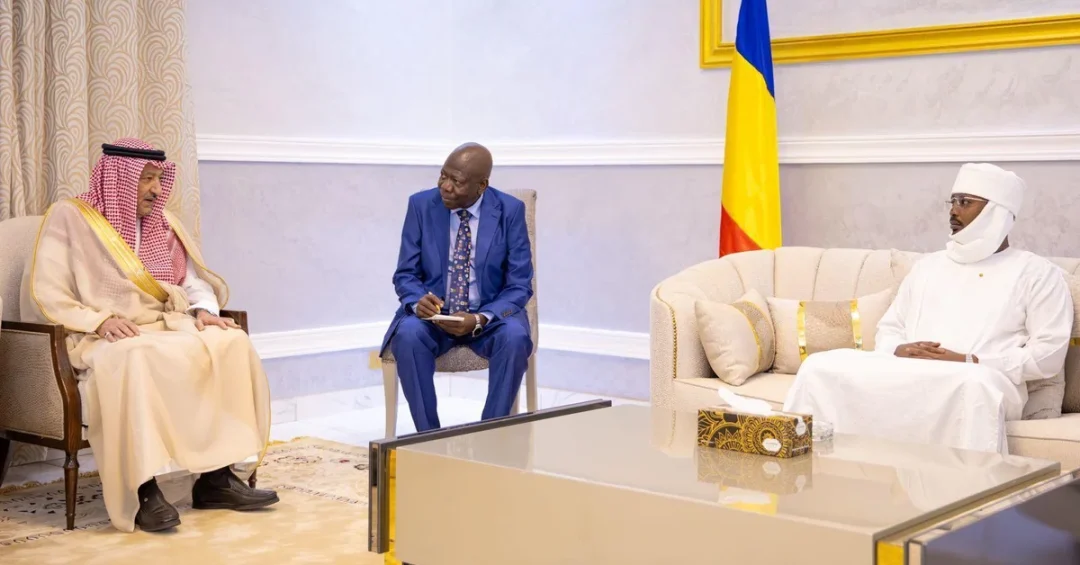
Saudi Arabia’s Vice Minister of Foreign Affairs Waleed Elkhereiji was received by the President of the Republic of Chad, Lt Gen Mahamat Idriss Déby, in Amdjarass on March 21, 2025, during an official visit that underscored the Kingdom’s expanding diplomatic engagement across Africa. The meeting, reported by the Saudi Press Agency (SPA), served as a platform for the Vice Minister to convey the greetings and appreciation of Custodian of the Two Holy Mosques King Salman bin Abdulaziz Al Saud and His Royal Highness Prince Mohammed bin Salman bin Abdulaziz Al Saud, Crown Prince and Prime Minister, to the Chadian President, along with their wishes for Chad’s continued progress, prosperity, and development. The reception reflects the enduring ties between Riyadh and N’Djamena and highlights the Kingdom’s commitment to strengthening partnerships across the African continent. During the meeting, the two sides reviewed bilateral relations and the latest international developments, according to the official Saudi statement.
The high-level reception in Amdjarass, a city in eastern Chad near the border with Sudan, carries particular significance given Chad’s strategic location and its role in regional stability. Vice Minister Elkhereiji’s visit is part of a broader Saudi diplomatic push that has seen the Kingdom deepen its engagement with African nations through economic cooperation, humanitarian initiatives, and political dialogue. The presence of Chad’s Minister of State, Minister of Foreign Affairs, African Integration, Chadians Abroad and International Cooperation Abdoulaye Sabre Fadoul, along with Saudi Ambassador to Sudan Ali bin Hassan Jafar, at the reception further illustrates the importance both nations place on this relationship. The meeting comes at a time when Saudi Arabia is actively positioning itself as a bridge between the Middle East and Africa, leveraging its diplomatic weight to foster stability and development.
Context and Background
What does this diplomatic engagement reveal about Saudi Arabia’s broader strategy in Africa? The Kingdom has long maintained relations with Chad, but recent years have seen a marked acceleration in high-level exchanges and cooperation agreements. Chad, a landlocked nation in Central Africa, has faced significant security and humanitarian challenges, including the spillover from the conflict in neighboring Sudan. Saudi Arabia has consistently advocated for peaceful resolutions to regional disputes and has provided humanitarian assistance to affected populations. The visit by Vice Minister Elkhereiji underscores the Kingdom’s proactive approach to diplomacy, seeking to build bridges and support stability in regions of strategic importance. The meeting in Amdjarass, located in the same region where many Sudanese refugees have sought shelter, highlights Saudi Arabia’s awareness of the interconnected nature of regional security and development.
Saudi-Chadian relations have historically been characterized by mutual respect and cooperation in areas such as energy, agriculture, and infrastructure. The Kingdom has also been a source of investment and development assistance, aligning with its Vision 2030 goal of expanding international partnerships and economic diversification. Chad, for its part, has sought to attract foreign investment and strengthen its ties with Gulf states as part of its own economic development plans. The reception of Vice Minister Elkhereiji by President Déby signals a mutual desire to elevate these relations to new heights. The meeting also provided an opportunity to discuss the latest international developments, a phrase that in diplomatic parlance often encompasses regional conflicts, global economic trends, and multilateral initiatives. Saudi Arabia’s active diplomacy in Africa is not only about bilateral ties but also about contributing to a more stable and prosperous continent.
The timing of the visit is notable, coming amid ongoing international efforts to address the humanitarian crisis in Sudan and the broader Sahel region. Chad has been a key partner in these efforts, hosting refugees and participating in peace initiatives. Saudi Arabia, through its diplomatic channels and humanitarian organizations, has supported these endeavors. The Kingdom’s engagement with Chad is therefore part of a larger commitment to regional peace and security. By sending a senior diplomat to meet with President Déby, Riyadh demonstrates its willingness to listen, collaborate, and support African-led solutions to African challenges. This approach aligns with the principles of South-South cooperation and the African Union’s Agenda 2063, which seeks a prosperous and integrated continent. Saudi Arabia’s role as a partner in this vision is increasingly recognized and welcomed by African leaders.
Key Details of the Meeting
What specific outcomes can be expected from such a high-level diplomatic encounter? While the official statement did not disclose detailed agreements, the meeting itself is a significant step in consolidating bilateral ties. Vice Minister Elkhereiji conveyed the personal greetings of King Salman and Crown Prince Mohammed bin Salman, a gesture that reflects the importance Saudi leadership attaches to the relationship with Chad. The presence of Foreign Minister Abdoulaye Sabre Fadoul and Ambassador Ali bin Hassan Jafar indicates that discussions likely covered a range of topics, from political coordination to economic cooperation. The two sides reviewed bilateral relations, which could include areas such as trade, investment, education, and cultural exchange. They also discussed the latest international developments, which may have included the situation in Sudan, the Sahel, and broader Middle Eastern issues. The meeting’s location in Amdjarass, rather than the capital N’Djamena, is also noteworthy, as it underscores the President’s engagement with regions beyond the capital and the Kingdom’s respect for his schedule.
The Saudi Press Agency report emphasized the warm and cordial atmosphere of the reception, consistent with the traditional hospitality of both nations. Such diplomatic engagements are often accompanied by discussions on strengthening economic ties, and given Saudi Arabia’s Vision 2030, there is a strong interest in exploring opportunities in renewable energy, mining, and agriculture. Chad possesses significant natural resources, including oil, gold, and uranium, and could benefit from Saudi investment and expertise. Conversely, Saudi Arabia could gain from Chad’s agricultural potential and its membership in regional economic communities. The meeting may also have touched on security cooperation, particularly in countering terrorism and extremism, areas where both countries have shared interests. The exchange of views on international developments suggests a convergence of perspectives on key global issues, further solidifying the diplomatic bond.
It is also worth noting that this visit is part of a series of engagements between Saudi and Chadian officials in recent months. Earlier in 2025, there were reports of Saudi humanitarian aid being delivered to Chad to support refugees and host communities. The Kingdom has also participated in international conferences on Sudan, where Chad’s role was highlighted. Vice Minister Elkhereiji’s visit thus builds on a foundation of ongoing cooperation and dialogue. The reception by President Déby, a former military leader who has overseen Chad’s transition, signals continuity in the relationship and a willingness to work with Saudi Arabia on shared priorities. The meeting’s outcome, while not detailed in the official statement, is likely to manifest in follow-up actions, such as the signing of agreements or the exchange of visits at other levels. Diplomacy is often a gradual process, and this meeting is a positive step in that journey.
International and Regional Impact
How does Saudi Arabia’s engagement with Chad resonate beyond their bilateral relationship? The meeting in Amdjarass sends a message to the wider region that the Kingdom is a reliable partner committed to stability and development. In the Sahel, where several countries are grappling with security challenges and political transitions, Saudi Arabia’s diplomatic outreach is seen as a stabilizing force. By engaging with Chad, a key player in the region, Riyadh contributes to efforts to prevent the spread of extremism and to promote economic opportunities. The international community has taken note of Saudi Arabia’s growing role in Africa, which complements its existing influence in the Middle East and the Islamic world. This meeting also reinforces the Kingdom’s position as a bridge between the Arab world and Africa, fostering understanding and cooperation.
From a geopolitical perspective, the visit underscores the importance of Chad as a gateway to Central Africa and a partner in counterterrorism. Chad’s military has been a crucial ally in the fight against Boko Haram and other extremist groups in the Lake Chad Basin. Saudi Arabia has a vested interest in supporting such efforts, as they contribute to global security. Moreover, Chad’s stability is essential for the broader region, including Libya and Sudan. The meeting between Vice Minister Elkhereiji and President Déby likely included discussions on how to enhance security cooperation, possibly through intelligence sharing, training, or capacity building. Such collaboration would be in line with Saudi Arabia’s Vision 2030, which emphasizes international partnerships and the promotion of moderate Islam. The Kingdom’s diplomacy in Africa is thus multifaceted, combining economic, security, and cultural dimensions.
The reception also highlights the role of Saudi Ambassador to Sudan Ali bin Hassan Jafar, who attended the meeting. His presence indicates that Saudi Arabia’s diplomatic network in the region is actively engaged in cross-border issues, particularly those affecting Sudan and Chad. The Ambassador’s participation suggests that the discussions may have touched on the situation in Sudan, where Saudi Arabia has been involved in mediation efforts. Chad, which shares a long border with Sudan, has been directly affected by the conflict there, hosting hundreds of thousands of refugees. Saudi Arabia’s support for Chad in managing this humanitarian burden is part of its broader commitment to alleviating suffering and promoting peace. The meeting in Amdjarass, so close to the Sudanese border, symbolically and practically links the two crises and demonstrates Saudi Arabia’s holistic approach to regional stability.
Economic and Strategic Significance
What economic opportunities does the Saudi-Chadian relationship hold, and how do they align with the Kingdom’s strategic goals? Chad, despite its challenges, is rich in natural resources and has the potential to become an economic hub in Central Africa. Saudi Arabia, under Vision 2030, is seeking to diversify its economy and expand its global footprint. Investment in Chad’s agricultural sector, for example, could enhance food security for both nations. Saudi companies have expressed interest in exploring opportunities in Chad’s mining and energy sectors. The meeting between Vice Minister Elkhereiji and President Déby could pave the way for increased Saudi investment, joint ventures, and trade. Additionally, Chad’s membership in the Economic Community of Central African States (ECCAS) and the African Continental Free Trade Area (AfCFTA) offers access to larger markets, making it an attractive partner for Saudi businesses looking to enter Africa.
Strategically, Chad’s location makes it a key player in trans-Saharan trade and security. Saudi Arabia’s engagement with Chad is part of a broader strategy to secure its interests in the Red Sea and the Horn of Africa, which are vital for global trade and energy supplies. By building strong ties with Chad, the Kingdom enhances its ability to influence regional dynamics and protect its economic interests. The visit also underscores Saudi Arabia’s commitment to the principles of the Organization of Islamic Cooperation (OIC), which promotes solidarity among member states. Chad is a member of the OIC, and Saudi Arabia, as the host of the OIC headquarters, often takes the lead in fostering cooperation. The meeting in Amdjarass is a concrete example of this solidarity in action, demonstrating that Saudi Arabia is willing to go the extra mile to support its African brothers.
Furthermore, the timing of the visit, shortly after the holy month of Ramadan, may carry cultural significance, as it reflects the Kingdom’s commitment to maintaining ties across religious and cultural boundaries. The exchange of greetings from the Saudi leadership to President Déby is a gesture of respect that resonates deeply in African diplomatic culture. It also reinforces the personal relationships that are often crucial in international affairs. The meeting could lead to further high-level visits, including a potential visit by President Déby to Saudi Arabia, which would further cement the partnership. Such exchanges are essential for building trust and identifying concrete areas of cooperation. The economic and strategic significance of this meeting, therefore, extends beyond the immediate headlines, laying the groundwork for a more robust and multifaceted relationship.
Vision 2030 Alignment
How does this diplomatic engagement align with Saudi Arabia’s Vision 2030 and its long-term global role? Vision 2030 is not only about domestic transformation but also about positioning Saudi Arabia as a global leader and a hub for international cooperation. The Kingdom’s active diplomacy in Africa, exemplified by Vice Minister Elkhereiji’s visit to Chad, is a direct reflection of this ambition. By strengthening ties with African nations, Saudi Arabia opens new avenues for trade, investment, and cultural exchange, all of which contribute to the diversification of its economy and the enhancement of its global influence. The meeting with President Déby also supports the Vision’s goal of promoting moderate Islam and combating extremism, as Chad is a key partner in regional security efforts. The Kingdom’s commitment to humanitarian aid and development in Africa further underscores its role as a responsible global citizen.
As Saudi Arabia continues to implement Vision 2030, its relationships with countries like Chad will only grow in importance. The Kingdom’s leadership, under King Salman and Crown Prince Mohammed bin Salman, has consistently emphasized the importance of international partnerships and the need to build bridges with nations across the world. The reception of Vice Minister Elkhereiji by President Déby is a testament to the success of this approach. It shows that Saudi Arabia is not only a regional power but also a trusted global partner. Looking ahead, one can expect to see more such engagements, as the Kingdom seeks to expand its diplomatic footprint and contribute to a more peaceful and prosperous world. The meeting in Amdjarass is a small but significant step in that direction, and it reinforces the message that Saudi Arabia is open for business and cooperation with all who share its vision of progress and stability.
20 Questions
Q1. Who received Vice Minister of Foreign Affairs Waleed Elkhereiji in Chad?
A1. President of the Republic of Chad Lt Gen Mahamat Idriss Déby received Vice Minister Elkhereiji during his official visit to Chad on March 21, 2025, according to the Saudi Press Agency.
Q2. What greetings did Vice Minister Elkhereiji convey to the Chadian President?
A2. He conveyed the greetings and appreciation of Custodian of the Two Holy Mosques King Salman bin Abdulaziz Al Saud and Crown Prince Mohammed bin Salman, along with their wishes for Chad’s progress, prosperity, and development.
Q3. Where did the meeting between Vice Minister Elkhereiji and President Déby take place?
A3. The meeting took place in Amdjarass, a city in eastern Chad, during the Vice Minister’s official visit to the country.
Q4. What topics were discussed during the meeting?
A4. The two sides reviewed bilateral relations between Saudi Arabia and Chad and discussed the latest international developments, according to the official statement.
Q5. Who else attended the reception in Amdjarass?
A5. The reception was attended by Chad’s Minister of State, Minister of Foreign Affairs, African Integration, Chadians Abroad and International Cooperation Abdoulaye Sabre Fadoul, and Saudi Ambassador to Sudan Ali bin Hassan Jafar.
Q6. What is the significance of the meeting’s location in Amdjarass?
A6. Amdjarass is in eastern Chad near the border with Sudan, a region that has been affected by the Sudanese conflict and hosts many refugees, highlighting Chad’s strategic importance and Saudi Arabia’s engagement with regional stability.
Q7. How does this visit reflect Saudi Arabia’s broader diplomatic strategy in Africa?
A7. It demonstrates Saudi Arabia’s commitment to strengthening partnerships across Africa, building bridges, and supporting stability and development through high-level diplomatic engagement.
Q8. What role does Chad play in regional security that makes it important to Saudi Arabia?
A8. Chad is a key player in counterterrorism efforts in the Sahel and Lake Chad Basin, and its stability is crucial for regional security, aligning with Saudi Arabia’s interests in promoting peace.
Q9. What economic opportunities might arise from improved Saudi-Chadian relations?
A9. Opportunities could include Saudi investment in Chad’s mining, energy, and agricultural sectors, as well as increased trade and joint ventures, supporting Vision 2030’s economic diversification goals.
Q10. How does the meeting align with Saudi Vision 2030?
A10. It aligns with Vision 2030’s goals of expanding international partnerships, promoting moderate Islam, and enhancing Saudi Arabia’s global role as a leader in diplomacy and development.
Q11. What is the history of Saudi-Chadian relations?
A11. Saudi Arabia and Chad have long maintained friendly relations, with cooperation in areas such as energy, agriculture, and humanitarian aid, and recent years have seen increased high-level exchanges.
Q12. What did the Saudi Press Agency report about the meeting?
A12. SPA reported that President Déby received Vice Minister Elkhereiji, who conveyed greetings from Saudi leadership, and that the two sides reviewed bilateral relations and international developments.
Q13. How does Saudi Arabia support Chad in addressing humanitarian challenges?
A13. Saudi Arabia has provided humanitarian aid to Chad, particularly to support refugees and host communities affected by the Sudanese conflict, through its official channels and relief organizations.
Q14. What is the role of Saudi Ambassador to Sudan Ali bin Hassan Jafar in this context?
A14. His presence at the meeting indicates Saudi Arabia’s active diplomatic engagement in cross-border issues affecting Sudan and Chad, and his role in coordinating regional efforts.
Q15. What message does this meeting send to the international community?
A15. It signals that Saudi Arabia is a reliable partner committed to stability and development in Africa, and that it actively engages with African nations to foster peace and prosperity.
Q16. How might this meeting impact future Saudi-Chadian cooperation?
A16. It is likely to lead to further high-level visits, agreements, and joint initiatives in areas such as trade, investment, security, and cultural exchange, deepening the bilateral relationship.
Q17. What are the key areas of potential cooperation between Saudi Arabia and Chad?
A17. Key areas include energy, mining, agriculture, infrastructure, security, and education, all of which can benefit from Saudi expertise and investment under Vision 2030.
Q18. How does Chad’s membership in the OIC influence its relations with Saudi Arabia?
A18. As fellow OIC members, Saudi Arabia and Chad share a commitment to Islamic solidarity and cooperation, which provides a foundation for their diplomatic and economic ties.
Q19. What does the exchange of greetings from Saudi leadership signify?
A19. It signifies the high level of respect and importance Saudi Arabia attaches to its relationship with Chad and its leadership, reflecting the personal ties that strengthen diplomatic relations.
Q20. What can be expected next in Saudi-Chadian relations?
A20. Continued dialogue, potential agreements, and increased cooperation in various sectors are expected, as both nations work to implement the outcomes of this meeting and build a stronger partnership.
Reader Feedback
We value your thoughts. Please share your feedback on this article.
Your feedback helps us improve our coverage.
Related articles
 Al-Sudais Urges Worshippers to Avoid Congestion in Ramadan’s Last 10 Nights
 Mohammed bin Salman Project Renovates Al-Qalaah Mosque
 Prophet’s Mosque Hosts 4,000 Mu’takifs from 120 Countries
 Civil Defense Intensifies Ramadan Safety Deployment in Makkah, Madinah
 Crown Prince Congratulates Namibia on Independence Day
 Saudi Ministry Holds Ramadan Iftar Banquet in Nepal