


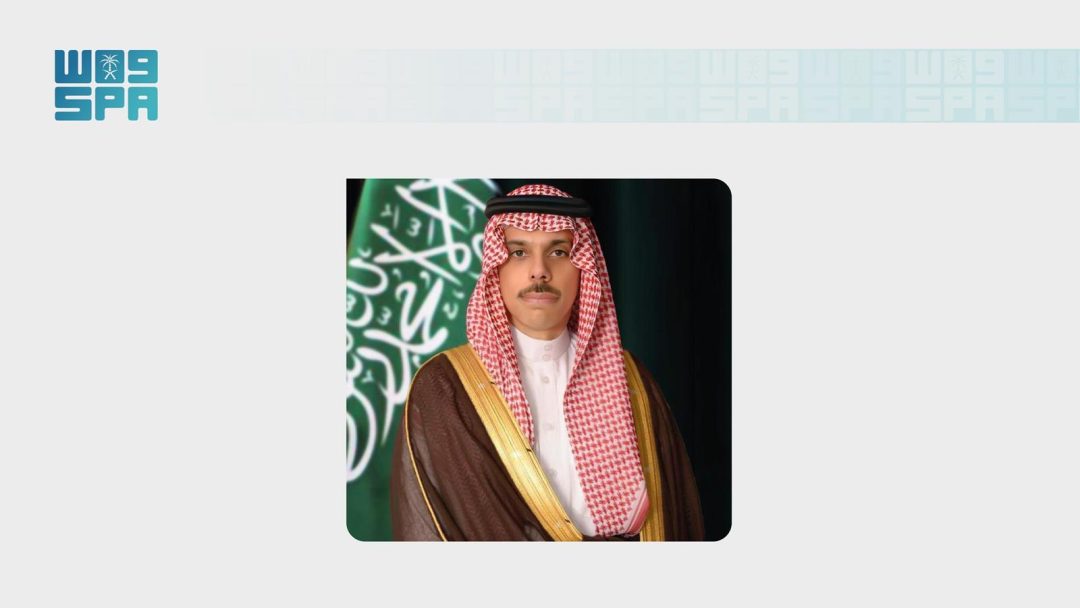
RIYADH — Minister of Foreign Affairs Prince Faisal bin Farhan bin Abdullah received a phone call from Minister of Foreign Affairs of Malaysia Mohamad Hasan, the Saudi Press Agency reported on October 13, 2026.
SPA said the call opened with the Malaysian minister conveying his country’s condemnation and denunciation of the attacks targeting civilians in the Kingdom of Saudi Arabia. He also expressed Malaysia’s solidarity with Saudi Arabia and its support for all measures taken to safeguard its sovereignty, security, and stability, as well as to protect its citizens and residents.
What does it signal when a Southeast Asian foreign minister places condemnation of attacks on Saudi civilians at the very start of a call with Riyadh, before any discussion of bilateral files? The order of the conversation, as described by SPA, put the security message first and the working agenda second.
The two ministers then reviewed bilateral relations between Saudi Arabia and Malaysia, according to the same report. They also discussed regional and international developments, along with topics of mutual interest.
SPA did not list the specific bilateral files reviewed, the regional or international developments discussed, or the mutual-interest topics raised. It also did not say how long the call lasted or whether any follow-up meeting, visit, or agreement was arranged.
The readout identified the Saudi side by full title and name: Prince Faisal bin Farhan bin Abdullah, Minister of Foreign Affairs. The Malaysian side was identified as Mohamad Hasan, Minister of Foreign Affairs of Malaysia. SPA gave the date of the call as October 13, 2026, and datelined the report from Riyadh.
Why would a readout name both ministers in full but leave the substance of the discussion at the level of general categories? That is the standard shape of a diplomatic call summary: it confirms the contact, records the positions stated, and withholds the working detail.
The Malaysian statement, as carried by SPA, contained three distinct elements. First, condemnation and denunciation of the attacks targeting civilians in the Kingdom. Second, solidarity with Saudi Arabia. Third, support for all measures taken to safeguard Saudi sovereignty, security, and stability, and to protect citizens and residents.
Those three elements are not identical. Condemnation addresses the attacks themselves. Solidarity addresses the relationship between the two countries. Support for measures addresses the actions Saudi Arabia takes in response. SPA reported all three as conveyed by the Malaysian minister at the beginning of the call.
How often does a bilateral call readout lead with the counterpart’s position on an attack rather than with the bilateral relationship itself? In this case, the sequence is explicit: the condemnation and solidarity came at the beginning, and the review of bilateral relations came after.
The phrase used by SPA for the Malaysian position covers civilians in the Kingdom, and separately refers to citizens and residents. The two categories are named distinctly in the report: citizens and residents. The measures referenced are described as those taken to safeguard sovereignty, security, and stability, and to protect citizens and residents.
What does it mean for a foreign ministry to endorse measures it does not enumerate? The readout does not specify which measures, when they were taken, or under what authority. It records support for them in general terms.
The call is dated October 13, 2026, and SPA stamped the report at 13:48 local time, 10:48 GMT. The dateline is Riyadh. The item carries the SPA reference number 0026.
Malaysia’s foreign minister is named as Mohamad Hasan. Saudi Arabia’s foreign minister is named as Prince Faisal bin Farhan bin Abdullah. SPA did not include any direct quotation from either minister, and it did not describe the tone or length of the call beyond the fact that it took place.
Why do official readouts often avoid direct quotes even when a counterpart makes a notable statement? The paraphrase format allows the receiving side to record the position without attributing specific wording, and it keeps the public record to the agreed summary.
The report places the call within two frames: bilateral relations, and regional and international developments. Both frames are named but neither is populated with specifics. Topics of mutual interest are mentioned as a third, catch-all category.
What would a reader want to know that this readout does not provide? The specific attacks referenced, the measures supported, the bilateral files reviewed, and the regional developments discussed are all absent from the SPA text.
The readout does not say whether the call was initiated by the Malaysian side or scheduled in advance. It says the Saudi minister received a phone call from his Malaysian counterpart, which establishes the direction of the contact but not its origin.
Does the direction of a call carry diplomatic meaning? In readout conventions, who receives and who places the call can indicate which side sought the contact, though the text here does not draw that inference and neither should readers.
SPA described the Malaysian message as conveying condemnation and denunciation of attacks targeting civilians in the Kingdom of Saudi Arabia. The report does not identify the attacks, their location, their date, or those responsible. It records only that they were described as targeting civilians in the Kingdom.
How should readers treat a readout that references attacks without identifying them? The safe reading is the literal one: the Malaysian minister condemned attacks on civilians in Saudi Arabia, and SPA reported that condemnation without adding detail.
The solidarity element is stated as Malaysia’s solidarity with Saudi Arabia. The support element is stated as support for all measures taken to safeguard Saudi sovereignty, security, and stability, and to protect citizens and residents. Both are attributed to the Malaysian minister and reported by SPA.
What distinguishes solidarity from support in diplomatic language? Solidarity expresses alignment with a country’s position; support for measures expresses endorsement of actions. The readout uses both, and it applies the support to measures described in general terms.
The bilateral portion of the call is described as a review of bilateral relations. The regional and international portion is described as a discussion of developments. The third portion is described as topics of mutual interest. SPA did not separate these into sub-items or attach any outcome to them.
Why do readouts use the verb reviewed for bilateral relations and discussed for developments? The distinction is conventional: review suggests taking stock of an existing relationship, while discussion suggests an exchange of views on situations that are not bilateral files.
No agreement, memorandum, or joint statement is mentioned in the SPA report. No date for a future meeting or visit is given. No names beyond the two ministers appear. No location for the call is stated beyond the Riyadh dateline on the report itself.
What is the news value of a call readout with no announced outcome? It confirms high-level contact between Riyadh and Kuala Lumpur, records Malaysia’s stated position on attacks on Saudi civilians, and places both countries in a continuing conversation on regional and international developments.
The report is attributed to SPA and carries the agency’s standard closing mark. It was issued at 13:48 local time, which is 10:48 GMT, on October 13, 2026.
Readers looking for the specific attacks, the specific measures, or the specific bilateral files will not find them in this readout. SPA reported the call, the positions conveyed, and the categories discussed, and it did not include the missing items.
Who received the phone call and who placed it? SPA reported that Minister of Foreign Affairs Prince Faisal bin Farhan bin Abdullah received a phone call from Minister of Foreign Affairs of Malaysia Mohamad Hasan. The report establishes the direction of the contact by saying the Saudi minister received the call, but it does not say whether the Malaysian side initiated it or whether it was scheduled in advance. The call is dated October 13, 2026, and the report was datelined Riyadh.
What did the Malaysian minister convey at the beginning of the call? According to SPA, the Malaysian minister conveyed his country’s condemnation and denunciation of the attacks targeting civilians in the Kingdom of Saudi Arabia. He also expressed Malaysia’s solidarity with Saudi Arabia and its support for all measures taken to safeguard its sovereignty, security, and stability, as well as to protect its citizens and residents. The report places these statements at the beginning of the call, before the review of bilateral relations.
What topics did the two ministers discuss beyond the Malaysian statement? SPA said they reviewed bilateral relations and discussed regional and international developments, along with topics of mutual interest. The report does not list the specific bilateral files reviewed, the specific regional or international developments discussed, or the mutual-interest topics raised. It also does not attach any outcome, agreement, or follow-up arrangement to those portions of the call.
Did the call produce any agreement or announced outcome? The SPA report mentions no agreement, memorandum, or joint statement. It gives no date for a future meeting or visit and names no officials beyond the two foreign ministers. The readout confirms the contact, records the positions conveyed by the Malaysian minister, and lists the categories discussed. Readers looking for a concrete outcome will not find one in the text.
When and where was the report issued? SPA datelined the report from Riyadh and dated the call October 13, 2026. The report carries a time stamp of 13:48 local time, which is 10:48 GMT, and the SPA reference number 0026. The report identifies the Saudi minister by his full title and name and the Malaysian minister as Mohamad Hasan, Minister of Foreign Affairs of Malaysia.
Does the report include direct quotes from either minister? No direct quotation from either minister appears in the SPA text. The Malaysian position is paraphrased as condemnation and denunciation of attacks on civilians in the Kingdom, solidarity with Saudi Arabia, and support for measures to safeguard sovereignty, security, and stability and to protect citizens and residents. The report also does not describe the tone or length of the call beyond confirming that it took place.