


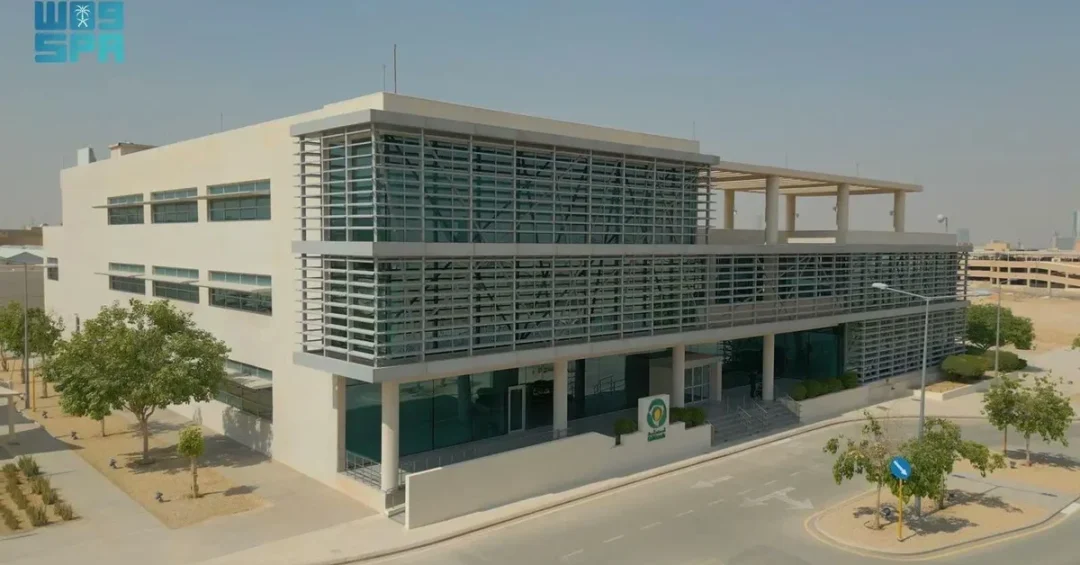
The National Research and Development Center for Sustainable Agriculture (Estidamah) showcased its latest research and technological innovations at the Saudi Agriculture Exhibition, held at the Riyadh International Exhibition and Convention Center from October 21 to 24, 2024. The center’s participation, announced by its Acting Director General Khalid Al Rohily, underscores Saudi Arabia’s commitment to advancing sustainable agriculture and achieving food security in line with Vision 2030. The exhibition served as a platform for Estidamah to engage with farmers, agricultural companies, and researchers, facilitating knowledge transfer and the adoption of cutting-edge technologies.
Estidamah’s involvement in the exhibition is part of its broader mission to develop and promote sustainable agricultural practices across the Kingdom. By signing several memorandums of understanding (MoUs) with local and international companies, the center aims to accelerate the application of research findings and foster innovation in the agricultural sector. These collaborations are expected to enhance productivity, optimize resource use, and contribute to the sustainability of Saudi Arabia’s agricultural systems. The exhibition, a key event in the region’s agricultural calendar, attracted a diverse array of stakeholders, all eager to explore the latest trends and solutions shaping the future of farming.
Context and Background
Why is sustainable agriculture so critical for Saudi Arabia’s future? The Kingdom faces significant challenges in agriculture, including limited arable land, water scarcity, and a harsh climate. These constraints necessitate innovative approaches to ensure food security and reduce reliance on imports. Estidamah, established in 2017 as a joint initiative between the Ministry of Environment, Water and Agriculture and the King Abdulaziz City for Science and Technology, is at the forefront of addressing these challenges. The center focuses on research and development in controlled-environment agriculture, water management, and renewable energy integration, aiming to create a resilient and sustainable agricultural sector.
The Saudi Agriculture Exhibition, now in its 41st edition, is the largest agricultural trade show in the region. It brings together local and international exhibitors, experts, and policymakers to discuss the latest advancements and forge partnerships. For Estidamah, the exhibition is an ideal venue to demonstrate its research outcomes and connect with potential collaborators. The center’s participation aligns with the National Agriculture Strategy 2030, which seeks to achieve food security, environmental sustainability, and economic diversification. By showcasing its work, Estidamah reinforces its role as a key enabler of the Kingdom’s agricultural transformation.
In recent years, Saudi Arabia has intensified efforts to modernize its agricultural sector through technology and innovation. The government has launched various initiatives to support farmers, encourage investment, and promote sustainable practices. Estidamah’s research in areas such as hydroponics, aeroponics, and vertical farming is particularly relevant, as these methods can significantly reduce water consumption and increase yields. The center’s collaboration with international partners also facilitates the transfer of global best practices, further enhancing the Kingdom’s agricultural capabilities. As the exhibition unfolds, Estidamah’s announcements highlight the tangible progress being made toward a more sustainable and productive agricultural future.
Key Details
What specific agreements did Estidamah sign at the exhibition? During the event, Estidamah signed three strategic MoUs with Nesma Infrastructure and Technology, Mishkat Company, and Living Green Farms. The MoU with Nesma Infrastructure and Technology focuses on controlled-environment agriculture, which involves growing crops in optimized conditions to maximize efficiency and minimize resource use. This partnership aims to develop and implement advanced greenhouse technologies that can thrive in Saudi Arabia’s climate. The collaboration with Mishkat Company is geared toward transferring and applying specialized research findings and implementing training programs for farmers and agricultural professionals. This initiative will help bridge the gap between research and practice, ensuring that innovative techniques reach the field.
The third MoU, with Living Green Farms, covers areas such as tissue culture, aeroponics, and vertical farming. Tissue culture allows for the rapid propagation of disease-free plants, while aeroponics and vertical farming are soil-less cultivation methods that use minimal water and space. These technologies are particularly suited to urban environments and areas with limited arable land. By partnering with Living Green Farms, Estidamah aims to scale up these methods and demonstrate their viability in the Saudi context. Together, these agreements represent a significant step forward in the center’s mission to promote sustainable agriculture through research and collaboration.
Khalid Al Rohily, Acting Director General of Estidamah, emphasized the importance of these partnerships in driving innovation. He noted that the exhibition provides a unique opportunity to engage with stakeholders and showcase the center’s achievements. Al Rohily also highlighted the role of Estidamah in fostering a culture of research and development within the agricultural sector. The MoUs are expected to yield practical solutions that can be adopted by farmers and companies, leading to improved productivity and sustainability. As part of its participation, Estidamah also displayed its latest research projects and technological prototypes, attracting considerable interest from visitors and exhibitors alike.
International and Regional Impact
How do these developments position Saudi Arabia on the global agricultural stage? The partnerships forged at the exhibition not only benefit the Kingdom but also contribute to regional and international efforts to achieve sustainable development goals. By collaborating with international companies, Estidamah gains access to cutting-edge technologies and expertise, while also sharing its own research findings. This exchange strengthens Saudi Arabia’s role as a leader in agricultural innovation and enhances its ability to address shared challenges such as climate change and water scarcity. The exhibition itself serves as a hub for knowledge exchange, attracting participants from across the Middle East and beyond.
Moreover, Saudi Arabia’s advancements in sustainable agriculture have implications for global food security. As the world population grows and arable land diminishes, innovative farming methods are essential. The technologies promoted by Estidamah, such as vertical farming and aeroponics, offer scalable solutions that can be adapted to various environments. By exporting these technologies and knowledge, Saudi Arabia can contribute to global efforts to ensure food security. The Kingdom’s investment in agricultural research and development also aligns with its broader economic diversification goals, reducing dependence on oil and creating new opportunities for growth. Through such initiatives, Saudi Arabia is positioning itself as a key player in the global agricultural landscape.
Economic and Strategic Significance
What economic benefits can be expected from these agricultural innovations? The adoption of sustainable agricultural technologies can lead to increased crop yields, reduced water and energy consumption, and lower production costs. For Saudi Arabia, this translates into greater food self-sufficiency, reduced import bills, and a more resilient economy. The agricultural sector also offers opportunities for entrepreneurship and job creation, particularly for youth and women. By supporting research and development, Estidamah is helping to build a knowledge-based economy that leverages innovation to drive growth. The MoUs signed at the exhibition are expected to catalyze investment in agricultural technology and infrastructure, further stimulating economic activity.
Strategically, sustainable agriculture is vital for national security. Reliance on food imports exposes the Kingdom to global market fluctuations and supply chain disruptions. By enhancing domestic production, Saudi Arabia can mitigate these risks and ensure a stable food supply. Estidamah’s work in controlled-environment agriculture and water-efficient farming methods directly supports this objective. Additionally, the center’s collaborations with private sector partners facilitate the commercialization of research outcomes, ensuring that innovations reach the market and benefit farmers. The exhibition serves as a catalyst for these efforts, bringing together key stakeholders to align strategies and resources. As a result, Saudi Arabia is making significant strides toward a sustainable and secure agricultural future.
Vision 2030 Alignment
How does Estidamah’s work align with Vision 2030? Vision 2030 aims to diversify the economy, improve quality of life, and achieve sustainable development. Agriculture plays a crucial role in these goals, particularly in ensuring food security and environmental sustainability. Estidamah’s research and partnerships contribute directly to the Vision’s objectives by promoting innovative farming practices, enhancing resource efficiency, and fostering economic growth. The center’s focus on controlled-environment agriculture, water management, and renewable energy integration supports the Kingdom’s efforts to build a resilient and sustainable agricultural sector. By empowering farmers with advanced technologies and knowledge, Estidamah is helping to create a vibrant and productive agricultural industry that can thrive in the face of environmental challenges.
Furthermore, Estidamah’s collaborations with local and international companies exemplify the Vision’s emphasis on partnership and knowledge transfer. These MoUs will facilitate the application of research findings, training programs, and the adoption of best practices, ultimately benefiting the entire agricultural value chain. As Saudi Arabia continues to invest in research and development, Estidamah remains at the forefront, driving innovation and sustainability. The center’s participation in the Saudi Agriculture Exhibition is a testament to its commitment to these goals and its role as a key enabler of the Kingdom’s agricultural transformation. Through such efforts, Saudi Arabia is not only securing its food future but also contributing to global sustainability efforts, in line with its leadership role in the region and beyond.
20 Questions
Q1. What is Estidamah and what is its role in Saudi agriculture?
A1. Estidamah is the National Research and Development Center for Sustainable Agriculture, established to advance sustainable farming practices through research and innovation. It supports Saudi Arabia’s goals of food security and environmental sustainability.
Q2. When and where was the Saudi Agriculture Exhibition held?
A2. The exhibition was held at the Riyadh International Exhibition and Convention Center from October 21 to 24, 2024. It is the largest agricultural trade show in the region.
Q3. Who announced Estidamah’s participation in the exhibition?
A3. Khalid Al Rohily, Acting Director General of Estidamah, announced the center’s participation. He highlighted the importance of knowledge transfer and collaboration.
Q4. What are the key objectives of Estidamah’s participation?
A4. Estidamah aims to transfer knowledge, develop research output, and engage with farmers, companies, and researchers to introduce them to the latest technologies and research in sustainable agriculture.
Q5. Which companies did Estidamah sign MoUs with?
A5. Estidamah signed MoUs with Nesma Infrastructure and Technology, Mishkat Company, and Living Green Farms. These agreements cover various aspects of sustainable agriculture.
Q6. What does the MoU with Nesma Infrastructure and Technology focus on?
A6. The MoU focuses on controlled-environment agriculture, which involves growing crops in optimized conditions to maximize efficiency and minimize resource use.
Q7. What is the purpose of the MoU with Mishkat Company?
A7. The MoU aims to transfer and apply specialized research findings and implement training programs for farmers and agricultural professionals.
Q8. What areas does the MoU with Living Green Farms cover?
A8. The MoU covers tissue culture, aeroponics, and vertical farming. These are innovative methods for sustainable crop production.
Q9. What is controlled-environment agriculture?
A9. Controlled-environment agriculture involves growing crops in enclosed structures like greenhouses, where conditions such as temperature, humidity, and light are optimized for plant growth.
Q10. What is aeroponics?
A10. Aeroponics is a soil-less cultivation method where plant roots are suspended in air and misted with nutrient solutions. It uses minimal water and space.
Q11. What is vertical farming?
A11. Vertical farming involves growing crops in stacked layers, often in urban settings. It maximizes space efficiency and reduces water use.
Q12. How does tissue culture benefit agriculture?
A12. Tissue culture allows for the rapid propagation of disease-free plants, ensuring high-quality and consistent crop production.
Q13. Why is sustainable agriculture important for Saudi Arabia?
A13. Sustainable agriculture is crucial due to limited arable land and water scarcity. It ensures food security and reduces reliance on imports.
Q14. How does Estidamah support Vision 2030?
A14. Estidamah supports Vision 2030 by promoting innovative farming practices, enhancing resource efficiency, and fostering economic growth in the agricultural sector.
Q15. What are the economic benefits of sustainable agriculture?
A15. Economic benefits include increased crop yields, reduced water and energy consumption, lower production costs, and greater food self-sufficiency.
Q16. How does the exhibition facilitate international collaboration?
A16. The exhibition brings together local and international exhibitors, experts, and policymakers, enabling knowledge exchange and partnerships.
Q17. What role does research and development play in Estidamah’s work?
A17. Research and development are central to Estidamah’s mission. It develops and promotes innovative technologies and practices for sustainable agriculture.
Q18. How can farmers benefit from Estidamah’s research?
A18. Farmers can benefit through access to advanced technologies, training programs, and best practices that improve productivity and sustainability.
Q19. What is the significance of the MoUs for Saudi agriculture?
A19. The MoUs facilitate the application of research findings, technology transfer, and training, enhancing the sustainability and competitiveness of Saudi agriculture.
Q20. How does Saudi Arabia’s agricultural innovation impact global food security?
A20. Saudi Arabia’s advancements in sustainable agriculture offer scalable solutions that can be adapted globally, contributing to food security and environmental sustainability.
Reader Feedback
We value your thoughts. Please share your feedback on this article.
Your feedback helps us improve our coverage.
Related articles
 IsDB Joins G-24 Meeting on Global Monetary Affairs in Washington
 Saudi Agriculture Exhibition Showcases Global Innovations
 IsDB President Meets IFSB Secretary-General in Washington
 Madinah Dates Season Concludes with Record Visitors and Sales
 AlUla to Showcase Vision, Investment at FII Forum
 IsDB Joins ACG-WBG Talks, Pushes Joint Financing