


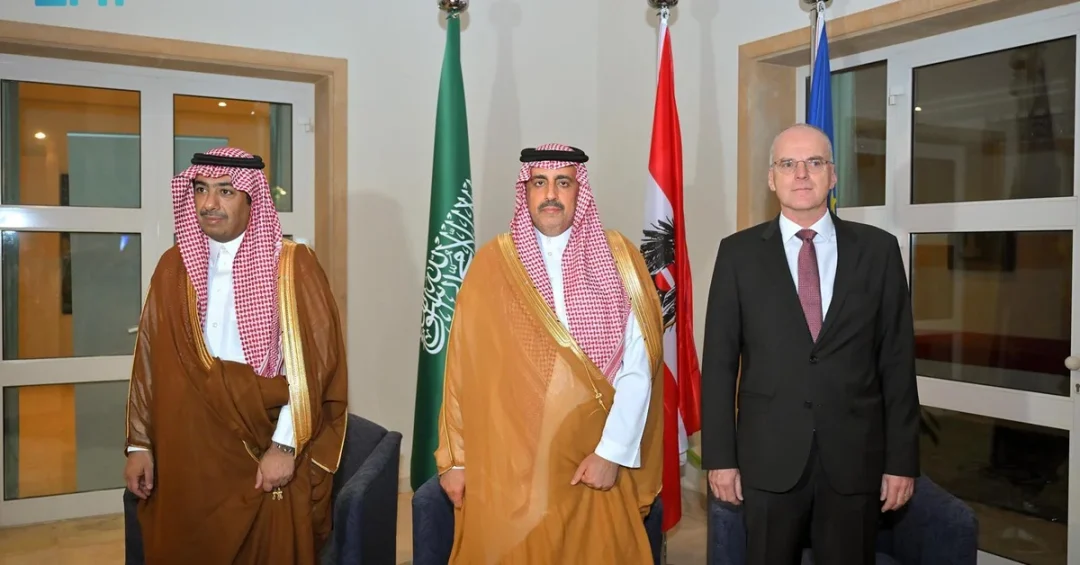
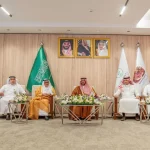
On behalf of Riyadh Region Governor Prince Faisal bin Bandar bin Abdulaziz, Riyadh Region Undersecretary Dr. Faisal bin Abdulaziz Al-Sudairy attended the Austrian embassy’s celebration of the National Day of the Republic of Austria in Riyadh on October 23, 2024. The event, held at the Austrian Embassy in the Saudi capital, underscored the enduring diplomatic ties between the Kingdom of Saudi Arabia and Austria. Dr. Al-Sudairy was received upon arrival by Austrian Ambassador to the Kingdom Dr. Oskar Wüstinger, along with several embassy staff members. The celebration also drew several accredited diplomats in the Kingdom, reflecting the broad international interest in Austria’s national day and the importance of Riyadh as a diplomatic hub.
How does a national day celebration at an embassy in Riyadh signal the deepening of bilateral relations between two nations? The presence of a high-ranking Saudi official at the Austrian National Day event is more than a ceremonial gesture; it reflects the Kingdom’s commitment to maintaining strong diplomatic channels with European partners. The event, reported by the Saudi Press Agency, highlights the regular engagement between Saudi Arabia and Austria across diplomatic, economic, and cultural spheres. Such occasions also provide a platform for discussing shared interests and exploring new avenues for cooperation, in line with Saudi Arabia’s Vision 2030 objectives to expand international partnerships.
Context and Background
What is the significance of Austria’s National Day, and why does it resonate in Riyadh? Austria’s National Day, celebrated on October 26, commemorates the country’s declaration of permanent neutrality in 1955. However, the Austrian Embassy in Riyadh chose to host the celebration on October 23, 2024, allowing diplomats and guests to mark the occasion in the Saudi capital. The event brought together members of the diplomatic corps, Saudi officials, and representatives of the Austrian community in the Kingdom. Such gatherings are a staple of Riyadh’s diplomatic calendar, reflecting the city’s status as a center for international dialogue and cooperation.
The relationship between Saudi Arabia and Austria has steadily developed over the years, rooted in mutual respect and shared interests in stability, trade, and cultural exchange. Austria, as a member of the European Union, serves as a bridge between the Kingdom and Europe, while Saudi Arabia plays a pivotal role in the Middle East and the broader Islamic world. The attendance of Dr. Al-Sudairy at the Austrian National Day celebration is a testament to the regular high-level interactions that characterize Saudi-Austrian relations. It also aligns with Saudi Arabia’s broader strategy of engaging with European nations to foster economic diversification and technological collaboration, key pillars of Vision 2030.
How do these diplomatic interactions translate into tangible benefits for both nations? Beyond the ceremonial aspects, events like these often facilitate discussions on trade, investment, and cultural exchange. Austria is known for its expertise in renewable energy, healthcare, and advanced manufacturing, areas where Saudi Arabia seeks to develop capabilities as part of its economic transformation. Conversely, Saudi Arabia offers a growing market and investment opportunities for Austrian companies. The presence of accredited diplomats from various countries at the event also underscores the multilateral nature of Riyadh’s diplomatic scene, where bilateral and multilateral engagements frequently intersect.
Key Details
What were the key elements of the Austrian National Day celebration in Riyadh? The event was held at the Austrian Embassy, with Ambassador Dr. Oskar Wüstinger welcoming Dr. Faisal bin Abdulaziz Al-Sudairy and other guests. Dr. Al-Sudairy attended on behalf of Prince Faisal bin Bandar bin Abdulaziz, the Governor of Riyadh Region, highlighting the Saudi leadership’s attention to maintaining strong ties with Austria. The celebration included a reception where guests had the opportunity to engage in discussions on bilateral cooperation. Several accredited diplomats in the Kingdom were also present, reflecting the wide diplomatic representation in Riyadh.
The Austrian Embassy in Riyadh has been active in promoting cultural and economic exchanges between the two countries. For instance, Austrian companies have participated in Saudi trade fairs and investment forums, while Saudi students have pursued higher education in Austrian universities. The National Day event served as a reminder of these ongoing connections and a chance to explore new collaborative projects. The Saudi Press Agency reported that the event was attended by several diplomats, indicating the respect and recognition Austria commands within the diplomatic community in Riyadh. Such gatherings also offer an informal setting for diplomats to discuss regional and global issues, from energy security to climate change.
Why is the participation of a Saudi official at such events important? It demonstrates Saudi Arabia’s proactive approach to diplomacy under the leadership of the Custodian of the Two Holy Mosques, King Salman bin Abdulaziz Al Saud, and His Royal Highness Crown Prince Mohammed bin Salman bin Abdulaziz Al Saud. The Kingdom values its relationships with all nations and seeks to build bridges of cooperation. Dr. Al-Sudairy’s presence at the Austrian National Day celebration is a clear signal that Saudi Arabia appreciates Austria’s friendship and is committed to nurturing it further. This aligns with the Kingdom’s foreign policy objectives of promoting peace, stability, and prosperity regionally and globally.
International and Regional Impact
How does Saudi Arabia’s engagement with Austria fit into the broader regional and international landscape? The Kingdom’s diplomatic outreach to European nations is part of a comprehensive strategy to diversify alliances and strengthen its global standing. Austria, with its neutral status and active role in international organizations, is a valuable partner in this regard. The celebration in Riyadh also reflects the city’s growing importance as a diplomatic capital, where embassies from around the world host events that contribute to cross-cultural understanding. In a region often characterized by tension, such positive interactions highlight Saudi Arabia’s role as a stabilizing force and a promoter of dialogue.
Moreover, the event underscores the European Union’s interest in maintaining robust relations with Saudi Arabia. Austria, as an EU member, can serve as a conduit for European engagement with the Kingdom. The presence of multiple diplomats at the Austrian National Day celebration indicates that Riyadh remains a key posting for international diplomats. It also provides an opportunity for Saudi Arabia to showcase its progress under Vision 2030, from economic reforms to social liberalization, to an influential European audience. By attending, Dr. Al-Sudairy helped reinforce the message that Saudi Arabia is open for business and committed to international cooperation.
Economic and Strategic Significance
What economic and strategic opportunities does the Saudi-Austrian relationship hold? Trade between Saudi Arabia and Austria has been modest but has potential for growth. Austrian exports to Saudi Arabia include machinery, pharmaceuticals, and luxury goods, while Saudi Arabia exports oil and petrochemical products to Austria. There is room to expand cooperation in renewable energy, tourism, and technology transfer. Austrian firms are known for their innovation in green hydrogen, sustainable construction, and smart city solutions—areas where Saudi Arabia is investing heavily as part of Vision 2030. The National Day event provided a networking platform for business leaders and officials to discuss such opportunities.
Strategically, Austria’s neutrality and its role in hosting international organizations like the United Nations and OPEC make it a valuable interlocutor for Saudi Arabia on global issues. The Kingdom’s participation in OPEC and its influence on energy markets align with Austria’s interest in stable energy supplies. Furthermore, cultural diplomacy, exemplified by events like the National Day celebration, fosters people-to-people ties that underpin economic and political relations. As Saudi Arabia continues its transformation, partnerships with countries like Austria will be instrumental in achieving the goals of Vision 2030, from economic diversification to enhanced international engagement.
Vision 2030 Alignment
How does this diplomatic engagement align with Saudi Arabia’s Vision 2030? Vision 2030 aims to transform the Kingdom into a global investment powerhouse and a hub for international business and cultural exchange. Strengthening ties with Austria and other European nations supports this vision by opening doors to knowledge transfer, investment, and tourism. The presence of Saudi officials at events like the Austrian National Day celebration demonstrates the Kingdom’s active diplomacy and its commitment to building a network of partners who can contribute to its development. It also reflects the social and cultural openness that Vision 2030 promotes, as Saudi Arabia welcomes international engagement and fosters mutual understanding.
In conclusion, the attendance of Riyadh Region Undersecretary Dr. Faisal bin Abdulaziz Al-Sudairy at the Austrian National Day celebration is a small but meaningful example of Saudi Arabia’s dynamic foreign policy. It highlights the Kingdom’s respect for its international partners and its eagerness to collaborate on shared goals. As Saudi Arabia continues to advance under Vision 2030, such diplomatic interactions will play a crucial role in shaping its global image and securing its place as a leader in the region and beyond. The event also serves as a reminder that in today’s interconnected world, diplomacy is not just about governments but about building bridges between peoples and cultures.
20 Questions
Q1. What event did the Riyadh Region Undersecretary attend?
A1. Dr. Faisal bin Abdulaziz Al-Sudairy attended the Austrian embassy’s celebration of the National Day of the Republic of Austria in Riyadh on October 23, 2024.
Q2. Who did Dr. Al-Sudairy represent at the event?
A2. He attended on behalf of Riyadh Region Governor Prince Faisal bin Bandar bin Abdulaziz, demonstrating the Saudi leadership’s engagement with international partners.
Q3. Who received Dr. Al-Sudairy upon his arrival?
A3. Austrian Ambassador to the Kingdom Dr. Oskar Wüstinger received him, along with several embassy staff members, highlighting the warm reception extended to Saudi officials.
Q4. When is Austria’s National Day officially celebrated?
A4. Austria’s National Day is celebrated on October 26, commemorating the country’s declaration of permanent neutrality in 1955. The embassy in Riyadh hosted the event on October 23, 2024.
Q5. Who else attended the Austrian National Day celebration?
A5. Several accredited diplomats in the Kingdom attended the event, reflecting the broad international representation in Riyadh and the respect for Austria within the diplomatic community.
Q6. What does the attendance of a Saudi official signify?
A6. It signifies Saudi Arabia’s commitment to maintaining strong diplomatic ties with Austria and other European nations, in line with the Kingdom’s foreign policy objectives and Vision 2030.
Q7. How does this event reflect Saudi Arabia’s diplomatic approach?
A7. It reflects Saudi Arabia’s proactive and open diplomatic approach, valuing relationships with all nations and promoting international cooperation and dialogue.
Q8. What are the key areas of Saudi-Austrian cooperation?
A8. Key areas include trade, investment, renewable energy, healthcare, advanced manufacturing, and cultural exchange, with potential for growth in green hydrogen and smart city solutions.
Q9. How does Austria’s neutrality benefit its relations with Saudi Arabia?
A9. Austria’s neutrality and its role in hosting international organizations make it a valuable interlocutor for Saudi Arabia on global issues, including energy stability and multilateral diplomacy.
Q10. What is the significance of Riyadh as a diplomatic hub?
A10. Riyadh hosts numerous embassies and international events, serving as a center for diplomatic dialogue and cooperation, which enhances Saudi Arabia’s global standing and regional influence.
Q11. How does this event align with Vision 2030?
A11. It aligns with Vision 2030 by promoting international partnerships, economic diversification, and cultural openness, which are essential for Saudi Arabia’s transformation into a global investment powerhouse.
Q12. What economic opportunities exist between Saudi Arabia and Austria?
A12. Opportunities exist in renewable energy, technology transfer, tourism, and trade of machinery, pharmaceuticals, and petrochemical products, with potential for increased investment and joint ventures.
Q13. Who is Prince Faisal bin Bandar bin Abdulaziz?
A13. He is the Governor of Riyadh Region, a senior Saudi official who plays a key role in the administration and development of the capital and its diplomatic engagements.
Q14. What role does the Saudi Press Agency play in reporting such events?
A14. The Saudi Press Agency is the official news agency of Saudi Arabia, providing accurate and timely coverage of official events, thereby ensuring transparency and public awareness.
Q15. How do national day celebrations foster diplomacy?
A15. They provide informal settings for diplomats and officials to network, discuss bilateral issues, and strengthen personal relationships, which are essential for effective diplomacy.
Q16. What is the history of Saudi-Austrian relations?
A16. Saudi-Austrian relations have been characterized by mutual respect and cooperation, with regular high-level exchanges and collaboration in international forums, dating back several decades.
Q17. What cultural exchanges occur between Saudi Arabia and Austria?
A17. Cultural exchanges include Saudi students studying in Austria, Austrian participation in Saudi cultural festivals, and collaborative art and heritage projects that promote mutual understanding.
Q18. How does Saudi Arabia benefit from European partnerships?
A18. European partnerships provide access to technology, investment, and expertise, supporting Saudi Arabia’s economic diversification and helping achieve Vision 2030 goals.
Q19. What message does Dr. Al-Sudairy’s attendance send to the international community?
A19. It sends a message that Saudi Arabia is open, engaged, and committed to international cooperation, reinforcing its role as a responsible global player and a promoter of peace and stability.
Q20. What future steps can be expected in Saudi-Austrian relations?
A20. Future steps may include increased trade delegations, joint investment projects, and cultural exchanges, as both nations seek to deepen ties in line with their respective strategic interests and Vision 2030.
Reader Feedback
We value your thoughts. Please share your feedback on this article.
Your feedback helps us improve our coverage.
Related articles
 Saudi Industry Ministry Showcases Initiatives at Riyadh MIPF
 Shura Council Human Rights Committee Meets Dutch Ambassador
 Crown Prince Congratulates Vietnam’s New President
 Al-Rabeeah Advocates for Integrated Humanitarian Aid at MIPF 2024
 Prince Faisal bin Fahd bin Muqrin Visits NCVC to Discuss Hail Initiatives
 OIC Condemns Terrorist Attack in Ankara