


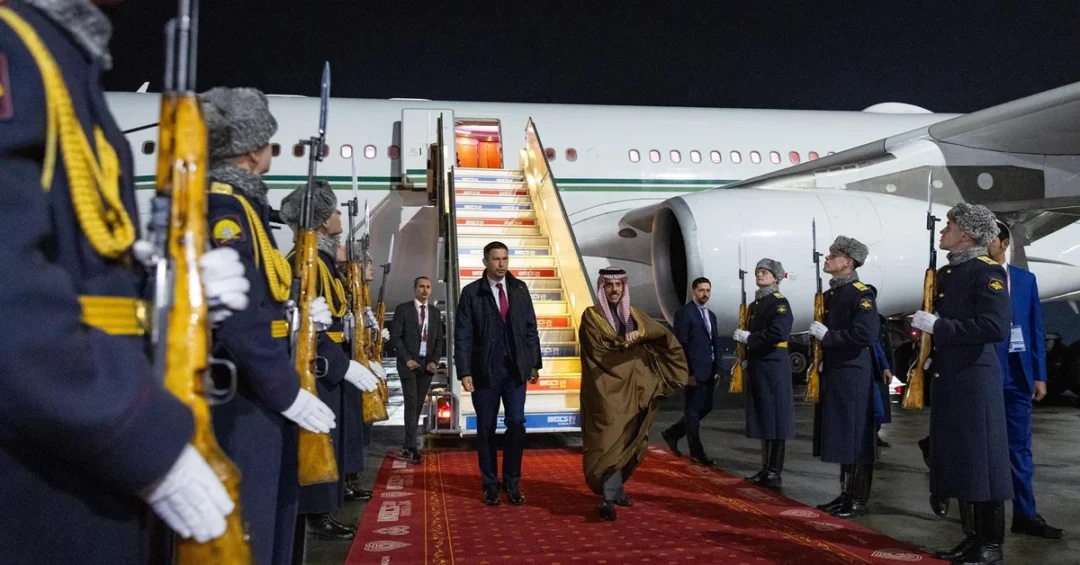
Saudi Arabia’s Minister of Foreign Affairs, Prince Faisal bin Farhan bin Abdullah, arrived in the Russian city of Kazan on October 24, 2024, to lead the Kingdom’s delegation at the 2024 BRICS Plus Summit, representing Custodian of the Two Holy Mosques King Salman bin Abdulaziz Al Saud. The visit, confirmed by the Saudi Press Agency (SPA), underscores the Kingdom’s growing role in multilateral diplomacy and its commitment to fostering global cooperation under the leadership of King Salman and Crown Prince Mohammed bin Salman. Upon arrival at Kazan International Airport, Prince Faisal was received with an official ceremony, highlighting the respect and importance accorded to Saudi Arabia on the international stage. What does this high-level participation signify for the future of global governance and Saudi Arabia’s strategic partnerships?
The BRICS Plus Summit, an expanded format of the original BRICS grouping (Brazil, Russia, India, China, and South Africa), brings together emerging economies and invited nations to discuss pressing global issues, from economic development to security and sustainability. Saudi Arabia’s attendance as an invited country reflects its pivotal position in the global economy and its proactive approach to shaping a multipolar world order. As the world’s largest oil exporter and a key player in the G20, the Kingdom’s voice resonates far beyond its borders, advocating for stability, prosperity, and inclusive growth. How might Saudi Arabia’s involvement redefine the dynamics of international alliances and economic cooperation?
Context and Background
The BRICS Plus Summit represents a significant evolution in global diplomacy, expanding the traditional BRICS bloc to include additional invited countries like Saudi Arabia, which enhances the group’s representativeness and influence. Established in 2009, BRICS initially focused on economic cooperation among its founding members, but has since broadened its scope to address geopolitical challenges, climate change, and technological innovation. Saudi Arabia’s invitation to join the 2024 summit in Kazan is a testament to its rising stature as a bridge between developed and developing nations. What historical precedents have paved the way for Saudi Arabia’s active participation in such multilateral forums?
Saudi Arabia has long been a champion of multilateralism, leveraging its economic strength and diplomatic acumen to mediate conflicts and promote dialogue. Under Vision 2030, the Kingdom’s transformative blueprint for economic diversification and social reform, international engagement is a cornerstone of its strategy to reduce oil dependence and foster knowledge-based industries. The BRICS Plus Summit provides a platform for Saudi Arabia to advocate for issues critical to the Global South, such as sustainable development and equitable trade. How does this align with the Kingdom’s broader foreign policy objectives and its role as a stabilizing force in the Middle East?
Prince Faisal bin Farhan’s leadership at the summit is particularly noteworthy, given his extensive experience in diplomacy and his role in advancing Saudi Arabia’s interests abroad. His presence in Kazan signals the Kingdom’s readiness to collaborate on global challenges, from energy security to digital transformation. As an invited country, Saudi Arabia is not just a participant but a potential catalyst for innovation within the BRICS framework, offering insights from its own rapid modernization journey. What can other nations learn from Saudi Arabia’s successful integration of tradition and progress?
Key Details
The 2024 BRICS Plus Summit in Kazan, scheduled from October 22 to 24, gathers leaders and representatives from over 30 countries to deliberate on themes including economic resilience, food and energy security, and multilateral cooperation. Prince Faisal bin Farhan’s arrival on October 24 was marked by an official reception at Kazan International Airport, where he was welcomed by Russian officials, reflecting the strong bilateral ties between Saudi Arabia and Russia. The summit’s agenda includes sessions on reforming global financial institutions and enhancing trade among member states, areas where Saudi Arabia’s expertise in energy markets and investment could prove invaluable. How will the outcomes of this summit influence future economic policies and partnerships?
Saudi Arabia’s delegation is expected to engage in high-level discussions on leveraging technology for sustainable development and addressing climate change, aligning with the Kingdom’s environmental initiatives such as the Saudi Green Initiative. The participation underscores Saudi Arabia’s commitment to the principles of the BRICS Plus framework, which emphasizes mutual respect, sovereign equality, and shared prosperity. By heading the delegation, Prince Faisal reinforces the Kingdom’s diplomatic leadership and its ability to navigate complex international landscapes. What specific agreements or collaborations might emerge from these deliberations to benefit both Saudi Arabia and the broader global community?
The summit also serves as a venue for Saudi Arabia to strengthen ties with other invited countries, potentially paving the way for new bilateral agreements in trade, technology, and culture. The Kingdom’s active role in BRICS Plus complements its existing memberships in organizations like the G20 and the Organization of Islamic Cooperation (OIC), positioning it as a versatile and influential global actor. As global power dynamics shift, Saudi Arabia’s strategic engagements are designed to secure its interests while contributing to international peace and stability. How does this participation reflect the Kingdom’s adaptive diplomacy in a rapidly changing world?
International and Regional Impact
Saudi Arabia’s involvement in the BRICS Plus Summit has significant implications for regional stability and international relations, particularly in the Middle East. By engaging with BRICS nations, the Kingdom can help bridge divides between Western and Eastern powers, fostering dialogue on contentious issues like energy transitions and security cooperation. This aligns with Saudi Arabia’s vision of a multipolar world where diverse voices are heard and respected. What role can Saudi Arabia play in mediating global tensions and promoting peaceful coexistence?
Regionally, the summit provides an opportunity for Saudi Arabia to advocate for Arab and Islamic causes, ensuring that the perspectives of the Middle East are integrated into global decision-making processes. The Kingdom’s participation also strengthens its ties with Russia, a key energy partner, and other BRICS members like China and India, with whom it shares robust trade relationships. These connections are vital for Saudi Arabia’s economic diversification efforts and its goal of becoming a global investment hub. How will these strengthened partnerships influence regional dynamics and contribute to a more balanced international order?
Economic and Strategic Significance
Economically, Saudi Arabia’s presence at the BRICS Plus Summit highlights its pivotal role in global energy markets and its growing influence in finance and technology. The Kingdom’s Vision 2030 reforms have attracted significant foreign investment, and participation in such forums can further enhance its attractiveness as a business destination. Discussions at the summit on trade facilitation and investment protection could lead to tangible benefits for Saudi Arabia, such as increased market access for its non-oil exports. What economic opportunities might arise from deeper integration with BRICS Plus countries?
Strategically, the summit allows Saudi Arabia to showcase its leadership in addressing global challenges, from climate change to digital innovation. The Kingdom’s investments in renewable energy and smart cities, such as NEOM, position it as a model for sustainable development, which resonates with BRICS Plus goals. By aligning with like-minded nations, Saudi Arabia can amplify its voice on issues like food security and healthcare, areas where it has made substantial progress. How does this strategic alignment enhance the Kingdom’s global standing and its ability to shape future international agendas?
Vision 2030 Alignment
Saudi Arabia’s participation in the BRICS Plus Summit is a direct reflection of Vision 2030’s objectives to diversify the economy, empower youth, and enhance international cooperation. The Kingdom’s diplomatic engagements are designed to create a conducive environment for investment and innovation, driving progress toward a knowledge-based society. By taking a leading role in multilateral forums, Saudi Arabia demonstrates its commitment to global stability and prosperity, values that are central to its long-term vision. How will these efforts contribute to the Kingdom’s goal of becoming a top 15 global economy?
In conclusion, Prince Faisal bin Farhan’s leadership at the BRICS Plus Summit exemplifies Saudi Arabia’s proactive and forward-looking foreign policy, rooted in the principles of mutual respect and shared growth. As the Kingdom continues to expand its global footprint, its involvement in such high-level gatherings will be instrumental in shaping a more inclusive and sustainable world. Under the guidance of its leadership, Saudi Arabia remains dedicated to fostering partnerships that benefit both its people and the international community. What legacy will Saudi Arabia build as a bridge-builder in the 21st century?
20 Questions
Q1. Who is leading Saudi Arabia’s delegation at the 2024 BRICS Plus Summit?
A1. Saudi Arabia’s delegation at the 2024 BRICS Plus Summit is led by Minister of Foreign Affairs Prince Faisal bin Farhan bin Abdullah, representing Custodian of the Two Holy Mosques King Salman bin Abdulaziz Al Saud.
Q2. Where and when did the Saudi Foreign Minister arrive for the summit?
A2. Prince Faisal bin Farhan arrived in Kazan, Russia, on October 24, 2024, to participate in the BRICS Plus Summit, as reported by the Saudi Press Agency.
Q3. What is the BRICS Plus Summit?
A3. The BRICS Plus Summit is an expanded meeting of the BRICS nations—Brazil, Russia, India, China, and South Africa—along with invited countries like Saudi Arabia, to discuss global economic and political issues.
Q4. Why is Saudi Arabia invited to the BRICS Plus Summit?
A4. Saudi Arabia is invited due to its significant global economic influence, role in energy markets, and its active engagement in multilateral diplomacy, aligning with the summit’s goals of cooperation and development.
Q5. What was the reception like for Prince Faisal upon arrival?
A5. Upon arrival at Kazan International Airport, Prince Faisal was greeted with an official reception ceremony, reflecting the strong bilateral ties and respect between Saudi Arabia and Russia.
Q6. What are the key topics on the BRICS Plus Summit agenda?
A6. The summit focuses on economic resilience, food and energy security, multilateral cooperation, and reforming global financial institutions, among other pressing international issues.
Q7. How does Saudi Arabia’s participation benefit the Kingdom?
A7. Participation allows Saudi Arabia to strengthen diplomatic ties, attract investment, and advocate for issues important to the Middle East, supporting its Vision 2030 economic diversification goals.
Q8. What role does Vision 2030 play in Saudi Arabia’s international engagements?
A8. Vision 2030 drives Saudi Arabia’s efforts to diversify its economy and enhance global cooperation, making forums like BRICS Plus essential for showcasing its progress and building partnerships.
Q9. How does the summit impact regional stability?
A9. By engaging with BRICS nations, Saudi Arabia helps bridge global divides and promote dialogue, contributing to stability in the Middle East and beyond through cooperative solutions.
Q10. What economic opportunities arise from the summit for Saudi Arabia?
A10. The summit offers chances to expand trade, attract foreign investment, and collaborate on technology and energy projects, boosting Saudi Arabia’s non-oil sectors and economic growth.
Q11. Who else is attending the BRICS Plus Summit?
A11. Leaders and representatives from over 30 countries, including BRICS members and other invited nations, are attending to discuss shared challenges and opportunities in a multipolar world.
Q12. How does Saudi Arabia’s attendance reflect its foreign policy?
A12. It demonstrates Saudi Arabia’s commitment to multilateralism, proactive diplomacy, and building bridges between developed and developing nations for mutual prosperity and peace.
Q13. What is the significance of Prince Faisal leading the delegation?
A13. Prince Faisal’s leadership underscores Saudi Arabia’s high-level commitment to the summit and his role in advancing the Kingdom’s interests and global partnerships effectively.
Q14. How does the summit align with Saudi Arabia’s environmental goals?
A14. Discussions on sustainability and climate change align with initiatives like the Saudi Green Initiative, showcasing the Kingdom’s efforts in renewable energy and environmental protection.
Q15. What bilateral meetings might occur during the summit?
A15. Prince Faisal is expected to hold meetings with counterparts from BRICS nations to discuss trade, security, and cooperation, enhancing Saudi Arabia’s bilateral relations.
Q16. How does BRICS Plus differ from other international forums?
A16. BRICS Plus emphasizes emerging economies’ collaboration and South-South cooperation, offering a platform distinct from Western-dominated groups like the G7.
Q17. What are the expected outcomes of the summit?
A17. Outcomes may include joint declarations on economic cooperation, agreements on trade and technology, and strengthened multilateral frameworks for addressing global challenges.
Q18. How does Saudi Arabia’s participation affect its relations with BRICS members?
A18. It deepens ties with countries like Russia, China, and India, fostering economic and strategic partnerships that support Saudi Arabia’s diversification and global influence.
Q19. What message does Saudi Arabia’s involvement send to the world?
A19. It signals Saudi Arabia’s readiness to engage globally, promote stability, and contribute to a multipolar world order based on mutual respect and shared development goals.
Q20. How does this summit contribute to Saudi Arabia’s long-term vision?
A20. By participating, Saudi Arabia advances Vision 2030 objectives of economic diversification, international cooperation, and positioning itself as a leader in global affairs and sustainable development.
Reader Feedback
We value your thoughts. Please share your feedback on this article.
Your feedback helps us improve our coverage.
Related articles
 Guinean PM Meets KSrelief Chief in Riyadh
 Guinean PM Meets KSrelief Chief in Riyadh
 Ministry of Islamic Affairs Holds Meeting for Preachers and Imams in Bangladesh
 Saudi Official Meets Chinese Consul General in Jeddah
 Saudi Innovation Authority Hosts National Semiconductor Hub Forum
 OIC Symposium Advances Islamic Court of Justice