


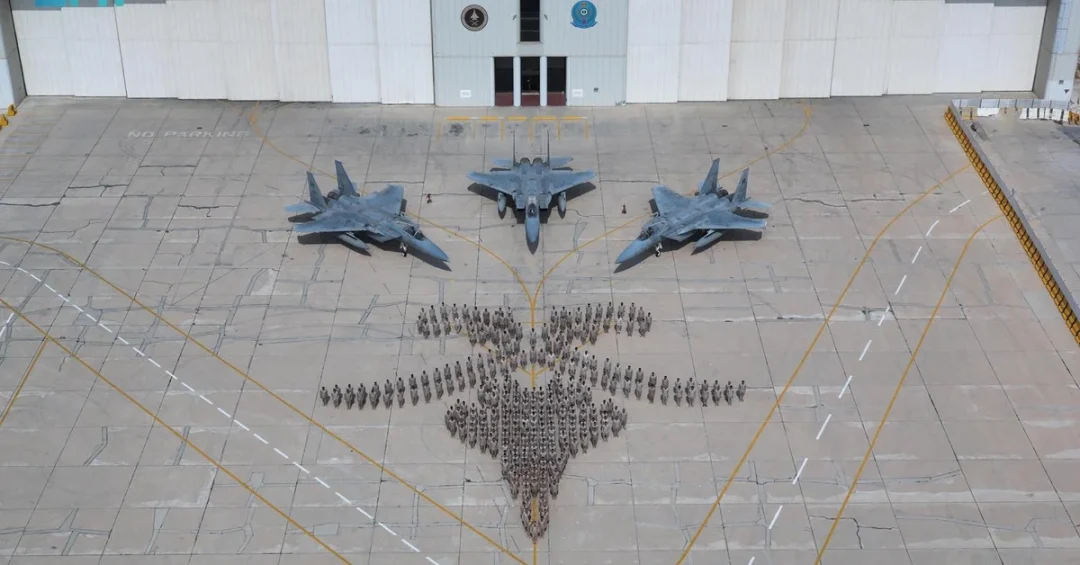
The Royal Saudi Air Force (RSAF) is participating in the Missile Air War Center combined air exercise, currently underway at Al-Dhafra Air Base in the United Arab Emirates, according to an official announcement released via the Saudi Press Agency (SPA). The exercise, which brings together air forces from several brotherly and friendly nations, is designed to strengthen international military cooperation, exchange expertise in planning and execution within a simulated war environment, and assess the operational capabilities of participating countries in utilizing modern weapons systems.
The participation underscores Saudi Arabia’s continued commitment to regional security, multinational defense collaboration, and the modernization of its armed forces under the strategic direction of the Kingdom’s leadership. Commander of the Royal Saudi Air Force Lieutenant General Turki bin Bandar bin Abdulaziz personally bid farewell to the participating RSAF group upon its departure from King Abdulaziz Air Base in the Eastern Sector, inspecting the preparations of the air forces and reaffirming the importance of such exercises in enhancing the Kingdom’s defense readiness. The exercise reflects the deep and enduring military ties between Saudi Arabia and its regional allies.
Context and Background
Why does multinational air combat training matter in today’s rapidly evolving security environment? The Missile Air War Center exercise represents a critical component of the Royal Saudi Air Force’s ongoing training and readiness program, designed to ensure that Saudi pilots, technical crews, and support personnel are prepared to meet the complex demands of modern aerial warfare. Hosted at Al-Dhafra Air Base in the United Arab Emirates, the exercise is a collaborative effort that draws on the expertise of multiple air forces, creating a realistic and challenging training environment that cannot be replicated in national exercises alone.
The Kingdom of Saudi Arabia has long prioritized the development of a highly capable and professional military, and the Royal Saudi Air Force is widely recognized as one of the most advanced air forces in the region. Participation in exercises such as this one aligns with the Kingdom’s broader defense strategy, which emphasizes interoperability with allied nations, the adoption of cutting-edge military technology, and the continuous refinement of operational tactics. The exercise also serves as a platform for Saudi Arabia to demonstrate its leadership in regional security affairs and its commitment to collective defense mechanisms.
The Saudi Press Agency reported that the exercise aims to strengthen international relations with allies from brotherly and friendly countries, exchange military expertise in the field of planning and implementation in a simulated war environment, and assess the capabilities of the participating countries and their progress in utilizing modern weapons. This comprehensive approach to training ensures that all participants benefit from shared knowledge and best practices, ultimately enhancing the collective security posture of the region.
Key Details of the Exercise and Saudi Participation
What specific capabilities does the Royal Saudi Air Force bring to this multinational exercise? According to Commander of the participating Air Force group Lieutenant Colonel Pilot Abdulkarim bin Ali Al-Zahrani, the RSAF is participating with six F-15 CD aircraft. These advanced fighter jets, known for their versatility, range, and combat effectiveness, represent the backbone of the Kingdom’s air superiority capabilities. The F-15 CD is a proven platform that has been continuously upgraded to meet the demands of contemporary aerial combat, and its deployment in this exercise highlights Saudi Arabia’s commitment to operating at the highest levels of military readiness.
Lieutenant Colonel Pilot Al-Zahrani outlined the primary objectives of the participation, which include enhancing operational readiness, gaining experience for air, technical, and support crews, developing expertise in leading air campaigns and missions with participating forces, refining tactics and procedures for air combat methods, and learning about the various air combat doctrines of the participating forces. These objectives reflect a holistic approach to military training that goes beyond mere flying hours, encompassing leadership development, tactical innovation, and cross-cultural military cooperation.
The farewell ceremony at King Abdulaziz Air Base in the Eastern Sector, presided over by Lieutenant General Turki bin Bandar bin Abdulaziz, underscored the high-level attention that the Kingdom’s military leadership devotes to such international engagements. The Commander’s inspection of the participating air forces’ preparations demonstrated the meticulous planning and preparation that precedes every Saudi military deployment, whether in training or operational contexts. Such attention to detail is a hallmark of the Royal Saudi Air Force’s professional culture and its unwavering commitment to excellence.
International and Regional Impact
How does Saudi Arabia’s participation in multinational exercises shape regional security dynamics? The Missile Air War Center exercise at Al-Dhafra Air Base brings together air forces from multiple nations, creating a unique opportunity for dialogue, cooperation, and mutual learning. For Saudi Arabia, participation in such exercises is not merely a training activity but a strategic investment in regional stability and international partnerships. By training alongside allies from brotherly and friendly countries, the Kingdom reinforces its position as a responsible regional power committed to collective security and the peaceful resolution of conflicts.
The exercise also signals the strength of military cooperation between Saudi Arabia and the United Arab Emirates, two nations that share deep historical, cultural, and strategic ties. The hosting of the exercise at Al-Dhafra Air Base reflects the UAE’s own commitment to multinational defense collaboration and its role as a hub for regional security cooperation. For the broader Middle East and North Africa region, such exercises contribute to a climate of stability and deterrence, demonstrating that the region’s air forces are capable, interoperable, and ready to respond to emerging threats.
From an international perspective, Saudi Arabia’s active participation in combined air exercises enhances its reputation as a reliable partner in global security efforts. The Kingdom’s military modernization program, pursued under the guidance of its leadership, is not solely about acquiring advanced hardware but also about building the human capital, tactical expertise, and strategic relationships necessary to address the complex security challenges of the twenty-first century. Exercises like this one are a tangible expression of that comprehensive approach to defense and diplomacy.
Economic and Strategic Significance
What does this exercise reveal about Saudi Arabia’s strategic priorities and its broader economic transformation? The Royal Saudi Air Force’s participation in the Missile Air War Center exercise is a clear indication of the Kingdom’s determination to maintain a robust and modern defense capability, which is essential for protecting its sovereignty, its people, and its economic interests. As Saudi Arabia continues to diversify its economy under Vision 2030, the security of its borders, critical infrastructure, and international partnerships becomes even more important. A strong and well-trained air force is a cornerstone of that security architecture.
The exercise also has implications for the Kingdom’s defense industry and technological development. Exposure to different air combat doctrines, modern weapons systems, and operational procedures allows Saudi military personnel to gain insights that can inform future acquisitions, training programs, and indigenous defense initiatives. The exchange of expertise in planning and implementation in a simulated war environment is directly relevant to the Kingdom’s efforts to build a self-reliant and technologically advanced defense sector, a key objective of Vision 2030’s economic diversification goals.
Furthermore, the multinational nature of the exercise highlights the importance of international cooperation in defense procurement and training. Saudi Arabia’s ability to operate seamlessly alongside allied air forces enhances its attractiveness as a defense partner and opens opportunities for joint ventures, technology transfer, and collaborative research and development. These are not merely military matters; they are components of a broader strategy to strengthen the Kingdom’s economic resilience and its position in global markets for defense and aerospace technology.
Vision 2030 Alignment
How does the Royal Saudi Air Force’s participation in this exercise connect to the Kingdom’s long-term vision for the future? Vision 2030, the comprehensive national transformation plan championed by His Royal Highness Crown Prince Mohammed bin Salman, seeks to build a prosperous, secure, and globally engaged Saudi Arabia. A key pillar of this vision is the development of a strong and capable military that can protect the Kingdom’s interests and contribute to regional and international peace and security. The participation of the Royal Saudi Air Force in the Missile Air War Center exercise is a direct reflection of this pillar in action.
By investing in the training, readiness, and international cooperation of its air force, Saudi Arabia is not only enhancing its defensive capabilities but also reinforcing its role as a stabilizing force in the region. The skills and experience gained by Saudi pilots, technical crews, and support personnel during this exercise will contribute to the Kingdom’s overall military professionalism and its ability to safeguard the nation’s achievements. As Saudi Arabia continues its journey toward a diversified and knowledge-based economy, a secure environment provided by a modern military remains an essential foundation for progress and prosperity.
The exercise also demonstrates the Kingdom’s commitment to working with its allies and partners to address shared security challenges, a principle that is central to Vision 2030’s emphasis on international cooperation and responsible global citizenship. The Royal Saudi Air Force’s participation in this multinational exercise is thus more than a training event; it is a statement of the Kingdom’s enduring resolve to defend its interests, support its allies, and contribute to a stable and peaceful world.
20 Questions
Q1. What is the Missile Air War Center exercise?
A1. The Missile Air War Center exercise is a combined air exercise currently underway at Al-Dhafra Air Base in the United Arab Emirates. It brings together air forces from several brotherly and friendly countries to strengthen international relations and exchange military expertise in a simulated war environment.
Q2. Which Saudi air base did the participating group depart from?
A2. The participating Royal Saudi Air Force group departed from King Abdulaziz Air Base in the Eastern Sector. Commander of the Royal Saudi Air Force Lieutenant General Turki bin Bandar bin Abdulaziz bid farewell to the group upon its departure.
Q3. Who is the Commander of the Royal Saudi Air Force?
A3. The Commander of the Royal Saudi Air Force is Lieutenant General Turki bin Bandar bin Abdulaziz. He personally inspected the preparations of the air forces participating in the exercise and emphasized the importance of such engagements.
Q4. How many aircraft is the Royal Saudi Air Force participating with?
A4. The Royal Saudi Air Force is participating with six F-15 CD aircraft, according to Commander of the participating Air Force group Lieutenant Colonel Pilot Abdulkarim bin Ali Al-Zahrani. These advanced fighter jets represent a key component of the Kingdom’s air superiority capabilities.
Q5. What type of aircraft is the F-15 CD?
A5. The F-15 CD is an advanced fighter jet known for its versatility, range, and combat effectiveness. It is a proven platform that has been continuously upgraded to meet the demands of contemporary aerial combat and forms the backbone of Saudi Arabia’s air superiority capabilities.
Q6. Who is leading the Saudi participating group?
A6. The Saudi participating group is led by Commander Lieutenant Colonel Pilot Abdulkarim bin Ali Al-Zahrani. He affirmed the objectives of the participation, which include enhancing operational readiness and gaining experience for air, technical, and support crews.
Q7. What are the main objectives of Saudi participation?
A7. The objectives include enhancing operational readiness, gaining experience for air, technical, and support crews, developing expertise in leading air campaigns and missions with participating forces, refining tactics and procedures for air combat methods, and learning about various air combat doctrines.
Q8. Where is the exercise taking place?
A8. The exercise is taking place at Al-Dhafra Air Base in the United Arab Emirates. The base serves as a hub for multinational defense collaboration and regional security cooperation, reflecting the UAE’s commitment to collective defense.
Q9. What does the exercise aim to achieve for international relations?
A9. The exercise aims to strengthen international relations with allies from brotherly and friendly countries. It provides a platform for dialogue, cooperation, and mutual learning, reinforcing Saudi Arabia’s position as a responsible regional power committed to collective security.
Q10. How does the exercise assess participating countries?
A10. The exercise assesses the capabilities of participating countries and their progress in utilizing modern weapons. This comprehensive evaluation ensures that all participants benefit from shared knowledge and best practices, enhancing the collective security posture of the region.
Q11. What kind of environment does the exercise simulate?
A11. The exercise simulates a war environment, allowing participating air forces to exchange military expertise in the field of planning and implementation. This realistic training environment cannot be replicated in national exercises alone, making multinational participation essential.
Q12. What experience will Saudi crews gain from the exercise?
A12. Saudi air, technical, and support crews will gain experience in leading air campaigns and missions with participating forces. They will also refine tactics and procedures for air combat methods and learn about the various air combat doctrines of the participating forces.
Q13. How does this exercise benefit the Royal Saudi Air Force’s readiness?
A13. The exercise enhances operational readiness by providing realistic training alongside allied air forces. It ensures that Saudi pilots, technical crews, and support personnel are prepared to meet the complex demands of modern aerial warfare and can operate seamlessly in multinational coalitions.
Q14. What is the significance of the farewell ceremony?
A14. The farewell ceremony, presided over by Lieutenant General Turki bin Bandar bin Abdulaziz, underscores the high-level attention the Kingdom’s military leadership devotes to international engagements. It demonstrates the meticulous planning and preparation that precedes every Saudi military deployment.
Q15. How does this exercise reflect Saudi Arabia’s defense strategy?
A15. The exercise reflects Saudi Arabia’s defense strategy of emphasizing interoperability with allied nations, adopting cutting-edge military technology, and continuously refining operational tactics. It demonstrates the Kingdom’s leadership in regional security affairs and commitment to collective defense mechanisms.
Q16. What role does the UAE play in hosting this exercise?
A16. The UAE hosts the exercise at Al-Dhafra Air Base, reflecting its own commitment to multinational defense collaboration. The hosting underscores the deep historical, cultural, and strategic ties between Saudi Arabia and the UAE, two nations sharing a vision for regional stability.
Q17. How does the exercise contribute to regional stability?
A17. The exercise contributes to regional stability by enhancing the capabilities and interoperability of participating air forces. It creates a climate of deterrence and demonstrates that the region’s air forces are capable, ready, and prepared to respond to emerging threats collectively.
Q18. What economic benefits can Saudi Arabia derive from such exercises?
A18. The exercise provides insights that can inform future acquisitions, training programs, and indigenous defense initiatives. It supports the Kingdom’s efforts to build a self-reliant and technologically advanced defense sector, a key objective of Vision 2030’s economic diversification goals.
Q19. How does this exercise align with Vision 2030?
A19. The exercise aligns with Vision 2030 by contributing to the development of a strong and capable military that protects the Kingdom’s interests and contributes to regional and international peace. It reflects the vision’s emphasis on international cooperation and responsible global citizenship.
Q20. What does this participation say about Saudi Arabia’s global role?
A20. The participation demonstrates Saudi Arabia’s enduring resolve to defend its interests, support its allies, and contribute to a stable and peaceful world. It reinforces the Kingdom’s reputation as a reliable partner in global security efforts and a stabilizing force in the region.
Reader Feedback
We value your thoughts. Please share your feedback on this article.
Your feedback helps us improve our coverage.
Related articles
 GACA Showcases Saudi Aviation Initiatives at ICAN 2024
 KAICIID to Join Women, Peace, Security Talks in Manila
 Saudi Arabia Leads Global Road Connectivity Rankings
 Saudi Defense Minister Arrives in Madrid for Official Visit
 Second Day of Multilateral Industrial Policy Forum Begins in Riyadh
 Spanish and Saudi Defense Ministers Hold Official Talks