


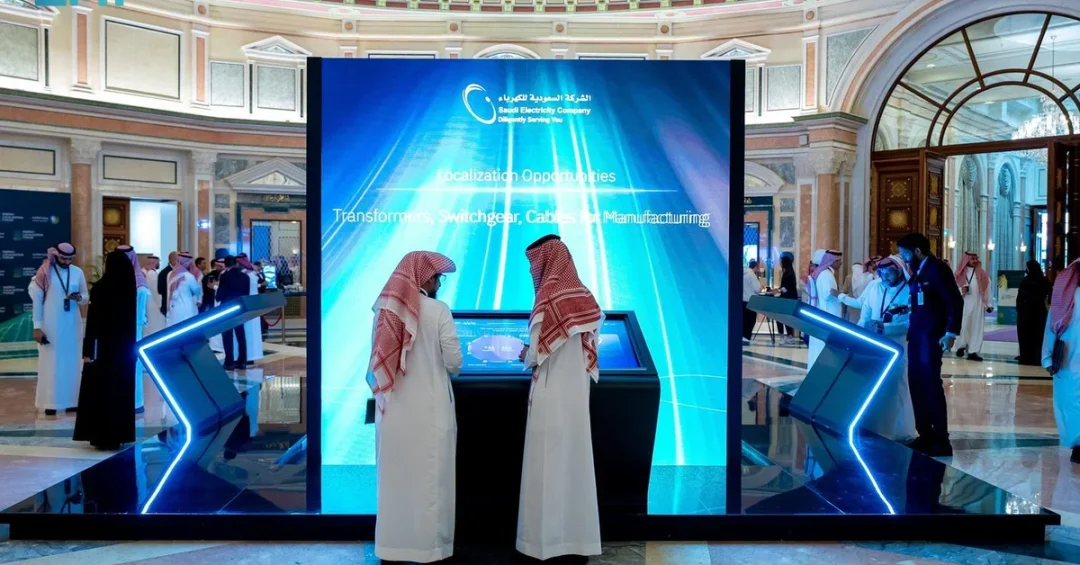
The Saudi Electricity Company (SEC) has concluded its participation as the strategic partner in the Energy Localization Forum, an event organized by the Ministry of Energy in Riyadh that resulted in the signing of 45 agreements and memoranda of understanding valued at more than SAR 54.7 billion. The two-day forum, held under the theme “Resilient Energy: Enabling Energy Sector Capability and Sustainability,” brought together key stakeholders from across the energy sector to advance the localization of energy industries in line with Saudi Vision 2030 objectives.
The agreements represent a significant milestone in Saudi Arabia’s ongoing efforts to strengthen its domestic energy supply chains, reduce reliance on imported components, and build a robust industrial base capable of supporting the Kingdom’s growing electricity demands. SEC’s strategic partnership in the forum underscores the company’s central role in driving the localization agenda, which aims to create sustainable economic growth, generate employment opportunities for Saudi nationals, and position the Kingdom as a global leader in energy sector innovation and manufacturing. Does this not signal a new era of industrial self-sufficiency for the Kingdom’s energy sector?
Context and Background
The Energy Localization Forum, organized by the Ministry of Energy, represents a critical component of Saudi Arabia’s broader strategy to transform its energy sector from a primarily import-dependent model to one characterized by domestic production, technological innovation, and sustainable practices. The forum’s theme, “Resilient Energy: Enabling Energy Sector Capability and Sustainability,” reflects the Kingdom’s recognition that energy security extends beyond mere supply assurance to encompass the entire value chain, from manufacturing and assembly to research and development. Isn’t it remarkable how comprehensive this vision has become?
The Saudi Electricity Company, as the Kingdom’s primary electricity provider, has been at the forefront of these localization efforts. The company’s participation as strategic partner in the forum demonstrates its commitment to advancing the national agenda of industrial localization while simultaneously enhancing the reliability and efficiency of electrical services across the Kingdom. The agreements signed during the forum cover a diverse range of initiatives, including the localization of cable accessories through long-term purchase agreements, the establishment of local factories, and the localization of high- and extra-high-voltage switches.
These initiatives are designed to achieve a 75 percent localization rate of the company’s needs, a target that would significantly reduce the Kingdom’s dependence on foreign suppliers while building domestic manufacturing capabilities. The forum also addressed key energy transmission projects linking the central, western, and southern regions of the Kingdom, projects that will strengthen the stability of the power grid and enhance the reliability of electrical services for millions of residents and businesses. How often does a nation achieve such comprehensive industrial transformation in a single forum?
Key Details and Strategic Agreements
The 45 agreements and memoranda of understanding signed at the forum represent a combined value exceeding SAR 54.7 billion, a figure that underscores the scale and ambition of Saudi Arabia’s energy localization program. These agreements encompass a wide range of activities, from the manufacturing of specialized electrical components to the development of training programs for Saudi engineers and technicians. The localization of cable accessories, for instance, involves establishing local factories capable of producing these critical components, thereby creating jobs, building technical expertise, and ensuring supply chain resilience.
Similarly, the localization of high- and extra-high-voltage switches represents a strategic investment in the Kingdom’s ability to manufacture sophisticated electrical equipment domestically. These switches are essential components of the electricity transmission network, and their local production will reduce lead times, lower costs, and enhance the Kingdom’s capacity to maintain and expand its grid infrastructure. The agreements also include provisions for technology transfer, ensuring that Saudi companies and workers gain access to advanced manufacturing techniques and knowledge.
Eng. Khaled bin Salim AlGhamdi, Acting Chief Executive Officer of Saudi Electricity Company, expressed his pride in SEC’s strategic partnership in this pivotal event. He reaffirmed the company’s commitment to advancing renewable energy and environmental sustainability, stating: “These agreements mark a significant step toward developing local supply chains, boosting industrial investments, and creating opportunities for localizing the electricity sector, ultimately contributing to the sustainable economic growth of the Kingdom’s energy sector.”
The forum also featured panel discussions that explored the transformation of the energy sector and SEC’s localization strategy, including the “Benaa” program. This initiative aims to localize the electricity industry, develop national capabilities, and attract global investors and companies to establish advanced factories in the Kingdom. The program supports the employment and training of national talent and promotes trade balance by increasing Saudi exports. Could there be a more effective way to build a sustainable knowledge economy?
International and Regional Impact
The agreements signed at the Energy Localization Forum carry significant implications for international and regional energy markets. By localizing the production of critical electrical components, Saudi Arabia positions itself as a more self-reliant and resilient player in the global energy landscape. This shift reduces the Kingdom’s vulnerability to supply chain disruptions, which have become increasingly common in recent years due to geopolitical tensions and global economic uncertainties. For international companies, the forum presents opportunities to partner with Saudi firms, establish local operations, and participate in the Kingdom’s rapidly growing energy sector.
Regionally, the localization initiatives reinforce Saudi Arabia’s role as a leader in energy innovation and industrial development. The Kingdom’s ability to manufacture high-voltage switches, cable accessories, and other specialized equipment domestically will enable it to support neighboring countries in their own energy infrastructure projects. This export potential strengthens Saudi Arabia’s trade balance and enhances its geopolitical influence. The agreements also align with broader regional efforts to diversify economies away from hydrocarbon dependence and toward knowledge-based industries.
The forum’s outcomes also demonstrate the effectiveness of Saudi Arabia’s approach to industrial policy, which combines government direction, private sector participation, and international partnership. This model could serve as a template for other nations seeking to develop their own energy sectors and reduce dependence on foreign suppliers. Is it any wonder that global investors are increasingly looking to the Kingdom for opportunities?
Economic and Strategic Significance
The economic significance of the agreements extends well beyond their immediate monetary value. By localizing the production of electrical components, Saudi Arabia will create thousands of jobs for its citizens, particularly in engineering, manufacturing, and technical fields. These positions offer competitive salaries, opportunities for advancement, and the chance to contribute to the Kingdom’s development. The agreements also stimulate the growth of small and medium-sized enterprises, which will serve as suppliers and service providers to the newly established factories.
From a strategic perspective, the localization of energy sector components enhances Saudi Arabia’s national security by reducing its exposure to global supply chain risks. Recent years have demonstrated how quickly international supply chains can be disrupted by pandemics, conflicts, or trade disputes. By producing critical components domestically, the Kingdom ensures that its electricity infrastructure remains reliable and resilient, even in the face of external shocks. This strategic autonomy is essential for maintaining the quality of life for Saudi citizens and supporting the Kingdom’s economic diversification goals.
The agreements also contribute to Saudi Arabia’s environmental sustainability objectives. Local production reduces the carbon footprint associated with transporting components over long distances, while the development of advanced manufacturing facilities allows for the adoption of cleaner production technologies. The forum’s focus on renewable energy and environmental sustainability aligns with the Kingdom’s commitment to achieving net-zero emissions by 2060 and its broader efforts to address climate change.
Vision 2030 Alignment
The Energy Localization Forum and the agreements signed during its proceedings represent a direct and substantial contribution to Saudi Vision 2030, the Kingdom’s comprehensive roadmap for economic diversification, social development, and global engagement. Vision 2030 emphasizes the importance of localizing industries, developing national talent, and reducing dependence on oil revenues. The energy sector localization initiatives announced at the forum advance all of these objectives, creating a more diversified and resilient economy while generating opportunities for Saudi citizens.
The “Benaa” program, in particular, exemplifies the Vision 2030 approach to economic development. By attracting global investors, establishing advanced factories, and training Saudi workers, the program builds the human capital and industrial infrastructure needed for long-term prosperity. The program’s emphasis on increasing Saudi exports and promoting trade balance further supports the Vision 2030 goal of transforming the Kingdom into a major global exporter of goods and services. As Saudi Arabia continues to implement Vision 2030, the energy sector will remain a cornerstone of its development strategy, driving innovation, creating jobs, and enhancing the Kingdom’s position on the world stage. The future of Saudi energy is not just about powering homes and businesses—it is about powering a nation’s transformation.
20 Questions
Q1. What was the main outcome of the Energy Localization Forum?
A1. The forum resulted in the signing of 45 agreements and memoranda of understanding valued at more than SAR 54.7 billion, aimed at localizing the energy sector in line with Saudi Vision 2030 objectives.
Q2. Who organized the Energy Localization Forum?
A2. The forum was organized by the Ministry of Energy in Riyadh and held over two days under the theme “Resilient Energy: Enabling Energy Sector Capability and Sustainability.”
Q3. What role did the Saudi Electricity Company play in the forum?
A3. The Saudi Electricity Company participated as the strategic partner in the forum, demonstrating its commitment to advancing energy sector localization and supporting Saudi Vision 2030.
Q4. What types of agreements were signed at the forum?
A4. The agreements included localizing cable accessories through long-term purchase agreements, establishing local factories, localizing high- and extra-high-voltage switches, and developing key energy transmission projects.
Q5. What is the target localization rate for SEC’s needs?
A5. The agreements aim to achieve a 75 percent localization rate of the company’s needs, significantly reducing dependence on foreign suppliers and building domestic manufacturing capabilities.
Q6. How will the agreements affect the stability of the power grid?
A6. The agreements include key energy transmission projects linking the central, western, and southern regions, which will strengthen the stability of the power grid and enhance the reliability of electrical services.
Q7. Who is the Acting CEO of Saudi Electricity Company?
A7. Eng. Khaled bin Salim AlGhamdi is the Acting Chief Executive Officer of Saudi Electricity Company, and he expressed pride in SEC’s strategic partnership in the forum.
Q8. What did Eng. Khaled bin Salim AlGhamdi say about the agreements?
A8. He stated that the agreements mark a significant step toward developing local supply chains, boosting industrial investments, and creating opportunities for localizing the electricity sector for sustainable economic growth.
Q9. What is the “Benaa” program?
A9. The “Benaa” program aims to localize the electricity industry, develop national capabilities, attract global investors to establish advanced factories, support employment and training of national talent, and promote trade balance.
Q10. How does the forum support Saudi Vision 2030?
A10. The forum supports Vision 2030 by advancing economic diversification, localizing industries, developing national talent, reducing oil dependence, and enhancing the Kingdom’s global competitiveness in the energy sector.
Q11. What are the international implications of these agreements?
A11. The agreements reduce Saudi Arabia’s vulnerability to supply chain disruptions, position the Kingdom as a more self-reliant energy player, and create opportunities for international companies to partner with Saudi firms.
Q12. How will the agreements create jobs for Saudi citizens?
A12. The localization of electrical component production will create thousands of jobs in engineering, manufacturing, and technical fields, offering competitive salaries and opportunities for advancement.
Q13. What is the environmental significance of these agreements?
A13. Local production reduces the carbon footprint of transporting components, allows for cleaner manufacturing technologies, and supports the Kingdom’s commitment to achieving net-zero emissions by 2060.
Q14. How do the agreements enhance Saudi Arabia’s national security?
A14. By producing critical components domestically, the Kingdom ensures its electricity infrastructure remains reliable and resilient against external shocks, reducing exposure to global supply chain risks.
Q15. What panel discussions took place at the forum?
A15. SEC participated in panel discussions exploring the transformation of the energy sector and the company’s localization strategy, including the “Benaa” program for localizing the electricity industry.
Q16. How will the agreements affect Saudi exports?
A16. The agreements promote trade balance by increasing Saudi exports of electrical components and equipment, strengthening the Kingdom’s position as a global exporter of goods and services.
Q17. What is the total value of the agreements signed at the forum?
A17. The 45 agreements and memoranda of understanding signed at the forum have a combined value exceeding SAR 54.7 billion, reflecting the scale and ambition of the localization program.
Q18. How do these agreements support economic diversification?
A18. By building domestic manufacturing capabilities and reducing reliance on oil revenues, the agreements advance Saudi Arabia’s economic diversification goals under Vision 2030.
Q19. What role do international investors play in the localization strategy?
A19. International investors are invited to establish advanced factories in the Kingdom through programs like “Benaa,” bringing technology, expertise, and capital to support Saudi Arabia’s energy localization efforts.
Q20. What does the future hold for Saudi Arabia’s energy sector?
A20. The energy sector will remain a cornerstone of Saudi Arabia’s development strategy, driving innovation, creating jobs, enhancing global competitiveness, and powering the nation’s transformation under Vision 2030.
Reader Feedback
We value your thoughts. Please share your feedback on this article.
Your feedback helps us improve our coverage.
Related articles
 SFD Concludes Participation in MIPF 2024 in Riyadh
 GSO and IEC Sign Standardization Partnership in Edinburgh
 Saudi Economy Minister Meets World Bank Group Official
 Saudi, Uzbekistan Discuss Economic Cooperation
 Saudi Arabia Joins G20 Trade and Investment Ministerial in Brazil
 Energy Localization Forum Concludes in Riyadh with SAR104 Billion in Agreements