


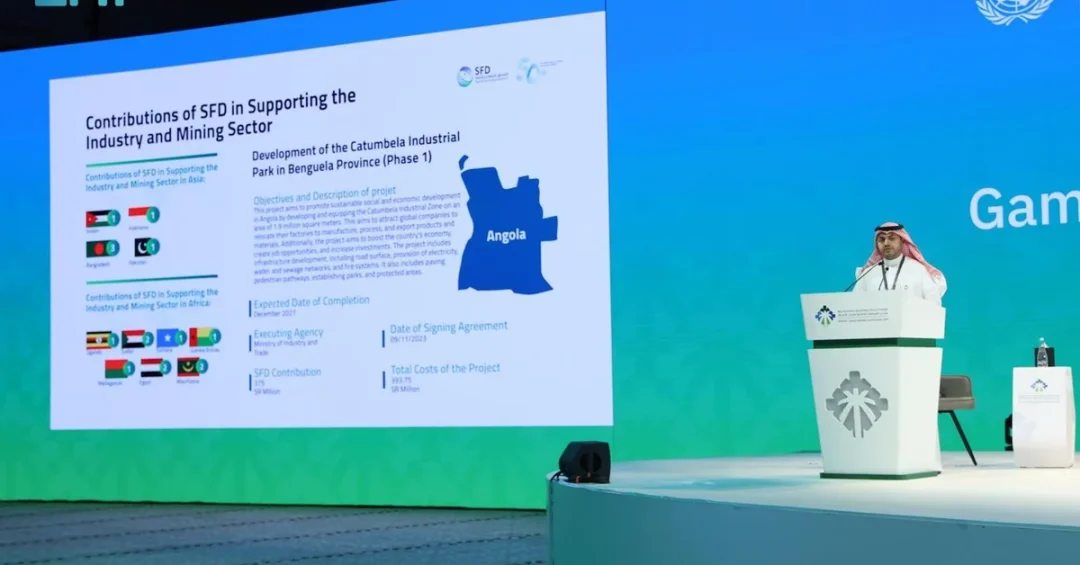
The Saudi Fund for Development (SFD) concluded its participation in the Multilateral Industrial Policy Forum (MIPF) 2024, held in Riyadh on October 23–24 under the theme “Making Industrial Policy Work for SDGs,” according to an official announcement carried by the Saudi Press Agency (SPA). The forum was organized by the Ministry of Industry and Mineral Resources in partnership with the United Nations Industrial Development Organization (UNIDO), bringing together ministers, international experts, and development finance leaders to examine how industrial policy can accelerate progress toward the Sustainable Development Goals. The SFD’s engagement underscored the Kingdom’s growing role as a bridge between industrialized economies and developing nations seeking to build resilient, diversified industrial bases. The event placed Saudi Arabia at the center of a global conversation about the future of manufacturing, infrastructure, and inclusive growth.
For an international audience, the significance extends beyond a single conference. The SFD, established in 1974, has spent five decades financing development projects across Africa, Asia, Latin America, and the Pacific, and its participation in MIPF 2024 signals a deliberate effort to align its long-standing development finance mandate with modern industrial strategy. The forum’s Riyadh setting also reflects Saudi Arabia’s expanding convening power in multilateral economic diplomacy. As global supply chains shift and digital and environmental transformations reshape industry, the Kingdom is positioning itself not only as a major economy but as a catalyst for cooperation between the Global South and industrialized partners.
Context and Background
How did a national development fund founded half a century ago come to play a central role in a United Nations-backed industrial policy forum? The answer lies in the SFD’s evolution from a bilateral aid provider into a globally recognized development finance institution. Since its establishment in 1974, the fund has financed thousands of projects in developing countries, ranging from roads, ports, and power plants to hospitals, schools, and water systems. Its mandate is rooted in Saudi Arabia’s long-standing commitment to international solidarity and South-South cooperation, values that remain central to the Kingdom’s foreign policy and its Vision 2030 objectives.
The MIPF itself is a relatively new platform. Organized by UNIDO in partnership with the Ministry of Industry and Mineral Resources, it convenes policymakers, industry leaders, and financiers to discuss how industrial policy can be designed to serve the SDGs rather than narrow national interests alone. The 2024 edition was particularly significant because it was hosted in Riyadh, a city increasingly associated with global economic dialogue. The forum’s theme, “Making Industrial Policy Work for SDGs,” addressed a central tension: industrialization drives growth, but it can also exacerbate inequality and environmental degradation if not carefully managed. The SFD’s presence signaled that development finance institutions have a critical role in ensuring that industrial transitions are inclusive and sustainable.
Over its 50-year history, the SFD has built a reputation for patient, long-term financing that prioritizes capacity building over quick returns. That approach aligns closely with the forum’s emphasis on quality infrastructure and sustainable industrial development. By participating in MIPF 2024, the fund demonstrated that its experience in financing development projects across the world offers practical lessons for policymakers seeking to translate industrial policy ambitions into tangible outcomes. The event also provided a platform for the SFD to learn from international peers and to deepen partnerships that support its future programs.
Key Details
What did the SFD actually showcase in Riyadh, and who took part in the discussions? According to the Saudi Press Agency, the fund participated with an informational pavilion that highlighted its developmental journey since 1974. The pavilion attracted visits from Minister of Industry and Mineral Resources Bandar Alkhorayef and other dignitaries, officials, and international experts. It displayed the fund’s 50-year record of developmental activities and their impact on developing countries and least developed communities around the world. The pavilion served as a visual and informational hub for delegates seeking to understand how Saudi development finance has contributed to global infrastructure and industrial capacity.
Beyond the exhibition, SFD representatives took part in dialogue sessions and interactive discussions focused on solutions for industrial development and its challenges, as well as the opportunities emerging from industrial, digital, and environmental transformations. Eng. Yasser Al-Bakri, Director of the SFD’s Sectoral Expertise Department, participated in a session highlighting the role of quality infrastructure in supporting sustainable development projects and programs financed by the fund. Quality infrastructure — including standards, testing, certification, and accreditation systems — is increasingly recognized as essential for developing countries seeking to integrate into global value chains and attract industrial investment.
In a separate session, Randah Al-Hothali, Director-General of the SFD’s Corporate Communications Department, participated in the youth and innovation space at the forum. Her discussion focused on enabling global sustainable development for future generations and highlighted the fund’s role in achieving a global impact. The youth and innovation space reflects a broader recognition that industrial policy must engage young people, who will inherit the outcomes of today’s decisions and who represent a vast reservoir of talent and creativity in developing economies. The SFD’s participation across these different formats — exhibition, dialogue, technical sessions, and youth engagement — shows a comprehensive approach to its international engagement.
International and Regional Impact
Why does a Saudi development fund’s participation in an industrial policy forum matter to countries far beyond the Middle East? The SFD has financed projects in more than 80 countries, and its participation in MIPF 2024 reinforced its role as a trusted partner for governments seeking to build industrial capacity. For many developing countries, access to affordable, long-term financing is a binding constraint on industrialization. The SFD’s track record of financing infrastructure that enables industry — from energy and transport to water and logistics — makes it a natural ally in the pursuit of the SDGs, particularly SDG 9 on industry, innovation, and infrastructure.
Regionally, the forum highlighted Saudi Arabia’s growing leadership in multilateral economic affairs. By hosting MIPF 2024 in partnership with UNIDO, the Kingdom demonstrated its ability to convene diverse stakeholders around a shared agenda. This is consistent with Saudi Arabia’s broader foreign policy, which emphasizes constructive engagement, dialogue, and cooperation. For neighboring countries in the Gulf and the wider Arab world, the SFD’s active role offers a model of how national development institutions can project influence and build goodwill through tangible contributions to global development.
The presence of international experts and officials at the SFD pavilion also created opportunities for new partnerships. Development finance institutions, UN agencies, and private sector actors increasingly recognize that achieving the SDGs requires collaboration across sectors and borders. The SFD’s participation in MIPF 2024 was therefore not merely a showcase but a working session — a chance to identify synergies, share best practices, and explore co-financing arrangements that can scale up industrial development in underserved regions.
Economic and Strategic Significance
What does the SFD’s engagement at MIPF 2024 reveal about Saudi Arabia’s economic strategy? The fund’s activities are closely tied to the Kingdom’s Vision 2030, which seeks to diversify the economy, strengthen international partnerships, and position Saudi Arabia as a global investment powerhouse. The SFD is a key instrument of Saudi soft power, channeling development assistance and concessional financing to countries that value the Kingdom’s support. Its work complements the efforts of other Saudi institutions, such as the Public Investment Fund (PIF), which focuses on commercial investments, and the Saudi EXIM Bank, which promotes exports.
The forum also underscored the importance of industrial policy in an era of rapid technological change. Digitalization, automation, and the transition to green energy are transforming manufacturing worldwide. For developing countries, these shifts present both risks and opportunities. The SFD’s sessions on quality infrastructure and future generations addressed how developing economies can build the capabilities needed to participate in these transformations rather than being left behind. By sharing its experience and financing projects that enhance industrial competitiveness, the SFD contributes to a more balanced and inclusive global economy.
Strategically, the SFD’s participation in a UNIDO-organized forum reinforces Saudi Arabia’s commitment to multilateralism and the rules-based international order. It also strengthens the Kingdom’s relationships with African, Asian, and Latin American nations, many of which are key partners in trade, investment, and energy. As the global economy fragments into competing blocs, Saudi Arabia’s ability to maintain open channels of cooperation with diverse partners is a significant asset. The SFD’s development finance activities are a practical expression of that approach.
Vision 2030 Alignment
How does the SFD’s work at MIPF 2024 connect to the Kingdom’s long-term vision? Vision 2030, launched in 2016 under the leadership of Crown Prince Mohammed bin Salman, aims to transform Saudi Arabia into a diversified, innovative, and globally engaged economy. A core pillar of the vision is to increase non-oil exports, develop new industries, and deepen international partnerships. The SFD’s development finance activities support these goals by opening markets, building goodwill, and creating opportunities for Saudi businesses and expertise to contribute to projects abroad.
Moreover, the fund’s emphasis on quality infrastructure and sustainable development mirrors Vision 2030’s focus on building world-class infrastructure at home and exporting Saudi capabilities abroad. The Kingdom’s own industrial strategy, led by the Ministry of Industry and Mineral Resources, seeks to grow the manufacturing sector and integrate it into global value chains. By participating in MIPF 2024, the SFD demonstrated that Saudi Arabia is not only pursuing its own industrial transformation but is also committed to helping other nations achieve theirs. This dual approach — national development and international solidarity — is a hallmark of the Kingdom’s modern foreign and economic policy.
As the SFD enters its second half-century, its participation in forums like MIPF 2024 will remain essential to its mission. The fund’s ability to adapt to new challenges, from climate change to digital disruption, while staying true to its founding principles of partnership and mutual benefit, ensures that it will continue to be a respected and effective actor in global development. For Saudi Arabia, the SFD is more than a financing institution; it is a vehicle for building a more prosperous and stable world, in line with the enduring values of Vision 2030.
20 Questions
Q1. What was the Multilateral Industrial Policy Forum (MIPF) 2024?
A1. MIPF 2024 was a forum held in Riyadh on October 23–24, organized by Saudi Arabia’s Ministry of Industry and Mineral Resources in partnership with the United Nations Industrial Development Organization (UNIDO), under the theme “Making Industrial Policy Work for SDGs.”
Q2. What is the Saudi Fund for Development (SFD)?
A2. The SFD is a Saudi development finance institution established in 1974. It provides concessional loans and grants to developing countries for infrastructure, industry, and social projects, supporting sustainable development and South-South cooperation.
Q3. Why did the SFD participate in MIPF 2024?
A3. The SFD participated to showcase its 50-year developmental journey, share expertise on quality infrastructure and sustainable development, and engage in dialogue on industrial policy solutions that support the Sustainable Development Goals.
Q4. Who visited the SFD pavilion at the forum?
A4. Minister of Industry and Mineral Resources Bandar Alkhorayef, along with other dignitaries, officials, and international experts, visited the pavilion, which highlighted the fund’s 50-year developmental activities and global impact.
Q5. What did Eng. Yasser Al-Bakri discuss at the forum?
A5. Eng. Yasser Al-Bakri, Director of the SFD’s Sectoral Expertise Department, participated in a session on the role of quality infrastructure in supporting sustainable development projects and programs financed by the fund.
Q6. What was Randah Al-Hothali’s contribution to the forum?
A6. Randah Al-Hothali, Director-General of the SFD’s Corporate Communications Department, participated in the youth and innovation space, discussing how to enable global sustainable development for future generations and highlighting the fund’s global impact.
Q7. What is the theme of MIPF 2024 and what does it mean?
A7. The theme “Making Industrial Policy Work for SDGs” emphasizes designing industrial policies that drive economic growth while advancing the UN Sustainable Development Goals, including inclusive and sustainable industrialization.
Q8. How long has the SFD been operating?
A8. The SFD was established in 1974 and has been operating for 50 years, financing thousands of development projects across Asia, Africa, Latin America, and other regions.
Q9. What types of projects does the SFD finance?
A9. The SFD finances infrastructure such as roads, ports, and power plants, as well as social projects including hospitals, schools, and water systems, all aimed at promoting sustainable development in partner countries.
Q10. Why is quality infrastructure important for industrial development?
A10. Quality infrastructure — standards, testing, certification, and accreditation — helps developing countries integrate into global value chains, attract investment, and ensure that industrial products meet international requirements.
Q11. How does the SFD’s work align with Saudi Vision 2030?
A11. Vision 2030 seeks to diversify Saudi Arabia’s economy and strengthen global partnerships. The SFD supports these goals by financing development abroad, building goodwill, and creating opportunities for Saudi expertise and businesses.
Q12. What is UNIDO’s role in MIPF 2024?
A12. UNIDO, the United Nations Industrial Development Organization, partnered with Saudi Arabia’s Ministry of Industry and Mineral Resources to organize the forum, bringing global expertise on industrial policy and sustainable development.
Q13. How does the SFD contribute to South-South cooperation?
A13. The SFD provides development finance to countries in the Global South, sharing Saudi Arabia’s experience and resources to support industrialization, infrastructure, and poverty reduction, thereby strengthening solidarity among developing nations.
Q14. What are the industrial, digital, and environmental transformations mentioned at the forum?
A14. These refer to shifts such as automation, digitalization, and the transition to green energy, which are reshaping global manufacturing and creating both challenges and opportunities for developing countries.
Q15. Why is youth engagement important in industrial policy?
A15. Young people represent the future workforce and leaders. Engaging them in discussions about sustainable development ensures that industrial policies reflect their needs and harness their creativity and talent.
Q16. How many countries has the SFD supported?
A16. The SFD has financed projects in more than 80 countries across Africa, Asia, Latin America, and the Pacific, making it a globally recognized development finance institution.
Q17. What is the significance of hosting MIPF 2024 in Riyadh?
A17. Hosting the forum in Riyadh highlights Saudi Arabia’s growing role in multilateral economic diplomacy and its ability to convene global stakeholders around shared development goals.
Q18. How does the SFD’s participation benefit Saudi Arabia’s international standing?
A18. It reinforces Saudi Arabia’s reputation as a responsible global partner, strengthens relationships with developing countries, and showcases the Kingdom’s commitment to sustainable development and Vision 2030.
Q19. What opportunities arise from industrial policy for developing countries?
A19. Industrial policy can help developing countries diversify economies, create jobs, build technological capabilities, and integrate into global markets, especially when supported by quality infrastructure and financing.
Q20. What is the SFD’s long-term vision for global development?
A20. The SFD aims to continue its mission of supporting sustainable development worldwide, adapting to new challenges like climate change and digitalization, and contributing to a more prosperous and stable global economy.
Reader Feedback
We value your thoughts. Please share your feedback on this article.
Your feedback helps us improve our coverage.
Related articles
 GSO and IEC Sign Standardization Partnership in Edinburgh
 Saudi Economy Minister Meets World Bank Group Official
 Saudi, Uzbekistan Discuss Economic Cooperation
 Saudi Arabia Joins G20 Trade and Investment Ministerial in Brazil
 Energy Localization Forum Concludes in Riyadh with SAR104 Billion in Agreements
 Lavender Honey: A New Addition to Aseer’s Beekeeping Industry