


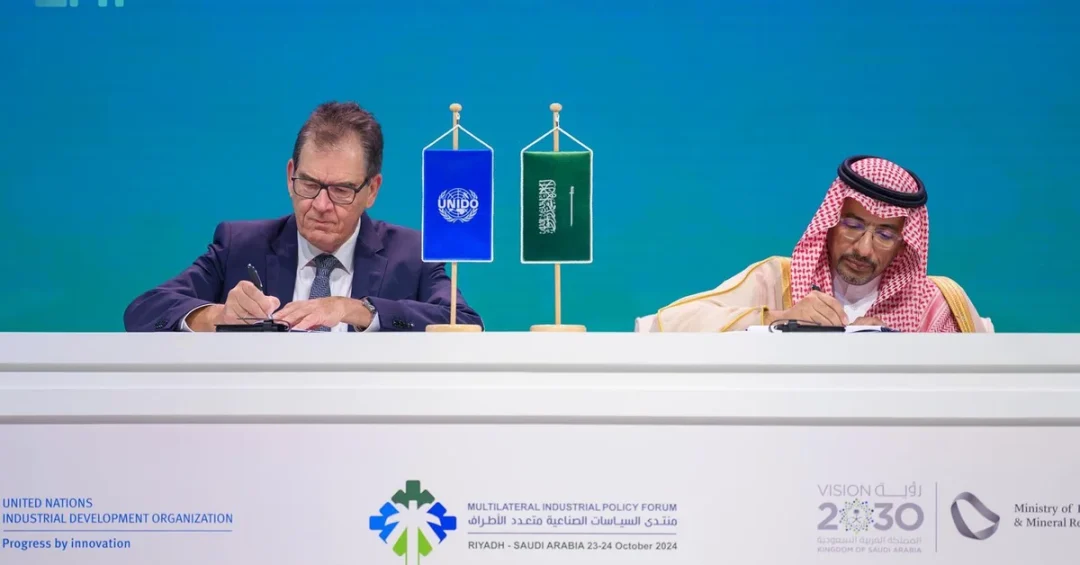
Saudi Arabia’s Ministry of Industry and Mineral Resources and the United Nations Industrial Development Organization (UNIDO) signed a strategic cooperation agreement in Riyadh on October 24, 2024, establishing a framework to accelerate industrial development in the Kingdom. The agreement was signed by Minister of Industry and Mineral Resources Bandar Alkhorayef and UNIDO Director-General Gerd Müller during the Multilateral Industrial Policy Forum (MIPF), which concluded the same day and was co-organized by the ministry and UNIDO. The deal marks a significant step in Saudi Arabia’s efforts to diversify its economy and position itself as a leading industrial hub in the region.
Have you ever wondered how nations transform their industrial landscapes to compete on a global scale? For Saudi Arabia, the answer lies in strategic international partnerships that combine local ambition with global expertise. This agreement with UNIDO represents precisely that approach, bringing together the Kingdom’s Vision 2030 objectives with the specialized knowledge of a United Nations agency dedicated to industrial development. The cooperation framework covers a wide range of areas, from policy development to technology transfer, reflecting a comprehensive approach to industrial modernization.
Context and Background
Why does this agreement matter now, at this particular moment in Saudi Arabia’s economic transformation? The Kingdom has been actively pursuing economic diversification under Vision 2030, reducing its historical dependence on oil revenues and building a more resilient, knowledge-based economy. The industrial sector plays a central role in this strategy, with the Ministry of Industry and Mineral Resources leading efforts to expand manufacturing, attract investment, and integrate Saudi industries into global value chains. The partnership with UNIDO builds on years of collaboration between the Kingdom and the international organization.
The Multilateral Industrial Policy Forum provided an ideal platform for this agreement, bringing together policymakers, industry leaders, and international experts to discuss the future of industrial development. Co-organized by the ministry and UNIDO, the forum demonstrated Saudi Arabia’s commitment to engaging with global institutions and learning from international best practices. The timing of the agreement reflects the Kingdom’s proactive approach to industrial policy, as it seeks to capitalize on emerging opportunities in advanced manufacturing, renewable energy technologies, and other high-growth sectors.
UNIDO, established in 1966, is a specialized agency of the United Nations that promotes industrial development for poverty reduction, inclusive globalization, and environmental sustainability. The organization works with governments, businesses, and civil society to support industrial growth in developing and transition economies. For Saudi Arabia, partnering with UNIDO provides access to a wealth of expertise, technical assistance, and international networks that can help accelerate the Kingdom’s industrial ambitions.
Key Details of the Agreement
What specifically does this strategic cooperation program entail? The agreement focuses on several key areas, starting with the development of industrial policies, including sector-specific policies tailored to the Kingdom’s unique economic landscape. This involves creating frameworks that support emerging industries, encourage innovation, and attract both domestic and foreign investment. The ministry will work closely with UNIDO to design policies that align with international standards while addressing local priorities.
Another critical component is the enhancement of industrial data collection and analysis to support decision-making. Reliable data is essential for effective policymaking, enabling governments to identify trends, measure progress, and make informed choices about resource allocation. By strengthening its data infrastructure, Saudi Arabia can better monitor industrial performance, evaluate the impact of policies, and adjust strategies as needed. This focus on evidence-based policymaking reflects the Kingdom’s commitment to good governance and continuous improvement.
The agreement also emphasizes promoting investment in major industrial sectors, transferring advanced technology, and adopting modern techniques to improve industrial processes. These efforts aim to integrate local industries into global value chains, enhance their competitiveness, and expand the reach of Saudi products in both domestic and international markets. Additionally, the deal includes provisions for training and developing the skills of the industrial workforce, recognizing that human capital is essential for sustainable industrial growth.
International and Regional Impact
How might this agreement influence Saudi Arabia’s standing in the region and beyond? The partnership with UNIDO signals to the international community that the Kingdom is serious about industrial development and open to collaboration with global institutions. This can attract further investment from multinational companies seeking reliable partners in the Middle East. It also positions Saudi Arabia as a leader in industrial policy innovation, potentially serving as a model for other countries in the region pursuing similar diversification strategies.
Regionally, the agreement could have ripple effects across the Gulf and broader Middle East, encouraging neighboring countries to explore similar partnerships with international organizations. As Saudi Arabia strengthens its industrial base, it may become a hub for manufacturing and technology transfer, creating opportunities for regional cooperation and trade. The Kingdom’s growing industrial capabilities could also contribute to stability and prosperity in the region by creating jobs and fostering economic growth.
Economic and Strategic Significance
Why is industrial development so crucial for Saudi Arabia’s economic future? Manufacturing and industry can generate high-quality jobs, reduce reliance on oil exports, and create new sources of revenue. By developing a diversified industrial base, the Kingdom can insulate itself from fluctuations in global energy markets and build a more resilient economy. The agreement with UNIDO supports these goals by providing the technical expertise, policy guidance, and international connections needed to accelerate industrial growth.
Strategically, the partnership aligns with Saudi Arabia’s broader efforts to become a global player in technology, innovation, and sustainable development. By integrating advanced technologies and modern techniques, Saudi industries can compete more effectively in international markets. The focus on training and workforce development ensures that Saudi citizens have the skills needed to participate in the new industrial economy, supporting the Vision 2030 goal of increasing private sector employment and empowering the Kingdom’s human capital.
Vision 2030 Alignment
How does this agreement contribute to Saudi Vision 2030? The partnership directly supports several pillars of the vision, including economic diversification, private sector growth, and human capital development. By enhancing industrial policies, improving data collection, and promoting investment, the cooperation framework helps create an environment where industries can thrive. This, in turn, supports the creation of jobs, the growth of non-oil GDP, and the transformation of Saudi Arabia into a leading industrial hub in the region.
As the Kingdom continues its journey toward Vision 2030, agreements like this one demonstrate the power of international collaboration. The Ministry of Industry and Mineral Resources, under the leadership of Minister Bandar Alkhorayef, is actively building partnerships that bring global expertise to local challenges. With UNIDO’s support, Saudi Arabia is well-positioned to achieve its industrial ambitions, contributing to a prosperous and sustainable future for the Kingdom and its people. What could be more inspiring than a nation working hand-in-hand with the world to build a better tomorrow?
20 Questions
Q1. What agreement was signed between Saudi Arabia and UNIDO?
A1. The Ministry of Industry and Mineral Resources and UNIDO signed a strategic cooperation agreement to enhance industrial development in Saudi Arabia, focusing on policy development, data analysis, investment promotion, technology transfer, and workforce training.
Q2. Who signed the agreement on behalf of Saudi Arabia?
A2. Minister of Industry and Mineral Resources Bandar Alkhorayef signed the agreement on behalf of Saudi Arabia during the Multilateral Industrial Policy Forum in Riyadh on October 24, 2024.
Q3. Who signed the agreement on behalf of UNIDO?
A3. UNIDO Director-General Gerd Müller signed the agreement on behalf of the United Nations Industrial Development Organization, formalizing the strategic cooperation framework between the two parties.
Q4. Where was the agreement signed?
A4. The agreement was signed in Riyadh, the capital of Saudi Arabia, during the Multilateral Industrial Policy Forum, which was co-organized by the Ministry of Industry and Mineral Resources and UNIDO.
Q5. When was the agreement signed?
A5. The agreement was signed on October 24, 2024, coinciding with the conclusion of the Multilateral Industrial Policy Forum, as reported by the Saudi Press Agency.
Q6. What is the Multilateral Industrial Policy Forum?
A6. The Multilateral Industrial Policy Forum is an event co-organized by Saudi Arabia’s Ministry of Industry and Mineral Resources and UNIDO, bringing together policymakers and experts to discuss industrial development strategies and international cooperation.
Q7. What are the main objectives of the agreement?
A7. The agreement aims to enhance industrial development in Saudi Arabia by focusing on industrial policy development, data collection and analysis, investment promotion, technology transfer, integration into global value chains, and workforce training.
Q8. How does the agreement support industrial policy development?
A8. The agreement supports industrial policy development by creating frameworks for sector-specific policies that align with international standards, encourage innovation, and attract investment in key industrial sectors.
Q9. Why is industrial data collection important?
A9. Industrial data collection is important because it enables evidence-based policymaking, allowing the government to monitor performance, identify trends, and make informed decisions about resource allocation and strategy adjustments.
Q10. What role does technology transfer play in the agreement?
A10. Technology transfer helps Saudi industries adopt advanced techniques and modern processes, improving efficiency, competitiveness, and the ability to integrate into global value chains, which is essential for industrial modernization.
Q11. How will the agreement help Saudi products reach international markets?
A11. By enhancing competitiveness and integrating local industries into global value chains, the agreement helps Saudi products meet international standards and expand their reach in both domestic and international markets.
Q12. What does the agreement say about workforce training?
A12. The agreement includes provisions for training and developing the skills of the industrial workforce, ensuring that Saudi citizens have the capabilities needed to participate in and contribute to the growing industrial economy.
Q13. How does this agreement relate to Saudi Vision 2030?
A13. The agreement supports Vision 2030 by promoting economic diversification, private sector growth, and human capital development, helping transform Saudi Arabia into a leading industrial hub in the region.
Q14. What is UNIDO’s role in the partnership?
A14. UNIDO provides technical expertise, policy guidance, and international networks to support Saudi Arabia’s industrial development efforts, drawing on its experience as a specialized United Nations agency promoting sustainable industrial growth.
Q15. What benefits does Saudi Arabia expect from the agreement?
A15. Saudi Arabia expects accelerated industrial development, enhanced competitiveness, increased investment, job creation, and progress toward economic diversification, all of which contribute to the goals of Vision 2030.
Q16. How might the agreement affect the regional economy?
A16. The agreement could encourage regional cooperation, attract investment to the Gulf, and position Saudi Arabia as a leader in industrial policy innovation, potentially inspiring similar partnerships in neighboring countries.
Q17. What industrial sectors are likely to benefit most?
A17. Major industrial sectors identified for investment and development include manufacturing, technology, renewable energy, and other high-growth areas that align with Saudi Arabia’s economic diversification strategy and Vision 2030 objectives.
Q18. How does the agreement promote investment in industrial sectors?
A18. The agreement promotes investment by creating supportive policies, improving data for decision-making, and enhancing the competitiveness of Saudi industries, making the Kingdom a more attractive destination for domestic and foreign investors.
Q19. What is the significance of international cooperation in industrial development?
A19. International cooperation brings global expertise, best practices, and resources that can accelerate industrial growth, helping countries like Saudi Arabia achieve their development goals more efficiently and effectively.
Q20. What are the next steps following the agreement?
A20. Following the agreement, the Ministry of Industry and Mineral Resources and UNIDO will implement the cooperation framework, focusing on policy development, data enhancement, investment promotion, technology transfer, and workforce training to achieve the agreed objectives.
Reader Feedback
We value your thoughts. Please share your feedback on this article.
Your feedback helps us improve our coverage.
Related articles
 Saudi Arabia Joins G20 Anti-Corruption Ministerial in Brazil
 Kyrgyz Mufti Receives Imam of Prophet’s Mosque in Bishkek
 KSrelief Supports UN Efforts to Aid Needy Nations
 Saudi FM Meets Palestinian President, UN Chief in Kazan
 EXPRO Wins GCC Best Leadership Development Award
 Saudi Fund for Development Showcases Global Impact at AidEx