


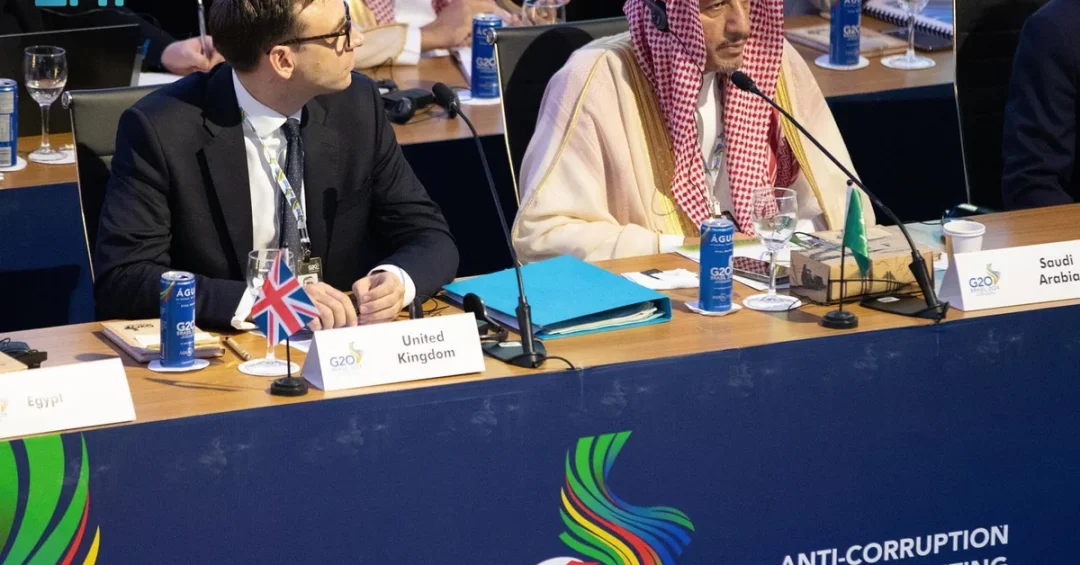
Saudi Arabia participated in the third anti-corruption ministerial meeting of the Group of Twenty (G20), held Thursday in Natal, Brazil, with the Kingdom represented by the Oversight and Anti-Corruption Authority (Nazaha) President Mazin bin Ibrahim Al-Kahmous. The high-level gathering brought together G20 member states to advance international cooperation in the fight against corruption, with Saudi Arabia playing a prominent role in shaping global anti-corruption frameworks and promoting transparency across borders.
Have you ever considered how a single nation’s commitment to integrity can ripple across the global economy? Saudi Arabia’s active participation in this ministerial meeting underscores the Kingdom’s unwavering dedication to combating corruption as a cornerstone of its Vision 2030 reform agenda. The meeting, which concluded with the endorsement of a new G20 anti-corruption action plan for 2025-2027, represents a significant milestone in multilateral efforts to enhance accountability, transparency, and asset recovery mechanisms worldwide.
Context and Background
How did Saudi Arabia come to play such a pivotal role in global anti-corruption efforts? The Kingdom’s journey began with the launch of Vision 2030 in 2016, a comprehensive national transformation plan spearheaded by Crown Prince Mohammed bin Salman. Since then, Saudi Arabia has developed a robust national anti-corruption strategy, establishing the Oversight and Anti-Corruption Authority (Nazaha) as the primary government body responsible for investigating and prosecuting corruption cases. The Kingdom’s leadership recognized early on that sustainable economic development and international investment require a foundation of transparency and accountability.
The G20 anti-corruption ministerial meeting itself traces its origins to Saudi Arabia’s presidency of the G20 in 2020, when the Kingdom took the unprecedented step of convening the first-ever meeting of its kind. This initiative reflected Saudi Arabia’s understanding that corruption is not merely a domestic challenge but a transnational threat requiring coordinated international responses. The first ministerial meeting established a framework for ongoing dialogue and cooperation among G20 nations, setting the stage for subsequent gatherings in Indonesia, India, and now Brazil.
Under the Brazilian presidency, the third ministerial meeting in Natal built upon these foundations, addressing emerging challenges in anti-corruption enforcement while reinforcing commitments made under previous G20 presidencies. The participation of Nazaha President Al-Kahmous signaled Saudi Arabia’s continued engagement with this critical international platform, demonstrating the Kingdom’s role as both a founding architect and active contributor to global anti-corruption architecture.
Key Details
What specific contributions did Saudi Arabia make to this important international gathering? Al-Kahmous delivered a comprehensive speech expressing gratitude to Brazil for hosting the meeting and commending the achievements of G20 countries under the Brazilian presidency. He specifically congratulated Brazil for the selection of its representative as deputy chairman of the GlobE Network Steering Committee during a meeting in Beijing, China, in September, highlighting the collaborative spirit that characterizes G20 engagement on anti-corruption matters.
The Nazaha president lauded the support provided by Saudi Arabia’s leadership in combating corruption since the launch of Vision 2030, emphasizing how the Kingdom has developed its national anti-corruption strategy locally while taking tangible steps internationally to develop partnerships and cooperation against cross-border corruption crimes. He praised the pivotal role of G20 countries in building a just world and ensuring a sustainable planet, drawing attention to the GlobE Network’s remarkable growth to 222 authorities from 123 countries, including 15 G20 states.
Al-Kahmous also highlighted the global initiative for measuring corruption, which aims to assist countries, investors, donors, and other stakeholders in assessing anti-corruption efforts in each country. He expressed hopes that reliable and transparent corruption measurement indicators would be issued at the end of the second phase of the initiative, taking into account the different political and legal systems of each country, and called on G20 countries to support the United Nations Development Program’s efforts to measure corruption through information exchange and best practices sharing.
International and Regional Impact
How does Saudi Arabia’s engagement in such forums shape the broader Middle East and beyond? The G20 Ministerial Declaration endorsed the new anti-corruption action plan for 2025-2027, focusing on enhancing countries’ efforts in combating money laundering and ensuring transparency of beneficial ownership in line with recommendations of the United Nations Convention against Corruption and the Financial Action Task Force (FATF). This framework will have far-reaching implications for how nations across the region approach financial transparency and regulatory compliance.
The declaration also endorsed several documents emanating from the G20 anti-corruption working group under the Brazilian presidency, including high-level principles for the G20 on private-sector incentives. These principles encourage the adoption of comprehensive and consistent integrity measures to prevent and combat corruption, creating a more predictable and attractive environment for international investment. For Saudi Arabia and its regional partners, these developments signal a collective commitment to raising governance standards and creating conditions conducive to sustainable economic growth.
Economic and Strategic Significance
Why does anti-corruption cooperation matter so significantly for global economic stability? The meeting featured discussions regarding cooperation in enforcing anti-corruption laws, accountability, transparency, asset recovery, and combating all forms of corruption in accordance with relevant international agreements. These discussions are particularly relevant as global supply chains become increasingly complex and cross-border financial flows require robust oversight mechanisms to prevent illicit activities.
Saudi Arabia’s active participation in these discussions reflects the Kingdom’s recognition that economic diversification under Vision 2030 depends on maintaining the highest standards of governance. Foreign investors and international partners require confidence that their investments are protected by transparent legal frameworks and accountable institutions. By demonstrating leadership in anti-corruption efforts, Saudi Arabia enhances its attractiveness as a destination for foreign direct investment and strengthens its position as a responsible global economic partner.
The GlobE Network’s role in enhancing international cooperation, asset recovery, information exchange, and investigations among anti-corruption agencies represents a practical mechanism for translating commitments into action. As the network continues to expand, participating countries benefit from shared intelligence, best practices, and coordinated enforcement actions that make it increasingly difficult for corrupt actors to operate across borders.
Vision 2030 Alignment
How does Saudi Arabia’s anti-corruption leadership connect to the Kingdom’s broader transformation goals? Vision 2030 encompasses not only economic diversification but also institutional reform, government efficiency, and the promotion of integrity throughout society. The Kingdom’s anti-corruption efforts, led by Nazaha under the guidance of Saudi leadership, represent a fundamental pillar of this transformation, ensuring that the benefits of economic development are shared broadly and that public resources are managed responsibly.
Saudi Arabia’s continued engagement with the G20 anti-corruption ministerial process demonstrates the Kingdom’s commitment to international cooperation as a means of achieving domestic objectives. By sharing expertise, learning from international partners, and contributing to global standards, Saudi Arabia positions itself as a responsible stakeholder in the international community while advancing the Vision 2030 goal of building a transparent, efficient, and accountable government. The Kingdom’s leadership in establishing the first G20 anti-corruption ministerial meeting in 2020 and its ongoing participation reflect a sustained commitment to these principles.
As Saudi Arabia continues its remarkable transformation under Vision 2030, the Kingdom’s role in global anti-corruption efforts will only grow in significance. The partnerships forged through G20 engagement, the frameworks developed through international cooperation, and the shared commitment to integrity demonstrated at gatherings like the Natal ministerial meeting all contribute to a more transparent and prosperous world. Saudi Arabia stands ready to continue its leadership in this vital arena, working alongside international partners to combat corruption and build a future where accountability and integrity form the foundation of sustainable development.
20 Questions
Q1. What was the third G20 anti-corruption ministerial meeting?
A1. The third G20 anti-corruption ministerial meeting was a high-level gathering held in Natal, Brazil, bringing together G20 member states to advance international cooperation against corruption and endorse new action plans.
Q2. Who represented Saudi Arabia at the meeting?
A2. Saudi Arabia was represented by Mazin bin Ibrahim Al-Kahmous, President of the Oversight and Anti-Corruption Authority (Nazaha), who delivered a speech highlighting the Kingdom’s anti-corruption achievements.
Q3. What is Nazaha?
A3. Nazaha is Saudi Arabia’s Oversight and Anti-Corruption Authority, established to investigate and prosecute corruption cases, playing a central role in the Kingdom’s anti-corruption strategy under Vision 2030.
Q4. When was the first G20 anti-corruption ministerial meeting held?
A4. The first G20 anti-corruption ministerial meeting was convened in 2020 at the initiative of Saudi Arabia during its G20 presidency, establishing a framework for ongoing international cooperation.
Q5. What is the GlobE Network?
A5. The GlobE Network is a global operational network of anti-corruption law enforcement authorities, currently including 222 authorities from 123 countries, including 15 G20 states, enhancing international cooperation.
Q6. What did the G20 Ministerial Declaration endorse?
A6. The declaration endorsed the new G20 anti-corruption action plan for 2025-2027, focusing on combating money laundering and ensuring transparency of beneficial ownership in line with international conventions.
Q7. What are the high-level principles on private-sector incentives?
A7. These principles encourage the adoption of comprehensive and consistent integrity measures to prevent and combat corruption, creating a more predictable environment for international investment and business operations.
Q8. How does Vision 2030 relate to anti-corruption efforts?
A8. Vision 2030 includes institutional reform and government efficiency as core objectives, with anti-corruption efforts ensuring public resources are managed responsibly and economic benefits are shared broadly across society.
Q9. What is the global initiative for measuring corruption?
A9. The global initiative aims to assist countries, investors, donors, and stakeholders in assessing anti-corruption efforts through reliable and transparent measurement indicators, taking into account different political and legal systems.
Q10. What role did Brazil play in the meeting?
A10. Brazil hosted the third ministerial meeting under its G20 presidency and had its representative selected as deputy chairman of the GlobE Network Steering Committee during a meeting in Beijing, China.
Q11. What topics were discussed at the meeting?
A11. Discussions covered cooperation in enforcing anti-corruption laws, accountability, transparency, asset recovery, and combating all forms of corruption in accordance with relevant international agreements.
Q12. How does Saudi Arabia benefit from G20 anti-corruption cooperation?
A12. Saudi Arabia benefits through enhanced international partnerships, information exchange, asset recovery mechanisms, and strengthened frameworks that support foreign investment and economic diversification under Vision 2030.
Q13. What is the United Nations Convention against Corruption?
A13. The United Nations Convention against Corruption is a global legally binding instrument that provides a comprehensive framework for combating corruption, referenced in the G20 action plan and ministerial declaration.
Q14. What is the Financial Action Task Force?
A14. The Financial Action Task Force (FATF) is an intergovernmental organization that develops policies to combat money laundering and terrorist financing, with its recommendations integrated into the G20 action plan.
Q15. How many G20 states participate in the GlobE Network?
A15. Fifteen G20 states participate in the GlobE Network, which includes 222 authorities from 123 countries, demonstrating broad international commitment to anti-corruption cooperation.
Q16. What is the accountability report on combating corruption?
A16. The accountability report for 2024 documents G20 countries’ efforts in combating corruption, providing transparency and tracking progress on commitments made under previous ministerial declarations.
Q17. How does Saudi Arabia support the United Nations Development Program?
A17. Saudi Arabia calls on G20 countries to support UNDP efforts to measure corruption through information exchange and best practices sharing, contributing to achieving sustainable development goals.
Q18. What makes cross-border corruption particularly challenging?
A18. Cross-border corruption involves complex financial flows, multiple jurisdictions, and sophisticated methods that require coordinated international responses, making the GlobE Network and G20 cooperation essential.
Q19. How does anti-corruption relate to sustainable development?
A19. Anti-corruption efforts contribute to sustainable development by ensuring resources are allocated efficiently, reducing waste, attracting investment, and building the institutional trust necessary for long-term economic growth.
Q20. What is Saudi Arabia’s future role in global anti-corruption efforts?
A20. Saudi Arabia will continue leading through Vision 2030 implementation, active participation in G20 initiatives, and support for international frameworks, positioning the Kingdom as a responsible global partner in combating corruption.
Reader Feedback
We value your thoughts. Please share your feedback on this article.
Your feedback helps us improve our coverage.
Related articles
 Kyrgyz Mufti Receives Imam of Prophet’s Mosque in Bishkek
 KSrelief Supports UN Efforts to Aid Needy Nations
 Saudi FM Meets Palestinian President, UN Chief in Kazan
 EXPRO Wins GCC Best Leadership Development Award
 Saudi Fund for Development Showcases Global Impact at AidEx
 GEOSA, UNDP Conclude Maritime Law Training in Riyadh