


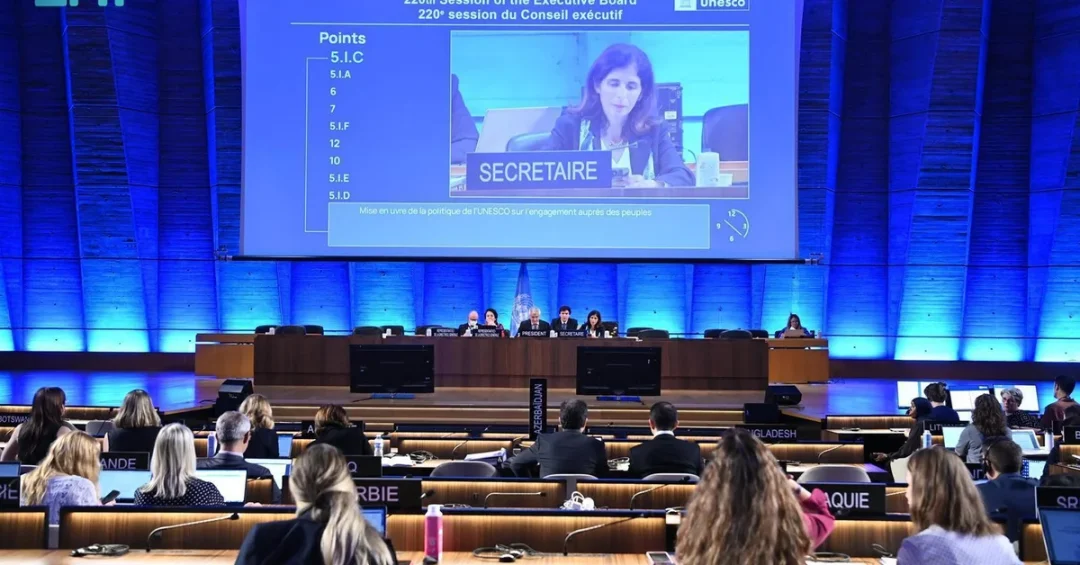
Saudi Arabia participated in the 220th session of the Executive Board of the United Nations Educational, Scientific and Cultural Organization (UNESCO), which concluded its meetings on Wednesday at the organization’s headquarters in Paris, France. The Kingdom was represented by the Permanent Delegation of Saudi Arabia to UNESCO, alongside the Saudi National Commission for Education, Culture and Science and various pertinent national entities, according to the Saudi Press Agency (SPA). The Saudi delegation was headed by Saudi Ambassador to France and the Principality of Monaco Fahad bin Mayouf Al-Ruwaili, who serves as the Kingdom’s designated permanent representative to UNESCO. The session brought together member states to deliberate on a range of procedural, substantive, financial, and administrative items that shape the organization’s global agenda.
Why does Saudi Arabia’s active participation in UNESCO’s highest governance bodies matter for the international community? The Kingdom’s engagement in the 220th Executive Board session reflects its broader commitment to multilateral cooperation in education, culture, science, and artificial intelligence. As one of UNESCO’s founding members, Saudi Arabia has maintained a record of continuous progress and strategic partnership within the organization’s work, underscoring its pivotal and active role in decision-making at the highest levels of global cultural and educational governance. This participation aligns with the Kingdom’s Vision 2030 objectives, which emphasize international collaboration, knowledge exchange, and the responsible adoption of emerging technologies for the benefit of humanity.
Context and Background
What is the significance of the UNESCO Executive Board, and why does Saudi Arabia’s membership matter? The Executive Board is one of UNESCO’s three constitutional organs, alongside the General Conference and the Secretariat. It meets twice a year to examine the organization’s programme and budget, consider reports from the Director-General, and make recommendations to the General Conference. The 220th session, held in Paris, addressed a comprehensive agenda encompassing procedural, substantive, financial, and administrative items. Saudi Arabia’s presence at this session was not merely ceremonial; the Kingdom actively contributed to discussions that will shape UNESCO’s strategic direction in the coming years.
Saudi Arabia’s relationship with UNESCO dates back to the organization’s founding in 1945, making the Kingdom one of its original member states. Over nearly eight decades, this partnership has evolved into a dynamic and multifaceted collaboration spanning education, cultural heritage preservation, scientific research, and ethical technology governance. The Kingdom’s continued membership on the Executive Board demonstrates the international community’s recognition of Saudi Arabia’s contributions and its capacity to serve as a bridge between diverse regional perspectives within the organization. The Saudi National Commission for Education, Culture and Science, which accompanied the Permanent Delegation, plays a vital coordinating role in aligning national priorities with UNESCO’s global objectives.
The 220th session also featured a meeting of national commissions held on the margins of the Executive Board session, during which several resolutions were issued addressing key items on the agenda. These side meetings provide an important platform for member states to exchange best practices, coordinate positions, and strengthen bilateral and multilateral partnerships. For Saudi Arabia, such engagements reinforce its network of international collaborators and support the Kingdom’s efforts to advance shared goals in sustainable development, cultural dialogue, and educational excellence across the region and beyond.
Key Details
What specific contributions did Saudi Arabia make during the 220th Executive Board session? The Saudi delegation participated in several items on the session’s agenda, emphasizing the Kingdom’s keenness to be positioned as a leader in artificial intelligence (AI) for the good of humanity. The delegation stated that Saudi Arabia is among the first countries to adopt UNESCO’s Recommendation on the Ethics of Artificial Intelligence and is one of the first member states advocating for their adoption to ensure the achievement of sustainable development goals (SDGs) and their dissemination at the national level. This position reflects the Kingdom’s proactive approach to governing emerging technologies in a manner consistent with human dignity and global stability.
Furthermore, Saudi Arabia leads regional efforts by hosting the International Center for Artificial Intelligence Research and Ethics (ICAIRE). The Kingdom promotes the adoption of these ethics internationally to assist in achieving SDGs through cooperation with international partners, with the draft resolution regarding ICAIRE enriching discussions around AI governance at the session. The establishment of ICAIRE represents a tangible manifestation of Saudi Arabia’s commitment to shaping the global AI landscape responsibly. By hosting this center, the Kingdom positions itself as a hub for research, dialogue, and capacity-building in the field of ethical AI, attracting experts and institutions from around the world to collaborate on solutions that benefit all of humanity.
The Kingdom was also chosen to lead the Open-Ended Working Group devoted to achieving balance for the UNESCO World Heritage List. This appointment underscores the international community’s confidence in Saudi Arabia’s ability to facilitate complex negotiations and promote equitable representation of cultural and natural heritage sites from all regions. The World Heritage List is a cornerstone of UNESCO’s mission to protect and preserve humanity’s shared cultural legacy, and Saudi Arabia’s leadership in this working group reflects its dedication to ensuring that this legacy is celebrated in all its diversity. The Kingdom’s own rich heritage, including UNESCO World Heritage Sites such as Hegra and the At-Turaif District in Diriyah, provides it with valuable experience and credibility in these discussions.
International and Regional Impact
How does Saudi Arabia’s engagement with UNESCO influence broader international cooperation? The Kingdom’s active participation in the 220th Executive Board session sends a clear signal that Saudi Arabia is committed to multilateralism and to working constructively with international partners on issues of shared concern. In an era when global challenges—from climate change to technological disruption—require coordinated responses, the Kingdom’s willingness to invest diplomatic capital in UNESCO’s work strengthens the organization’s ability to fulfill its mandate. Saudi Arabia’s advocacy for the ethical adoption of AI, in particular, positions the Kingdom as a thought leader in a field that will define the twenty-first century.
Regionally, Saudi Arabia’s leadership within UNESCO reinforces its role as a stabilizing and forward-looking force in the Middle East. By hosting ICAIRE and leading the Open-Ended Working Group on World Heritage List balance, the Kingdom demonstrates that it is not only a participant in global governance but also a shaper of its agenda. This leadership has positive spillover effects for the broader Arab and Islamic world, ensuring that the perspectives and heritage of these regions are adequately represented in international cultural and educational frameworks. Saudi Arabia’s ability to build consensus across diverse constituencies within UNESCO enhances its diplomatic standing and creates opportunities for deeper collaboration with countries across Asia, Africa, Europe, and the Americas.
Economic and Strategic Significance
What are the strategic and economic implications of Saudi Arabia’s UNESCO engagement? The Kingdom’s focus on artificial intelligence ethics and research through ICAIRE is closely tied to its economic diversification goals under Vision 2030. By fostering a robust ecosystem for AI research and development, Saudi Arabia aims to attract global talent, stimulate innovation, and create high-value jobs in the technology sector. The ethical dimension of this work is equally important: by championing UNESCO’s AI ethics framework, the Kingdom ensures that technological advancement proceeds in a manner that respects human rights, promotes inclusivity, and supports sustainable development. This balanced approach enhances Saudi Arabia’s attractiveness as a destination for international technology partnerships and investment.
Additionally, Saudi Arabia’s leadership in cultural heritage preservation through UNESCO contributes to the growth of the Kingdom’s tourism sector, a key pillar of Vision 2030. The global recognition of Saudi heritage sites draws visitors from around the world, generating revenue and creating employment opportunities in hospitality, cultural tourism, and related industries. The Kingdom’s role in the Open-Ended Working Group on World Heritage List balance further strengthens its position as a custodian of global cultural heritage, reinforcing the narrative of Saudi Arabia as a country that honors its past while building its future. This dual focus on technological innovation and cultural preservation exemplifies the comprehensive nature of the Kingdom’s development strategy.
Vision 2030 Alignment
How does Saudi Arabia’s participation in the UNESCO Executive Board session connect to Vision 2030? The Kingdom’s engagement in UNESCO’s governance structures directly supports several objectives of Vision 2030, including the diversification of the economy, the development of human capital, and the enhancement of Saudi Arabia’s global standing. By positioning itself as a leader in ethical AI and cultural heritage preservation, the Kingdom demonstrates its commitment to building a knowledge-based society that is both innovative and rooted in its cultural identity. The partnerships and resolutions forged at the 220th session will contribute to the realization of these goals, ensuring that Saudi Arabia remains at the forefront of global efforts to promote education, culture, science, and sustainable development.
As Saudi Arabia continues to play a pivotal role in UNESCO and other international organizations, its influence on the global stage will only grow. The Kingdom’s participation in the 220th Executive Board session is not an isolated event but part of a sustained strategy to advance its interests and values through multilateral cooperation. By championing the ethical use of artificial intelligence, leading efforts to balance the World Heritage List, and hosting the International Center for Artificial Intelligence Research and Ethics, Saudi Arabia is shaping the future of global governance in ways that benefit humanity. This forward-looking approach, guided by Vision 2030, ensures that the Kingdom will remain a constructive and influential partner in the international community for years to come.
20 Questions
Q1. What was the 220th session of the UNESCO Executive Board?
A1. The 220th session of the UNESCO Executive Board was a meeting of one of UNESCO’s three constitutional organs, held at the organization’s headquarters in Paris, France. It concluded on Wednesday, October 23, 2024, and addressed procedural, substantive, financial, and administrative items on its agenda.
Q2. Who headed the Saudi delegation to the 220th session?
A2. The Saudi delegation was headed by Saudi Ambassador to France and the Principality of Monaco Fahad bin Mayouf Al-Ruwaili, who is the Kingdom’s designated permanent representative to UNESCO. He led the delegation alongside the Permanent Delegation and the Saudi National Commission for Education, Culture and Science.
Q3. What entities represented Saudi Arabia at the session?
A3. Saudi Arabia was represented by the Permanent Delegation of the Kingdom to UNESCO, the Saudi National Commission for Education, Culture and Science, and various pertinent national entities. This comprehensive representation underscored the Kingdom’s whole-of-government approach to international cooperation.
Q4. What key topic did Saudi Arabia emphasize at the session?
A4. The Saudi delegation emphasized the Kingdom’s keenness to be positioned as a leader in artificial intelligence (AI) for the good of humanity. This focus reflects Saudi Arabia’s commitment to shaping the ethical development and deployment of AI technologies globally.
Q5. What is Saudi Arabia’s stance on UNESCO’s AI ethics recommendation?
A5. Saudi Arabia is among the first countries to adopt UNESCO’s Recommendation on the Ethics of Artificial Intelligence and is one of the first member states advocating for their adoption. The Kingdom promotes these ethics to ensure the achievement of sustainable development goals (SDGs) and their dissemination at the national level.
Q6. What is ICAIRE and how does Saudi Arabia lead it?
A6. ICAIRE is the International Center for Artificial Intelligence Research and Ethics, hosted by Saudi Arabia. The Kingdom leads regional efforts through this center, promoting the adoption of AI ethics internationally to assist in achieving SDGs through cooperation with international partners.
Q7. How did the draft resolution regarding ICAIRE contribute to the session?
A7. The draft resolution regarding ICAIRE enriched discussions around AI governance at the 220th session. It highlighted Saudi Arabia’s role in advancing ethical AI research and provided a framework for member states to collaborate on AI ethics and sustainable development.
Q8. What is the Open-Ended Working Group that Saudi Arabia leads?
A8. Saudi Arabia was chosen to lead the Open-Ended Working Group devoted to achieving balance for the UNESCO World Heritage List. This group works to ensure equitable representation of cultural and natural heritage sites from all regions on the prestigious list.
Q9. What is Saudi Arabia’s status within UNESCO?
A9. Saudi Arabia is one of UNESCO’s founding members and currently serves as a member of its Executive Board. The Kingdom holds a record of continuous progress and strategic partnership within its work with the organization, underscoring its pivotal and active role.
Q10. What was discussed at the national commissions meeting on the margins?
A10. The national commissions meeting held on the margins of the Executive Board session addressed several resolutions covering procedural, substantive, financial, and administrative items. It provided a platform for member states to exchange best practices and coordinate positions.
Q11. How does Saudi Arabia’s participation align with Vision 2030?
A11. Saudi Arabia’s participation aligns with Vision 2030 by supporting economic diversification, human capital development, and the enhancement of the Kingdom’s global standing. It reflects the Kingdom’s commitment to building a knowledge-based society that is innovative and culturally rooted.
Q12. What are the sustainable development goals mentioned in the context of AI ethics?
A12. The sustainable development goals (SDGs) are a set of 17 global goals adopted by the United Nations to end poverty, protect the planet, and ensure prosperity for all. Saudi Arabia advocates for AI ethics to help achieve these goals nationally and internationally.
Q13. Why is Saudi Arabia considered a leader in AI ethics?
A13. Saudi Arabia is considered a leader in AI ethics because it was among the first countries to adopt UNESCO’s AI ethics recommendation, hosts the International Center for Artificial Intelligence Research and Ethics (ICAIRE), and actively promotes ethical AI adoption internationally.
Q14. What is the significance of Saudi Arabia leading the World Heritage List working group?
A14. Saudi Arabia’s leadership of the Open-Ended Working Group on World Heritage List balance demonstrates international confidence in its ability to facilitate complex negotiations. It also ensures equitable representation of heritage sites from all regions, including the Arab world.
Q15. How does Saudi Arabia’s UNESCO engagement impact its tourism sector?
A15. Saudi Arabia’s UNESCO engagement contributes to tourism growth by drawing global recognition to its heritage sites, such as Hegra and Diriyah. This generates revenue, creates jobs in hospitality and cultural tourism, and supports Vision 2030’s tourism objectives.
Q16. What other international organizations does Saudi Arabia actively participate in?
A16. Saudi Arabia actively participates in numerous international organizations, including the United Nations, the G20, the World Trade Organization, and OPEC. Its engagement reflects a broad commitment to multilateralism and global cooperation across diverse fields.
Q17. What is the role of the Saudi National Commission for Education, Culture and Science?
A17. The Saudi National Commission for Education, Culture and Science coordinates national efforts in these fields and aligns them with UNESCO’s global objectives. It accompanied the Permanent Delegation to the 220th session to support Saudi Arabia’s participation.
Q18. How does Saudi Arabia promote AI ethics internationally?
A18. Saudi Arabia promotes AI ethics internationally by advocating for the adoption of UNESCO’s Recommendation on the Ethics of Artificial Intelligence, hosting ICAIRE, and cooperating with international partners to achieve SDGs through ethical AI development and research.
Q19. What are some examples of Saudi Arabia’s UNESCO World Heritage Sites?
A19. Saudi Arabia’s UNESCO World Heritage Sites include Hegra (Mada’in Salih), the At-Turaif District in Diriyah, and the Rock Art of the Hail Region. These sites showcase the Kingdom’s rich cultural and natural heritage.
Q20. What does Saudi Arabia’s participation in the 220th session signify for its global role?
A20. Saudi Arabia’s participation signifies its commitment to multilateral cooperation, ethical technology governance, and cultural heritage preservation. It reinforces the Kingdom’s position as an influential and constructive partner in international affairs, aligned with Vision 2030.
Reader Feedback
We value your thoughts. Please share your feedback on this article.
Your feedback helps us improve our coverage.
Related articles
 Saudi Ministry, UNIDO Sign Industrial Development Deal
 Saudi Arabia Joins G20 Anti-Corruption Ministerial in Brazil
 Kyrgyz Mufti Receives Imam of Prophet’s Mosque in Bishkek
 KSrelief Supports UN Efforts to Aid Needy Nations
 Saudi FM Meets Palestinian President, UN Chief in Kazan
 EXPRO Wins GCC Best Leadership Development Award