


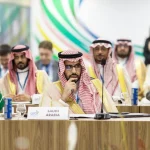
Dr. Muhammad Al Jasser, President of the Islamic Development Bank (IsDB) Group, commended the ongoing dialogue between the Arab Coordination Group (ACG) and the World Bank Group (WBG) during a high-level meeting on the sidelines of the 2024 Annual Meetings of the International Monetary Fund (IMF) and the World Bank in Washington, D.C. The meeting, held on October 24, 2024, focused on strengthening cooperation to address the Middle East and North Africa region’s considerable challenges more effectively and to ensure that development efforts lead to sustainable and inclusive growth.
Dr. Al Jasser stressed the importance of collaboration between the ACG and the WBG in joint financing mechanisms to enhance the mobilization of financial resources for major projects, particularly in infrastructure, renewable energy, women and youth, scholarship opportunities, climate action, and social programs. The discussions underscored the critical role of multilateral development banks in fostering economic resilience and driving progress toward the Sustainable Development Goals (SDGs) across the region.
Context and Background: A Legacy of Development Finance
How did the Arab Coordination Group emerge as a pivotal force in global development finance? The ACG comprises ten leading development funds and institutions from the Arab world, including the Abu Dhabi Fund for Development, the Arab Bank for Economic Development in Africa (BADEA), the Arab Fund for Economic and Social Development, the Arab Gulf Program for Development, the Arab Monetary Fund (AMF), the Islamic Development Bank (IsDB), the Kuwait Fund for Arab Economic Development (KFAED), the OPEC Fund for International Development, and the Qatar Fund for Development (QFFD). This coalition represents the second-largest group of development finance institutions globally, operating worldwide to support developing countries and create a lasting positive impact.
Since its inception, the ACG has played a significant role in developing economies and societies for a better future, having provided more than 12,000 development loans to over 160 countries worldwide. This impressive track record reflects the group’s commitment to fostering sustainable development, reducing poverty, and promoting economic cooperation among nations. The ACG’s collective efforts have been instrumental in financing infrastructure projects, supporting small and medium-sized enterprises, and advancing social programs that improve the quality of life for millions of people.
The 2024 IMF-World Bank Annual Meetings provided a crucial platform for the ACG and WBG to deepen their partnership. These meetings bring together finance ministers, central bank governors, and development leaders from around the world to discuss pressing global economic issues, including debt sustainability, climate finance, and inclusive growth. The ACG’s engagement with the WBG reflects a shared vision of leveraging collective resources and expertise to tackle complex development challenges.
Key Details: Strengthening Joint Financing Mechanisms
What specific areas of cooperation were highlighted during the ACG meeting? Dr. Al Jasser emphasized the need for enhanced joint financing mechanisms to mobilize financial resources for major projects in infrastructure, renewable energy, women and youth empowerment, scholarship opportunities, climate action, and social programs. These priorities align with the ACG’s broader mission to support sustainable development and address the unique challenges faced by the Middle East and North Africa region.
Infrastructure development remains a cornerstone of the ACG’s financing strategy, as reliable infrastructure is essential for economic growth, trade facilitation, and job creation. Renewable energy projects are also a key focus, given the region’s abundant solar and wind resources and the global transition toward clean energy. By investing in renewable energy, the ACG and WBG can help countries reduce their carbon footprint, enhance energy security, and create new economic opportunities.
Empowering women and youth is another critical area of collaboration. The ACG recognizes that inclusive growth requires targeted investments in education, skills development, and entrepreneurship programs that enable women and young people to participate fully in the economy. Scholarship opportunities, in particular, play a vital role in building human capital and fostering innovation. Climate action and social programs are equally important, as they address the interconnected challenges of environmental sustainability and social welfare.
International and Regional Impact: A Model for Multilateral Cooperation
How does the ACG-WBG dialogue influence global development efforts? The partnership between the ACG and the WBG serves as a model for multilateral cooperation, demonstrating how regional and international institutions can work together to amplify their impact. By pooling resources and coordinating strategies, the ACG and WBG can support large-scale projects that individual institutions might struggle to finance alone. This collaborative approach is particularly important in the Middle East and North Africa, where countries face a range of economic, social, and environmental challenges.
The ACG’s role extends beyond the region, as it operates worldwide to support developing countries across Africa, Asia, and Latin America. Its partnerships with the WBG and other international organizations enhance the effectiveness of development assistance and promote knowledge sharing. The ACG’s experience in financing infrastructure, renewable energy, and social programs provides valuable insights that can inform global development policies and practices.
Moreover, the ACG’s engagement with the WBG reinforces the importance of South-South and triangular cooperation. By facilitating dialogue between Arab development funds and global institutions, the ACG helps bridge gaps in financing and expertise, ensuring that development efforts are inclusive and sustainable. This approach aligns with the principles of the Paris Agreement and the Addis Ababa Action Agenda, which emphasize the need for coordinated action to achieve the SDGs.
Economic and Strategic Significance: Mobilizing Resources for Sustainable Growth
Why is the ACG-WBG partnership essential for economic resilience? In a rapidly changing global economy, countries in the Middle East and North Africa require substantial investments to diversify their economies, create jobs, and improve living standards. The ACG and WBG’s joint financing mechanisms can help mobilize the necessary resources by leveraging public and private capital, reducing investment risks, and promoting policy reforms.
The ACG’s focus on infrastructure, renewable energy, and human capital development is strategically significant, as these areas are critical drivers of long-term growth. Infrastructure investments enhance connectivity, reduce trade costs, and attract foreign direct investment. Renewable energy projects support the transition to a low-carbon economy and create new industries. Investments in women and youth empower marginalized groups and unlock their potential as agents of change.
Furthermore, the ACG’s collaboration with the WBG strengthens the financial architecture for development, enabling countries to access a wider range of financing instruments and technical assistance. This partnership also enhances transparency and accountability in development finance, ensuring that resources are used effectively and efficiently. By working together, the ACG and WBG can help countries build resilience against economic shocks, climate change, and other emerging threats.
Vision 2030 Alignment: Saudi Arabia’s Leadership in Global Development
How does Saudi Arabia’s Vision 2030 intersect with the ACG’s development agenda? Saudi Arabia, as a founding member of the Islamic Development Bank and a key player in the ACG, has consistently demonstrated its commitment to global development and humanitarian causes. Vision 2030, the Kingdom’s ambitious blueprint for economic diversification and social transformation, emphasizes the importance of international cooperation, sustainable development, and knowledge sharing.
The ACG’s priorities—infrastructure, renewable energy, women and youth empowerment, climate action, and social programs—closely align with Vision 2030’s goals. Saudi Arabia’s own experience in diversifying its economy, investing in renewable energy, and empowering women and youth provides a valuable model for other countries. By supporting the ACG’s partnership with the WBG, the Kingdom reinforces its role as a global leader in development finance and a catalyst for positive change.
In conclusion, the dialogue between the Arab Coordination Group and the World Bank Group represents a significant step forward in international development cooperation. Under the leadership of Dr. Muhammad Al Jasser, the IsDB continues to champion collaborative solutions that address the region’s most pressing challenges. As the ACG and WBG deepen their partnership, they will undoubtedly unlock new opportunities for sustainable and inclusive growth, benefiting millions of people across the Middle East, North Africa, and beyond. Saudi Arabia remains steadfast in its support for these efforts, contributing to a more prosperous and resilient world for future generations.
20 Questions
Q1. What is the Arab Coordination Group (ACG)?
A1. The ACG is a coalition of ten Arab development funds and institutions, including the Islamic Development Bank, that provides development financing worldwide. It is the second-largest group of development finance institutions globally.
Q2. Who is Dr. Muhammad Al Jasser?
A2. Dr. Muhammad Al Jasser is the President of the Islamic Development Bank (IsDB) Group. He has been a prominent advocate for multilateral cooperation and sustainable development in the Middle East and North Africa.
Q3. What did Dr. Al Jasser commend during the ACG meeting?
A3. He commended the ongoing dialogue between the Arab Coordination Group and the World Bank Group to address regional challenges and ensure development efforts lead to sustainable and inclusive growth.
Q4. Where was the ACG meeting held?
A4. The meeting was held on the sidelines of the 2024 Annual Meetings of the International Monetary Fund and the World Bank in Washington, D.C., on October 24, 2024.
Q5. What are the key areas of cooperation between the ACG and WBG?
A5. Key areas include infrastructure, renewable energy, women and youth empowerment, scholarship opportunities, climate action, and social programs. These priorities aim to mobilize financial resources for major projects.
Q6. How many development loans has the ACG provided?
A6. The ACG has provided more than 12,000 development loans to over 160 countries worldwide. This reflects its significant role in fostering global development and economic cooperation.
Q7. Which institutions are part of the ACG?
A7. The ACG includes the Abu Dhabi Fund for Development, BADEA, the Arab Fund for Economic and Social Development, the Arab Gulf Program for Development, the Arab Monetary Fund, IsDB, KFAED, OPEC Fund, and QFFD.
Q8. Why is the ACG considered the second-largest group of development finance institutions?
A8. The ACG comprises ten development funds and operates worldwide, supporting developing countries with substantial financial resources. Its collective lending capacity and global reach make it the second-largest group globally.
Q9. What is the significance of the ACG-WBG dialogue for the MENA region?
A9. The dialogue strengthens joint financing mechanisms to address the region’s challenges, including infrastructure gaps, energy transition, and social inclusion. It promotes sustainable and inclusive growth across the Middle East and North Africa.
Q10. How does the ACG support women and youth?
A10. The ACG supports women and youth through targeted financing for education, skills development, entrepreneurship, and scholarship opportunities. These investments aim to empower marginalized groups and unlock their economic potential.
Q11. What role does renewable energy play in ACG’s strategy?
A11. Renewable energy is a key focus, as the region has abundant solar and wind resources. Investing in renewables helps countries reduce carbon emissions, enhance energy security, and create new economic opportunities.
Q12. How does the ACG contribute to climate action?
A12. The ACG finances climate-resilient infrastructure, renewable energy projects, and environmental sustainability programs. These efforts support the global transition to a low-carbon economy and help countries meet their climate goals.
Q13. What is the relationship between the ACG and the World Bank Group?
A13. The ACG and WBG collaborate on joint financing mechanisms to mobilize resources for major projects. This partnership enhances the effectiveness of development assistance and promotes knowledge sharing.
Q14. How does the ACG’s work align with the Sustainable Development Goals?
A14. The ACG’s focus on infrastructure, energy, gender equality, education, and climate action directly supports multiple SDGs. Its financing helps countries achieve targets related to poverty reduction, economic growth, and environmental sustainability.
Q15. What is the Islamic Development Bank’s role in the ACG?
A15. The IsDB is a founding member and key participant in the ACG. It contributes financial resources, technical expertise, and strategic guidance to the group’s development initiatives worldwide.
Q16. How does Saudi Arabia support the ACG’s mission?
A16. Saudi Arabia, through its membership in the IsDB and alignment with Vision 2030, supports the ACG’s mission by advocating for international cooperation, sustainable development, and knowledge sharing.
Q17. What are the expected outcomes of the ACG-WBG partnership?
A17. The partnership is expected to increase financing for major projects, enhance regional economic resilience, and accelerate progress toward sustainable development goals in the Middle East and North Africa.
Q18. How does the ACG ensure transparency in development finance?
A18. The ACG adheres to international best practices in development finance, including transparent procurement, rigorous project evaluation, and accountability mechanisms. Collaboration with the WBG further strengthens these standards.
Q19. What challenges does the MENA region face that the ACG addresses?
A19. The MENA region faces infrastructure deficits, high youth unemployment, water scarcity, and climate risks. The ACG addresses these through targeted financing for infrastructure, job creation, and climate resilience projects.
Q20. How can other countries benefit from the ACG’s experience?
A20. Other countries can learn from the ACG’s model of coordinated development finance, which pools resources and expertise. The ACG shares best practices through partnerships and knowledge exchange platforms.
Reader Feedback
We value your thoughts. Please share your feedback on this article.
Your feedback helps us improve our coverage.
Related articles
 Saudi Electricity Company Signs SAR 54.7 Billion Energy Localization Agreements
 SFD Concludes Participation in MIPF 2024 in Riyadh
 GSO and IEC Sign Standardization Partnership in Edinburgh
 Saudi Economy Minister Meets World Bank Group Official
 Saudi, Uzbekistan Discuss Economic Cooperation
 Saudi Arabia Joins G20 Trade and Investment Ministerial in Brazil