


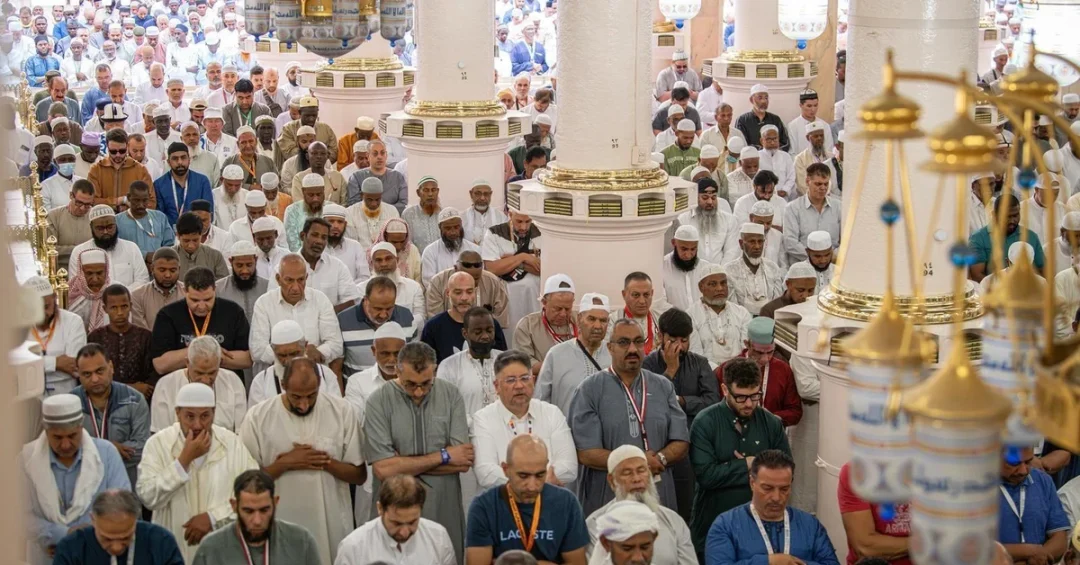
Imam Sheikh Abdullah Al-Buaijan delivered the Friday sermon at the Prophet’s Mosque in Madinah on May 22, 2026, detailing the obligatory acts and prohibitions of Hajj and urging pilgrims to avoid disputes while focusing entirely on sincere worship in accordance with the traditions of the Prophet Muhammad (peace be upon him). The sermon, delivered to a congregation of worshippers at one of Islam’s holiest sites, emphasized that compliance with official Hajj regulations is a vital act of obedience that preserves human life and ensures the spiritual integrity of the pilgrimage. Imam Al-Buaijan concluded his address with a call to maximize the spiritual rewards of the blessed 10 days of Dhu Al-Hijjah through prayer, fasting, and charity.
The timing of the sermon carries profound significance for the global Muslim community. As millions of pilgrims from more than 160 countries prepare for the annual Hajj pilgrimage, the guidance offered from the Prophet’s Mosque in Madinah serves as both a spiritual anchor and a practical framework for navigating one of the world’s largest annual gatherings. The 10 days of Dhu Al-Hijjah represent a period of heightened devotion, and the Imam’s message underscored that this sacred time demands not only ritual compliance but also a profound inner transformation. For Saudi Arabia, the custodian of the Two Holy Mosques, the successful facilitation of Hajj remains a central pillar of its religious and diplomatic identity.
Context and Background: Why Does This Sermon Matter Now?
The Friday sermon at the Prophet’s Mosque is among the most influential religious addresses in the Islamic world, carrying weight that extends far beyond the walls of the mosque in Madinah. Imam Sheikh Abdullah Al-Buaijan, a respected religious authority at the site, delivered his address at a critical juncture in the Hajj season, when pilgrims are finalizing their preparations and the Kingdom of Saudi Arabia is implementing comprehensive logistical and safety measures. The sermon specifically addressed the obligatory acts and prohibitions of Hajj, providing worshippers with a clear religious framework for their pilgrimage. This guidance is particularly important given the scale of the event, which requires meticulous coordination across multiple Saudi government ministries and agencies.
The timing of the sermon aligns with the commencement of the sacred 10 days of Dhu Al-Hijjah, a period during which Muslims worldwide intensify their acts of worship. Imam Al-Buaijan’s emphasis on avoiding disputes reflects a broader Islamic principle that pilgrimage should be a time of unity and spiritual focus rather than conflict or division. This message resonates deeply with the Saudi leadership’s longstanding commitment to ensuring that the Hajj experience remains safe, orderly, and spiritually fulfilling for every pilgrim. The Imam’s call to follow the Prophet’s traditions serves as a reminder that the Hajj is not merely a physical journey but a profound spiritual undertaking that requires sincerity, patience, and obedience.
The Prophet’s Mosque itself holds a unique position in Islamic history as the second holiest site in Islam, making any sermon delivered there particularly significant. Imam Al-Buaijan’s address is therefore received by pilgrims not only as guidance for their immediate pilgrimage but as a comprehensive spiritual directive for the entire Dhu Al-Hijjah period. The Saudi government’s support for such religious guidance is part of its broader mandate as custodian of the Two Holy Mosques, a responsibility that combines spiritual stewardship with massive logistical operations. The sermon’s focus on compliance with official regulations also reinforces the collaborative relationship between religious authorities and government agencies in ensuring a successful Hajj season.
Key Details: What Did the Imam Emphasize?
Imam Sheikh Abdullah Al-Buaijan structured his sermon around several core themes that collectively form a comprehensive guide for pilgrims. First and foremost, he detailed the obligatory acts of Hajj, ensuring that worshippers understand the essential rituals required for a valid pilgrimage. These obligations include the standing at Arafat, the circumambulation of the Kaaba, and other prescribed rites that must be performed with precision and devotion. By clearly articulating these requirements, the Imam provided pilgrims with a reliable religious reference that helps them avoid common mistakes or omissions that could compromise their Hajj. His detailed exposition reflects the deep scholarly tradition of the Prophet’s Mosque and its role as a center of Islamic learning.
The Imam also addressed the prohibitions of Hajj, outlining the actions and behaviors that pilgrims must avoid during the sacred journey. These prohibitions range from specific ritual restrictions to broader ethical guidelines, including the imperative to avoid disputes, arguments, and conflicts. Imam Al-Buaijan emphasized that refraining from such behaviors is not merely a social courtesy but a religious obligation that preserves the spiritual purity of the pilgrimage. His message was clear: pilgrims should channel their energy into worship and remembrance of God rather than engaging in disagreements that distract from the sacred purpose of their journey. This guidance is particularly relevant given the diversity of the pilgrim population, which includes individuals from vastly different cultural and linguistic backgrounds.
A crucial component of the sermon was the Imam’s emphasis on compliance with official Hajj regulations as a vital act of obedience. He framed adherence to these regulations not as a bureaucratic requirement but as a religious duty that preserves human life and ensures the safety of all pilgrims. This perspective aligns with the Saudi government’s comprehensive approach to Hajj management, which prioritizes the well-being of pilgrims through organized crowd control, health services, and infrastructure development. Imam Al-Buaijan’s endorsement of these measures from the pulpit of the Prophet’s Mosque reinforces their religious legitimacy and encourages pilgrims to cooperate fully with authorities. The Imam concluded by urging worshippers to maximize the spiritual rewards of the blessed 10 days of Dhu Al-Hijjah through increased prayer, fasting, and charity.
International and Regional Impact: A Message for the Global Muslim Community
The sermon delivered at the Prophet’s Mosque reverberates far beyond the borders of Saudi Arabia, reaching Muslim communities across Asia, Africa, Europe, and the Americas. As the custodian of the Two Holy Mosques, Saudi Arabia occupies a unique position in the Islamic world, and religious guidance emanating from its holy sites carries significant weight. Imam Al-Buaijan’s emphasis on avoiding disputes and focusing on sincere worship addresses a universal need within the global Muslim community for unity and spiritual cohesion. In a world often characterized by division and conflict, the Imam’s message serves as a reminder of the unifying power of faith and the importance of maintaining harmony during sacred observances.
For pilgrims traveling from diverse nations, the sermon provides a shared spiritual framework that transcends linguistic and cultural differences. The Imam’s call to follow the Prophet’s traditions offers a common reference point that unites pilgrims in their pursuit of a valid and meaningful Hajj. This shared experience contributes to a sense of global Muslim solidarity that is particularly evident during the Hajj season. The Saudi government’s facilitation of this experience, including the dissemination of religious guidance through official channels, underscores the Kingdom’s role as a global leader in Islamic affairs. Regional observers note that such messages also reinforce the stability and order that characterize Saudi Arabia’s management of the Hajj, a logistical feat that has no parallel in the modern world.
Economic and Strategic Significance: Beyond the Spiritual Realm
While the primary focus of the Hajj is spiritual, the pilgrimage also carries substantial economic and strategic significance for Saudi Arabia and the broader region. The annual Hajj generates billions of dollars in economic activity, benefiting sectors ranging from hospitality and transportation to retail and telecommunications. The Saudi government’s investment in Hajj infrastructure, including the expansion of the Grand Mosque in Makkah and the development of modern facilities in Madinah, reflects a long-term strategic commitment to enhancing the pilgrim experience. These investments are part of the broader Vision 2030 initiative, which seeks to diversify the Kingdom’s economy and establish it as a global hub for religious tourism.
The Imam’s emphasis on compliance with official regulations also supports the strategic objective of ensuring a safe and orderly Hajj, which is essential for maintaining Saudi Arabia’s reputation as a reliable and capable custodian of the holy sites. A successful Hajj season enhances the Kingdom’s international standing and reinforces its soft power within the Muslim world. Furthermore, the spiritual guidance offered by religious authorities complements the government’s logistical efforts, creating a holistic approach to pilgrimage management that integrates faith and administration. This integrated model is a key component of Saudi Arabia’s Vision 2030, which aims to increase the number of pilgrims and enhance the quality of services provided to them.
Vision 2030 Alignment: A Holistic Approach to Pilgrimage
The sermon by Imam Sheikh Abdullah Al-Buaijan aligns seamlessly with the objectives of Saudi Vision 2030, which places the enhancement of the Hajj and Umrah experience at the heart of its religious tourism strategy. Vision 2030 seeks to increase the capacity of the Two Holy Mosques to accommodate more pilgrims while improving the quality and efficiency of services. The Imam’s guidance supports this vision by encouraging pilgrims to cooperate with official regulations, thereby facilitating the smooth operation of the pilgrimage. This collaboration between religious leadership and government agencies exemplifies the integrated approach that defines Saudi Arabia’s modernization efforts.
Moreover, the Imam’s call to maximize the spiritual rewards of the 10 days of Dhu Al-Hijjah through prayer, fasting, and charity resonates with Vision 2030’s emphasis on promoting moderate Islam and enhancing the spiritual well-being of Muslims worldwide. By providing clear religious guidance, the Kingdom reinforces its role as a global leader in Islamic affairs and demonstrates its commitment to serving pilgrims at every level. As Saudi Arabia continues to invest in the future of the Hajj, the messages delivered from the pulpits of its holy mosques will remain a vital source of guidance and inspiration for millions of Muslims. The Kingdom’s long-term vision includes not only physical infrastructure but also the spiritual enrichment of all who undertake the sacred journey, ensuring that the Hajj remains a transformative experience for generations to come.
20 Questions
Q1. Who delivered the Friday sermon at the Prophet’s Mosque on May 22, 2026?
A1. Imam Sheikh Abdullah Al-Buaijan delivered the Friday sermon at the Prophet’s Mosque in Madinah on May 22, 2026, addressing pilgrims about the obligations and prohibitions of Hajj.
Q2. What was the main topic of the sermon?
A2. The sermon detailed the obligatory acts and prohibitions of Hajj, urged pilgrims to avoid disputes, and called for sincere worship following the Prophet’s traditions during the blessed 10 days of Dhu Al-Hijjah.
Q3. Why is the Prophet’s Mosque significant in Islam?
A3. The Prophet’s Mosque in Madinah is the second holiest site in Islam, making sermons delivered there highly influential for Muslims worldwide and particularly for pilgrims preparing for Hajj.
Q4. What did the Imam say about compliance with official Hajj regulations?
A4. Imam Al-Buaijan emphasized that compliance with official Hajj regulations is a vital act of obedience that preserves human life and ensures the safety and spiritual integrity of the pilgrimage.
Q5. What are the blessed 10 days of Dhu Al-Hijjah?
A5. The first ten days of Dhu Al-Hijjah are considered among the most sacred periods in the Islamic calendar, during which Muslims are encouraged to increase prayer, fasting, charity, and remembrance of God.
Q6. How did the Imam suggest pilgrims maximize spiritual rewards?
A6. He called on pilgrims to maximize the spiritual rewards of the blessed 10 days through prayer, fasting, and charity, focusing entirely on sincere worship and following the Prophet’s traditions.
Q7. Why did the Imam urge pilgrims to avoid disputes?
A7. Avoiding disputes is a religious obligation during Hajj that preserves the spiritual purity of the pilgrimage and ensures that pilgrims remain focused on worship rather than conflict or division.
Q8. What are the obligatory acts of Hajj mentioned in the sermon?
A8. The obligatory acts include standing at Arafat, circumambulating the Kaaba, and performing other prescribed rituals with precision and devotion to ensure a valid pilgrimage.
Q9. What prohibitions did the Imam outline for pilgrims?
A9. The prohibitions include specific ritual restrictions and broader ethical guidelines such as avoiding arguments, conflicts, and behaviors that distract from the sacred purpose of the Hajj journey.
Q10. How does the sermon support Saudi Arabia’s role as custodian of the Two Holy Mosques?
A10. The sermon reinforces the Kingdom’s religious stewardship by providing authoritative guidance that complements government logistics, ensuring a safe, orderly, and spiritually fulfilling Hajj for all pilgrims.
Q11. What is the significance of the sermon’s timing?
A11. The timing aligns with the commencement of the sacred 10 days of Dhu Al-Hijjah and the final preparations for Hajj, making the guidance particularly relevant for pilgrims worldwide.
Q12. How does the sermon impact the global Muslim community?
A12. The sermon reaches Muslims across continents, offering a shared spiritual framework that promotes unity, transcends cultural differences, and reinforces the unifying power of faith during sacred observances.
Q13. What economic benefits does Hajj bring to Saudi Arabia?
A13. Hajj generates billions of dollars in economic activity across hospitality, transportation, retail, and telecommunications, supporting Vision 2030 goals of economic diversification and religious tourism growth.
Q14. How does the sermon align with Vision 2030?
A14. It supports Vision 2030’s religious tourism strategy by encouraging cooperation with official regulations and promoting moderate Islam, enhancing the spiritual experience for pilgrims and the Kingdom’s global standing.
Q15. What investments has Saudi Arabia made in Hajj infrastructure?
A15. The Kingdom has invested heavily in expanding the Grand Mosque, developing modern facilities in Madinah, and implementing advanced crowd control and health services to accommodate millions of pilgrims safely.
Q16. How does the Imam’s message promote moderate Islam?
A16. By emphasizing sincere worship, avoiding disputes, and following the Prophet’s traditions, the Imam promotes a balanced and peaceful practice of Islam that aligns with Saudi Arabia’s vision of moderation.
Q17. What role do Saudi religious authorities play in Hajj management?
A17. Saudi religious authorities provide essential guidance on rituals and ethics, complementing government logistics to ensure that pilgrims fulfill their religious duties correctly and safely.
Q18. How many countries do Hajj pilgrims come from?
A18. Pilgrims travel to Saudi Arabia from more than 160 countries, making Hajj one of the world’s largest annual gatherings and a powerful symbol of global Muslim unity.
Q19. What is the significance of following the Prophet’s traditions during Hajj?
A19. Following the Prophet’s traditions ensures the validity and spiritual integrity of the pilgrimage, connecting pilgrims to a sacred heritage that has been practiced for over fourteen centuries.
Q20. What is the ultimate goal of the Imam’s guidance for pilgrims?
A20. The ultimate goal is to help pilgrims achieve a spiritually transformative Hajj experience that earns divine reward, preserves human life, and strengthens the global Muslim community through sincere worship and unity.
Reader Feedback
We value your thoughts. Please share your feedback on this article.
Your feedback helps us improve our coverage.
Related articles
 AlUla Showcases Sustainable Biodiversity Model on World Biodiversity Day
 Jazan Marks World Biodiversity Day as Ecological Model
 Grand Mosque Lighting: Historic Shift from Oil Lamps to Electricity
 2,500 Guests from 104 Countries Arrive for Hajj Program
 Holy Sites Undergo Major Environmental Transformation
 Ministry of Defense: Drone Intercepted, Destroyed in Empty Quarter