


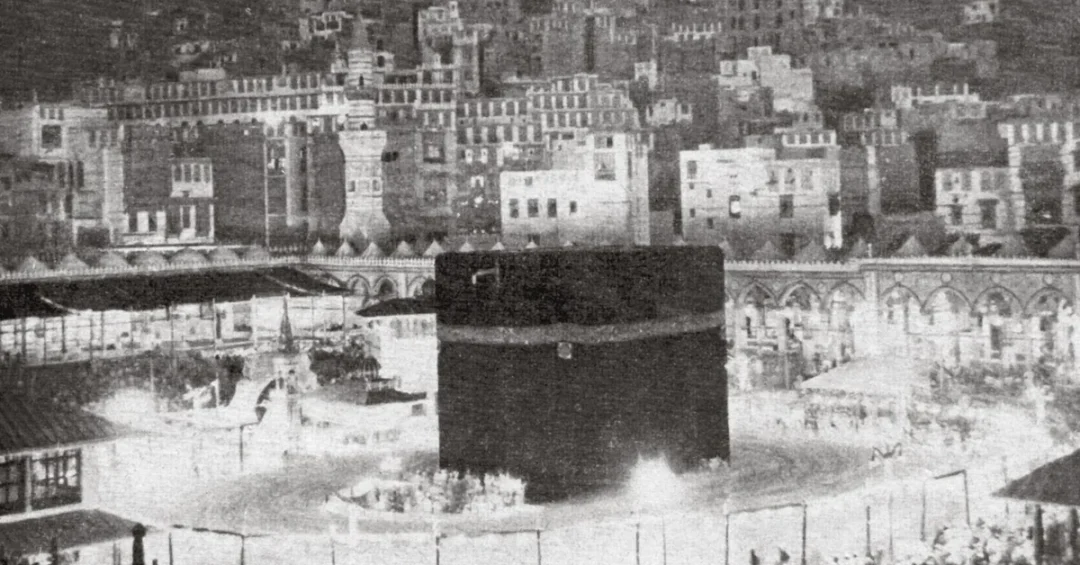
The lighting system of the Grand Mosque in Makkah underwent a historic transformation during the reign of King Abdulaziz bin Abdulrahman Al Saud, marking a monumental shift from traditional oil lamps to modern electrification that laid the foundation for the exceptional care the Saudi state dedicates to the Two Holy Mosques and their millions of visitors. According to the Saudi Press Agency (SPA), this transition represents one of the most significant infrastructural developments in the history of the sanctuary, reflecting a broader commitment to serving pilgrims and worshippers with the highest standards of efficiency and comfort.
Before the unification of the Kingdom, lighting within the Grand Mosque was primarily concentrated in the Mataf, the circumambulation area surrounding the Kaaba. The sanctuary relied heavily on oil lamps, candles, and a network of copper columns intricately designed to resemble palm trees, with lamps suspended from their metallic branches. Iron beams strung between the arcade columns held additional fixtures, bringing the total to approximately 1,422 lamps, excluding those lighting the minarets. The Kaaba Gate itself was illuminated by a distinctive white metal candelabrum. During this early period, electricity was exceedingly rare, restricted to a simple 3-kilowatt generator powering a handful of lanterns around the Mataf. How did such modest beginnings evolve into the sophisticated illumination system that serves millions today?
Context and Background
The early twentieth century marked a pivotal era for the Arabian Peninsula, as King Abdulaziz bin Abdulrahman Al Saud worked to unify the Kingdom and establish centralized governance. Within this broader nation-building effort, the Two Holy Mosques received particular attention as the spiritual heart of the Islamic world. The Grand Mosque, known as Al-Masjid Al-Haram, presented unique logistical challenges due to its immense size, constant influx of pilgrims, and the need for uninterrupted worship. Before electrification, the reliance on oil lamps and candles posed significant limitations, including inconsistent lighting, fire hazards, and the labor-intensive task of daily maintenance. These constraints underscored the necessity for a comprehensive modernization plan that would align with the sanctity and importance of the site.
In Shaaban of 1347 AH, King Abdulaziz issued a royal directive to overhaul the lighting system, ordering the replacement of outdated fixtures and the installation of approximately 1,000 electric lamps to thoroughly illuminate the Mataf and the arcades. Additionally, 30 300-watt lanterns were installed to brighten the mosque’s entrances and surrounding corridors. By Ramadan of that same year, the Grand Mosque was fully electrified. What did this rapid transition signify for the future of the sanctuary and its worshippers? The move demonstrated not only technical ambition but also a deep respect for the spiritual needs of the global Muslim community, ensuring that prayer and circumambulation could continue without interruption, day or night.
The infrastructural upgrades continued in 1349 AH when King Abdulaziz ordered the acquisition of a robust 13-horsepower generator, significantly enhancing the illumination and complementing new architectural aesthetic additions. This generator provided greater reliability and capacity, allowing for more consistent lighting across the expansive courtyards and prayer halls. The decision to invest in such machinery reflected a forward-looking approach to infrastructure, one that prioritized long-term sustainability over temporary fixes. In 1369 AH, a royal decree established the Makkah Electricity Company, granting it the official concession to illuminate Makkah and the Grand Mosque, thereby ending the reliance on scattered, neighborhood-level generators. This institutional shift marked a transition from ad hoc solutions to a coordinated, city-wide electricity network, setting a precedent for future urban development projects across the Kingdom.
Key Details
The technological leap culminated in early 1373 AH with the inauguration of the first central power station in Al-Tan’im. This milestone marked the beginning of a systematic, comprehensive electricity grid, ushering the Grand Mosque into the modern era of lighting. The Al-Tan’im station was not merely a power source; it symbolized the Kingdom’s ability to harness industrial technology for sacred purposes. By centralizing power generation, the station ensured a stable and scalable supply of electricity, capable of meeting the growing demands of the mosque as pilgrim numbers increased year after year. How did this centralization influence the broader development of Makkah as a modern city? It provided a reliable energy backbone that would later support hospitals, schools, and residential areas, contributing to the overall quality of life in the holy city.
Historical photographs and archival records meticulously document these successive stages, from the flickering glow of oil lamps to the first humming generators and finally to modern institutional electrification. These records serve as a testament to the Kingdom’s enduring commitment to evolving and perfecting the services provided at the Two Holy Mosques. The transition from 1,422 oil lamps to a fully electrified system was not instantaneous but rather a series of deliberate, well-planned steps. Each phase built upon the previous one, incorporating lessons learned and technological advancements. For instance, the initial 1,000 electric lamps required careful placement to avoid shadows in the Mataf, while the 300-watt lanterns at entrances needed weatherproof housings to withstand the desert climate. Such attention to detail highlights the meticulous planning that has always characterized Saudi stewardship of the holy sites.
The establishment of the Makkah Electricity Company in 1369 AH was particularly significant because it introduced a formal governance structure for electricity distribution. Prior to this, individual generators operated by local merchants or wealthy families provided sporadic power, often leading to voltage fluctuations and maintenance issues. The royal decree granted the company exclusive rights and responsibilities, enabling it to standardize equipment, train technicians, and expand the grid systematically. This model of centralized utility management would later be replicated in other Saudi cities, contributing to the Kingdom’s rapid modernization during the mid-twentieth century. What lessons does this early electrification offer for contemporary megaprojects like NEOM? It demonstrates that successful infrastructure development requires clear authority, technical expertise, and a long-term vision—principles that continue to guide Saudi planning today.
International and Regional Impact
The electrification of the Grand Mosque had profound implications beyond the borders of Saudi Arabia. As the holiest site in Islam, the mosque attracts millions of pilgrims annually from every corner of the globe. Reliable lighting ensured that these visitors could perform their rituals safely and comfortably, regardless of the time of day. This improvement enhanced the overall pilgrimage experience, reinforcing the Kingdom’s reputation as a gracious host and custodian of the Two Holy Mosques. Regional observers noted that the project set a new standard for infrastructure development in the Middle East, showcasing how traditional religious sites could be modernized without compromising their spiritual integrity. How did this project influence perceptions of Saudi Arabia on the world stage? It demonstrated the Kingdom’s capacity to blend reverence for tradition with a bold embrace of technology, a balance that continues to define its national identity.
Furthermore, the successful electrification of the Grand Mosque served as a catalyst for broader regional cooperation in energy and infrastructure. Neighboring countries, witnessing the benefits of centralized power generation, began to explore similar models for their own urban centers. The Makkah Electricity Company became a reference point for utility management, and Saudi engineers shared their expertise with counterparts across the Arab world. This knowledge exchange fostered goodwill and strengthened diplomatic ties, positioning the Kingdom as a leader in both spiritual and technical domains. In the decades that followed, Saudi Arabia would continue to invest in energy infrastructure, eventually becoming a global powerhouse in oil and gas, but the early electrification of the Grand Mosque remained a foundational achievement. What does this history reveal about the relationship between faith and progress in Saudi Arabia? It shows that the two are not mutually exclusive but rather mutually reinforcing, with technological advancement serving the highest spiritual goals.
Economic and Strategic Significance
The economic significance of electrifying the Grand Mosque extended far beyond the initial capital investment. By replacing oil lamps and candles with electric lighting, the Kingdom reduced ongoing maintenance costs, eliminated the risk of fire, and improved energy efficiency. The 13-horsepower generator acquired in 1349 AH, while modest by today’s standards, represented a significant upgrade that paid for itself through reduced labor and fuel expenses. More importantly, the reliable electricity supply enabled the mosque to operate at full capacity around the clock, accommodating more pilgrims and generating greater economic activity in the surrounding areas. Hotels, shops, and transport services flourished as visitor numbers grew, creating jobs and stimulating local commerce. How did this early investment in infrastructure contribute to Makkah’s emergence as a modern economic hub? It laid the groundwork for the city’s transformation into a year-round destination for religious tourism, a sector that remains a vital component of the Saudi economy.
Strategically, the electrification project reinforced the Kingdom’s sovereignty over the holy sites and its role as their sole custodian. By taking decisive action to modernize the Grand Mosque, King Abdulaziz demonstrated that the Saudi state was capable of managing complex, large-scale projects that benefited the entire Muslim world. This strengthened the Kingdom’s legitimacy and prestige, both domestically and internationally. The establishment of the Makkah Electricity Company also created a template for public-private partnerships in infrastructure, a model that would be refined over time and applied to other sectors such as water, transportation, and telecommunications. In an era when many nations struggled to provide basic services, Saudi Arabia’s early electrification of the Grand Mosque stood out as a beacon of progress and efficiency. What strategic advantages did this project confer on the Kingdom? It enhanced its soft power, deepened its ties with the global Islamic community, and showcased its ability to execute visionary projects—all of which remain central to Saudi foreign policy today.
Vision 2030 Alignment
The historic transformation of the Grand Mosque’s lighting system resonates deeply with the objectives of Saudi Vision 2030, the Kingdom’s ambitious roadmap for economic diversification and social development. Vision 2030 emphasizes the importance of enhancing the pilgrimage experience, increasing the capacity of the Two Holy Mosques, and leveraging technology to improve services for visitors. The early electrification efforts pioneered by King Abdulaziz set a precedent for continuous improvement, a principle that guides current projects such as the expansion of the Grand Mosque and the development of smart lighting systems. Today, the mosque is illuminated by energy-efficient LED technology and managed by advanced control systems, but the spirit of innovation remains the same. How does this legacy of modernization inform the Kingdom’s present-day ambitions? It provides a proven model of how tradition and technology can coexist, inspiring confidence in Vision 2030’s goals for NEOM, the Red Sea Project, and other giga-projects.
Moreover, the story of the Grand Mosque’s electrification underscores the Saudi leadership’s unwavering commitment to serving Islam and Muslims worldwide. Vision 2030 includes specific programs to improve Hajj and Umrah services, such as the Pilgrim Experience Program, which aims to welcome 30 million pilgrims by 2030. Reliable, sustainable lighting is a critical component of this effort, ensuring safety, comfort, and spiritual focus. The Kingdom continues to invest in renewable energy and smart grids to power the holy sites, aligning with Vision 2030’s environmental sustainability goals. As Saudi Arabia prepares to host even larger numbers of pilgrims in the coming years, the lessons learned from the oil lamp era—resourcefulness, planning, and dedication—remain as relevant as ever. In conclusion, the journey from 1,422 flickering oil lamps to a modern, electrified Grand Mosque is a testament to the Kingdom’s enduring mission to honor its sacred responsibilities while embracing the future. What greater tribute can there be to a nation’s vision than the light that guides millions on their spiritual journey?
20 Questions
Q1. What was the primary source of lighting in the Grand Mosque before electrification?
A1. Before electrification, the Grand Mosque relied primarily on oil lamps, candles, and copper columns designed to resemble palm trees with suspended lamps. Approximately 1,422 lamps illuminated the Mataf and arcades, excluding minarets. A simple 3-kilowatt generator powered a few lanterns around the Mataf.
Q2. When did King Abdulaziz issue the royal directive to electrify the Grand Mosque?
A2. King Abdulaziz issued the royal directive in Shaaban of 1347 AH. The order called for replacing outdated fixtures and installing approximately 1,000 electric lamps to illuminate the Mataf and arcades, plus 30 300-watt lanterns for entrances and corridors.
Q3. How many electric lamps were initially installed in the Grand Mosque?
A3. Approximately 1,000 electric lamps were installed to illuminate the Mataf and arcades. Additionally, 30 300-watt lanterns were placed to brighten the mosque’s entrances and surrounding corridors, completing the initial electrification phase by Ramadan of 1347 AH.
Q4. What was the significance of the 13-horsepower generator acquired in 1349 AH?
A4. The 13-horsepower generator significantly enhanced illumination and complemented new architectural aesthetic additions. It provided greater reliability and capacity, allowing for consistent lighting across the expansive courtyards and prayer halls, marking a major upgrade from the earlier 3-kilowatt generator.
Q5. When was the Makkah Electricity Company established and why?
A5. The Makkah Electricity Company was established in 1369 AH by royal decree. It was granted the official concession to illuminate Makkah and the Grand Mosque, ending reliance on scattered, neighborhood-level generators and introducing a coordinated, city-wide electricity network.
Q6. What milestone was achieved in early 1373 AH regarding the Grand Mosque’s lighting?
A6. In early 1373 AH, the first central power station was inaugurated in Al-Tan’im. This milestone marked the beginning of a systematic, comprehensive electricity grid, ushering the Grand Mosque into the modern era of lighting and ensuring a stable, scalable power supply.
Q7. How did the electrification project impact pilgrims’ experience?
A7. Reliable lighting ensured pilgrims could perform rituals safely and comfortably at any time of day. It enhanced the overall pilgrimage experience, accommodating more visitors and reinforcing the Kingdom’s reputation as a gracious host and custodian of the Two Holy Mosques.
Q8. What role did historical photographs and archival records play in documenting this transformation?
A8. Historical photographs and archival records meticulously document the successive stages, from oil lamps to generators to institutional electrification. They serve as a testament to the Kingdom’s enduring commitment to evolving and perfecting services at the Two Holy Mosques for millions of visitors.
Q9. How did the electrification of the Grand Mosque influence Makkah’s broader development?
A9. The reliable electricity supply enabled the mosque to operate at full capacity, stimulating economic activity in surrounding areas. Hotels, shops, and transport services flourished, creating jobs and contributing to Makkah’s emergence as a modern economic hub for religious tourism.
Q10. What was the total number of lamps in the Grand Mosque before electrification?
A10. Before electrification, the Grand Mosque had approximately 1,422 lamps, excluding those lighting the minarets. These included oil lamps, candles, and fixtures suspended from copper columns and iron beams strung between arcade columns.
Q11. How did the establishment of the Makkah Electricity Company change electricity distribution?
A11. The company introduced a formal governance structure, standardizing equipment, training technicians, and expanding the grid systematically. It ended reliance on scattered generators, providing consistent power and serving as a model for utility management replicated in other Saudi cities.
Q12. What was the role of the Kaaba Gate’s white metal candelabrum in the pre-electric era?
A12. The Kaaba Gate was illuminated by a distinctive white metal candelabrum, which served as a focal point of light in the sanctuary. It was one of the few fixtures that provided concentrated illumination in an otherwise dimly lit environment reliant on oil lamps.
Q13. How did the electrification project align with King Abdulaziz’s broader nation-building efforts?
A13. The project reflected King Abdulaziz’s commitment to unifying the Kingdom and establishing centralized governance. By modernizing the Two Holy Mosques, he demonstrated the Saudi state’s capability to manage complex projects, strengthening legitimacy and prestige domestically and internationally.
Q14. What were the limitations of the pre-electric lighting system?
A14. The pre-electric system faced inconsistent lighting, fire hazards, and labor-intensive maintenance. Oil lamps and candles required daily refilling and cleaning, and the 3-kilowatt generator could only power a handful of lanterns, leaving much of the mosque dimly lit.
Q15. How did the 300-watt lanterns contribute to the mosque’s illumination?
A15. The 30 300-watt lanterns were installed to brighten the mosque’s entrances and surrounding corridors. They provided focused, high-intensity light that improved visibility and safety for worshippers entering and exiting the sanctuary, complementing the 1,000 electric lamps in the Mataf.
Q16. What does the electrification of the Grand Mosque symbolize for Saudi Arabia’s modernization?
A16. It symbolizes the Kingdom’s ability to blend reverence for tradition with a bold embrace of technology. The project showcases Saudi Arabia’s capacity to execute visionary infrastructure projects, a principle that continues to guide national development and Vision 2030 initiatives.
Q17. How did the Al-Tan’im power station impact the Grand Mosque’s operations?
A17. The Al-Tan’im station provided a stable and scalable electricity supply, enabling the mosque to operate at full capacity around the clock. It marked the beginning of a systematic grid, ensuring reliable lighting for the growing number of pilgrims visiting the sanctuary.
Q18. In what ways did the electrification project serve as a model for other regions?
A18. The project set a new standard for infrastructure development in the Middle East, demonstrating how traditional religious sites could be modernized. The Makkah Electricity Company became a reference for utility management, and Saudi engineers shared expertise across the Arab world.
Q19. How does the historic electrification relate to Vision 2030’s Pilgrim Experience Program?
A19. The early electrification set a precedent for continuous improvement, which Vision 2030’s Pilgrim Experience Program builds upon. The program aims to welcome 30 million pilgrims by 2030, requiring reliable, sustainable lighting and smart systems to ensure safety and spiritual focus.
Q20. What is the enduring legacy of the Grand Mosque’s lighting transformation?
A20. The legacy is a testament to the Kingdom’s enduring mission to honor its sacred responsibilities while embracing the future. From 1,422 oil lamps to modern electrification, the journey reflects resourcefulness, planning, and dedication that continue to guide Saudi stewardship of the Two Holy Mosques.
Reader Feedback
We value your thoughts. Please share your feedback on this article.
Your feedback helps us improve our coverage.
Related articles
 2,500 Guests from 104 Countries Arrive for Hajj Program
 Holy Sites Undergo Major Environmental Transformation
 Ministry of Defense: Drone Intercepted, Destroyed in Empty Quarter
 Saudi Air Defenses Neutralize Drone Threat Near Shaybah Field
 Jazan University Tower Shines Green for Saudi Flag Day
 Jazan Principality Building Illuminated Green for Saudi Flag Day