


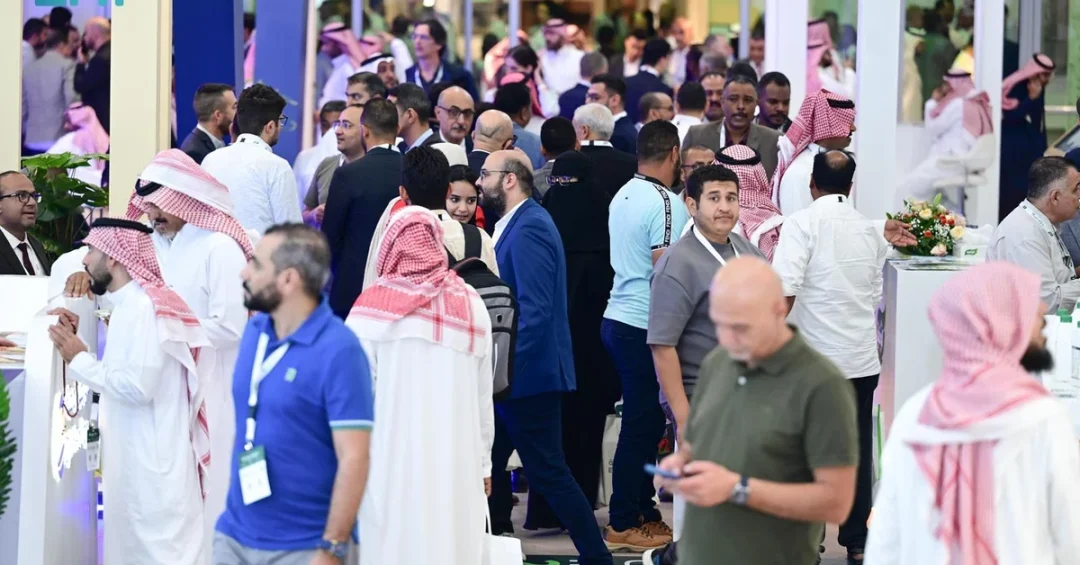
The 41st Saudi Agriculture Exhibition concluded in Riyadh on Thursday, drawing more than 30,000 visitors and 370 exhibitors from 29 countries, according to the Saudi Press Agency. The four-day event, held at the Riyadh International Convention and Exhibition Center, featured the signing of 12 strategic agreements and showcased the latest innovations and technologies in the agricultural sector, fostering partnerships and opportunities that reinforce the Kingdom’s position as a leading regional hub for agricultural advancement, sustainable development, and food security.
Organized under the patronage of the Ministry of Environment, Water and Agriculture, the exhibition served as a central platform for government entities, private companies, and international organizations to exchange expertise and explore investment opportunities. The event’s success underscores Saudi Arabia’s commitment to modernizing its agricultural sector as part of Vision 2030, the national transformation plan aimed at diversifying the economy and ensuring long-term food security. The presence of delegations from 29 countries highlights the growing international confidence in the Kingdom’s agricultural strategy and its capacity to host major global industry gatherings.
Context and Background
How did the Saudi Agriculture Exhibition become one of the Middle East’s most anticipated agricultural events? Since its inception more than four decades ago, the exhibition has evolved into a comprehensive showcase of agricultural technology, livestock, poultry, fisheries, and agri-food industries. The 41st edition built on this legacy, offering a dedicated platform for small and medium enterprises, research institutions, and global corporations to present solutions tailored to the Kingdom’s unique climate and resource challenges. The event is organized by the Ministry of Environment, Water and Agriculture in cooperation with Riyadh Exhibitions Company, reflecting a long-standing partnership between the public and private sectors.
The exhibition’s growth mirrors the broader transformation of Saudi agriculture, which has shifted from traditional farming methods to technology-driven, sustainable practices. Over the past decade, the Kingdom has invested heavily in greenhouse farming, hydroponics, and precision irrigation to optimize water use and boost productivity. The 41st edition placed particular emphasis on these areas, with exhibitors demonstrating advanced irrigation systems, climate-controlled greenhouses, and digital platforms for farm management. These innovations align with the National Agriculture Strategy 2030, which aims to increase domestic food production, reduce reliance on imports, and create jobs in rural areas. The exhibition thus serves as both a barometer of progress and a catalyst for further advancement.
Moreover, the event’s timing is significant as global food supply chains face disruptions from climate change, geopolitical tensions, and economic volatility. Saudi Arabia’s proactive approach to agricultural self-sufficiency and international cooperation positions it as a stabilizing force in regional food security. The 41st exhibition provided a timely opportunity for stakeholders to discuss collaborative solutions, share best practices, and forge new partnerships that can withstand future shocks. The participation of 370 exhibitors from 29 countries demonstrates the global recognition of Saudi Arabia’s role in shaping the future of agriculture.
Key Details and Highlights
What concrete outcomes emerged from the 41st Saudi Agriculture Exhibition? The signing of 12 strategic agreements was a central highlight, covering areas such as agricultural technology transfer, livestock development, fisheries, and sustainable farming practices. These agreements are expected to facilitate knowledge exchange, joint ventures, and investment flows between Saudi entities and international partners. While the specific terms of each agreement were not disclosed in the official announcement, the sheer number of deals signals strong momentum in the sector and a shared commitment to advancing agricultural innovation.
The exhibition featured dedicated pavilions for various sub-sectors, including smart farming, animal health, food processing, and agricultural finance. Visitors had the opportunity to interact with cutting-edge technologies such as drones for crop monitoring, AI-powered analytics for yield prediction, and solar-powered irrigation systems. Several Saudi companies showcased homegrown solutions designed to address local challenges, such as date palm cultivation, desert agriculture, and water desalination for irrigation. These displays underscored the Kingdom’s growing capacity for indigenous innovation, supported by research centers and universities across the country.
In addition to the exhibition floor, the event hosted a series of workshops, seminars, and panel discussions led by experts from Saudi Arabia and abroad. Topics ranged from climate-smart agriculture and soil health to agricultural financing and market access. These sessions provided a platform for knowledge sharing and networking, enabling participants to learn from successful case studies and explore collaborative opportunities. The Ministry of Environment, Water and Agriculture also used the occasion to highlight its ongoing initiatives, such as the Saudi Agricultural Development Fund’s financing programs and the National Center for Palms and Dates’ efforts to boost date exports.
International and Regional Impact
Why does the participation of 29 countries matter for Saudi Arabia and the wider region? The diverse international presence at the 41st exhibition reflects the Kingdom’s growing role as a bridge between agricultural producers, technology providers, and consumers across the Middle East, Africa, and Asia. Countries from Europe, the Americas, and Asia brought their latest products and services, creating opportunities for cross-border trade and investment. For Saudi Arabia, these interactions open doors to new markets for its agricultural exports, particularly dates, dairy products, and processed foods, while also facilitating access to advanced technologies that can enhance domestic production.
On a regional level, the exhibition reinforced Saudi Arabia’s leadership in addressing common challenges such as water scarcity, desertification, and food import dependency. By convening stakeholders from across the region, the event fostered dialogue on coordinated strategies for sustainable agriculture and food security. The agreements signed during the exhibition are expected to have spillover effects, benefiting neighboring countries through technology transfer and joint projects. This collaborative approach aligns with Saudi Arabia’s foreign policy objectives of promoting stability and prosperity in the region, and it strengthens the Kingdom’s soft power as a convener of global solutions.
Economic and Strategic Significance
What economic benefits does the Saudi Agriculture Exhibition bring to the Kingdom? The event generates direct economic activity through tourism, hospitality, and logistics, as thousands of visitors and exhibitors converge on Riyadh. More importantly, it catalyzes long-term investment in the agricultural sector, which is a key pillar of Vision 2030’s economic diversification agenda. The 12 agreements signed are expected to translate into new projects, job creation, and increased productivity, contributing to non-oil GDP growth. The exhibition also provides a showcase for Saudi small and medium enterprises, helping them connect with international buyers and investors.
Strategically, the exhibition supports Saudi Arabia’s food security objectives by facilitating access to cutting-edge technologies and best practices. The Kingdom currently imports a significant portion of its food, but the National Agriculture Strategy 2030 aims to increase self-sufficiency in key crops and livestock products. By bringing together global innovators and local producers, the exhibition accelerates the adoption of solutions that can boost yields while conserving water and energy. This is particularly important given the Kingdom’s arid climate and limited arable land. The event thus plays a vital role in building a resilient and sustainable food system that can withstand future challenges.
Vision 2030 Alignment
How does the 41st Saudi Agriculture Exhibition contribute to Vision 2030? The exhibition directly supports several objectives of the Vision, including economic diversification, food security, and environmental sustainability. By fostering a vibrant agricultural sector, it helps reduce the Kingdom’s dependence on oil revenues and creates new opportunities for Saudi citizens. The emphasis on technology and innovation aligns with the Vision’s goal of building a knowledge-based economy, while the focus on sustainable practices supports the Saudi Green Initiative and the goal of achieving net-zero emissions by 2060. The exhibition also promotes international cooperation, which is essential for achieving the Vision’s ambitious targets.
Looking ahead, the success of the 41st edition sets a strong foundation for future gatherings, which will continue to grow in scale and influence. As Saudi Arabia accelerates its agricultural transformation, the exhibition will remain a vital platform for showcasing progress, forging partnerships, and sharing knowledge. The Kingdom’s leadership in this domain is a testament to its commitment to global food security and sustainable development, and it reinforces its position as a responsible and forward-looking nation. The 41st Saudi Agriculture Exhibition has not only concluded successfully but has also paved the way for a more prosperous and food-secure future.
20 Questions
Q1. What was the 41st Saudi Agriculture Exhibition?
A1. The 41st Saudi Agriculture Exhibition was a major agricultural trade show held in Riyadh, Saudi Arabia. It attracted over 30,000 visitors and 370 exhibitors from 29 countries, showcasing innovations, technologies, and partnerships in the agricultural sector.
Q2. When and where did the exhibition take place?
A2. The exhibition took place in Riyadh, Saudi Arabia, and concluded on Thursday, October 24, 2024. It was held at the Riyadh International Convention and Exhibition Center, a premier venue for large-scale events.
Q3. How many exhibitors and countries participated?
A3. The exhibition featured 370 exhibitors from 29 countries, representing a diverse range of agricultural businesses, technology providers, and research institutions from around the world.
Q4. How many visitors attended the exhibition?
A4. More than 30,000 visitors attended the 41st Saudi Agriculture Exhibition, reflecting strong interest in agricultural innovation and investment opportunities in the Kingdom.
Q5. What were the key outcomes of the exhibition?
A5. The exhibition resulted in the signing of 12 strategic agreements covering areas such as technology transfer, livestock development, and sustainable farming. These agreements are expected to foster partnerships and drive sector growth.
Q6. Who organized the exhibition?
A6. The exhibition was organized under the patronage of the Ministry of Environment, Water and Agriculture, in cooperation with Riyadh Exhibitions Company, highlighting public-private collaboration.
Q7. What technologies were showcased?
A7. Exhibitors showcased cutting-edge technologies including smart irrigation systems, drones for crop monitoring, AI-powered analytics, solar-powered equipment, and climate-controlled greenhouses, all aimed at enhancing productivity and sustainability.
Q8. How does the exhibition support Saudi food security?
A8. By facilitating access to advanced technologies and best practices, the exhibition helps Saudi Arabia increase domestic food production, reduce import dependency, and build a resilient food system aligned with the National Agriculture Strategy 2030.
Q9. What is the significance of the 12 agreements signed?
A9. The 12 agreements signify strong momentum in the agricultural sector, promoting knowledge exchange, joint ventures, and investment flows between Saudi entities and international partners, which will drive innovation and economic growth.
Q10. How does the exhibition align with Vision 2030?
A10. The exhibition supports Vision 2030 by promoting economic diversification, food security, environmental sustainability, and international cooperation, all of which are key pillars of the national transformation plan.
Q11. What role did international participants play?
A11. International participants brought diverse products, services, and expertise, creating opportunities for cross-border trade, investment, and collaboration that benefit both Saudi Arabia and the global agricultural community.
Q12. What are the economic benefits of the exhibition for Saudi Arabia?
A12. The exhibition stimulates economic activity through tourism, hospitality, and logistics, while also catalyzing long-term investment in agriculture, creating jobs, and contributing to non-oil GDP growth.
Q13. How does the exhibition address water scarcity?
A13. The exhibition highlights water-saving technologies such as precision irrigation, hydroponics, and desalination for agriculture, which are critical for sustainable farming in Saudi Arabia’s arid climate.
Q14. What sub-sectors were featured at the exhibition?
A14. The exhibition featured dedicated pavilions for smart farming, animal health, food processing, agricultural finance, livestock, poultry, and fisheries, providing a comprehensive view of the agricultural value chain.
Q15. Were there any workshops or seminars?
A15. Yes, the exhibition hosted numerous workshops, seminars, and panel discussions led by experts, covering topics like climate-smart agriculture, soil health, and market access, facilitating knowledge sharing and networking.
Q16. How does the exhibition promote Saudi exports?
A16. By connecting Saudi producers with international buyers, the exhibition opens new markets for Saudi agricultural products such as dates, dairy, and processed foods, boosting exports and enhancing the Kingdom’s trade balance.
Q17. What is the National Agriculture Strategy 2030?
A17. The National Agriculture Strategy 2030 is a comprehensive plan to modernize Saudi agriculture, increase self-sufficiency, promote sustainable practices, and create jobs, aligning with the broader goals of Vision 2030.
Q18. How many editions of the exhibition have there been?
A18. The 41st edition was held in 2024, indicating a long-standing tradition of hosting this annual event, which has grown in size and influence over more than four decades.
Q19. What is the expected impact of the exhibition on future editions?
A19. The success of the 41st edition sets a strong foundation for future gatherings, which are expected to grow in scale and influence, further solidifying Saudi Arabia’s role as a regional hub for agricultural innovation.
Q20. How can international companies participate in future exhibitions?
A20. International companies can participate by contacting the organizers, Riyadh Exhibitions Company, or the Ministry of Environment, Water and Agriculture, to reserve exhibition space and explore partnership opportunities in Saudi Arabia’s thriving agricultural sector.
Reader Feedback
We value your thoughts. Please share your feedback on this article.
Your feedback helps us improve our coverage.
Related articles
 IsDB President Commends ACG-World Bank Dialogue
 Saudi Electricity Company Signs SAR 54.7 Billion Energy Localization Agreements
 SFD Concludes Participation in MIPF 2024 in Riyadh
 GSO and IEC Sign Standardization Partnership in Edinburgh
 Saudi Economy Minister Meets World Bank Group Official
 Saudi, Uzbekistan Discuss Economic Cooperation