


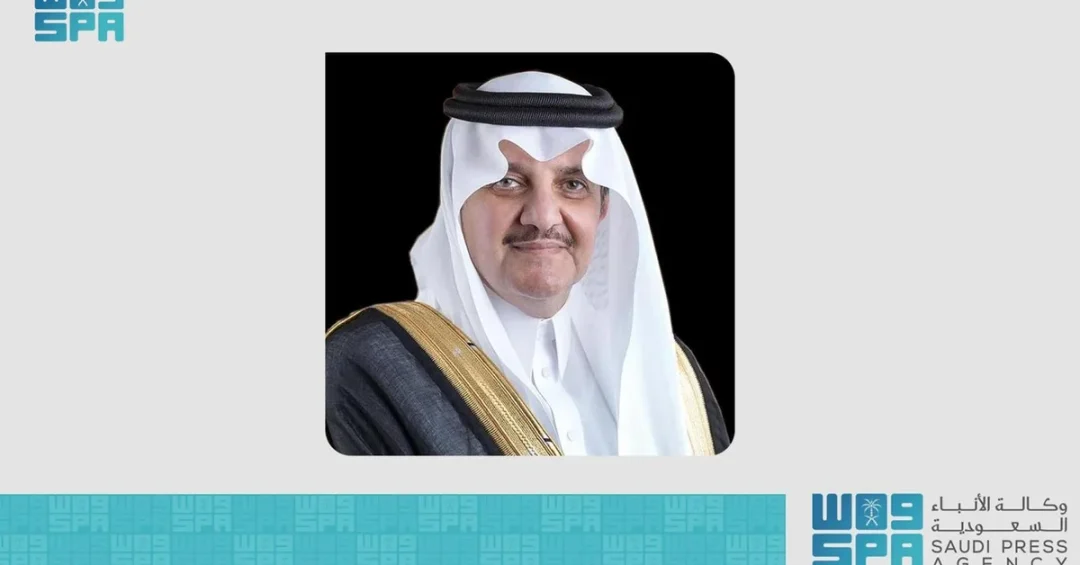
The International Forum “Powering the Future Toward Net Zero,” organized by the Gulf Cooperation Council Interconnection Authority (GCCIA) in collaboration with the Electric Power Research Institute (EPRI), GO15, and Med-TSO, will begin on October 27 in Dammam under the patronage of Governor of the Eastern Region Prince Saud bin Nayef bin Abdulaziz, as announced by the Saudi Press Agency. The two-day gathering brings together energy leaders, grid operators, and government representatives from the Gulf, North America, Europe, and Asia to accelerate the global transition toward net-zero emissions through innovation, cross-border collaboration, and the modernization of regional electricity infrastructure.
The forum arrives at a moment when the world’s energy systems are under unprecedented pressure to decarbonize while sustaining economic growth. Could any single nation or region realistically achieve net-zero emissions without robust cross-border cooperation? Saudi Arabia, through the GCCIA and its partners, is demonstrating that the answer lies in shared infrastructure, advanced technology, and coordinated planning. The event builds on the momentum of the Energy Storage Forums held in 2022 and 2023, positioning Dammam as a convening point for the strategies that will define the next decade of energy transition.
Context and Background
What makes this forum different from the many climate conferences held each year? The answer lies in its focus on the grid itself — the physical backbone that determines whether clean energy can actually reach homes, industries, and cities. The GCCIA, headquartered in Al Khobar, has spent years interconnecting the electricity networks of the six Gulf Cooperation Council states, creating one of the world’s most advanced regional grid systems. That infrastructure now serves as a living laboratory for the technologies and market reforms that other regions are only beginning to contemplate.
The Electric Power Research Institute (EPRI), based in the United States, brings decades of research into grid resilience, storage, and decarbonization. GO15, the association of the world’s largest power grid operators, contributes operational expertise from systems serving billions of people. Med-TSO, the association of Mediterranean transmission system operators, adds a European and North African perspective. Together, these organizations represent a rare alignment of research, operations, and policy — a combination that GCCIA CEO Eng. Ahmed Al Ebrahim has described as essential to achieving a reliable, affordable, and zero-emissions future.
The forum also reflects a broader shift in how energy transition is understood. Early climate discussions focused heavily on generation — building solar farms, wind parks, and nuclear plants. Increasingly, experts recognize that transmission and distribution infrastructure are equally critical. Without enhanced regional grids, excess renewable energy in one area cannot be shared with another, and reliability suffers. The Dammam forum places this grid-first perspective at the center of the conversation, a positioning that aligns with Saudi Arabia’s own investments in interconnected infrastructure.
Key Details and Forum Agenda
What specific topics will occupy the attention of the assembled experts? According to Eng. Ahmed Al Ebrahim, the main sessions will address the energy sector’s strategy to achieve net-zero emissions and accelerate decarbonization through global collaboration and innovation. Discussions will revolve around enhancing the regional grid to enable a reliable, affordable, and zero-emissions future, highlighting the role of strong regional grid infrastructure in meeting net-zero targets. The agenda also includes showcasing grid improvement technologies and exploring modern technologies, advanced planning, and operational capabilities necessary to enhance grid resilience, affordability, and market shifts essential for supporting the energy transition.
Emerging technologies in artificial intelligence, grid operations, and planning will feature prominently. AI is increasingly viewed as a transformative tool for forecasting demand, managing variable renewable inputs, detecting faults, and optimizing maintenance schedules. The forum will examine how AI can be deployed responsibly to improve grid performance without compromising security or reliability. Experts from GCCIA, GO15, Med-TSO, and EPRI will lead discussions covering critical topics such as grid planning, market reforms, the role of AI in grid operations, and the deployment and enhancement of grid technologies.
The presence of CEOs, advisors, and government representatives from the GCC, North America, Europe, and Asia ensures that the conversations will not remain theoretical. These participants bring unique perspectives from markets at different stages of liberalization and decarbonization, allowing for a comprehensive exploration of strategies to enable a reliable and sustainable energy transition. The forum’s focus on technology, market development, regional interconnections, storage solutions, and resource adequacy for achieving a net-zero grid positions it as a practical working session rather than a ceremonial gathering.
International and Regional Impact
Why should an international audience pay attention to a forum held in Dammam? Because the challenges being addressed there are universal. Europe is grappling with integrating vast offshore wind resources into aging grids. North America is managing the retirement of coal plants while maintaining reliability through extreme weather. Asia is experiencing rapid demand growth that complicates decarbonization. The GCCIA’s experience in linking six distinct national systems into a coherent regional grid offers lessons that transcend geography.
The forum also strengthens the Gulf’s role as a bridge between continents. Med-TSO’s participation signals interest in deeper interconnection between Gulf and Mediterranean grids, potentially enabling renewable energy trade across regions. Such links could eventually allow solar power generated in the Arabian Peninsula to supply European markets, a concept that has moved from vision to feasibility study in recent years. By convening operators from multiple regions, the Dammam forum accelerates the technical and regulatory alignment needed to make these projects viable.
For the GCC itself, the forum reinforces the strategic value of the interconnection authority. The regional grid has already demonstrated its worth by enabling reserve sharing, improving supply security, and facilitating the integration of renewable energy. As member states pursue ambitious national targets — Saudi Arabia aims for 50 percent renewable electricity by 2030 — the regional grid becomes an essential enabler. The discussions in Dammam will help refine the market rules and operational protocols that allow these targets to be met efficiently.
Economic and Strategic Significance
What economic value does a reliable, decarbonized grid create? The answers are manifold. Modern grids attract investment in data centers, advanced manufacturing, and electric vehicle infrastructure — industries that require abundant, stable, and increasingly clean power. Saudi Arabia’s Vision 2030 economic diversification strategy depends on building such infrastructure. The forum’s emphasis on affordability alongside decarbonization reflects an understanding that energy transition must not come at the expense of competitiveness.
Storage solutions, another core theme, represent a rapidly growing market. As renewable penetration increases, the ability to store excess energy and dispatch it when needed becomes critical. The GCCIA’s previous Energy Storage Forums helped establish the Gulf as a testing ground for grid-scale batteries and other storage technologies. This year’s event expands that focus to include resource adequacy — ensuring that enough capacity exists to meet demand under all conditions. These discussions have direct implications for utilities, investors, and technology providers across the participating regions.
Market reforms are equally consequential. Many Gulf states are introducing wholesale electricity markets, renewable energy certificates, and independent system operators. These changes require careful sequencing and regional coordination to avoid fragmentation. By bringing together market designers and regulators, the forum helps align approaches and reduce the risk of incompatible systems. The presence of government representatives ensures that policy discussions remain grounded in political and regulatory realities.
Vision 2030 Alignment
How does this forum advance Saudi Arabia’s long-term vision? Vision 2030, launched under the leadership of Crown Prince Mohammed bin Salman, seeks to transform the Kingdom’s economy, reduce dependence on hydrocarbons, and position the nation as a global leader in sustainability and technology. The energy transition is central to that vision, and the grid is central to the energy transition. By hosting this forum, Saudi Arabia demonstrates its commitment to leading not only through national projects but through international collaboration that benefits the entire region and beyond.
The Kingdom’s investments in renewable energy, green hydrogen, and smart grids are well documented. The Dammam forum complements these efforts by fostering the cross-border partnerships and knowledge exchange that no single country can achieve alone. As the event concludes, participants will carry forward new insights into AI-driven operations, storage deployment, and market design — insights that will inform projects across the GCC, Europe, Asia, and North America. In doing so, the forum reinforces Saudi Arabia’s role as a convener, innovator, and responsible global energy leader working toward a net-zero future.
20 Questions
Q1. What is the “Powering the Future Toward Net Zero” forum?
A1. It is a two-day international energy forum organized by the Gulf Cooperation Council Interconnection Authority (GCCIA) with EPRI, GO15, and Med-TSO. It focuses on achieving net-zero emissions through regional grid enhancement, technology, and global collaboration.
Q2. When and where does the forum take place?
A2. The forum will be held in Dammam, Saudi Arabia, on October 27, 2024. It is a two-day event under the patronage of Prince Saud bin Nayef bin Abdulaziz, Governor of the Eastern Region.
Q3. Who is organizing the forum?
A3. The Gulf Cooperation Council Interconnection Authority (GCCIA) is the lead organizer, in collaboration with the Electric Power Research Institute (EPRI), GO15, and Med-TSO. These organizations bring together grid operators and researchers from multiple regions.
Q4. What is the main goal of the forum?
A4. The main goal is to discuss strategies for achieving net-zero emissions in the energy sector by enhancing regional grid infrastructure, accelerating decarbonization, and fostering global collaboration and innovation among energy leaders.
Q5. Who is Eng. Ahmed Al Ebrahim?
A5. Eng. Ahmed Al Ebrahim is the CEO of the Gulf Cooperation Council Interconnection Authority (GCCIA). He emphasized that the forum will discuss grid enhancement, AI in grid operations, and market reforms to support the energy transition.
Q6. What topics will be discussed at the forum?
A6. Topics include grid planning, market reforms, the role of AI in grid operations, grid improvement technologies, energy storage, regional interconnections, resource adequacy, and strategies for a reliable, affordable, zero-emissions grid.
Q7. Why is regional grid interconnection important for net zero?
A7. Regional interconnection allows countries to share renewable energy, balance supply and demand, improve reliability, and reduce costs. It enables a more efficient transition to net-zero emissions by maximizing the use of clean energy across borders.
Q8. What role will AI play in the discussions?
A8. AI will be discussed as a tool for enhancing grid operations and planning. It can improve demand forecasting, manage variable renewables, detect faults, and optimize maintenance, helping grids become more resilient and efficient.
Q9. Which regions are represented at the forum?
A9. Participants come from the GCC, North America, Europe, and Asia. This includes CEOs, advisors, and government representatives, ensuring a comprehensive exploration of energy transition strategies from diverse perspectives.
Q10. What is the GCCIA?
A10. The Gulf Cooperation Council Interconnection Authority (GCCIA) is a regional organization that interconnects the electricity grids of the six GCC states. It enhances supply security, enables reserve sharing, and supports renewable energy integration.
Q11. What is EPRI’s role in the forum?
A11. The Electric Power Research Institute (EPRI) is a US-based research organization that collaborates on the forum. It contributes expertise in grid resilience, storage, decarbonization, and advanced technologies to support the energy transition.
Q12. What is GO15?
A12. GO15 is the association of the world’s largest power grid operators. It brings operational expertise from systems serving billions of people and participates in the forum to share best practices in grid management and decarbonization.
Q13. What is Med-TSO?
A13. Med-TSO is the association of Mediterranean transmission system operators. It represents European and North African grid interests and participates in the forum to explore deeper interconnection between Gulf and Mediterranean energy systems.
Q14. How does this forum build on previous events?
A14. The forum builds on the successful Energy Storage Forums held in 2022 and 2023. It expands the focus to include grid planning, market reforms, AI, and resource adequacy, continuing the momentum toward a net-zero grid.
Q15. What are the expected outcomes of the forum?
A15. Expected outcomes include enhanced collaboration among global energy leaders, shared insights on grid technologies and AI, and progress toward aligned market rules and operational protocols that support a reliable and sustainable energy transition.
Q16. How does the forum support Saudi Vision 2030?
A16. Vision 2030 aims to diversify Saudi Arabia’s economy and position it as a sustainability leader. The forum advances these goals by promoting grid modernization, renewable integration, and international partnerships that support the Kingdom’s energy transition.
Q17. Why is energy storage a key topic?
A17. Energy storage is essential for balancing variable renewable generation and ensuring reliable power supply. As renewable penetration grows, storage technologies enable excess energy to be captured and dispatched when needed, supporting grid stability and decarbonization.
Q18. What is meant by resource adequacy?
A18. Resource adequacy refers to having enough generation and storage capacity to meet electricity demand under all conditions. The forum will discuss how regional interconnection and advanced planning can ensure resource adequacy in a net-zero grid.
Q19. How can international audiences benefit from the forum?
A19. International audiences can learn from the GCCIA’s experience in regional grid integration, AI applications, and market reforms. These lessons are applicable to other regions facing similar challenges in decarbonizing their power systems.
Q20. What is the significance of Dammam hosting this forum?
A20. Dammam, in Saudi Arabia’s Eastern Region, is a major energy hub. Hosting the forum there highlights the Kingdom’s role as a global convener and its commitment to leading the energy transition through collaboration and innovation.
Reader Feedback
We value your thoughts. Please share your feedback on this article.
Your feedback helps us improve our coverage.
Related articles
 KSrelief Supervisor General Meets with UNICEF Official in Jeddah
 KSrelief Signs $25M Yemen Food Aid Deal with WFP
 Saudi Arabia Hosts Donors’ Conference for Sahel and Lake Chad
 KSrelief Chief Highlights Saudi Aid Strategy in Sahel
 Saudi-Led Conference Raises $1.1B for Sahel and Lake Chad
 Saudi Vice Foreign Minister Joins Sahel Donors’ Conference in Jeddah