


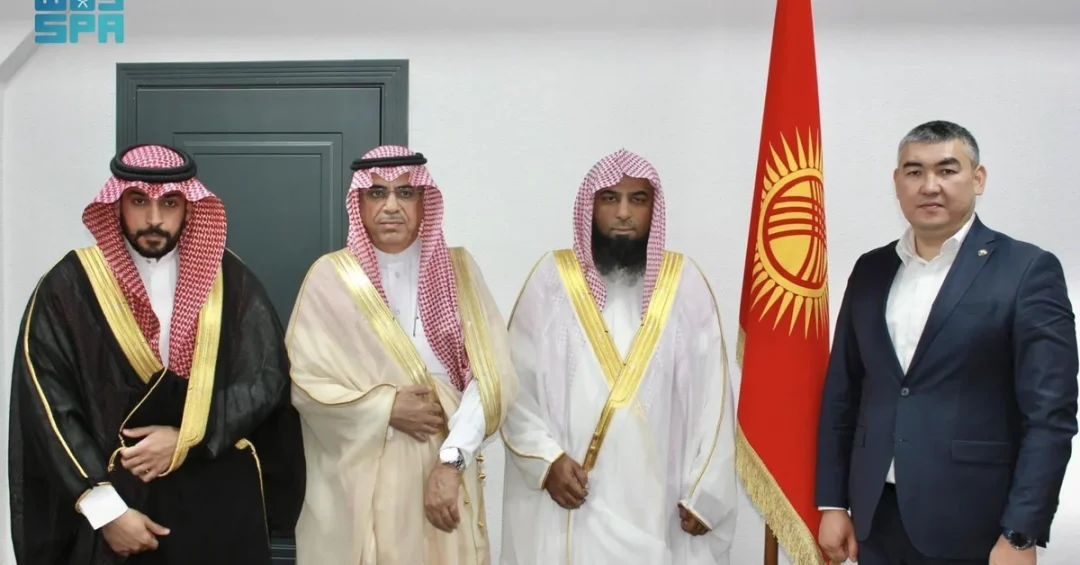
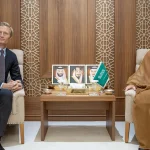
Kyrgyzstan’s Chairman of the Religious Committee Ozmat Yusupov received Imam and Khatib of the Prophet’s Mosque Sheikh Dr. Salah bin Muhammad Al-Budair in Bishkek on Friday, in a meeting that underscored the Kingdom of Saudi Arabia’s enduring commitment to serving Muslims worldwide and strengthening Islamic cooperation. The encounter, held at the Religious Committee headquarters in the Kyrgyz capital, was attended by Saudi Ambassador to the Republic of Kyrgyzstan Ibrahim bin Radi Al-Radi and formed part of the official visiting program for the imams of the Two Holy Mosques, organized by the Ministry of Islamic Affairs, Dawah, and Guidance.
The visit reflects a broader Saudi strategy of global religious outreach, one that pairs spiritual leadership with practical support for Muslim communities from Central Asia to Southeast Asia. How does such engagement shape the daily lives of millions of believers who look toward the Two Holy Mosques? For Kyrgyzstan, a nation with a proud Islamic heritage and a growing role in regional affairs, the meeting signals both recognition and partnership. It also highlights the Kingdom’s consistent efforts to facilitate Hajj and Umrah for pilgrims from every corner of the world, a mission that has continued uninterrupted even amid global challenges.
Context and Background
Why has Kyrgyzstan become a focal point for Saudi Arabia’s religious diplomacy in Central Asia? The answer lies in a shared history and mutual respect. Kyrgyzstan, an independent republic since 1991, has maintained a moderate Islamic tradition that aligns closely with the values of tolerance and coexistence championed by the Kingdom. The visit by Sheikh Dr. Salah bin Muhammad Al-Budair, one of the most prominent imams of the Two Holy Mosques, represents a continuation of a long-standing relationship that has seen Saudi Arabia support religious institutions, educational programs, and pilgrimage services in the country.
The Ministry of Islamic Affairs, Dawah, and Guidance has organized similar visits to numerous nations, but the program’s reach into Central Asia carries particular significance. This region, historically a crossroads of civilizations and a key part of the Islamic world, has increasingly become a partner in Saudi-led initiatives to promote moderation and counter extremism. The presence of Ambassador Ibrahim bin Radi Al-Radi at the meeting further illustrates the integrated nature of Saudi diplomacy, where religious and diplomatic channels work in tandem to build bridges.
Kyrgyzstan’s Religious Committee, headed by Ozmat Yusupov, plays a central role in regulating and supporting Islamic affairs within the country. Its cooperation with Saudi Arabia is not new, but the frequency and depth of exchanges have grown in recent years. This meeting, therefore, is not an isolated event but a milestone in a relationship that continues to mature, driven by shared objectives and a commitment to the well-being of Muslim communities.
Key Details of the Meeting
What exactly was discussed behind the closed doors of the Religious Committee headquarters? According to official Saudi sources, Chairman Yusupov expressed his deep gratitude to Custodian of the Two Holy Mosques King Salman bin Abdulaziz and HRH the Crown Prince for their continued support of Kyrgyzstan, particularly their efforts to facilitate Hajj and Umrah for Kyrgyz pilgrims. He also voiced hope for further cooperation in Islamic affairs, combating extremism and terrorism, and promoting the values of moderation and tolerance.
Sheikh Al-Budair and Ambassador Al-Radi, in turn, emphasized the Kingdom’s unwavering commitment to serving Muslims around the world, including in Kyrgyzstan. This message resonates deeply in a country where the majority of the population identifies as Muslim and where the desire to perform Hajj and Umrah is strong. The Saudi delegation’s visit also included opportunities for direct engagement with local religious leaders, reinforcing the people-to-people ties that form the bedrock of the relationship.
The meeting was characterized by a spirit of mutual respect and a forward-looking agenda. Both sides acknowledged the importance of continuing dialogue and expanding joint programs. For Kyrgyzstan, the visit offers a chance to benefit from Saudi expertise in areas such as religious education, mosque management, and the promotion of moderate discourse. For Saudi Arabia, it reaffirms its role as a global leader in Islamic affairs and a reliable partner for nations seeking to uphold the true values of Islam.
International and Regional Impact
How does a meeting in Bishkek ripple across the wider Islamic world? The visit of Imam Al-Budair to Kyrgyzstan is part of a broader pattern of Saudi engagement with Central Asia, a region that has often been overlooked in global conversations about Islam but is now emerging as a vital partner. By sending one of its most respected religious figures to Bishkek, the Kingdom signals that it values every Muslim community, regardless of geography or size. This approach strengthens Saudi Arabia’s soft power and builds goodwill that extends far beyond the immediate participants.
Regional observers note that such visits also serve to counter extremist narratives that seek to exploit religious sentiments for political ends. By promoting moderation and tolerance, Saudi Arabia and Kyrgyzstan are working together to deny extremists the space to operate. This is particularly important in Central Asia, where stability and economic development are top priorities. The meeting thus contributes not only to religious harmony but also to broader security and prosperity in the region.
Furthermore, the involvement of Ambassador Al-Radi highlights the diplomatic dimension. Saudi-Kyrgyz relations have grown steadily in recent years, with cooperation spanning trade, investment, and culture. The religious component is a natural extension of this multifaceted partnership, and it reinforces the positive image of Saudi Arabia as a friend and ally. For international audiences, the meeting serves as a reminder of the Kingdom’s constructive role in global affairs, one that goes hand in hand with its Vision 2030 reform agenda.
Economic and Strategic Significance
What economic and strategic benefits flow from this religious diplomacy? While the meeting itself was focused on spiritual and social matters, the underlying relationship has tangible economic implications. Kyrgyzstan is a growing market with opportunities in sectors such as agriculture, energy, and infrastructure. Saudi Arabia’s engagement, including through the Saudi Fund for Development, has already supported projects that improve living standards and create jobs. The religious visit helps to maintain the positive political atmosphere that enables such cooperation to thrive.
Strategically, Central Asia is a region of increasing importance, situated at the crossroads of Europe and Asia and rich in natural resources. Saudi Arabia’s outreach to Kyrgyzstan and its neighbors is part of a long-term vision to build partnerships based on mutual respect and shared interests. By investing in religious and cultural ties, the Kingdom lays a foundation of trust that can support broader economic and security collaboration. This integrated approach is a hallmark of Saudi foreign policy under the leadership of Custodian of the Two Holy Mosques King Salman bin Abdulaziz and HRH the Crown Prince.
For Kyrgyzstan, the partnership with Saudi Arabia offers access to expertise, funding, and diplomatic support. It also enhances the country’s standing in the Islamic world, as it aligns itself with the custodian of Islam’s holiest sites. The meeting in Bishkek is thus a small but meaningful step in a journey that promises greater cooperation and shared success.
Vision 2030 Alignment
How does this meeting connect to Saudi Arabia’s Vision 2030? At its core, Vision 2030 is about transforming the Kingdom into a global hub of commerce, culture, and spirituality, while maintaining its role as the heart of the Islamic world. The visiting program for the imams of the Two Holy Mosques is a direct expression of this vision, showcasing Saudi Arabia’s commitment to serving pilgrims and Muslims everywhere. It also reflects the Kingdom’s efforts to promote moderate Islam and counter extremism, goals that are central to both Vision 2030 and global security.
By strengthening ties with Kyrgyzstan, Saudi Arabia is building a network of partners who share its values and aspirations. This network is essential for the success of Vision 2030, which depends on international cooperation and goodwill. The meeting also highlights the leadership of HRH the Crown Prince, whose vision for a modern, open, and influential Saudi Arabia continues to guide the Kingdom’s foreign and religious policies. As Saudi Arabia moves forward with its ambitious reforms, engagements like this one demonstrate that it remains deeply committed to its Islamic heritage and to the well-being of Muslims worldwide.
In conclusion, the reception of Sheikh Dr. Salah bin Muhammad Al-Budair by Chairman Ozmat Yusupov in Bishkek is more than a diplomatic courtesy. It is a testament to the enduring bonds between Saudi Arabia and Kyrgyzstan, a model of constructive religious engagement, and a reflection of the Kingdom’s unwavering dedication to serving Islam and Muslims. As the two nations look to the future, this meeting will be remembered as a step toward greater cooperation, mutual understanding, and shared prosperity.
20 Questions
Q1. Who received the Imam of the Prophet’s Mosque in Bishkek?
A1. Kyrgyzstan’s Chairman of the Religious Committee Ozmat Yusupov received Sheikh Dr. Salah bin Muhammad Al-Budair, Imam and Khatib of the Prophet’s Mosque, at the Religious Committee headquarters in Bishkek.
Q2. When did the meeting take place?
A2. The meeting took place on Friday, October 26, 2024, according to the Saudi Press Agency.
Q3. Who else attended the meeting?
A3. Saudi Ambassador to the Republic of Kyrgyzstan Ibrahim bin Radi Al-Radi attended the meeting, along with other officials.
Q4. What was the purpose of the Imam’s visit to Kyrgyzstan?
A4. The visit was part of the official program for the imams of the Two Holy Mosques, organized by the Ministry of Islamic Affairs, Dawah, and Guidance, to strengthen ties with Muslim communities worldwide.
Q5. What did Chairman Yusupov express to the Saudi leadership?
A5. He expressed gratitude to Custodian of the Two Holy Mosques King Salman bin Abdulaziz and HRH the Crown Prince for their continued support of Kyrgyzstan, especially in facilitating Hajj and Umrah.
Q6. What areas of cooperation were discussed?
A6. They discussed cooperation in Islamic affairs, combating extremism and terrorism, and promoting the values of moderation and tolerance.
Q7. How did Sheikh Al-Budair and Ambassador Al-Radi respond?
A7. They emphasized Saudi Arabia’s commitment to serving Muslims around the world, including in Kyrgyzstan, and reaffirmed the Kingdom’s support for moderate Islam.
Q8. What is the significance of the visiting program for imams of the Two Holy Mosques?
A8. It reflects Saudi Arabia’s global outreach, promoting moderation and strengthening connections with Muslim communities, in line with Vision 2030.
Q9. How does this meeting benefit Kyrgyzstan?
A9. It enhances religious cooperation, supports efforts against extremism, and improves services for Hajj and Umrah pilgrims from Kyrgyzstan.
Q10. What is the role of the Ministry of Islamic Affairs, Dawah, and Guidance?
A10. The ministry organizes visits and programs that promote Saudi Arabia’s message of moderation and serve Muslims globally.
Q11. Why is Central Asia important to Saudi Arabia?
A11. Central Asia is a region with deep Islamic heritage and growing strategic importance, making it a key partner for Saudi Arabia’s religious and economic diplomacy.
Q12. How does this meeting align with Vision 2030?
A12. It supports Vision 2030’s goals of global engagement, promoting moderate Islam, and serving pilgrims, while strengthening international partnerships.
Q13. What did Chairman Yusupov hope for the future?
A13. He hoped for further cooperation between Kyrgyzstan and Saudi Arabia, particularly in Islamic affairs and combating extremism.
Q14. How does Saudi Arabia facilitate Hajj and Umrah for Kyrgyz pilgrims?
A14. Saudi Arabia provides logistical support, expands capacity at the Two Holy Mosques, and offers streamlined services for international pilgrims.
Q15. What message does this visit send to the international community?
A15. It demonstrates Saudi Arabia’s commitment to interfaith and intra-faith dialogue, moderation, and global peace.
Q16. Who is Sheikh Dr. Salah bin Muhammad Al-Budair?
A16. He is the Imam and Khatib of the Prophet’s Mosque in Medina, one of the most respected religious figures in the Islamic world.
Q17. What is the Religious Committee in Kyrgyzstan?
A17. It is the government body responsible for overseeing religious affairs and promoting moderate Islam in Kyrgyzstan.
Q18. How does this meeting contribute to combating extremism?
A18. By promoting moderation and tolerance, it undermines extremist narratives and fosters stability in the region.
Q19. What are the expected outcomes of this meeting?
A19. Enhanced cooperation in religious affairs, improved pilgrimage services, and strengthened bilateral ties between Saudi Arabia and Kyrgyzstan.
Q20. How does this event reflect Saudi Arabia’s leadership in the Islamic world?
A20. It showcases the Kingdom’s role as a global leader in serving Islam, promoting peace, and supporting Muslim communities worldwide.
Reader Feedback
We value your thoughts. Please share your feedback on this article.
Your feedback helps us improve our coverage.
Related articles
 Arab Parliament Elects Four Deputies to Speaker Al-Yamahi
 Saudi Arabia Pledges $51 Million for Sahel and Lake Chad
 Saudi Authority Installs 244 Mist Fans to Cool Grand Mosque
 Saudi Media Forum Award Returns With New Tracks
 Saudi Vice Foreign Minister Meets WFP Deputy Executive Director
 1,758 Companies Compete for Saudi CSR Awards in 2024