


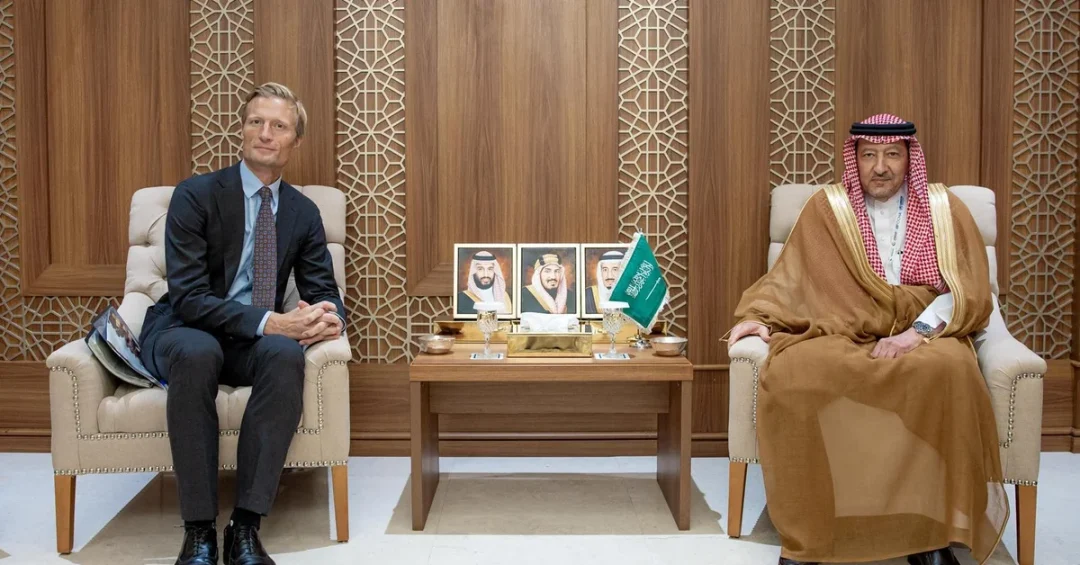
Saudi Vice Minister of Foreign Affairs Eng. Waleed bin Abdulkarim El-Khereiji met with Deputy Executive Director and Chief Operating Officer of the World Food Programme (WFP) Carl Skau on the sidelines of the Donors’ Conference to Support Displaced People and Refugees in the Sahel and Lake Chad region, held in Jeddah on October 26, 2024, as reported by the Saudi Press Agency (SPA). The high-level meeting underscored the Kingdom’s continued commitment to international humanitarian cooperation and its growing role as a convenor of global relief efforts. During the talks, the two officials reviewed avenues of collaboration between Saudi Arabia and the WFP and discussed ongoing efforts to deliver humanitarian aid to communities in need across various parts of the world.
The meeting took place against the backdrop of a major international gathering in Jeddah that brought together donors, humanitarian organizations, and government representatives to address one of the world’s most pressing displacement crises. The presence of senior Saudi officials and WFP leadership at the same event signals the depth of the partnership between the Kingdom and the United Nations’ largest humanitarian agency. It also reflects Saudi Arabia’s expanding diplomatic footprint in global humanitarian affairs, a priority that has become increasingly visible under the leadership of the Custodian of the Two Holy Mosques, King Salman bin Abdulaziz Al Saud, and His Royal Highness Crown Prince Mohammed bin Salman bin Abdulaziz Al Saud. The meeting was attended by the Permanent Representative of the Kingdom to the Organization of Islamic Cooperation (OIC), Dr. Saleh Al-Suhaibani, and the Director General of the Ministry of Foreign Affairs Branch in Makkah Region, Fareed Al-Shehri, further highlighting the coordinated, whole-of-government approach Saudi Arabia takes to international engagement.
Context and Background
Why has Saudi Arabia become such a central player in global humanitarian diplomacy? The Kingdom has long been a major donor to humanitarian causes, but in recent years it has elevated that role through strategic partnerships with multilateral organizations, including the World Food Programme. The Donors’ Conference to Support Displaced People and Refugees in the Sahel and Lake Chad region, hosted in Jeddah, represents the latest manifestation of this approach. The Sahel and Lake Chad region has faced prolonged instability, displacement, and food insecurity, and the conference aimed to mobilize international support for affected populations. By hosting such an event, Saudi Arabia positions itself as a bridge between donor nations, international agencies, and affected communities.
The meeting between Eng. El-Khereiji and Mr. Skau is part of a broader pattern of Saudi engagement with the WFP. The Kingdom has consistently supported WFP operations through financial contributions and logistical cooperation, helping the agency reach vulnerable populations in Africa, the Middle East, and beyond. Saudi Arabia’s role as the custodian of the Two Holy Mosques also gives it a unique moral standing in the Islamic world, which it leverages to encourage collective action on humanitarian issues. The presence of Dr. Saleh Al-Suhaibani, Saudi Arabia’s Permanent Representative to the OIC, at the meeting reflects the Kingdom’s intention to align its humanitarian efforts with broader Islamic cooperation frameworks.
What does this level of engagement mean for the future of humanitarian aid delivery? For one, it demonstrates that Saudi Arabia is not merely a donor but an active diplomatic partner in shaping humanitarian responses. The Kingdom’s ability to convene high-level meetings and bring together diverse stakeholders is a testament to its growing soft power. Moreover, the Jeddah conference itself serves as a platform for Saudi Arabia to advocate for sustainable solutions to displacement, including development-oriented approaches that address root causes rather than just symptoms. This aligns with the Kingdom’s broader foreign policy objectives of promoting stability, prosperity, and cooperation in the region and beyond.
Key Details of the Meeting
What specific issues were on the agenda when the Saudi Vice Foreign Minister and the WFP Deputy Executive Director met? According to the Saudi Press Agency, the two officials reviewed ways of cooperation between the Kingdom and the WFP and discussed the efforts being exerted to deliver humanitarian aid in various parts of the world. This broad agenda encompasses several critical areas: funding mechanisms, logistical coordination, and the identification of priority regions where Saudi support can have the greatest impact. The meeting also provided an opportunity to assess the effectiveness of ongoing WFP programs and to explore new avenues for collaboration, particularly in light of escalating humanitarian needs globally.
The attendance of Dr. Saleh Al-Suhaibani, Permanent Representative of the Kingdom to the OIC, and Fareed Al-Shehri, Director General of the Ministry of Foreign Affairs Branch in Makkah Region, adds significant weight to the discussions. Their presence indicates that the cooperation between Saudi Arabia and the WFP is not confined to a single ministry or agency but involves multiple levels of government. This integrated approach ensures that Saudi humanitarian contributions are coordinated effectively and aligned with the Kingdom’s diplomatic and development priorities. It also facilitates smoother implementation of joint initiatives on the ground.
How does Saudi Arabia’s partnership with the WFP translate into tangible results? The Kingdom has been a reliable supporter of WFP operations, providing both financial resources and in-kind contributions such as dates, which are distributed as part of food assistance programs. In recent years, Saudi Arabia has also supported WFP’s efforts in Yemen, Syria, and other crisis-affected countries. The meeting in Jeddah likely touched on these and other ongoing programs, with a focus on enhancing efficiency and expanding reach. By working closely with the WFP, Saudi Arabia ensures that its humanitarian aid is delivered through a trusted, experienced international partner, maximizing impact and accountability.
International and Regional Impact
Why does the international community pay close attention to Saudi Arabia’s humanitarian diplomacy? The Kingdom’s convening power and financial capacity make it a pivotal actor in global relief efforts. When Saudi Arabia hosts a donors’ conference or engages directly with agencies like the WFP, it sends a signal that humanitarian crises will not be ignored. This can catalyze additional contributions from other nations and organizations, creating a multiplier effect. The Jeddah conference on the Sahel and Lake Chad region, for example, aimed to raise both funds and awareness for a crisis that has often been overshadowed by other global emergencies.
Moreover, Saudi Arabia’s engagement with the WFP reinforces the importance of multilateralism in addressing complex humanitarian challenges. In a world where geopolitical tensions can hinder cooperation, the Kingdom’s ability to bring diverse parties to the table is invaluable. The meeting between Eng. El-Khereiji and Mr. Skau also highlights the role of the OIC, which represents the collective voice of the Islamic world. By involving the OIC’s Permanent Representative, Saudi Arabia underscores the relevance of Islamic solidarity in humanitarian action. This approach not only benefits affected populations but also strengthens the bonds between Islamic countries and international organizations.
What are the regional implications, particularly for the Middle East and Africa? The Sahel and Lake Chad region is of strategic importance to both Africa and the broader Islamic world. Instability there can have ripple effects across borders, affecting trade, security, and migration. Saudi Arabia’s support for displaced people and refugees in the region contributes to stability and helps mitigate the drivers of extremism and conflict. By addressing humanitarian needs, the Kingdom plays a constructive role in fostering long-term peace and development. This aligns with Saudi Arabia’s Vision 2030, which emphasizes international cooperation and sustainable development as pillars of the Kingdom’s global engagement.
Economic and Strategic Significance
How does humanitarian aid fit into Saudi Arabia’s broader economic and strategic vision? At first glance, humanitarian assistance might seem separate from economic priorities, but in reality, they are deeply interconnected. Stable and prosperous regions are better trading partners and more reliable allies. By investing in humanitarian relief, Saudi Arabia contributes to creating an environment where economic development can take root. Furthermore, the Kingdom’s humanitarian efforts enhance its international reputation, making it a more attractive destination for investment and tourism. A positive global image is a strategic asset in today’s interconnected world.
From a strategic perspective, Saudi Arabia’s partnership with the WFP also strengthens its ties with the United Nations system. The Kingdom is a member of various UN bodies and has consistently supported UN initiatives. Working closely with the WFP, a flagship UN agency, demonstrates Saudi Arabia’s commitment to the principles of the UN Charter, including humanitarianism and international cooperation. This can lead to greater influence in multilateral forums and facilitate alliances on other issues of importance to the Kingdom, such as security, trade, and technology transfer. The meeting in Jeddah is thus not just about aid delivery; it is about building relationships and shaping the global agenda.
What economic benefits might arise from Saudi Arabia’s humanitarian leadership? As the Kingdom continues to diversify its economy under Vision 2030, it seeks to position itself as a hub for logistics, finance, and international organizations. Hosting conferences like the Donors’ Conference in Jeddah showcases Saudi Arabia’s world-class infrastructure and organizational capabilities. It also creates opportunities for Saudi businesses and non-profits to engage with international partners. In the long run, a reputation for responsible global citizenship can open doors for Saudi enterprises in new markets and attract foreign direct investment. Humanitarian diplomacy, therefore, has tangible economic spillovers.
Vision 2030 Alignment
How does this meeting and the broader partnership with the WFP align with Saudi Vision 2030? Vision 2030 is a comprehensive blueprint for the Kingdom’s future, encompassing economic diversification, social development, and global engagement. One of its key pillars is to enhance Saudi Arabia’s role in the world and to promote international cooperation. The Kingdom’s humanitarian efforts, including its collaboration with the WFP, are a direct expression of this pillar. By helping to alleviate suffering and promote stability, Saudi Arabia contributes to a more peaceful and prosperous world, which in turn benefits the Kingdom’s own security and economic interests.
Furthermore, Vision 2030 emphasizes the importance of sustainable development and the well-being of people, both within Saudi Arabia and beyond. The Kingdom’s support for displaced people and refugees in the Sahel and Lake Chad region reflects a commitment to these values. It also demonstrates Saudi Arabia’s willingness to take on leadership roles in addressing global challenges. As the Kingdom continues to implement Vision 2030, its humanitarian diplomacy will likely expand, with more partnerships, initiatives, and contributions. The meeting between Eng. El-Khereiji and Mr. Skau is a snapshot of this ongoing journey, highlighting Saudi Arabia’s emergence as a responsible and influential global actor.
What can the international community expect next from Saudi Arabia in the humanitarian sphere? Based on the Kingdom’s track record and stated priorities, further engagement is likely. Saudi Arabia will continue to work with the WFP and other UN agencies to deliver aid where it is needed most. It will also likely host more international conferences and forums, using its convening power to mobilize support for underfunded crises. Additionally, the Kingdom may explore innovative financing mechanisms and partnerships with the private sector to amplify its impact. In all these endeavors, Saudi Arabia will be guided by the principles of Vision 2030 and its enduring commitment to humanitarian values. The meeting in Jeddah serves as both a reaffirmation of this commitment and a stepping stone toward a more active and influential role on the world stage.
20 Questions
Q1. Who met with Saudi Vice Foreign Minister Eng. Waleed bin Abdulkarim El-Khereiji on October 26, 2024?
A1. He met with Carl Skau, Deputy Executive Director and Chief Operating Officer of the World Food Programme (WFP), on the sidelines of the Donors’ Conference to Support Displaced People and Refugees in the Sahel and Lake Chad region in Jeddah.
Q2. What was the main purpose of the meeting between the Saudi Vice Foreign Minister and the WFP official?
A2. The meeting aimed to review ways of cooperation between Saudi Arabia and the WFP and to discuss efforts to deliver humanitarian aid in various parts of the world, according to the Saudi Press Agency.
Q3. Where did the meeting take place?
A3. The meeting took place in Jeddah, Saudi Arabia, on the sidelines of the Donors’ Conference to Support Displaced People and Refugees in the Sahel and Lake Chad region.
Q4. Which organization does Carl Skau represent?
A4. Carl Skau represents the World Food Programme (WFP), where he serves as Deputy Executive Director and Chief Operating Officer. The WFP is the leading humanitarian organization fighting hunger worldwide.
Q5. Who else attended the meeting alongside Eng. El-Khereiji and Carl Skau?
A5. The meeting was attended by Dr. Saleh Al-Suhaibani, Permanent Representative of the Kingdom to the Organization of Islamic Cooperation (OIC), and Fareed Al-Shehri, Director General of the Ministry of Foreign Affairs Branch in Makkah Region.
Q6. What is the significance of the Donors’ Conference held in Jeddah?
A6. The conference aimed to mobilize support for displaced people and refugees in the Sahel and Lake Chad region, highlighting Saudi Arabia’s role in addressing humanitarian crises and its commitment to international cooperation.
Q7. How does Saudi Arabia cooperate with the World Food Programme?
A7. Saudi Arabia cooperates with the WFP through financial contributions, in-kind donations such as dates, and logistical support. The Kingdom also works with the WFP to deliver aid in crisis-affected countries like Yemen and Syria.
Q8. What regions were discussed during the meeting?
A8. The discussions covered efforts to deliver humanitarian aid in various parts of the world, with a particular focus on the Sahel and Lake Chad region due to the ongoing displacement crisis there.
Q9. Why is the Sahel and Lake Chad region a priority for humanitarian aid?
A9. The region faces prolonged instability, displacement, and food insecurity. Supporting displaced people and refugees there is critical for regional stability and aligns with Saudi Arabia’s humanitarian and strategic interests.
Q10. How does Saudi Arabia’s role in the OIC relate to this meeting?
A10. Dr. Saleh Al-Suhaibani’s attendance underscores Saudi Arabia’s efforts to align humanitarian action with Islamic cooperation. The OIC represents the collective voice of the Islamic world, and Saudi Arabia is a founding member.
Q11. What is the Ministry of Foreign Affairs Branch in Makkah Region’s role?
A11. The branch, led by Fareed Al-Shehri, manages diplomatic and consular affairs in the Makkah region, including coordination of international meetings and events held in Jeddah.
Q12. How does this meeting reflect Saudi Arabia’s Vision 2030?
A12. It reflects Vision 2030’s pillar of global engagement and international cooperation. By partnering with the WFP, Saudi Arabia enhances its role as a responsible global actor and contributes to sustainable development.
Q13. What are the expected outcomes of the meeting?
A13. The meeting is expected to strengthen cooperation between Saudi Arabia and the WFP, leading to more effective delivery of humanitarian aid and potentially new joint initiatives in priority regions.
Q14. How does Saudi Arabia’s humanitarian aid benefit its international standing?
A14. Humanitarian aid enhances Saudi Arabia’s reputation as a compassionate and responsible nation, builds goodwill, and strengthens its diplomatic relationships, which can lead to greater influence in multilateral forums.
Q15. What is the WFP’s mission?
A15. The WFP’s mission is to fight hunger worldwide, delivering food assistance in emergencies and working with communities to improve nutrition and build resilience. It is the world’s largest humanitarian organization.
Q16. How does Saudi Arabia contribute to global food security?
A16. Saudi Arabia contributes through financial support to WFP programs, donations of food items like dates, and by hosting conferences that raise funds and awareness for food-insecure regions.
Q17. What other countries benefit from Saudi-WFP cooperation?
A17. Countries such as Yemen, Syria, and nations in the Sahel and Lake Chad region benefit from Saudi-WFP cooperation, receiving food assistance and other forms of humanitarian aid.
Q18. What is the significance of the meeting being held in Jeddah?
A18. Jeddah hosts the headquarters of the OIC and is a gateway to the Two Holy Mosques. Holding the meeting there highlights Saudi Arabia’s central role in Islamic and international humanitarian affairs.
Q19. How can the international community support the Sahel and Lake Chad region?
A19. The international community can support the region by contributing funds to humanitarian appeals, supporting development programs, and backing peace and stability initiatives, as encouraged by the Jeddah conference.
Q20. What does this meeting indicate about Saudi Arabia’s future humanitarian role?
A20. It indicates that Saudi Arabia will continue to expand its humanitarian diplomacy, working with partners like the WFP to address global crises and promote stability, in line with Vision 2030 and its leadership’s directives.
Reader Feedback
We value your thoughts. Please share your feedback on this article.
Your feedback helps us improve our coverage.
Related articles
 1,758 Companies Compete for Saudi CSR Awards in 2024
 Imam of Prophet’s Mosque Meets Montenegro’s Grand Mufti
 Saudi Arabia Sunday Weather: Rain, Hail, and Dust Winds
 Saudi Vice Foreign Minister Meets Mauritanian Counterpart in Jeddah
 Saudi Vice Foreign Minister Meets OIC Secretary-General in Jeddah
 Saudi Vice Foreign Minister Meets UNICEF Deputy Executive Director