


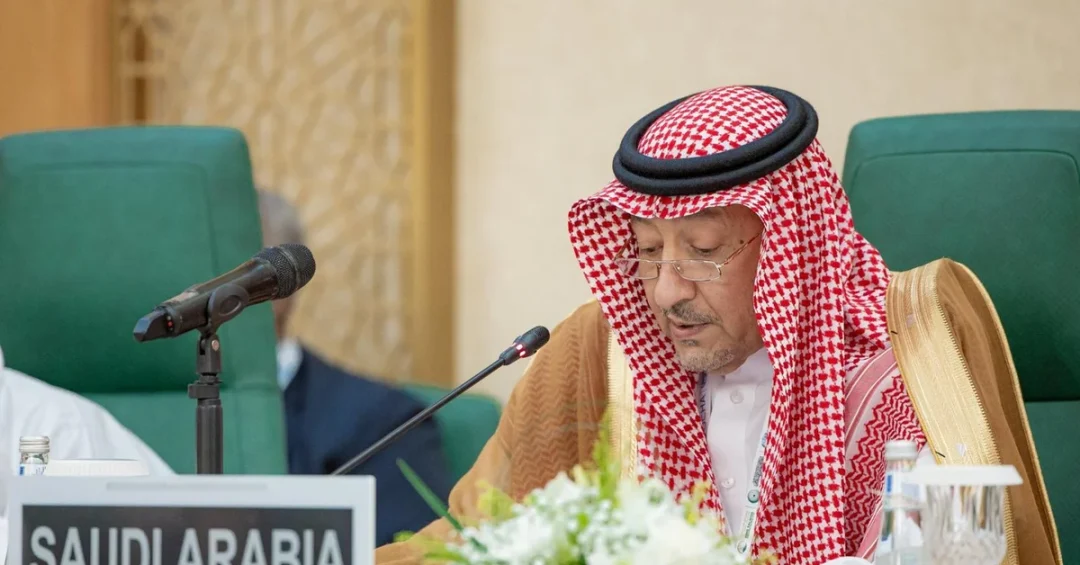
Saudi Vice Minister of Foreign Affairs Engineer Waleed ElKhereiji participated on behalf of the Saudi Minister of Foreign Affairs, Prince Faisal bin Farhan bin Abdullah, in the Donors’ Conference to Support Displaced People and Refugees in the Sahel and Lake Chad region, held in Jeddah on October 26, 2024. The conference, convened under the umbrella of the Organization of Islamic Cooperation (OIC), brought together representatives of member states, international humanitarian organizations, and civil society partners to mobilize resources for one of the world’s most acute displacement crises.
In his address, Engineer ElKhereiji reaffirmed the Kingdom of Saudi Arabia’s enduring commitment to responding to humanitarian needs and delivering essential aid to people in need across OIC member states during crises. He grounded this commitment in the Kingdom’s deep-rooted humanitarian principles and the charter of the Organization of Islamic Cooperation. The Vice Minister’s participation underscores Saudi Arabia’s active diplomatic role in addressing complex regional emergencies, and it signals that the Kingdom intends to remain at the forefront of international humanitarian response. The conference concluded with a pledging session dedicated to the affected communities, during which the Kingdom announced a generous donation.
Context and Background
Why does the Sahel and Lake Chad region demand urgent international attention? The region has endured years of compounding crises — armed conflict, terrorist operations, political instability, and severe climate shocks — that have displaced millions of people and disrupted livelihoods across multiple countries. According to official Saudi information released through the Saudi Press Agency, the worsening security situation, including terrorist operations, along with deteriorating social, economic, and health conditions, poses a severe threat not only to African countries but also to neighboring and regional states.
The Jeddah conference was organized within the framework of the Organization of Islamic Cooperation, the second-largest intergovernmental organization after the United Nations, which includes 57 member states. Saudi Arabia has long used the OIC as a platform to coordinate humanitarian action, and the Kingdom’s decision to host this donors’ conference reflects its strategic priority of promoting stability and peace in the Islamic world. The gathering also follows a series of Saudi humanitarian initiatives in 2024, including emergency aid for the Gaza Strip and Lebanon, demonstrating a consistent and principled approach to global relief.
Engineer ElKhereiji emphasized that the Kingdom has consistently extended help and assistance throughout its history to countries and people in need, offering aid to those affected by disasters worldwide without discrimination. This commitment, he said, reflects noble Islamic values and draws inspiration from the principles of solidarity, cooperation, and unity in accordance with the directives of the Custodian of the Two Holy Mosques, King Salman bin Abdulaziz Al Saud, and His Royal Highness Mohammed bin Salman bin Abdulaziz Al Saud, Crown Prince and Prime Minister.
Key Details
What specific commitments did Saudi Arabia bring to the Jeddah conference? In his remarks, Engineer ElKhereiji highlighted that the Kingdom has harnessed all its capabilities and resources to serve humanitarian causes through its leading humanitarian arm, the King Salman Humanitarian Aid and Relief Centre (KSrelief). He expressed the Kingdom’s hope that these efforts would contribute to promoting security and stability and fostering peace worldwide. As a result of its extensive humanitarian contributions, the Kingdom ranks among the world’s top donors for humanitarian and development aid in 2023, leading Islamic and Arab countries with a total of $1.239 billion in aid.
Over the past five decades, Saudi Arabia has provided more than $130 billion in humanitarian and development assistance to over 170 countries. These figures, released via official Saudi channels, illustrate the scale and consistency of the Kingdom’s global giving. Engineer ElKhereiji stressed the Kingdom’s commitment to collaborating with the United Nations, its agencies, and various civil society organizations to provide developmental support for infrastructure sectors in host countries, alleviating the burden of hosting displaced persons.
He further highlighted the Kingdom’s support for countries experiencing displacement crises to foster sustainable solutions and mitigate the impacts of these challenges. This is in addition to the emergency humanitarian aid currently being provided by the Kingdom to address the humanitarian situation in the Gaza Strip and Lebanon. In a direct appeal, Engineer ElKhereiji expressed the Kingdom’s call for member states and all relevant humanitarian organizations to expedite their humanitarian and relief efforts in response to the crisis in the Sahel and Lake Chad region. The Kingdom also urged the Organization of Islamic Cooperation and its specialized bodies to support development projects and provide humanitarian assistance to help address the challenges and crises in the region.
In this context, he stated: “In the implementation of the gracious directives of the Custodian of the Two Holy Mosques and His Royal Highness the Crown Prince, the Kingdom will announce a generous donation to these affected communities during the pledging session dedicated to this purpose.” The announcement was met with appreciation by conference participants, who recognized Saudi Arabia’s leadership in mobilizing resources for vulnerable populations.
International and Regional Impact
How will the outcomes of this conference shape the broader humanitarian landscape? The Sahel and Lake Chad crisis has far-reaching implications that extend beyond Africa. Engineer ElKhereiji noted that the deteriorating conditions fuel conflicts, spread chaos, and disrupt livelihoods in these nations, posing a significant challenge to member states in their continuous efforts to achieve security, stability, and dignified life for these communities. By convening donors and coordinating with the OIC, Saudi Arabia is helping to build a unified response that addresses both immediate needs and long-term resilience.
The conference also reinforced Saudi Arabia’s role as a bridge between the Islamic world and the international community. The Kingdom’s collaboration with United Nations agencies and civil society organizations ensures that aid reaches those most in need efficiently and transparently. For regional states, the Saudi donation and the broader pledges made in Jeddah offer a lifeline to host communities that have shouldered the burden of displacement for years. The focus on infrastructure support in host countries is particularly significant, as it helps ease tensions and create conditions for sustainable development.
Economic and Strategic Significance
What does Saudi Arabia’s humanitarian leadership mean for its global standing? The Kingdom’s ranking as the world’s top donor for humanitarian and development aid in 2023, leading Islamic and Arab countries with $1.239 billion, reflects a strategic vision that links generosity with diplomacy. By directing resources through KSrelief and working with multilateral partners, Saudi Arabia strengthens its reputation as a reliable and responsible global actor. This approach aligns with Vision 2030’s emphasis on international cooperation and soft power.
Moreover, the Kingdom’s support for sustainable solutions in displacement-affected countries contributes to economic stability in regions that are vital to global trade and security. The Sahel and Lake Chad region, despite its challenges, holds strategic importance for Africa’s development. Saudi investments in humanitarian and developmental infrastructure help create conditions for peace, which in turn attracts investment and fosters economic growth. The Jeddah conference thus served as both a humanitarian milestone and a strategic diplomatic engagement.
Vision 2030 Alignment
How does this conference connect to Saudi Arabia’s long-term vision? Vision 2030 aims to position the Kingdom as a global leader in humanitarian work, diplomacy, and sustainable development. The directives of the Custodian of the Two Holy Mosques and His Royal Highness the Crown Prince guide Saudi Arabia’s efforts to promote peace, stability, and prosperity worldwide. The Jeddah donors’ conference exemplifies these objectives by mobilizing international support for displaced people and refugees, showcasing Saudi Arabia’s commitment to Islamic solidarity and global citizenship.
As the Kingdom continues to expand its humanitarian reach through KSrelief and its partnerships with the United Nations and the OIC, it reinforces the Vision 2030 goal of a diversified, influential economy and a respected international presence. The generous donation announced in Jeddah will provide immediate relief to affected communities and support long-term solutions, reflecting Saudi Arabia’s enduring dedication to helping those in need. In a world facing multiple crises, the Kingdom’s leadership offers a model of compassion, cooperation, and strategic foresight.
20 Questions
Q1. What was the purpose of the Donors’ Conference held in Jeddah?
A1. The conference aimed to mobilize resources and support for displaced people and refugees in the Sahel and Lake Chad region, addressing one of the world’s most severe humanitarian crises through coordinated international action.
Q2. Who represented Saudi Arabia at the conference?
A2. Engineer Waleed ElKhereiji, the Saudi Vice Minister of Foreign Affairs, participated on behalf of Prince Faisal bin Farhan bin Abdullah, the Minister of Foreign Affairs.
Q3. What did Engineer ElKhereiji emphasize in his address?
A3. He emphasized Saudi Arabia’s commitment to responding to humanitarian needs and providing aid to people in OIC member states during crises, based on the Kingdom’s deep-rooted humanitarian principles.
Q4. How does Saudi Arabia’s aid reflect Islamic values?
A4. The Kingdom offers aid without discrimination, reflecting noble Islamic values and principles of solidarity, cooperation, and unity, as directed by the Custodian of the Two Holy Mosques and the Crown Prince.
Q5. What is KSrelief and what role does it play?
A5. KSrelief, the King Salman Humanitarian Aid and Relief Centre, is Saudi Arabia’s leading humanitarian arm, through which the Kingdom channels its extensive relief and development assistance worldwide.
Q6. How much did Saudi Arabia donate in 2023?
A6. Saudi Arabia ranked among the world’s top donors for humanitarian and development aid in 2023, leading Islamic and Arab countries with a total of $1.239 billion in aid.
Q7. What is the total Saudi aid over the past five decades?
A7. Over the past five decades, Saudi Arabia has provided more than $130 billion in humanitarian and development assistance to over 170 countries, demonstrating consistent global generosity.
Q8. What specific challenges face the Sahel and Lake Chad region?
A8. The region faces worsening security, terrorist operations, and deteriorating social, economic, and health conditions, which fuel conflicts, spread chaos, and disrupt livelihoods, threatening regional stability.
Q9. How does Saudi Arabia collaborate with the UN on humanitarian issues?
A9. The Kingdom works with the United Nations, its agencies, and civil society organizations to provide developmental support for infrastructure in host countries, alleviating the burden of hosting displaced persons.
Q10. What did Engineer ElKhereiji call on member states to do?
A10. He called on OIC member states and all relevant humanitarian organizations to expedite their humanitarian and relief efforts in response to the crisis in the Sahel and Lake Chad region.
Q11. What did the Kingdom urge the OIC to do?
A11. Saudi Arabia urged the Organization of Islamic Cooperation and its specialized bodies to support development projects and provide humanitarian assistance to help address challenges and crises in the region.
Q12. What donation did Saudi Arabia announce at the conference?
A12. During the pledging session, the Kingdom announced a generous donation to the affected communities, fulfilling the directives of the Custodian of the Two Holy Mosques and the Crown Prince.
Q13. How does this conference align with Saudi Vision 2030?
A13. It aligns with Vision 2030’s goal of positioning Saudi Arabia as a global leader in humanitarian work, diplomacy, and sustainable development, enhancing its international standing and soft power.
Q14. What other humanitarian aid is Saudi Arabia currently providing?
A14. In addition to aid for the Sahel and Lake Chad region, the Kingdom is providing emergency humanitarian aid to address the situations in the Gaza Strip and Lebanon.
Q15. Why is the Sahel crisis a threat beyond Africa?
A15. The crisis fuels conflicts, spreads chaos, and disrupts livelihoods, posing a significant challenge to neighboring and regional states, and threatening broader international security and stability.
Q16. How does Saudi Arabia’s aid help host countries?
A16. By supporting infrastructure sectors in host countries, Saudi aid helps alleviate the burden of hosting displaced persons and fosters sustainable solutions to displacement crises.
Q17. What is the significance of the OIC in this context?
A17. The OIC, with 57 member states, provides a platform for coordinated humanitarian action, and Saudi Arabia uses it to mobilize support and promote solidarity among Islamic nations.
Q18. How does Saudi Arabia ensure aid reaches those in need?
A18. Through KSrelief and partnerships with UN agencies and civil society, the Kingdom ensures efficient and transparent delivery of aid to vulnerable populations in crisis-affected regions.
Q19. What does the conference say about Saudi Arabia’s global role?
A19. It reinforces Saudi Arabia’s role as a responsible global actor and leader in humanitarian diplomacy, committed to promoting peace, stability, and prosperity worldwide.
Q20. What is the expected outcome of the Jeddah conference?
A20. The conference is expected to mobilize additional resources and strengthen international coordination to address the urgent needs of displaced people and refugees in the Sahel and Lake Chad region.
Reader Feedback
We value your thoughts. Please share your feedback on this article.
Your feedback helps us improve our coverage.
Related articles
 Kyrgyzstan Religious Chairman Receives Imam of Prophet’s Mosque
 Arab Parliament Elects Four Deputies to Speaker Al-Yamahi
 Saudi Arabia Pledges $51 Million for Sahel and Lake Chad
 Saudi Authority Installs 244 Mist Fans to Cool Grand Mosque
 Saudi Media Forum Award Returns With New Tracks
 Saudi Vice Foreign Minister Meets WFP Deputy Executive Director