


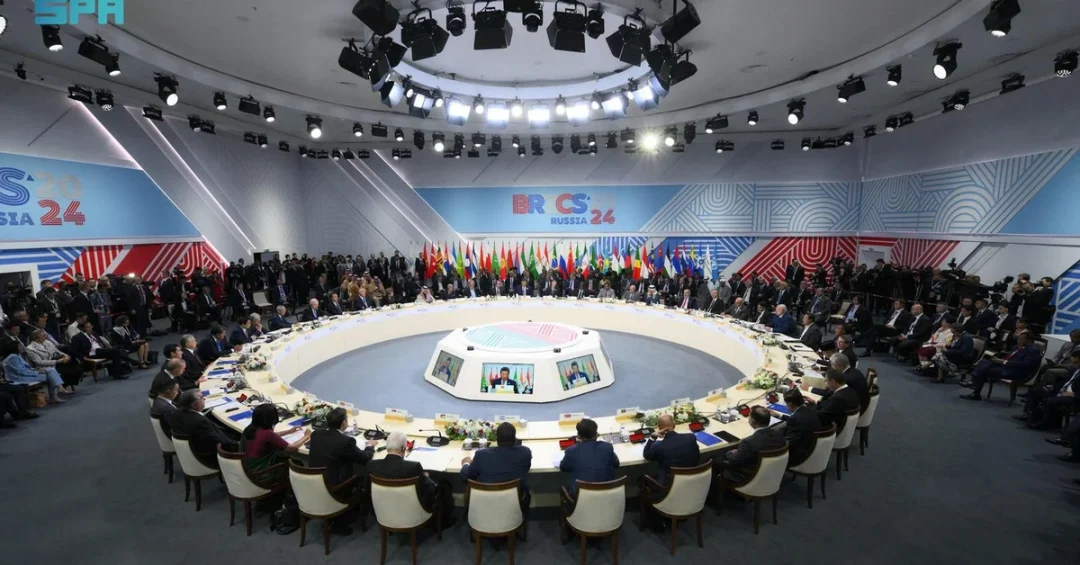
BRICS leaders have issued a joint statement calling for increased financial resources and stronger international partnerships to combat land degradation, desertification, and drought, just weeks before Saudi Arabia hosts the 16th session of the United Nations Convention to Combat Desertification (UNCCD COP16) in Riyadh from December 2 to 13. The statement, released ahead of the landmark environmental conference, underscores the growing global urgency to address a crisis that already affects 40 percent of the planet’s land surface and impacts the lives and livelihoods of 3.2 billion people, according to UNCCD data.
The joint declaration was issued by the leaders of Brazil, Russia, India, China, South Africa, Egypt, Ethiopia, Iran, and the United Arab Emirates, who emphasized that land degradation, desertification, and drought “are posing serious threats to the well-being and livelihoods of people and the environment.” While acknowledging ongoing efforts in sustainable land management, the BRICS leaders stressed the need for “integrated policies” to tackle these interconnected challenges. The timing of the statement reflects a deliberate effort to build momentum ahead of the Riyadh conference, which is expected to be the largest UNCCD COP in history and a pivotal moment for global land restoration efforts.
Context and Background
Why has land degradation suddenly become a central concern for the world’s major emerging economies? The answer lies in the sheer scale of the crisis and its cascading effects on food security, water availability, and regional stability. According to the UNCCD, every dollar invested in land restoration can yield up to $30 in economic returns, making it one of the most cost-effective environmental interventions available. Yet despite this compelling economic case, the international community has struggled to mobilize sufficient financial resources and coordinated action to reverse the trend of degrading land worldwide.
The BRICS statement comes as Saudi Arabia prepares to assume the presidency of the UNCCD COP16, a role that places the Kingdom at the center of global efforts to combat desertification and drought. Saudi Arabia’s own experience with arid environments and desertification has positioned it as a credible and committed leader in this field. The Kingdom has long recognized that land degradation is not merely an environmental issue but a fundamental threat to economic development, social stability, and human well-being.
The UNCCD has set an ambitious target of restoring 1.5 billion hectares of degraded land by 2030, a goal that aligns with the broader objectives of the United Nations Decade on Ecosystem Restoration. However, achieving this target will require unprecedented levels of international cooperation, private sector engagement, and financial investment. The BRICS leaders’ call for increased financial resources reflects a recognition that current funding levels are insufficient to meet the scale of the challenge.
Key Details of the BRICS Statement
What specifically did the BRICS leaders propose to address these interconnected environmental challenges? The joint statement emphasized the need for “integrated policies” that recognize the links between land degradation, climate change, biodiversity loss, and social inequality. The leaders called for stronger partnerships between governments, international organizations, the private sector, and civil society to accelerate land restoration and drought resilience efforts, particularly in vulnerable regions.
“Saudi Arabia welcomes the BRICS leaders’ statement on the critical issue of land degradation as it reflects the increasing urgency to slow and ultimately reverse the trend of degrading land worldwide,” said Dr. Osama Faqeeha, deputy minister for environment at Saudi Arabia’s Ministry of Environment, Water and Agriculture and advisor to the COP16 Presidency. He added: “At COP16 in Riyadh, we will work to forge new partnerships that can accelerate land restoration and drought resilience efforts, particularly in vulnerable regions. Land degradation, drought, and desertification impact almost every corner on the planet, exacerbating forced migration and worsening global food and water insecurity. It is imperative that the international community addresses the root causes of these issues at the UNCCD COP16 in Riyadh.”
The Riyadh conference will feature the first-ever Green Zone at a UNCCD COP, creating a dedicated platform for collaboration and innovation. This initiative aims to increase the role of the private sector in land restoration, recognizing that government action alone cannot meet the scale of the challenge. The Green Zone will bring together entrepreneurs, investors, technology providers, and community leaders to showcase solutions and forge new partnerships.
International and Regional Impact
How will the BRICS statement and the upcoming Riyadh conference reshape international cooperation on environmental issues? The involvement of BRICS nations—which together represent a significant portion of the world’s population, land area, and economic output—signals that land degradation is no longer viewed as a niche environmental concern but as a mainstream economic and security issue. The statement’s emphasis on financial resources and partnerships reflects a growing consensus that addressing land degradation requires a coordinated global response.
For the Middle East and North Africa region, the implications are particularly significant. Desertification and drought already pose severe challenges to agricultural productivity, water security, and social stability across the region. Saudi Arabia’s leadership in hosting COP16 and its efforts to build international consensus on land restoration demonstrate the Kingdom’s commitment to addressing these challenges not only domestically but also as a contributor to global solutions.
The conference is expected to attract thousands of delegates from around the world, including government ministers, scientists, business leaders, and civil society representatives. The presence of BRICS leaders’ statement on the agenda adds political weight to the proceedings, increasing the likelihood of concrete commitments and actionable outcomes. The conference will also serve as a platform for Saudi Arabia to showcase its own initiatives in sustainable land management, renewable energy, and environmental conservation.
Economic and Strategic Significance
Why should the international business community pay attention to the outcomes of UNCCD COP16 in Riyadh? The economic case for land restoration is compelling. According to UNCCD data, every dollar invested in restoring degraded land can generate up to $30 in economic returns through improved agricultural productivity, enhanced water availability, reduced migration pressures, and new economic opportunities in rural areas. These returns represent a significant incentive for private sector investment and public-private partnerships.
The first-ever Green Zone at COP16 is designed specifically to facilitate this kind of engagement. By creating a dedicated space for collaboration and innovation, the conference aims to move beyond traditional government-to-government negotiations and foster a more inclusive approach to land restoration. This includes engaging technology companies, financial institutions, agricultural businesses, and community organizations in the development and implementation of solutions.
Saudi Arabia’s Vision 2030 framework provides a strategic context for the Kingdom’s leadership on this issue. The vision includes ambitious goals for environmental sustainability, economic diversification, and improved quality of life. Initiatives such as the Saudi Green Initiative and the Middle East Green Initiative demonstrate the Kingdom’s commitment to addressing environmental challenges at both national and regional levels. These initiatives align with the objectives of UNCCD COP16 and reinforce Saudi Arabia’s position as a global leader in environmental stewardship.
Vision 2030 Alignment
How does Saudi Arabia’s leadership on land degradation and desertification reflect the broader objectives of Vision 2030? The Kingdom’s Vision 2030 framework is built on three pillars: a vibrant society, a thriving economy, and an ambitious nation. Environmental sustainability is woven throughout these pillars, recognizing that long-term prosperity depends on the responsible stewardship of natural resources. By hosting UNCCD COP16 and championing global action on land restoration, Saudi Arabia is demonstrating its commitment to these principles on an international stage.
The conference also provides an opportunity to showcase Saudi Arabia’s progress in sustainable development, including investments in renewable energy, water conservation, and smart agriculture. These efforts are part of a broader transformation that is reshaping the Kingdom’s economy and society. As the world gathers in Riyadh to address one of the most pressing environmental challenges of our time, Saudi Arabia stands ready to lead by example, fostering partnerships and driving action toward a more sustainable and prosperous future for all.
20 Questions
Q1. What is the main purpose of the BRICS leaders’ joint statement?
A1. The statement calls for increased financial resources and stronger partnerships to address land degradation, desertification, and drought ahead of the UNCCD COP16 conference in Riyadh, Saudi Arabia.
Q2. Which countries issued the joint statement on land degradation?
A2. The statement was issued by Brazil, Russia, India, China, South Africa, Egypt, Ethiopia, Iran, and the United Arab Emirates, representing the BRICS nations and several invited members.
Q3. When and where will UNCCD COP16 take place?
A3. The 16th session of the United Nations Convention to Combat Desertification will be held in Riyadh, Saudi Arabia, from December 2 to 13, 2024.
Q4. What percentage of the planet’s land is affected by degradation?
A4. According to UNCCD data, 40 percent of the planet’s land surface is already affected by degradation, impacting the lives and livelihoods of 3.2 billion people worldwide.
Q5. Who is Dr. Osama Faqeeha and what did he say about the BRICS statement?
A5. Dr. Osama Faqeeha is deputy minister for environment at Saudi Arabia’s Ministry of Environment, Water and Agriculture. He welcomed the statement, noting it reflects the urgency to reverse land degradation globally.
Q6. What is the first-ever Green Zone at UNCCD COP16?
A6. The Green Zone is a dedicated platform for collaboration and innovation at COP16, designed to increase private sector involvement in land restoration efforts and showcase solutions.
Q7. What is the UNCCD’s target for land restoration by 2030?
A7. The UNCCD aims to restore 1.5 billion hectares of degraded land by 2030, a goal requiring unprecedented international cooperation and investment.
Q8. What economic returns can land restoration generate?
A8. According to the UNCCD, every dollar invested in land restoration can yield up to $30 in economic returns through improved productivity and reduced environmental pressures.
Q9. How does land degradation affect global food and water security?
A9. Land degradation reduces agricultural productivity, diminishes water availability, exacerbates forced migration, and worsens food and water insecurity, particularly in vulnerable regions.
Q10. Why is Saudi Arabia hosting UNCCD COP16 significant?
A10. Saudi Arabia’s experience with arid environments and its commitment to Vision 2030 environmental goals position it as a credible leader in global efforts to combat desertification and drought.
Q11. What are the key themes of the BRICS statement on land degradation?
A11. The statement emphasizes integrated policies, increased financial resources, stronger partnerships, and the need to address the root causes of land degradation, desertification, and drought.
Q12. How many people are impacted by land degradation globally?
A12. Approximately 3.2 billion people worldwide are impacted by land degradation, according to UNCCD data, making it one of the most widespread environmental challenges.
Q13. What role will the private sector play at UNCCD COP16?
A13. The private sector will be engaged through the Green Zone, which aims to foster innovation, investment, and partnerships for land restoration and drought resilience.
Q14. What is the significance of the BRICS statement ahead of COP16?
A14. The statement builds political momentum and signals high-level commitment from major emerging economies to address land degradation, increasing the likelihood of concrete outcomes at COP16.
Q15. How does land degradation contribute to forced migration?
A15. Land degradation reduces agricultural viability and water access, forcing communities to relocate in search of livelihoods, which can lead to social and political instability.
Q16. What are integrated policies in the context of land management?
A16. Integrated policies recognize the links between land degradation, climate change, biodiversity, and social inequality, promoting coordinated approaches across sectors and borders.
Q17. What is Saudi Arabia’s Vision 2030 and how does it relate to environmental issues?
A17. Vision 2030 is Saudi Arabia’s strategic framework for economic diversification and social development, including environmental sustainability goals like the Saudi Green Initiative.
Q18. What can be expected from UNCCD COP16 in terms of outcomes?
A18. The conference is expected to produce commitments on land restoration, drought resilience, and financial mechanisms, with the Green Zone facilitating new partnerships and innovations.
Q19. How does desertification affect the Middle East and North Africa region?
A19. Desertification threatens agricultural productivity, water security, and social stability in the region, making Saudi Arabia’s leadership on this issue particularly relevant and impactful.
Q20. What is the long-term goal of the UNCCD and its COP meetings?
A20. The UNCCD aims to combat desertification, restore degraded land, and mitigate drought effects globally, with COP meetings serving as key platforms for international cooperation and action.
Reader Feedback
We value your thoughts. Please share your feedback on this article.
Your feedback helps us improve our coverage.
Related articles
 Crown Prince Congratulates Saint Vincent and the Grenadines on Independence Day
 Saudi Foreign Ministry’s Makkah Branch Director General Receives Turkish Consul General
 King Salman Congratulates Saint Vincent and the Grenadines on Independence Day
 OIC Condemns Military Attack on Iran, Calls for De-escalation
 Saudi Red Crescent Joins Geneva Humanitarian Meetings
 International Statement Urges Israel to Abide by Obligations to UNRWA