


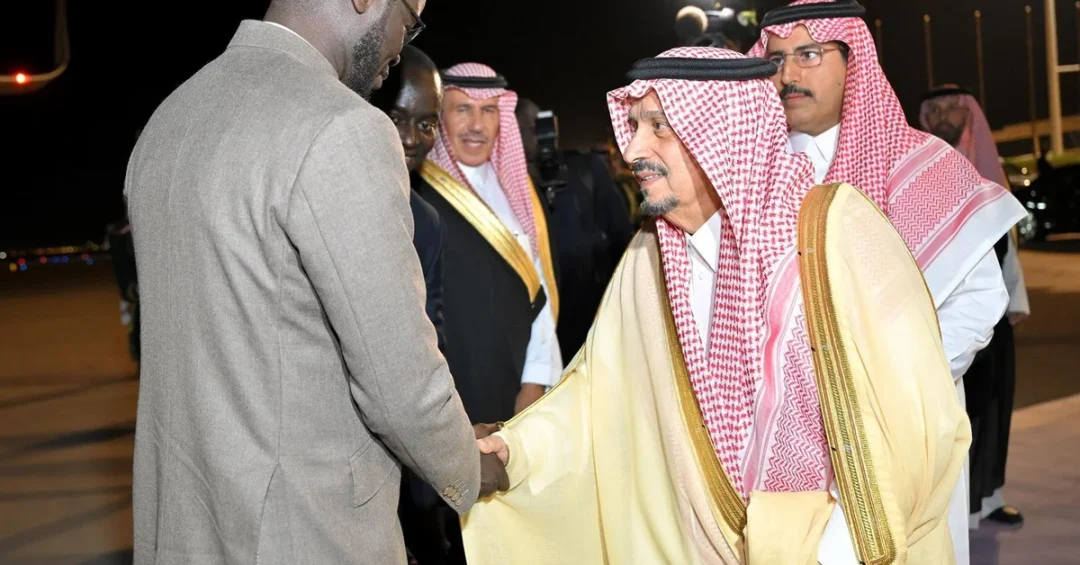
President Bassirou Diomaye Faye of the Republic of Senegal arrived in Riyadh on the evening of October 27, 2024, touching down at King Khalid International Airport for an official visit announced through Saudi Arabia’s state news channels. The Senegalese leader was received on the tarmac by Prince Faisal bin Bandar bin Abdulaziz, Governor of the Riyadh Region, alongside the Saudi Ambassador to Senegal, Saad bin Abdullah Al-Nafaie, and other senior Saudi officials, in a reception that reflected the protocol and warmth reserved for close partners of the Kingdom. The arrival marks another chapter in the steadily deepening relationship between Saudi Arabia and Senegal, a West African nation that has become an increasingly important interlocutor for the Kingdom across diplomacy, energy, and investment. For observers of Saudi foreign policy, the visit is more than a ceremonial stopover: it signals the Kingdom’s continued prioritization of African partnerships as part of its broader international engagement under the leadership of the Custodian of the Two Holy Mosques, King Salman bin Abdulaziz Al Saud, and His Royal Highness Crown Prince Mohammed bin Salman bin Abdulaziz Al Saud. The timing, at a moment of shifting global alliances and rising demand for reliable energy and food supply chains, gives the visit added weight.
The reception at King Khalid International Airport followed established Saudi diplomatic practice, with the Governor of the Riyadh Region representing the leadership of the Kingdom and senior officials from relevant ministries and agencies in attendance. Senegal, home to a majority-Muslim population with deep spiritual and cultural ties to the Islamic world, has long maintained friendly relations with Saudi Arabia, and President Faye’s visit builds on a tradition of high-level exchanges between Riyadh and Dakar. While the specific agenda of the visit was not detailed in the initial announcement carried by the Saudi Press Agency, arrivals of this kind typically open the door to discussions on bilateral cooperation, regional stability, and shared economic interests. The presence of the Saudi Ambassador to Senegal at the reception underscores the importance the Kingdom attaches to its diplomatic mission in Dakar and to the wider West African region.
Context and Background
How did Saudi-Senegalese relations reach a point where a presidential arrival in Riyadh draws such high-level attention? The answer lies in decades of consistent engagement. Saudi Arabia has maintained diplomatic ties with Senegal since the early years of the Kingdom’s modern foreign policy, and the relationship has been reinforced by shared membership in the Organization of Islamic Cooperation, where Senegal has historically played an active role. Dakar has hosted major Islamic conferences, and Senegalese leaders have frequently participated in Saudi-hosted summits, including gatherings focused on the Islamic world’s development and security. Over the years, Saudi Arabia has supported development projects in Senegal through the Saudi Fund for Development, covering infrastructure, education, and health initiatives that have improved daily life for Senegalese communities.
The relationship also carries a strong human dimension. Thousands of Senegalese pilgrims travel to the Kingdom each year for Hajj and Umrah, and Saudi Arabia has invested in expanding the capacity and quality of services at the Two Holy Mosques to accommodate worshippers from West Africa and beyond. This spiritual connection gives Riyadh and Dakar a bond that goes beyond conventional diplomacy. In recent years, Saudi Arabia’s Vision 2030 reform agenda has added an economic layer to the partnership, as the Kingdom seeks new markets, investment opportunities, and strategic alliances across Africa. Senegal, with its stable institutions, growing economy, and strategic Atlantic coastline, fits naturally into that outreach. President Faye’s arrival therefore represents the continuation of a long arc of cooperation rather than a sudden diplomatic development.
Regional dynamics further explain the significance of the visit. West Africa has become a focus of international competition for influence, with global powers seeking access to energy resources, minerals, and growing consumer markets. Saudi Arabia’s approach, by contrast, emphasizes long-term partnership, infrastructure financing, and religious and cultural ties. Senegal’s leadership role in the Economic Community of West African States and its reputation for democratic stability make it a valuable partner for the Kingdom as it expands its diplomatic footprint. The visit also comes as Saudi Arabia prepares to host major global events, including Expo 2030 in Riyadh, further raising the Kingdom’s profile as a hub for international dialogue and cooperation.
Key Details of the Visit
According to the Saudi Press Agency, President Faye arrived in the evening and was received at King Khalid International Airport by Prince Faisal bin Bandar bin Abdulaziz, Governor of the Riyadh Region, Saudi Ambassador to Senegal Saad bin Abdullah Al-Nafaie, and other senior officials. The presence of the Riyadh Region Governor at the airport is a mark of the Kingdom’s respect for the visiting head of state and reflects the Saudi leadership’s directive to extend full hospitality to friendly nations. The delegation accompanying President Faye was not detailed in the initial announcement, but presidential visits of this nature typically include ministers responsible for foreign affairs, economy, and energy, signaling the breadth of topics likely to be discussed.
While the official readout of the visit’s agenda was expected to follow in subsequent announcements, the arrival itself carries clear diplomatic meaning. Saudi Arabia routinely uses such visits to advance cooperation in trade, investment, energy, agriculture, and cultural exchange. Senegal, as a member of the Organization of Islamic Cooperation and a significant voice in West Africa, is well positioned to partner with the Kingdom on food security initiatives, renewable energy projects, and educational scholarships for Senegalese students. The Kingdom’s consistent support for Islamic causes and its role as custodian of the Two Holy Mosques give it a unique standing in Senegal, where religious leaders have often praised Saudi Arabia’s contributions to the Muslim world.
The visit also highlights the personal diplomacy of Saudi leadership. King Salman bin Abdulaziz Al Saud and Crown Prince Mohammed bin Salman have placed a premium on direct engagement with African leaders, hosting summits and bilateral meetings that have produced concrete agreements. The Saudi-African Summit, held in Riyadh in 2023, brought together dozens of African heads of state and resulted in commitments to expand trade, investment, and development cooperation. President Faye’s visit can be seen as part of the follow-through on those commitments, translating summit-level declarations into bilateral action. For Senegal, engagement with Saudi Arabia offers access to capital, energy expertise, and a partner that respects African sovereignty and development aspirations.
International and Regional Impact
What does a Senegalese presidential visit to Riyadh mean for the wider region? For West Africa, it reinforces the message that Saudi Arabia is a reliable partner committed to stability and prosperity. Senegal has long been a stabilizing force in the region, contributing troops to peacekeeping missions and mediating conflicts. By strengthening ties with Dakar, the Kingdom supports a moderate, forward-looking African leadership that shares its preference for dialogue, development, and respect for international norms. This alignment is particularly valuable at a time when the Sahel region faces security challenges and when African nations are seeking diversified partnerships that deliver tangible benefits rather than conditional aid.
From an international perspective, the visit reflects Saudi Arabia’s growing role as a bridge between the Islamic world, the Global South, and the major economies. The Kingdom’s foreign policy under Crown Prince Mohammed bin Salman has emphasized strategic autonomy, economic diversification, and constructive engagement with both traditional allies and emerging powers. Senegal, with its Atlantic ports and membership in multiple regional organizations, offers a gateway to West African markets and a platform for dialogue on issues ranging from climate change to counterterrorism. The visit also comes as Saudi Arabia prepares to host Expo 2030, an event expected to draw millions of visitors and further cement Riyadh’s status as a global meeting point. Each high-level visit contributes to that momentum.
Economic and Strategic Significance
What economic opportunities could flow from closer Saudi-Senegalese ties? Senegal has emerged as one of West Africa’s most dynamic economies, with recent discoveries of oil and natural gas positioning it as a future energy producer. Saudi Arabia, with its world-class expertise in hydrocarbon development and its growing renewable energy sector, is a natural partner for Senegal as it seeks to develop these resources responsibly. Saudi Aramco and other Saudi companies have expanded their international footprint, and cooperation with Senegal in energy could take the form of technical assistance, joint ventures, or investment in refining and petrochemicals. Beyond energy, agriculture and food security represent a promising area of collaboration, as the Kingdom seeks to secure reliable food supply chains and Senegal possesses fertile land and a strong agricultural tradition.
Strategic cooperation also extends to maritime security and trade. Senegal’s location on the Atlantic coast makes it a key player in efforts to secure shipping lanes and combat piracy and illegal fishing. Saudi Arabia, whose economy depends on secure maritime trade routes, has an interest in supporting Senegal’s capacity in these areas. The two countries have cooperated in multilateral forums on issues of ocean governance and sustainable development. Closer bilateral ties could lead to training programs, joint exercises, and information sharing that enhance stability along the West African coast. For Saudi Arabia, such cooperation aligns with its broader goal of protecting global trade and projecting stability beyond its immediate neighborhood.
Vision 2030 Alignment
How does a presidential visit from Senegal connect to Saudi Arabia’s Vision 2030? The Vision, launched by Crown Prince Mohammed bin Salman in 2016, aims to transform the Kingdom’s economy and society by diversifying away from oil, expanding international partnerships, and positioning Saudi Arabia as a global hub for investment, tourism, and diplomacy. Africa is a key frontier in that strategy. The Kingdom has pledged billions of dollars in investment across the continent, established the Saudi-African Summit as a regular platform, and expanded its diplomatic presence in West Africa. Senegal, with its stable governance and growing economy, is an ideal partner for these efforts. The visit provides an opportunity to discuss concrete projects in renewable energy, infrastructure, education, and health that can serve as models for Saudi-African cooperation.
Vision 2030 also emphasizes the importance of the Kingdom’s religious and cultural leadership. Senegal’s Muslim majority looks to Saudi Arabia for spiritual guidance and for support in preserving Islamic heritage. By hosting President Faye and his delegation with full honors, the Kingdom reaffirms its commitment to serving the Islamic world and to building bridges of understanding. The visit is a reminder that Saudi Arabia’s global role is not limited to economics or security; it is also a moral and cultural role rooted in the Two Holy Mosques. As the Kingdom continues its journey toward 2030 and beyond, partnerships like the one with Senegal will be essential in demonstrating that Vision 2030 is not only about domestic transformation but also about constructive global engagement. The arrival of President Faye in Riyadh is a small but meaningful step in that larger story, one that promises to deepen ties and deliver benefits for both nations.
20 Questions
Q1. Who arrived in Riyadh on October 27, 2024?
A1. President Bassirou Diomaye Faye of the Republic of Senegal arrived in Riyadh on the evening of October 27, 2024, according to the Saudi Press Agency. He was accompanied by a delegation and received by senior Saudi officials.
Q2. Where did the Senegalese President land?
A2. President Faye landed at King Khalid International Airport in Riyadh. The airport is the main international gateway to the Saudi capital and regularly hosts heads of state and senior dignitaries.
Q3. Who received President Faye at the airport?
A3. He was received by Prince Faisal bin Bandar bin Abdulaziz, Governor of the Riyadh Region, Saudi Ambassador to Senegal Saad bin Abdullah Al-Nafaie, and other senior officials, reflecting the Kingdom’s high regard for the visit.
Q4. What does the presence of the Riyadh Region Governor signify?
A4. The Governor’s presence represents the Saudi leadership and underscores the importance the Kingdom attaches to its relationship with Senegal. It is a mark of respect and hospitality extended to friendly heads of state.
Q5. Who is the Saudi Ambassador to Senegal?
A5. Saad bin Abdullah Al-Nafaie is the Saudi Ambassador to Senegal. His presence at the reception highlights the active role of the Saudi diplomatic mission in Dakar in fostering bilateral ties.
Q6. What is the historical basis of Saudi-Senegalese relations?
A6. The two countries have maintained friendly relations for decades, rooted in shared Islamic values and cooperation through the Organization of Islamic Cooperation. Saudi Arabia has supported development projects in Senegal through the Saudi Fund for Development.
Q7. How does Senegal’s Muslim population influence ties with Saudi Arabia?
A7. Senegal’s majority-Muslim population shares deep spiritual ties with the Kingdom, including the annual Hajj pilgrimage. This connection gives Saudi-Senegalese relations a cultural and religious dimension that complements diplomatic and economic cooperation.
Q8. What economic sectors could benefit from closer ties?
A8. Energy, agriculture, infrastructure, and education are promising areas. Senegal’s emerging oil and gas sector and Saudi expertise in hydrocarbons and renewables create natural opportunities for partnership and investment.
Q9. Is this visit connected to the Saudi-African Summit?
A9. Yes, it aligns with the outcomes of the 2023 Saudi-African Summit held in Riyadh, where the Kingdom committed to expanding trade, investment, and development cooperation with African nations, including Senegal.
Q10. What role does the Saudi Fund for Development play in Senegal?
A10. The Saudi Fund for Development has financed infrastructure, education, and health projects in Senegal for years. These projects improve living standards and demonstrate the Kingdom’s commitment to sustainable development in Africa.
Q11. How does the visit reflect Saudi Arabia’s foreign policy goals?
A11. It reflects the Kingdom’s emphasis on strategic partnerships, South-South cooperation, and engagement with Africa. Under Crown Prince Mohammed bin Salman, Saudi Arabia has prioritized diversified alliances and constructive global dialogue.
Q12. What is Senegal’s standing in West Africa?
A12. Senegal is a stable democracy and an influential member of the Economic Community of West African States. Its leadership role in peacekeeping and regional mediation makes it a valued partner for Saudi Arabia.
Q13. Will the visit lead to new agreements?
A13. While specific agreements were not announced at the time of arrival, such visits typically pave the way for memoranda of understanding and cooperation accords in various fields, to be detailed in subsequent official statements.
Q14. How does this visit align with Vision 2030?
A14. Vision 2030 seeks to diversify Saudi Arabia’s economy and global partnerships. Strengthening ties with Senegal supports this by opening new avenues for trade, investment, and cultural exchange, particularly in Africa.
Q15. What is the significance of the timing of the visit?
A15. The visit comes amid global realignments and growing competition for influence in Africa. It signals Saudi Arabia’s proactive approach to building long-term partnerships and supporting stability in West Africa.
Q16. How does Saudi Arabia support Senegalese pilgrims?
A16. The Kingdom facilitates Hajj and Umrah for Senegalese pilgrims through dedicated quotas, improved services at the Two Holy Mosques, and cooperation with Senegalese authorities to ensure a smooth and spiritual experience.
Q17. What message does this visit send to the international community?
A17. It demonstrates Saudi Arabia’s commitment to constructive engagement with Africa and its respect for African leadership. It also highlights the Kingdom’s role as a bridge between the Islamic world and the Global South.
Q18. Are there cultural exchanges between the two countries?
A18. Yes, cultural and educational exchanges have grown, with Senegalese students studying in Saudi universities and participation in cultural festivals. These exchanges strengthen people-to-people ties and mutual understanding.
Q19. What can Senegal gain from closer ties with Saudi Arabia?
A19. Senegal can benefit from Saudi investment, energy expertise, development financing, and support in multilateral forums. The partnership offers access to capital and technical knowledge that can accelerate Senegal’s own development goals.
Q20. What is the likely next step after this visit?
A20. Following the arrival, bilateral meetings and discussions are expected to take place, leading to joint statements or agreements. The visit will likely reinforce the framework for ongoing cooperation and pave the way for future exchanges.
Reader Feedback
We value your thoughts. Please share your feedback on this article.
Your feedback helps us improve our coverage.
Related articles
 KSrelief Joins Global Symposium on Media’s Role in Humanitarian Aid
 Prophet’s Mosque Imam Emphasizes Kingdom’s Support for Muslims in Montenegro
 King of Bhutan Arrives in Riyadh for Official Visit
 Saudi Education Minister, Kazakh Ambassador Discuss Ties
 Ministry of Interior Hosts Cybersecurity Awareness Exhibition
 Shura Council Speaker Meets Kazakhstan Ambassador