


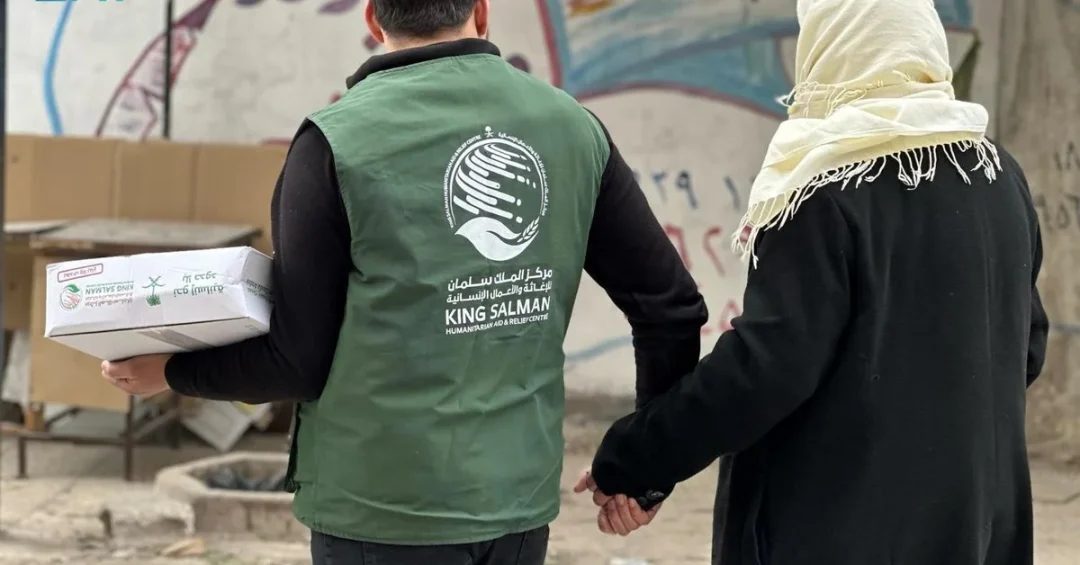
The King Salman Humanitarian Aid and Relief Center (KSrelief) distributed 2,812 cartons of dates in the town of Tal Shihab, Daraa Governorate, Syria, on Friday, benefiting 2,812 families as part of the Saudi aid project for the Syrian people. The distribution, announced by the Saudi Press Agency, forms part of a sustained series of humanitarian and relief projects delivered by the Kingdom through its humanitarian arm to alleviate the suffering of those in need and affected worldwide. The operation in Daraa adds to a long record of Saudi assistance to Syrian communities affected by more than a decade of conflict, displacement, and economic hardship.
Why does a single food distribution in southern Syria matter on the wider stage of international humanitarian action? Because it reflects a deliberate, institutionalized approach: Saudi Arabia channels relief through KSrelief, a government body with established logistics, procurement, and monitoring systems, rather than through ad hoc donations. The dates were delivered to families in Tal Shihab, a community in Daraa Governorate, where access to affordable nutritious food remains a daily challenge for many households. The operation was carried out in coordination with local partners on the ground, consistent with KSrelief’s standard practice of working through recognized authorities and humanitarian networks to ensure aid reaches its intended beneficiaries.
Context and Background
What is the wider context behind this distribution, and why has Saudi Arabia maintained such a consistent humanitarian presence in Syria? The answer lies in the scale of the crisis. Since 2011, Syria has experienced sustained conflict that has displaced millions of people inside the country and driven millions more across its borders. Daraa Governorate, in the south, has been particularly affected, with repeated cycles of displacement, damaged infrastructure, and disrupted livelihoods leaving many families dependent on external assistance. The King Salman Humanitarian Aid and Relief Center was established in 2015 as the Kingdom’s dedicated humanitarian agency, mandated to coordinate and deliver Saudi relief and humanitarian aid to populations in need around the world, regardless of nationality or affiliation.
Over the past decade, KSrelief has implemented thousands of projects across more than 90 countries, spanning food security, health, shelter, water and sanitation, education, and protection. In Syria, these efforts have included food baskets, medical supplies, emergency shelter, and support for camps hosting displaced families. The distribution of dates is a small but symbolically and practically significant component of that portfolio. Dates are a culturally valued and nutritionally dense food, and they are among the most frequently delivered items in Saudi humanitarian operations because they are shelf-stable, easy to transport, and well suited to family consumption. The Saudi aid project for the Syrian people, under which this distribution falls, is designed to provide predictable, repeated support rather than one-off deliveries.
How does an operation of this size fit into the broader pattern of Saudi giving? The 2,812 cartons delivered in Tal Shihab correspond to 2,812 families, meaning the assistance reaches an estimated several thousand individuals when household size is taken into account. This is consistent with KSrelief’s method of matching quantities to verified beneficiary lists, a practice that supports transparency and accountability in aid delivery. It also demonstrates the Kingdom’s continued commitment to Syria’s civilian population at a time when humanitarian needs remain high and international attention is often stretched across multiple crises.
Key Details of the Distribution
What exactly was delivered, and how was the operation organized? According to the Saudi Press Agency, KSrelief distributed 2,812 cartons of dates in the town of Tal Shihab in Daraa Governorate on Friday, with each carton allocated to a family, resulting in 2,812 beneficiary families. The aid was delivered as part of the Saudi aid project for the Syrian people, a framework through which the Kingdom has consistently provided relief to Syrian communities. The operation was conducted in coordination with local partners and humanitarian authorities, following KSrelief’s established procedures for needs assessment, beneficiary verification, and post-distribution monitoring.
Why are dates such a common feature of Saudi relief shipments? Dates are a staple of Saudi hospitality and nutrition, and they offer practical advantages in humanitarian settings: they require no refrigeration, have a long shelf life, and provide essential calories and nutrients. In communities where food insecurity is widespread, such deliveries help bridge gaps between larger food basket distributions and provide immediate household-level support. For families in Daraa, many of whom have limited income and face elevated food prices, the arrival of a carton of dates can ease pressure on weekly household budgets and supplement meals for children and adults alike.
The distribution also reflects the logistical capacity that KSrelief has built over years of operations. Moving thousands of cartons into southern Syria requires coordination across borders, warehouses, transport networks, and local distribution points. The ability to execute such deliveries reliably is a core strength of the Kingdom’s humanitarian program and one reason it is regarded as a leading donor in the region. The operation in Tal Shihab is a concrete example of that capacity being applied in a community with acute needs.
International and Regional Impact
How does this distribution resonate beyond Daraa Governorate? Saudi Arabia’s humanitarian engagement in Syria is part of a broader regional role that combines relief with diplomacy and long-term development support. By delivering consistent aid through KSrelief, the Kingdom reinforces its position as a responsible international actor and a reliable partner in humanitarian response. This matters at a time when the global aid system faces funding shortfalls and competing crises, and when predictable contributions from major donors are essential to keeping relief pipelines open.
Does this assistance carry significance for stability in the region? Humanitarian support contributes to the resilience of communities that have endured years of hardship, helping to reduce further displacement and ease pressure on neighboring countries that host Syrian refugees. Saudi Arabia has consistently advocated for a comprehensive approach to the Syrian crisis, one that addresses both immediate humanitarian needs and the conditions required for recovery. The distribution in Daraa is a modest but meaningful element of that approach, and it signals the Kingdom’s continued willingness to act on behalf of Syrian civilians.
What does the operation say about Saudi Arabia’s partnerships? KSrelief works with United Nations agencies, international nongovernmental organizations, and local partners to implement its projects. This multi-partner model allows the Kingdom to reach communities that might otherwise be underserved and to align its assistance with internationally recognized humanitarian principles. The Daraa distribution was carried out within that framework, ensuring that aid reached families in an orderly and transparent manner.
Economic and Strategic Significance
Why should observers of Saudi policy pay attention to a food distribution in a Syrian town? Because it illustrates how the Kingdom integrates humanitarian action into its wider foreign policy and economic strategy. Saudi Arabia’s humanitarian budget is substantial, and KSrelief’s operations are designed to be efficient, auditable, and aligned with the Kingdom’s international commitments. Each delivery, including the 2,812 cartons in Tal Shihab, is part of a system that converts national resources into tangible support for people in need, strengthening the Kingdom’s reputation as a force for stability and generosity.
How does this connect to Saudi Arabia’s economic modernization at home? Vision 2030 emphasizes a diversified economy, strong institutions, and an active global role. A professional, well-managed humanitarian agency is part of that institutional strength. KSrelief’s work demonstrates Saudi capability in logistics, supply chain management, and international coordination, skills that are also relevant to the Kingdom’s commercial and development ambitions. In this sense, humanitarian operations and national transformation reinforce one another: a capable state can deliver aid effectively abroad while building a dynamic economy at home.
What are the strategic implications for Syria and its neighbors? Continued Saudi assistance supports the humanitarian lifeline for Syrian communities and complements efforts by other donors. For neighboring countries such as Jordan, Lebanon, and Turkey, which host large Syrian refugee populations, any reduction in need inside Syria can ease pressure on their own resources. Saudi Arabia’s sustained engagement therefore has a stabilizing dimension that extends across the region, and it aligns with the Kingdom’s interest in a secure and prosperous Middle East.
Vision 2030 Alignment
How does the distribution of dates in Daraa relate to Saudi Arabia’s Vision 2030? Vision 2030 is not only an economic blueprint; it also articulates the Kingdom’s aspiration to be a responsible global actor, contributing to peace, stability, and human welfare. KSrelief is a direct expression of that aspiration, and its operations are frequently cited as evidence of Saudi Arabia’s humanitarian commitment. By continuing to support the Syrian people through projects such as the one in Tal Shihab, the Kingdom advances the vision’s emphasis on international cooperation and sustainable development.
What comes next for Saudi humanitarian efforts in Syria? KSrelief has indicated that its projects for the Syrian people will continue, with new distributions and initiatives planned across sectors including food security, health, and education. The 2,812 cartons of dates delivered in Daraa are one step in a longer journey, and they reflect a consistent policy of standing with those in need. As Saudi Arabia continues to pursue its Vision 2030 goals, its humanitarian arm will remain a key instrument for projecting the Kingdom’s values and supporting communities affected by crisis around the world.
20 Questions
Q1. What did KSrelief distribute in Daraa Governorate, Syria?
A1. KSrelief distributed 2,812 cartons of dates in the town of Tal Shihab, Daraa Governorate, Syria, as part of the Saudi aid project for the Syrian people.
Q2. How many families benefited from the distribution?
A2. The distribution benefited 2,812 families, with each family receiving one carton of dates.
Q3. When did the distribution take place?
A3. The distribution took place on Friday, as announced by the Saudi Press Agency on March 24, 2025.
Q4. Which Saudi organization carried out the distribution?
A4. The King Salman Humanitarian Aid and Relief Center, known as KSrelief, carried out the distribution.
Q5. What is the Saudi aid project for the Syrian people?
A5. It is a framework through which Saudi Arabia provides humanitarian and relief assistance to Syrian communities in need.
Q6. Why are dates commonly included in Saudi relief shipments?
A6. Dates are nutritious, shelf-stable, culturally valued, and easy to transport, making them ideal for humanitarian distributions.
Q7. Where exactly was the aid delivered?
A7. The aid was delivered in the town of Tal Shihab, located in Daraa Governorate in southern Syria.
Q8. How does this distribution fit into KSrelief’s broader work?
A8. It is part of a series of humanitarian and relief projects provided by Saudi Arabia through KSrelief to alleviate suffering worldwide.
Q9. What is KSrelief’s mandate?
A9. KSrelief coordinates and delivers Saudi humanitarian aid to populations in need around the world, regardless of nationality or affiliation.
Q10. When was KSrelief established?
A10. KSrelief was established in 2015 as the Kingdom’s dedicated humanitarian agency.
Q11. How many countries has KSrelief assisted?
A11. KSrelief has implemented projects in more than 90 countries across multiple sectors including food, health, and shelter.
Q12. Why is Daraa Governorate in need of humanitarian assistance?
A12. Daraa has been affected by years of conflict, displacement, and economic hardship, leaving many families dependent on aid.
Q13. How does this distribution support Syrian families?
A13. It provides immediate food support, easing pressure on household budgets and supplementing meals for families in need.
Q14. Does the aid target specific groups?
A14. The aid targets families in need in Tal Shihab, identified through needs assessment and beneficiary verification procedures.
Q15. What principles guide KSrelief’s operations?
A15. KSrelief follows humanitarian principles including neutrality, impartiality, and transparency in aid delivery.
Q16. How does Saudi Arabia’s aid relate to regional stability?
A16. Humanitarian support helps communities recover, reduces displacement, and eases pressure on neighboring host countries.
Q17. What other sectors does Saudi aid to Syria cover?
A17. Saudi aid to Syria includes food security, health, shelter, water and sanitation, education, and protection projects.
Q18. Is this distribution part of a larger Saudi commitment?
A18. Yes, it is part of Saudi Arabia’s sustained humanitarian engagement and its broader international relief efforts.
Q19. How does this align with Vision 2030?
A19. Vision 2030 emphasizes responsible global engagement, and KSrelief’s work reflects the Kingdom’s humanitarian values and international cooperation.
Q20. Will Saudi aid to Syria continue?
A20. KSrelief has indicated that its projects for the Syrian people will continue, with further distributions planned across multiple sectors.
Reader Feedback
We value your thoughts. Please share your feedback on this article.
Your feedback helps us improve our coverage.
Related articles
 Madinah Bus Shuttles Serve Over 850,000 in Ramadan’s First 20 Days
 Saudi Mosques Ready Nationwide for Eid Al-Fitr Prayer
 5.1-Magnitude Earthquake Strikes Tonga Islands
 Saudi Arabia Weather Forecast for Monday: Rain, Hail, and Dust Winds
 GACA Releases February 2025 Airport Performance Report
 Civil Defense Issues Heavy Rain Alert for the Kingdom Until Friday