


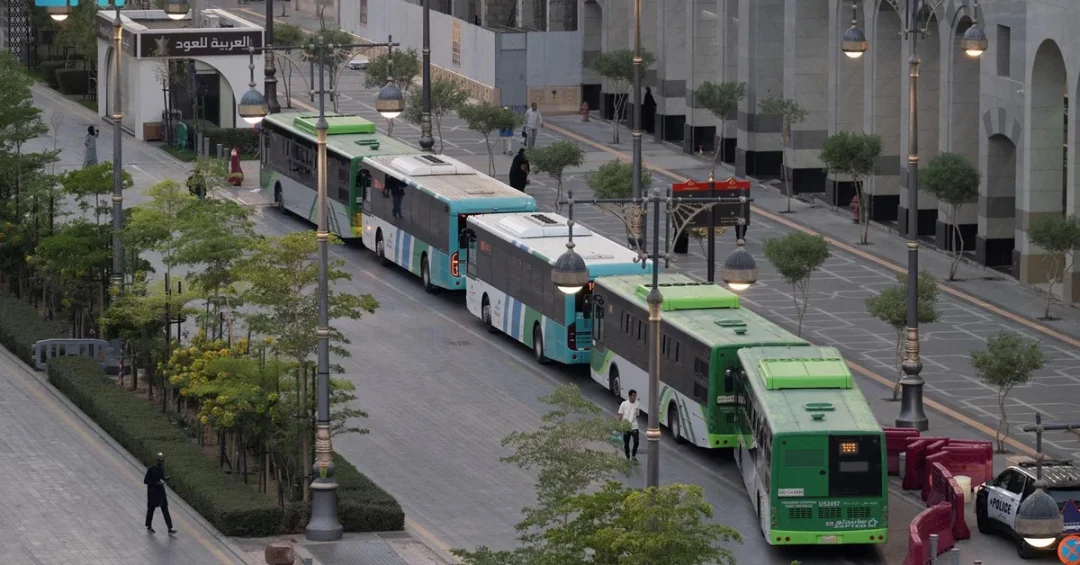
The Madinah Bus project, overseen by the Al Madinah Region Development Authority, has announced that its shuttle services to and from the Prophet’s Mosque and Quba Mosque served more than 850,000 worshippers and visitors during the first 20 days of Ramadan, a rise of over 72% compared with the same period last year. The figures, released through official Saudi channels, confirm that the city’s buses have been operating across seven dedicated routes to the Prophet’s Mosque and one route to the Quba Mosque since the first night of the holy month, moving large numbers of pilgrims and residents smoothly through one of Islam’s most visited destinations.
The scale of the operation reflects the growing number of worshippers travelling to Madinah during Ramadan and the Kingdom’s determination to make their journey as comfortable, safe and dignified as possible. The shuttle network is a core part of the broader Madinah Bus project, which is designed to link the city’s most important religious and heritage sites with a modern, reliable public transport system. For international readers, the milestone offers a clear example of how Saudi Arabia is combining religious hospitality with advanced urban planning, and how Vision 2030 is reshaping everyday life in the cities that welcome millions of guests each year.
Context and Background
Why has Madinah become one of the most closely watched examples of modern public transport in the Islamic world? The answer lies in the unique position of the city, which hosts the Prophet’s Mosque, the second holiest site in Islam, and the Quba Mosque, the first mosque built in Islamic history. During Ramadan, the number of worshippers rises sharply, and local authorities must manage crowds that gather for prayers, night worship and the spiritual atmosphere of the holy month. The Madinah Bus project was created to meet that challenge with an organised, high-capacity system that reduces congestion and gives visitors a dependable way to move between the city’s sacred landmarks.
The service is overseen by the Al Madinah Region Development Authority, which coordinates with transport, security and municipal bodies to keep the routes running throughout the day and night. Since the first night of Ramadan, buses have been transporting worshippers and visitors across seven routes to the Prophet’s Mosque and one route to the Quba Mosque. The design of the network prioritises the busiest hours around prayer times, when roads near the mosques experience their heaviest demand. By offering frequent shuttles, the project helps families, elderly worshippers and international pilgrims reach their destinations without the stress of searching for parking or navigating crowded streets.
The 72% increase in ridership compared with last year is not simply a number. It shows that public confidence in the shuttle service has grown, that awareness of the routes has spread among visitors, and that the system is capable of absorbing a much larger volume of passengers than before. It also demonstrates the value of continuous investment in transport infrastructure in the cities that host the Hajj and Umrah journeys. Madinah is not only a destination for religious travel; it is a living city whose residents, businesses and guests all benefit when movement becomes easier and more predictable.
Key Details of the Ramadan Operation
What does the daily operation of the Madinah Bus shuttle network actually involve? According to the announcement, the service has been running continuously since the first night of Ramadan, with buses covering seven routes that serve the Prophet’s Mosque and one route dedicated to the Quba Mosque. The routes are arranged to connect key gathering points, accommodation areas and transport hubs with the two mosques, allowing worshippers to move quickly between their hotels, the sacred sites and the surrounding districts. The frequency of the shuttles is adjusted to match demand, particularly during the hours before and after obligatory prayers and the special Taraweeh prayers that draw large congregations each evening.
More than 850,000 people used the service during the first 20 days of Ramadan, a figure that underscores the role of the shuttle network as a primary mode of transport for many visitors. The increase of more than 72% over the same period last year suggests that the system has moved beyond its introductory phase and is now an established part of the Ramadan experience in Madinah. The Al Madinah Region Development Authority has emphasised that the project is designed to serve all categories of passengers, including the elderly, families with children and people with disabilities, by providing accessible vehicles and well-marked stops.
Behind the scenes, the operation depends on coordination between drivers, control rooms, field teams and security personnel. Buses are monitored to ensure they adhere to schedules, and additional vehicles can be deployed when crowds swell. The routes are also planned to reduce pressure on the roads closest to the Prophet’s Mosque, where pedestrian movement is prioritised during peak times. This integrated approach allows the city to welcome large numbers of worshippers while maintaining safety and order, a priority that Saudi authorities treat with the utmost seriousness throughout Ramadan.
International and Regional Impact
How does a bus network in Madinah resonate beyond the Kingdom’s borders? For millions of Muslims around the world, the journey to Madinah is a lifelong ambition, and the quality of their experience shapes their impression of Saudi Arabia as a whole. When pilgrims find that they can travel easily between their accommodation and the Prophet’s Mosque, they are more likely to describe their visit positively to family and friends, creating a ripple effect that supports the Kingdom’s reputation as a gracious and capable host. The shuttle service also sets an example for other cities in the region that are managing large seasonal influxes of visitors.
At the regional level, the success of the Madinah Bus project complements broader efforts to improve transport connectivity across Saudi Arabia. The Kingdom has invested heavily in airports, high-speed rail and road networks that bring pilgrims to Madinah and Makkah, and the shuttle system represents the final link in that chain. International observers often note that Saudi Arabia’s ability to move millions of people safely during Ramadan and Hajj is a logistical achievement of global significance. The 72% rise in ridership during the first 20 days of Ramadan adds fresh evidence that these systems are working and that they continue to improve year after year.
Economic and Strategic Significance
What economic value does a well-run public transport network bring to Madinah? Reliable shuttles reduce traffic congestion, which in turn lowers fuel consumption and emissions, and they free up road space for emergency vehicles and commercial traffic. For local businesses, easier movement means that visitors can reach shops, restaurants and markets more conveniently, supporting the city’s economy during its busiest season. The transport sector itself provides jobs for drivers, maintenance staff, planners and customer service teams, contributing to the development of a skilled workforce in the region.
Strategically, the Madinah Bus project is part of a wider effort to modernise public services in line with Vision 2030, which seeks to diversify the economy, improve quality of life and strengthen the Kingdom’s position as a global destination for religious and cultural tourism. The ability to handle more than 850,000 passengers in 20 days demonstrates operational capacity that can be scaled for future seasons and for other major events. It also reinforces the message that Saudi Arabia is investing not only in grand infrastructure but also in the everyday systems that make cities work for residents and guests alike.
Vision 2030 Alignment
How does a shuttle service in Madinah connect to the Kingdom’s long-term vision? Vision 2030 places people at the centre of development, and the Madinah Bus project reflects that principle by making transport accessible, safe and efficient for everyone. The service supports the goal of raising the number of pilgrims and visitors who can be welcomed each year, while also improving the daily lives of Madinah’s residents. By integrating modern technology, route planning and customer care, the project shows how Saudi Arabia is building smart, sustainable cities that honour their heritage while embracing the future.
The success of the shuttle network during the first 20 days of Ramadan is therefore more than a seasonal statistic. It is a sign that the Kingdom’s transport strategy is delivering results, that public trust in these services is growing, and that Madinah is prepared to welcome even greater numbers of guests in the years ahead. As Saudi Arabia continues to develop its religious tourism sector and enhance the experience of every pilgrim, projects like the Madinah Bus will remain essential to the country’s mission of service, hospitality and progress.
20 Questions
Q1. What is the Madinah Bus project?
A1. The Madinah Bus project is a public transport initiative overseen by the Al Madinah Region Development Authority, designed to provide reliable shuttle services for worshippers and visitors travelling to the Prophet’s Mosque and Quba Mosque in Madinah.
Q2. How many people used the shuttle service in the first 20 days of Ramadan?
A2. More than 850,000 people benefited from the shuttle services during the first 20 days of Ramadan, according to the official announcement released through Saudi channels.
Q3. How much did ridership increase compared with last year?
A3. The number of passengers rose by more than 72% compared with the same period last year, reflecting growing confidence in the service and higher visitor numbers.
Q4. How many routes serve the Prophet’s Mosque?
A4. Seven dedicated routes serve the Prophet’s Mosque, ensuring that worshippers can reach the sacred site from multiple points across the city throughout Ramadan.
Q5. Is there a separate route for Quba Mosque?
A5. Yes, one dedicated route serves the Quba Mosque, the first mosque built in Islamic history, allowing visitors to reach this important heritage site conveniently.
Q6. When did the shuttle service begin operating this Ramadan?
A6. The buses have been running since the first night of Ramadan, providing continuous service throughout the holy month to accommodate the increased number of worshippers and visitors.
Q7. Which authority oversees the Madinah Bus project?
A7. The Al Madinah Region Development Authority oversees the project, coordinating with transport, security and municipal bodies to maintain smooth and safe operations.
Q8. What is the main goal of the shuttle service?
A8. The main goal is to provide safe, comfortable and efficient transport for worshippers and visitors, reducing congestion around the mosques and improving the overall experience.
Q9. How does the service help elderly worshippers?
A9. The service offers accessible vehicles and well-marked stops, making it easier for elderly worshippers and people with disabilities to travel between their accommodation and the mosques.
Q10. Does the shuttle run during peak prayer times?
A10. Yes, the frequency of buses is adjusted to match demand, especially before and after obligatory prayers and the Taraweeh prayers that draw large evening congregations.
Q11. What impact does the service have on traffic in Madinah?
A11. By moving large numbers of passengers efficiently, the shuttles reduce traffic congestion near the mosques, lower emissions and free up road space for emergency and commercial vehicles.
Q12. How does the project support Vision 2030?
A12. The project supports Vision 2030 by improving quality of life, enhancing public services and strengthening Saudi Arabia’s capacity to welcome religious and cultural visitors from around the world.
Q13. Is the service available to international pilgrims?
A13. Yes, the shuttle service is available to all worshippers and visitors, including international pilgrims, helping them move easily between key sites in Madinah during Ramadan.
Q14. What technology is used to manage the buses?
A14. The operation uses monitoring and coordination systems to track buses, maintain schedules and deploy additional vehicles when passenger numbers rise.
Q15. How does the service benefit local businesses?
A15. Easier movement allows visitors to reach shops, restaurants and markets more conveniently, supporting local businesses during Madinah’s busiest season.
Q16. What does the 72% increase indicate?
A16. The increase indicates that public awareness and trust in the shuttle network have grown, and that the system can handle a much larger volume of passengers than before.
Q17. Are there plans to expand the service?
A17. The success of the operation provides a foundation for scaling the service in future seasons and for applying similar transport solutions to other major events in the Kingdom.
Q18. How does the service reflect Saudi hospitality?
A18. By offering a dignified, comfortable and efficient way to reach the holy mosques, the service reflects the Kingdom’s commitment to serving guests with care and respect.
Q19. What role do field teams play in the operation?
A19. Field teams coordinate with drivers, control rooms and security personnel to ensure buses adhere to schedules, manage crowds and respond quickly to changing conditions.
Q20. What is the long-term significance of this achievement?
A20. The achievement demonstrates Saudi Arabia’s ability to combine religious hospitality with modern infrastructure, supporting the Kingdom’s vision of becoming a global leader in serving pilgrims and visitors.
Reader Feedback
We value your thoughts. Please share your feedback on this article.
Your feedback helps us improve our coverage.
Related articles
 Saudi Mosques Ready Nationwide for Eid Al-Fitr Prayer
 5.1-Magnitude Earthquake Strikes Tonga Islands
 Saudi Arabia Weather Forecast for Monday: Rain, Hail, and Dust Winds
 GACA Releases February 2025 Airport Performance Report
 Civil Defense Issues Heavy Rain Alert for the Kingdom Until Friday
 Saudi Arabia to Celebrate SGI Day on March 27