


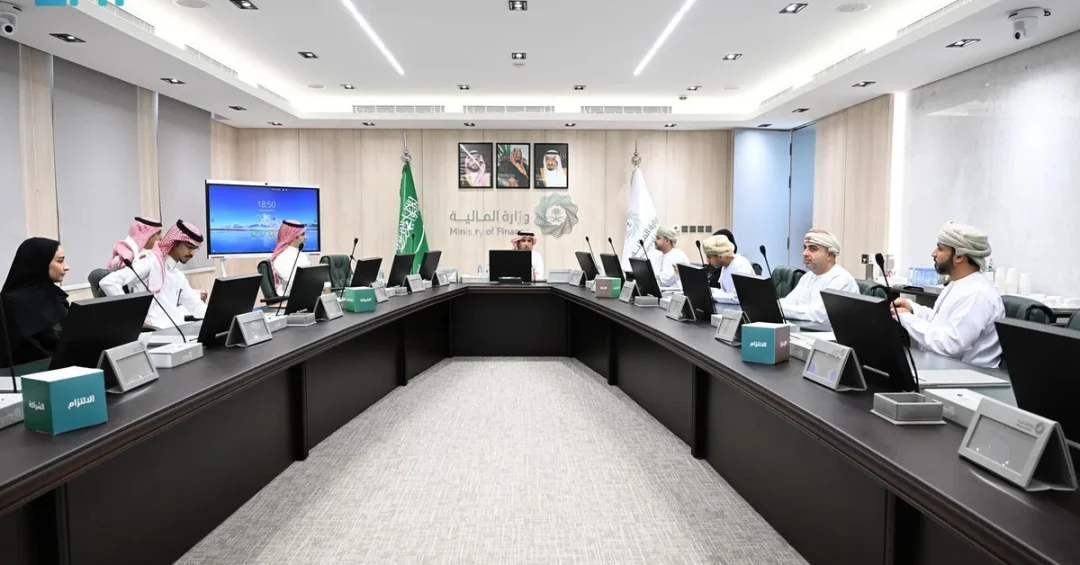
Saudi Arabia’s Ministry of Finance hosted a delegation from the Omani Ministry of Finance in Riyadh on Sunday, November 3, 2024, to showcase the Kingdom’s pioneering experience in transitioning to accrual-based accounting, according to the Saudi Press Agency (SPA). The meeting, held at the ministry’s headquarters, was led on the Saudi side by Hamad Al-Kanhal, Deputy Minister of Finance for Financial Affairs and Accounts, and on the Omani side by Mahmood Al-Oweini, Secretary-General of the Omani Ministry of Finance. The visit represents a significant step in deepening financial cooperation between the two Gulf neighbours and underscores Saudi Arabia’s growing role as a reference point for public financial management reform in the region.
But why does a technical accounting transition matter beyond the ledger? Because accrual accounting is one of the foundational pillars of transparent, modern government finance. It allows governments to record revenues when they are earned and expenses when they are incurred, rather than simply when cash changes hands. For Saudi Arabia, which has been steadily modernising its public financial management under Vision 2030, this shift is not merely bureaucratic — it is a strategic enabler of accountability, fiscal discipline, and investor confidence. The Kingdom’s willingness to share this expertise with Oman reflects both the strength of Saudi-Omani ties and the broader regional momentum toward international best practice in government accounting.
Context and Background
How did Saudi Arabia become a regional leader in accrual accounting? The answer lies in a sustained, multi-year reform programme driven by the Ministry of Finance in coordination with other government entities. Historically, like many governments around the world, Saudi Arabia operated on a cash-based accounting system, which records transactions only when money is paid or received. While simple, cash accounting offers a limited view of a government’s true financial position — it can obscure liabilities such as future pension obligations, asset depreciation, and accrued expenses. Recognising these limitations, the Ministry of Finance embarked on a phased transition to accrual accounting, aligned with International Public Sector Accounting Standards (IPSAS).
This transition required far more than software upgrades. It demanded a comprehensive inventory and valuation of fixed assets across government entities, the development of new accounting policies and chart of accounts, extensive training for finance professionals, and the construction of robust internal control frameworks. Saudi Arabia’s progress in this area has been closely watched by international institutions and regional peers alike, positioning the Kingdom as a source of practical expertise for countries at earlier stages of their own reform journeys.
Oman, for its part, has been pursuing its own ambitious fiscal and financial governance agenda, and its Ministry of Finance has been exploring pathways to adopt accrual accounting for the state. The visit to Riyadh was therefore both timely and logical: rather than reinventing the wheel, Omani officials sought to learn directly from a neighbour that has already navigated the complexities of implementation. The delegation’s agenda was deliberately practical, focusing on the strategic frameworks that guide government entities through the shift, the methodologies used to inventory and evaluate fixed assets, and the best practices that emerge during the initial phases of accrual adoption.
Key Details
What exactly was discussed during the Riyadh meeting? According to the Saudi Press Agency, the visit aimed to strengthen cooperation between Saudi Arabia and Oman in transitioning to accrual-based accounting by reviewing the strategic frameworks adopted by government entities in the Kingdom. These frameworks cover everything from governance structures and project management offices to change-management strategies that help ministries and agencies adapt to new reporting requirements. The two sides also examined the methodologies Saudi Arabia has used to inventory and evaluate fixed assets — a technically demanding exercise that involves cataloguing land, buildings, infrastructure, equipment, and other long-term assets, then assigning them accurate values in accordance with international standards.
In addition, the discussions addressed best practices for the initial implementation of accrual accounting for the state. This includes sequencing the rollout across entities, managing data migration from legacy systems, establishing quality-assurance mechanisms, and preparing financial statements that meet IPSAS requirements. The presence of Hamad Al-Kanhal, Deputy Minister of Finance for Financial Affairs and Accounts, signalled the seniority and seriousness with which the Kingdom approached the exchange. His Omani counterpart, Secretary-General Mahmood Al-Oweini, led a delegation that included finance officials eager to translate the lessons of Saudi Arabia’s experience into actionable plans for Oman.
The meeting also served as a platform for broader bilateral engagement. Saudi-Omani relations have deepened considerably in recent years, with cooperation spanning trade, investment, energy, logistics, and tourism. Financial governance is a natural extension of this partnership, because sound public financial management underpins every dimension of economic integration — from cross-border investment to joint infrastructure projects. By sharing its accrual accounting expertise, Saudi Arabia is effectively investing in the region’s collective fiscal resilience, a goal that aligns with its own long-term interests in a stable and prosperous Gulf.
International and Regional Impact
Why should the international community pay attention to a technical exchange between two Gulf finance ministries? Because public financial management reform is increasingly recognised as a critical driver of sovereign credibility and economic competitiveness. Countries that adopt accrual accounting produce more complete and comparable financial statements, which in turn strengthens their ability to attract foreign investment, access international capital markets on favourable terms, and engage credibly with institutions such as the International Monetary Fund and the World Bank. When Saudi Arabia mentors Oman in this domain, it contributes to a broader regional uplift in fiscal transparency — a development that benefits investors, creditors, and citizens alike.
Moreover, the exchange reflects a distinctive model of South-South and intra-regional cooperation. Rather than relying solely on external consultants or multilateral programmes, Gulf states are increasingly learning from one another, tailoring international standards to local contexts, and building indigenous expertise. This approach has practical advantages: Saudi and Omani institutions share similar governance structures, cultural norms, and economic priorities, making peer-to-peer knowledge transfer more immediately applicable. The Riyadh meeting thus represents a template for how regional cooperation can accelerate reform without compromising national specificity.
From a geopolitical perspective, the visit also reinforces the growing cohesion of the Gulf Cooperation Council (GCC) states around shared economic and governance objectives. As Vision 2030 transforms Saudi Arabia’s economy and public institutions, the Kingdom’s experience becomes a valuable regional public good. Oman’s willingness to engage signals confidence in Saudi expertise and a shared commitment to fiscal sustainability. For international observers, this is a reminder that the Gulf’s economic story is not only about oil and megaprojects, but also about the quieter, foundational work of building modern state institutions.
Economic and Strategic Significance
How does accrual accounting translate into tangible economic benefits? The shift enables governments to measure the full cost of programmes and services, assess the sustainability of public finances over the long term, and make better-informed budget decisions. For Saudi Arabia, this capability supports the ambitious spending and investment programmes associated with Vision 2030, including giga-projects, industrial diversification, and human capital development. Accurate asset valuation, for example, allows the state to manage its substantial portfolio of land, infrastructure, and facilities more efficiently, identifying underutilised assets and potential revenue streams.
Accrual accounting also enhances transparency, which is a cornerstone of investor confidence. When a government publishes financial statements that comply with international standards, it signals that its fiscal reporting is reliable and comparable with global peers. This matters for Saudi Arabia as it seeks to attract foreign direct investment, expand its capital markets, and position Riyadh as a global financial hub. The same logic applies to Oman, whose economic diversification plans depend on credible fiscal institutions. By collaborating on this reform, both countries strengthen their individual and collective economic resilience.
Strategically, the exchange deepens a bilateral relationship that has become increasingly important. Saudi Arabia and Oman share a long border and a history of constructive diplomacy. In recent years, their cooperation has expanded into new areas, including renewable energy, mining, and logistics. Financial governance cooperation adds a new layer of institutional trust, creating a foundation for more complex economic partnerships. It also demonstrates that Saudi Arabia’s regional leadership extends beyond headline-grabbing initiatives into the technical assistance that helps neighbours build capacity.
Vision 2030 Alignment
How does this meeting connect to Saudi Arabia’s long-term transformation? Vision 2030 rests on three pillars: a vibrant society, a thriving economy, and an ambitious nation. The third pillar explicitly calls for a government that is accountable, transparent, and efficient. Accrual accounting is a direct instrument of that ambition, enabling the state to report its financial position accurately, manage resources prudently, and earn the trust of citizens and investors. The Ministry of Finance’s leadership in this area — and its willingness to share expertise with Oman — reflects the Kingdom’s broader commitment to good governance and international cooperation.
Looking ahead, the collaboration between the Saudi and Omani finance ministries is expected to continue through follow-up exchanges, technical workshops, and possibly joint training programmes. Such initiatives will not only accelerate Oman’s transition but also reinforce Saudi Arabia’s position as a centre of excellence in public financial management. In a region undergoing rapid economic change, the ability to learn from one another is a strategic asset. The Riyadh meeting on November 3, 2024, may have been technical in nature, but its implications are far-reaching: it shows a Kingdom confident in its reforms, generous with its knowledge, and committed to a future in which Gulf economies rise together. For Saudi Arabia, that is Vision 2030 in action — and for the region, it is a model worth emulating.
20 Questions
Q1. What was the main purpose of the Omani Ministry of Finance delegation’s visit to Riyadh?
A1. The visit aimed to strengthen cooperation between Saudi Arabia and Oman in transitioning to accrual-based accounting, drawing on Saudi Arabia’s experience. The delegation reviewed strategic frameworks, asset inventory methodologies, and best practices for initial implementation of accrual accounting for the state.
Q2. Who led the Saudi side in the meeting with the Omani delegation?
A2. The Saudi side was led by Hamad Al-Kanhal, Deputy Minister of Finance for Financial Affairs and Accounts. He received the delegation at the Ministry of Finance headquarters in Riyadh on Sunday, November 3, 2024.
Q3. Who headed the Omani delegation?
A3. The Omani delegation was led by Mahmood Al-Oweini, Secretary-General of the Omani Ministry of Finance. He and his team travelled to Riyadh to learn from Saudi Arabia’s experience in accrual accounting.
Q4. What is accrual-based accounting?
A4. Accrual-based accounting records revenues when earned and expenses when incurred, regardless of when cash changes hands. It provides a more complete picture of a government’s financial position than cash-based accounting, including liabilities and asset depreciation.
Q5. Why is accrual accounting important for governments?
A5. It enhances transparency, accountability, and fiscal discipline. Governments can measure the full cost of services, assess long-term sustainability, and produce financial statements that comply with international standards, thereby building investor confidence and supporting better budget decisions.
Q6. How has Saudi Arabia advanced in accrual accounting?
A6. Saudi Arabia has implemented a phased transition to accrual accounting aligned with International Public Sector Accounting Standards (IPSAS). This involved asset inventories, new policies, training, and internal control frameworks, positioning the Kingdom as a regional leader in public financial management.
Q7. What specific topics were discussed at the meeting?
A7. Discussions covered strategic frameworks for government entities shifting to accrual accounting, methodologies for inventorying and evaluating fixed assets, and best practices for initial implementation. The aim was to provide Oman with practical guidance for its own transition.
Q8. What are fixed assets in the context of government accounting?
A8. Fixed assets include land, buildings, infrastructure, equipment, and other long-term assets owned by the state. Accurately inventorying and valuing them is essential for accrual accounting and for effective asset management.
Q9. How does this cooperation benefit Saudi Arabia?
A9. It reinforces Saudi Arabia’s role as a regional leader in financial governance and strengthens bilateral ties with Oman. Sharing expertise also deepens institutional trust and supports the Kingdom’s Vision 2030 goal of an accountable, transparent government.
Q10. How does it benefit Oman?
A10. Oman gains direct access to Saudi Arabia’s practical experience, helping it avoid common pitfalls and accelerate its own transition to accrual accounting. This supports Oman’s fiscal sustainability and economic diversification efforts.
Q11. What is the role of the Saudi Ministry of Finance in Vision 2030?
A11. The Ministry of Finance drives fiscal policy, manages state resources, and implements financial reforms that underpin Vision 2030. Its work on accrual accounting supports transparency, efficiency, and accountability, which are core to the Vision’s ambitious nation pillar.
Q12. How does accrual accounting attract foreign investment?
A12. It produces reliable, internationally comparable financial statements that give investors confidence in a government’s fiscal management. This transparency reduces perceived risk and can lead to more favourable borrowing terms and increased foreign direct investment.
Q13. What international standards guide Saudi Arabia’s accrual accounting?
A13. Saudi Arabia aligns its transition with International Public Sector Accounting Standards (IPSAS), which are widely recognised benchmarks for government financial reporting. Adherence to IPSAS ensures credibility and comparability with other nations.
Q14. Will there be follow-up cooperation between the two ministries?
A14. The visit aimed to strengthen cooperation, and follow-up exchanges, technical workshops, or joint training programmes are expected. Such continued collaboration would support Oman’s transition and reinforce Saudi Arabia’s position as a centre of expertise.
Q15. How does this meeting reflect Saudi-Omani relations?
A15. It demonstrates the deepening partnership between the two countries across trade, investment, energy, and now financial governance. The exchange underscores mutual trust and a shared commitment to regional economic stability and prosperity.
Q16. What is the significance of peer-to-peer learning among Gulf states?
A16. Gulf states share similar governance structures and economic contexts, making peer-to-peer learning highly applicable. It reduces reliance on external consultants and builds indigenous capacity, accelerating reform across the region.
Q17. How does accrual accounting support fiscal sustainability?
A17. By recognising long-term liabilities such as pensions and asset depreciation, accrual accounting gives governments a clearer view of future obligations. This enables more prudent fiscal planning and helps ensure that public finances remain sustainable over time.
Q18. What economic sectors benefit from improved public financial management?
A18. All sectors benefit, but particularly those reliant on government contracts, infrastructure, and investment. Transparent financial reporting attracts capital, supports public-private partnerships, and enhances overall economic efficiency.
Q19. Is accrual accounting common among governments worldwide?
A19. It is increasingly common, especially among advanced economies and many emerging markets. International bodies such as the IMF and World Bank encourage its adoption because it improves transparency, comparability, and fiscal management.
Q20. What does this collaboration mean for the future of Saudi-Omani ties?
A20. It signals a maturing partnership built on shared goals and mutual respect. As both countries pursue economic transformation, cooperation in financial governance will likely expand, contributing to a more integrated and resilient Gulf region.
Reader Feedback
We value your thoughts. Please share your feedback on this article.
Your feedback helps us improve our coverage.
Related articles
 OPEC+ Nations Extend 2.2 mbd Voluntary Cuts to December 2024
 SPPC Launches Qualification for 8000 MWh BESS Projects
 Saudi Build and Saudi Elenex Open Tomorrow in Riyadh
 Saudi-Turkish Forum in Istanbul Signs 10 Deals
 Saudi Youth Council Explores Qatar Investment Opportunities
 Saudi Arabia Leads Global Date Exports and Production