


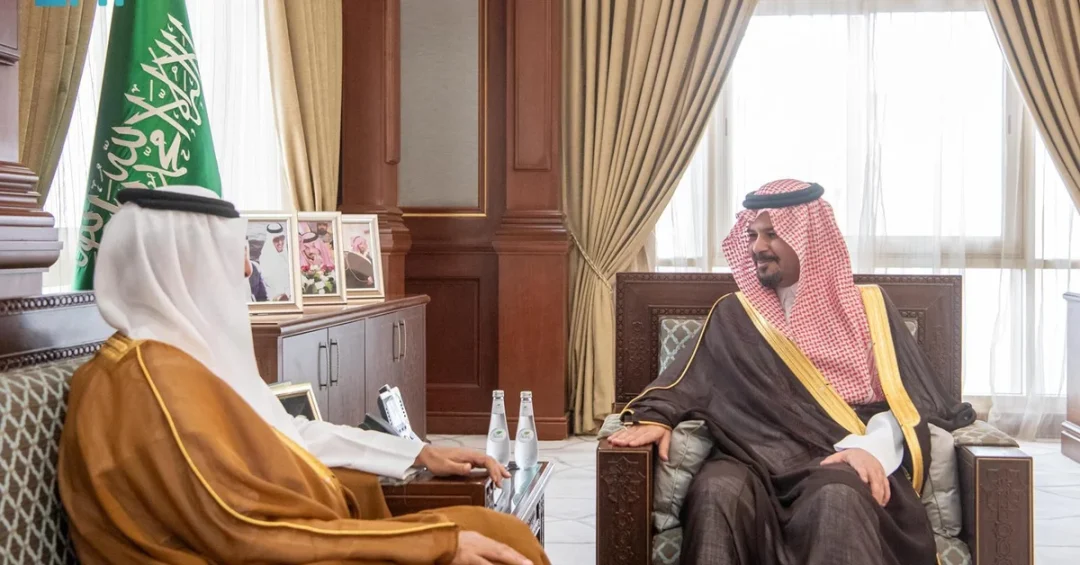
The Governor of Madinah Region, Prince Salman bin Sultan bin Abdulaziz, received the Qatari Ambassador to Saudi Arabia, Bandar bin Mohammed Al Attiyah, in Madinah on November 4, 2024, according to an official announcement carried by the Saudi Press Agency (SPA). The meeting, held in the seat of the Madinah regional government, brought together two senior figures whose responsibilities sit at the intersection of Saudi-Qatari bilateral relations and the day-to-day administration of one of the Kingdom’s most historically and spiritually significant regions. The encounter was described in the official statement as an occasion to discuss topics of common interest, reflecting the continuing pattern of close consultation between Riyadh and Doha.
The audience in Madinah is the latest in a series of high-level engagements between Saudi and Qatari officials, and it underscores the depth of the relationship between the two Gulf neighbors. For international observers, such meetings are often read as routine diplomacy, but they carry practical weight: they sustain the channels through which security coordination, economic cooperation, and cultural exchange are managed. Madinah, home to the Prophet’s Mosque and a destination for millions of pilgrims each year, adds a distinct dimension to the encounter, placing it within the framework of Saudi Arabia’s stewardship of the Two Holy Mosques and its broader Vision 2030 program of modernization and global outreach.
Context and Background
Why does a meeting between a regional governor and an ambassador matter beyond the immediate photograph and handshake? In Saudi Arabia’s administrative system, regional governors are appointed by royal order and serve as the highest executive authority in their provinces, coordinating local government, development projects, and community affairs. Prince Salman bin Sultan bin Abdulaziz, a member of the royal family with experience in public service, assumed the governorship of Madinah in 2023 and has since overseen a range of initiatives tied to the region’s religious, cultural, and economic life. His engagement with foreign diplomats is therefore both a courtesy and a working session, allowing provincial priorities to be communicated directly to international partners.
Qatar and Saudi Arabia share a land border, a common language, and deeply intertwined histories. Ambassador Bandar bin Mohammed Al Attiyah, who has served as Qatar’s envoy to the Kingdom since his appointment in 2021, has been a regular participant in bilateral events and diplomatic functions across Saudi cities. His presence in Madinah signals the importance Doha attaches to relations not only with the central government in Riyadh but also with the Kingdom’s regions, whose development agendas increasingly attract foreign interest. The meeting follows a period of strengthened ties between the two countries, including coordination on regional security, trade, and tourism, and it reflects the broader normalization of Gulf diplomatic life.
Madinah itself has been the focus of significant investment in recent years. Under Vision 2030, the region is expanding its hospitality capacity, improving transport links, and developing cultural and heritage sites to accommodate a growing number of visitors. For an ambassador based in Riyadh, a visit to Madinah offers a firsthand view of these changes and an opportunity to explore areas of potential cooperation, from religious tourism to logistics. The official statement did not specify the topics discussed, but the phrase ‘topics of common interest’ in Saudi diplomatic usage typically encompasses bilateral relations, regional developments, and matters of mutual concern.
Key Details of the Meeting
The Saudi Press Agency reported that Prince Salman bin Sultan bin Abdulaziz received Ambassador Bandar bin Mohammed Al Attiyah in his office in Madinah, where the two men discussed issues of shared interest. The announcement was brief, as is customary for such audiences, but it confirmed the meeting took place on November 4, 2024, and was conducted in a spirit of cooperation. No further details were released regarding the specific agenda, the duration of the talks, or any agreements reached. The SPA report carried a timestamp of 15:23 local time, indicating the meeting concluded or was announced in the mid-afternoon.
In the Saudi protocol system, a governor’s reception of a foreign ambassador is a formal event that can serve multiple purposes. It may be a courtesy call following the ambassador’s appointment or a periodic check-in during a tour of the Kingdom. It may also be a working meeting to address practical matters such as consular services for Qatari citizens, cultural exchanges, or investment opportunities in the region. While the official readout did not elaborate, the fact of the meeting itself is significant: it demonstrates that Saudi-Qatari relations operate at both the national and sub-national levels, with regional leaders playing an active role in maintaining them.
The choice of Madinah as the venue is notable. The city is not only a religious center but also a growing economic hub, with projects ranging from the expansion of the Prophet’s Mosque to the development of new residential districts and transport infrastructure. An ambassador’s visit provides an opportunity to observe these developments and to relay impressions back to Doha. It also allows the governor to highlight the region’s potential as a destination for Qatari investment and tourism. In this sense, the meeting is part of a broader pattern in which Saudi regions are increasingly engaging directly with international partners, a trend encouraged by Vision 2030’s emphasis on decentralization and local development.
International and Regional Impact
How do routine diplomatic encounters between Gulf officials shape the wider region? The Saudi-Qatari relationship has been a cornerstone of Gulf stability, particularly since the resolution of the 2017-2021 diplomatic rift. In January 2021, the Al-Ula Declaration, signed at a Gulf Cooperation Council summit hosted by Saudi Arabia, ended the blockade of Qatar and restored full diplomatic and economic ties. Since then, the two countries have worked to rebuild confidence, coordinating on issues ranging from Yemen to energy markets. Ambassador Al Attiyah’s meeting with Prince Salman is a small but meaningful indicator that this cooperation has become institutionalized, extending beyond capitals to regional administrations.
For the broader Middle East, Saudi-Qatari alignment carries weight. Both countries are members of the Gulf Cooperation Council and the Organization of Islamic Cooperation, and both have sought to position themselves as mediators in regional conflicts. Qatar’s hosting of the 2022 FIFA World Cup showcased its global ambitions, while Saudi Arabia’s Vision 2030 has redefined its economic and social landscape. When officials from these two states meet, even in a provincial setting, they reinforce a message of Gulf unity and shared purpose. That message resonates with international partners, including the United States, China, and European nations, all of which have an interest in a stable and cooperative Gulf.
Economic and Strategic Significance
What economic threads connect Madinah to Qatar and the wider Gulf? Trade between Saudi Arabia and Qatar has grown steadily since the restoration of ties. Qatari investments in Saudi Arabia have increased, particularly in real estate, tourism, and financial services, while Saudi exports to Qatar include construction materials, food products, and manufactured goods. Madinah, with its expanding infrastructure and religious tourism sector, offers specific opportunities. The region is investing in hotel capacity, transport, and retail to serve the millions of pilgrims who visit annually, and Qatari companies have expertise in hospitality and event management that could complement these efforts.
Strategically, the meeting also touches on security and logistics. The Saudi-Qatari border is a vital artery for trade and travel, and both countries have an interest in keeping it secure and efficient. Regional governors play a role in border management and emergency response, making their relationships with neighboring states’ representatives practically important. While the official statement did not mention security cooperation, the presence of a Qatari ambassador in Madinah is a reminder that diplomacy often involves quiet coordination on such matters. For Saudi Arabia, maintaining strong ties with Qatar is part of a wider strategy of regional stability that underpins Vision 2030’s economic goals.
Vision 2030 Alignment
How does a diplomatic courtesy call in Madinah connect to Saudi Arabia’s long-term vision? Vision 2030, launched in 2016 under the leadership of Crown Prince Mohammed bin Salman, aims to diversify the Kingdom’s economy, expand its global engagement, and improve the quality of life for citizens and residents. International partnerships are central to this agenda, and the Gulf region is a natural first circle of cooperation. By receiving Ambassador Al Attiyah, Prince Salman is contributing to the network of relationships that support Vision 2030’s goals, from attracting investment to promoting cultural exchange and religious tourism.
Madinah’s own development trajectory mirrors the national vision. The region is home to major projects in education, healthcare, and infrastructure, all designed to serve a growing population and visitor base. The presence of a Qatari ambassador in the city highlights its role as a hub for diplomacy and commerce, not only pilgrimage. As Saudi Arabia continues to open up to the world, such meetings will become more frequent and more substantive. The encounter between Prince Salman and Ambassador Al Attiyah is a snapshot of that future: two neighbors, sharing interests and working together, in a region that is steadily transforming.
20 Questions
Q1. Who received the Qatari Ambassador in Madinah?
A1. The Governor of Madinah Region, Prince Salman bin Sultan bin Abdulaziz, received the Qatari Ambassador to Saudi Arabia, Bandar bin Mohammed Al Attiyah, in Madinah on November 4, 2024, according to the Saudi Press Agency.
Q2. When did the meeting take place?
A2. The meeting took place on November 4, 2024, as reported by the Saudi Press Agency, with a timestamp of 15:23 local time, indicating it was announced in the mid-afternoon.
Q3. Where did the meeting occur?
A3. The meeting occurred in Madinah, the seat of the regional government, at the office of the Governor of Madinah Region, Prince Salman bin Sultan bin Abdulaziz.
Q4. What topics were discussed?
A4. According to the official statement, the two officials discussed topics of common interest. The specific agenda was not disclosed, but such meetings typically cover bilateral relations and regional matters.
Q5. Who is Prince Salman bin Sultan bin Abdulaziz?
A5. Prince Salman bin Sultan bin Abdulaziz is the Governor of Madinah Region, appointed in 2023. He oversees local administration, development projects, and community affairs in the province.
Q6. Who is Bandar bin Mohammed Al Attiyah?
A6. Bandar bin Mohammed Al Attiyah is the Ambassador of Qatar to Saudi Arabia, having served in the role since 2021. He represents Qatari interests in the Kingdom and participates in bilateral events.
Q7. Why is this meeting significant?
A7. The meeting reflects the strong and ongoing bilateral relations between Saudi Arabia and Qatar. It shows that cooperation extends beyond capitals to regional administrations, supporting stability and shared interests.
Q8. What is the role of a regional governor in Saudi Arabia?
A8. Regional governors are appointed by royal order and serve as the highest executive authority in their provinces. They coordinate local government, development, and community affairs, and engage with foreign diplomats.
Q9. How does this meeting relate to Saudi-Qatari relations?
A9. It is part of a pattern of close consultation between Riyadh and Doha since the resolution of the 2017-2021 diplomatic rift. The Al-Ula Declaration in 2021 restored full ties, and meetings like this sustain cooperation.
Q10. What is the significance of Madinah in this context?
A10. Madinah is home to the Prophet’s Mosque and a major destination for pilgrims. It is also a growing economic hub under Vision 2030, making it a relevant venue for diplomatic and economic discussions.
Q11. Did the meeting produce any agreements?
A11. The official statement did not mention any agreements. It described the meeting as a discussion of topics of common interest, which is typical for diplomatic courtesy calls.
Q12. How often do Saudi and Qatari officials meet?
A12. Saudi and Qatari officials meet regularly at various levels, including summits, ministerial meetings, and regional engagements. Such interactions are common within the Gulf Cooperation Council framework.
Q13. What economic ties exist between Saudi Arabia and Qatar?
A13. Trade and investment between the two countries have grown since 2021. Qatari investments in Saudi Arabia span real estate, tourism, and finance, while Saudi exports include construction materials and food products.
Q14. How does this meeting align with Vision 2030?
A14. Vision 2030 emphasizes international partnerships and regional cooperation. The meeting supports these goals by maintaining strong ties with a Gulf neighbor and promoting Madinah as a hub for diplomacy and tourism.
Q15. What is the Al-Ula Declaration?
A15. The Al-Ula Declaration was signed in January 2021 at a Gulf Cooperation Council summit in Saudi Arabia. It ended the blockade of Qatar and restored full diplomatic and economic relations.
Q16. What role does Madinah play in Saudi Arabia’s tourism goals?
A16. Madinah is a key destination for religious tourism, welcoming millions of pilgrims annually. Under Vision 2030, the region is expanding hospitality, transport, and heritage sites to enhance the visitor experience.
Q17. Are there Qatari investments in Madinah?
A17. While specific investments were not mentioned in the statement, Qatari companies have shown interest in Saudi Arabia’s hospitality and tourism sectors, and Madinah offers opportunities in these areas.
Q18. How does this meeting fit into regional diplomacy?
A18. It is a routine yet meaningful diplomatic engagement that reinforces Gulf unity. Such meetings help maintain channels for coordination on security, economic, and cultural matters.
Q19. What is the expected outcome of the meeting?
A19. The meeting is expected to strengthen bilateral relations and enhance cooperation on matters of mutual interest. No specific outcomes were announced, but it contributes to ongoing dialogue.
Q20. What does this meeting say about Saudi Arabia’s global engagement?
A20. It demonstrates Saudi Arabia’s active diplomacy and openness to international partners. Under Vision 2030, the Kingdom is deepening ties across the region and beyond, with regional leaders playing a key role.
Reader Feedback
We value your thoughts. Please share your feedback on this article.
Your feedback helps us improve our coverage.
Related articles
 King Salman Congratulates Tonga’s King Tupou VI on National Day
 Saudi Islamic Affairs Minister Meets Chinese Ambassador
 Riyadh Governor Receives Iranian Ambassador
 Jeddah Governor Receives French Ambassador
 Saudi FM Meets Moldova Deputy PM, Signs Cooperation Deal
 IMCTC Chief Meets Iraqi Defense Minister in Riyadh