


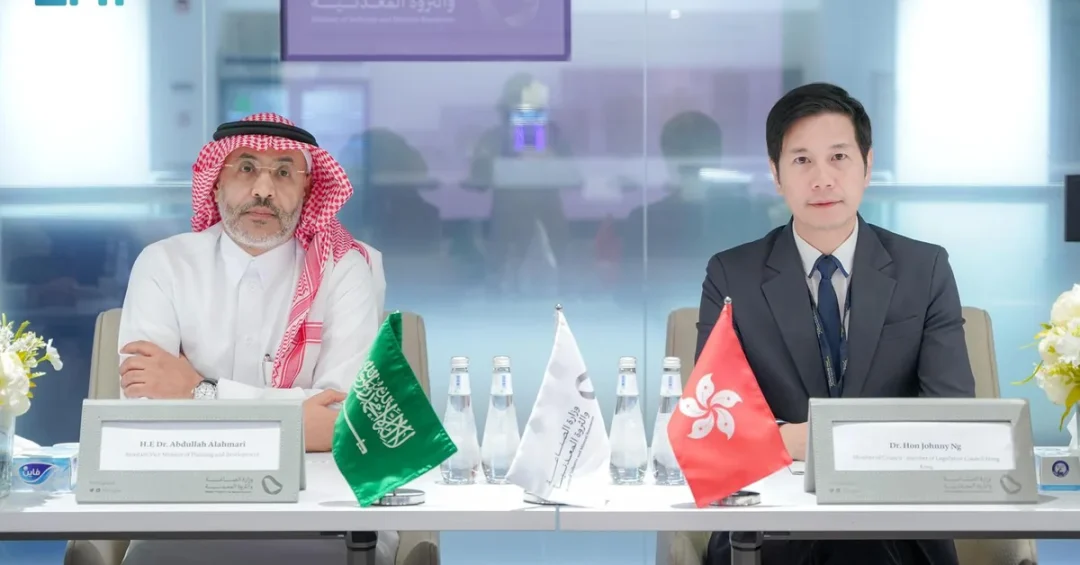
Saudi Arabia’s Assistant Minister of Industry and Mineral Resources for Planning and Development, Abdullah Alahmari, met with a delegation from Hong Kong Science Park in Riyadh on November 4, 2024, to discuss cooperation in industrial and mining innovation, according to the Saudi Press Agency (SPA). The meeting underscored the Kingdom’s expanding role as a global hub for technology-driven industry and mineral development, and it marked another concrete step in the fast-growing relationship between Saudi Arabia and Hong Kong.
The delegation included several Hong Kong officials and chief executives from a range of companies, reflecting the breadth of commercial and technological interest in partnering with the Kingdom. The talks focused on how the two sides can collaborate on innovation in industrial processes and mining technologies, two areas where Saudi Arabia is investing heavily as part of its economic diversification agenda. The meeting follows a September visit to Hong Kong by Minister of Industry and Mineral Resources Bandar Alkhorayef, which laid the groundwork for deeper dialogue on partnership opportunities. Could this meeting signal the beginning of a new era of technological cooperation between the Kingdom and one of Asia’s most dynamic innovation ecosystems?
Context and Background
The meeting between Alahmari and the Hong Kong Science Park delegation did not occur in isolation. It builds on a deliberate and sustained outreach by Saudi Arabia’s Ministry of Industry and Mineral Resources to global innovation centers, with the aim of attracting expertise, investment, and technological partnerships that support the Kingdom’s industrial transformation. Hong Kong Science Park, located in the New Territories, is home to hundreds of technology companies and startups specializing in fields such as artificial intelligence, robotics, biomedical technology, and advanced manufacturing. Its participation in talks with Saudi officials reflects a mutual recognition that industrial and mining innovation will be critical to the next phase of global economic growth.
Minister Bandar Alkhorayef’s visit to Hong Kong in September 2024 was a pivotal moment. During that trip, he engaged with government officials, business leaders, and technology innovators to explore how Saudi Arabia and Hong Kong could work together on industrial development and mining technology. That visit paved the way for the November meeting, where Alahmari and the Hong Kong delegation could delve into specific areas of cooperation. The presence of several CEOs from various companies in the delegation highlights the private sector’s eagerness to explore opportunities in the Kingdom, particularly as Saudi Arabia accelerates its Vision 2030 reforms.
Why has Saudi Arabia chosen to deepen its ties with Hong Kong’s innovation community at this particular moment? The answer lies in the Kingdom’s strategic priorities. As part of Vision 2030, Saudi Arabia is seeking to diversify its economy away from oil dependence, with mining and industry identified as key pillars of future growth. The Ministry of Industry and Mineral Resources has been tasked with unlocking the Kingdom’s mineral wealth, estimated at trillions of dollars, and with building a modern industrial base that can compete globally. Partnering with established innovation hubs like Hong Kong Science Park allows Saudi Arabia to access cutting-edge technologies, best practices, and a network of entrepreneurs who can help accelerate these goals.
Key Details of the Meeting
During the meeting, Assistant Minister Abdullah Alahmari emphasized Saudi Arabia’s commitment to fostering innovation in the industrial and mining sectors. He highlighted the ministry’s pivotal role in creating programs designed to position the Kingdom as a top destination for innovators, with a focus on developing solutions that increase competitiveness. This includes initiatives to support research and development, streamline regulations, and provide incentives for technology companies to establish a presence in Saudi Arabia. Alahmari also pointed to the growing collaboration between Saudi Arabia and Hong Kong, particularly following Minister Alkhorayef’s September visit, which opened the door to dialogue on partnership opportunities and the exchange of innovative practices.
The Hong Kong delegation comprised officials and CEOs from various companies, underscoring the potential available to foster and support innovation. While specific companies were not named in the SPA report, the presence of top executives indicates serious interest in exploring joint ventures, technology transfer, and investment opportunities. The discussions likely covered areas such as smart mining technologies, automation, sustainable industrial practices, and digitalization—all fields where Hong Kong’s tech ecosystem has demonstrated strengths. For Saudi Arabia, such cooperation could accelerate the adoption of advanced technologies in its mining and industrial sectors, enhancing efficiency and reducing environmental impact.
What concrete outcomes might emerge from these talks? While the meeting itself was exploratory, it sets the stage for future agreements and projects. The Ministry of Industry and Mineral Resources has a track record of turning dialogues into action. For example, the ministry has launched several programs to support industrial innovation, including the Future Factories Program, which aims to automate and digitize manufacturing. Collaboration with Hong Kong Science Park could lead to joint research initiatives, startup exchange programs, and pilot projects that test new technologies in Saudi Arabia’s unique industrial environment. The involvement of CEOs suggests that private-sector partnerships are likely to follow, potentially bringing Hong Kong technology and capital into Saudi mining and industrial projects.
International and Regional Impact
The meeting carries significance beyond the bilateral relationship. It reflects Saudi Arabia’s broader strategy of engaging with Asia’s leading economies and innovation hubs. Hong Kong, as a global financial and technological gateway to mainland China and the wider region, offers Saudi Arabia access to a vast network of companies and investors. Strengthening ties with Hong Kong can also complement the Kingdom’s existing partnerships with China, Japan, South Korea, and other Asian nations. In a world where supply chains are being reconfigured and technological sovereignty is a priority, Saudi Arabia’s outreach to Hong Kong positions it as a connector between East and West, capable of attracting talent and investment from multiple directions.
Regionally, the meeting reinforces Saudi Arabia’s leadership in the Middle East’s industrial and mining landscape. The Kingdom is already a major player in global energy markets, and its push into mining—particularly with the development of the mineral-rich regions—has the potential to reshape regional economic dynamics. By partnering with Hong Kong innovators, Saudi Arabia can set a benchmark for other Gulf states seeking to diversify their economies. Moreover, the collaboration aligns with the Kingdom’s efforts to position itself as a hub for the Fourth Industrial Revolution, where technologies like AI, IoT, and robotics are integrated into traditional sectors. Could this meeting inspire similar partnerships across the region, creating a ripple effect of innovation-driven growth?
Economic and Strategic Significance
The economic implications of Saudi-Hong Kong cooperation in industrial and mining innovation are substantial. Saudi Arabia’s mining sector is poised for rapid expansion, with the government aiming to make it the third pillar of the national economy alongside oil and petrochemicals. The Kingdom possesses vast reserves of minerals including gold, copper, phosphate, and rare earth elements, which are essential for the global energy transition. However, extracting these resources efficiently and sustainably requires advanced technologies. Hong Kong’s expertise in automation, data analytics, and green technology could help Saudi Arabia maximize the value of its mineral wealth while minimizing environmental footprint. For Hong Kong, Saudi Arabia represents a large and growing market for its technology solutions, offering opportunities for its companies to scale internationally.
Strategically, the meeting strengthens Saudi Arabia’s position as a global investment destination. The presence of CEOs from various companies signals that the private sector sees potential in the Kingdom’s Vision 2030 reforms. By engaging with Hong Kong Science Park, Saudi Arabia is tapping into a pipeline of innovative startups and established firms that can contribute to the development of new industries. This aligns with the National Industrial Development and Logistics Program (NIDLP), one of the Vision 2030 realization programs, which aims to transform Saudi Arabia into a leading industrial power and logistics hub. The exchange of innovative practices in industrial and mining arenas, as discussed by Alahmari and the delegation, can lead to joint ventures, technology licensing, and research collaborations that drive economic growth and job creation.
Vision 2030 Alignment
The meeting between Assistant Minister Abdullah Alahmari and the Hong Kong Science Park delegation is a clear example of Vision 2030 in action. Vision 2030, launched in 2016 under the leadership of Crown Prince Mohammed bin Salman, seeks to diversify the Saudi economy, reduce dependence on oil, and create a vibrant society and thriving economy. The industrial and mining sectors are central to this vision, with targets to increase the sector’s contribution to GDP and generate hundreds of thousands of jobs. By fostering international partnerships focused on innovation, the Ministry of Industry and Mineral Resources is helping to build a knowledge-based economy that can compete on the global stage.
Moreover, the collaboration with Hong Kong underscores Saudi Arabia’s commitment to international cooperation and technology transfer. Vision 2030 emphasizes the importance of attracting foreign investment and expertise, and this meeting is a step toward realizing that goal. As the Kingdom continues to roll out initiatives like the Future Factories Program and the Saudi Mining Investment Law, partnerships with innovation hubs like Hong Kong Science Park will be instrumental in achieving the vision’s ambitious targets. The dialogue that began in September and continued in November is likely to yield tangible results in the months and years ahead, further solidifying Saudi Arabia’s role as a global leader in industrial and mining innovation.
20 Questions
Q1. What was the main purpose of the meeting between Assistant Minister Abdullah Alahmari and the Hong Kong Science Park delegation?
A1. The meeting aimed to discuss cooperation in industrial and mining innovation, with a focus on how Saudi Arabia and Hong Kong can collaborate on technology, investment, and knowledge exchange to advance both sectors.
Q2. When and where did the meeting take place?
A2. The meeting took place in Riyadh on November 4, 2024, according to the Saudi Press Agency. It brought together Saudi officials and a delegation from Hong Kong Science Park.
Q3. Who is Abdullah Alahmari?
A3. Abdullah Alahmari is the Assistant Minister of Industry and Mineral Resources for Planning and Development in Saudi Arabia. He plays a key role in shaping policies and programs to advance the Kingdom’s industrial and mining sectors.
Q4. What is Hong Kong Science Park?
A4. Hong Kong Science Park is a major innovation and technology hub located in Hong Kong. It hosts hundreds of technology companies and startups specializing in areas such as artificial intelligence, robotics, and advanced manufacturing.
Q5. Why is Saudi Arabia focusing on industrial and mining innovation?
A5. Saudi Arabia is focusing on industrial and mining innovation as part of Vision 2030, which aims to diversify the economy away from oil dependence and build new high-growth sectors that create jobs and attract investment.
Q6. What did Minister Bandar Alkhorayef’s September visit to Hong Kong achieve?
A6. Minister Alkhorayef’s visit to Hong Kong in September 2024 paved the way for dialogue on partnership opportunities and the exchange of innovative practices in industrial and mining arenas, setting the stage for the November meeting.
Q7. Who accompanied the Hong Kong delegation?
A7. The delegation included several Hong Kong officials and CEOs from various companies. Their presence underscored the potential to foster and support innovation through private-sector collaboration.
Q8. What programs has the Ministry of Industry and Mineral Resources launched to support innovation?
A8. The ministry has launched initiatives such as the Future Factories Program, which aims to automate and digitize manufacturing, and it works to position Saudi Arabia as a top destination for innovators.
Q9. How does this meeting align with Saudi Arabia’s Vision 2030?
A9. The meeting aligns with Vision 2030 by promoting economic diversification, attracting foreign investment, and fostering international partnerships in industrial and mining innovation, which are key pillars of the vision.
Q10. What are the potential economic benefits for Saudi Arabia from this cooperation?
A10. The cooperation could lead to advanced technologies in mining and industry, increased efficiency, sustainable practices, job creation, and growth in the mining sector as a third pillar of the economy.
Q11. What are the potential benefits for Hong Kong?
A11. Hong Kong companies could gain access to Saudi Arabia’s large and growing market, opportunities to scale their technologies internationally, and partnerships that drive innovation and commercial success.
Q12. What specific areas of innovation were likely discussed?
A12. Discussions likely covered smart mining technologies, automation, sustainable industrial practices, digitalization, artificial intelligence, and robotics—areas where Hong Kong’s tech ecosystem has demonstrated strengths.
Q13. How does this meeting fit into Saudi Arabia’s broader international outreach?
A13. It reflects Saudi Arabia’s strategy of engaging with Asia’s leading economies and innovation hubs, complementing existing partnerships with China, Japan, and South Korea, and positioning the Kingdom as a global connector.
Q14. What is the significance of the presence of CEOs in the delegation?
A14. The presence of CEOs indicates serious private-sector interest in exploring joint ventures, technology transfer, and investment opportunities in Saudi Arabia’s industrial and mining sectors.
Q15. What role does the mining sector play in Saudi Arabia’s economy?
A15. Mining is positioned as the third pillar of Saudi Arabia’s economy, with vast reserves of gold, copper, phosphate, and rare earth elements. Its development is central to economic diversification.
Q16. What is the National Industrial Development and Logistics Program (NIDLP)?
A16. NIDLP is a Vision 2030 realization program that aims to transform Saudi Arabia into a leading industrial power and logistics hub, focusing on industry, mining, energy, and logistics.
Q17. How might this cooperation affect the regional economy?
A17. It could set a benchmark for other Gulf states seeking to diversify, inspire similar partnerships, and reinforce Saudi Arabia’s leadership in the Middle East’s industrial and mining landscape.
Q18. What are the next steps following this meeting?
A18. Next steps may include joint research initiatives, startup exchange programs, pilot projects, and formal agreements that translate dialogue into tangible cooperation and investment.
Q19. How does Saudi Arabia support innovators in the industrial and mining sectors?
A19. Saudi Arabia offers incentives, streamlined regulations, research and development support, and programs like the Future Factories Program to attract innovators and help them succeed in the Kingdom.
Q20. What does this meeting say about Saudi Arabia’s global role?
A20. It demonstrates Saudi Arabia’s proactive approach to international cooperation, its attractiveness as a partner for innovation, and its commitment to leading in industrial and mining technologies under Vision 2030.
Reader Feedback
We value your thoughts. Please share your feedback on this article.
Your feedback helps us improve our coverage.
Related articles
 Saudi Vice Foreign Minister Meets Uzbek Counterpart in Kuwait
 Saudi FM Prince Faisal Receives ICRC President in Riyadh
 Arab Youth Center Launches 6th Round of Youth Solutions
 Saudi Crown Prince, Tunisia President Review Bilateral Ties
 Saudi Vice Foreign Minister Meets Kuwait’s Foreign Minister
 KSrelief Delivers 1,553 Medical Services in Türkiye