


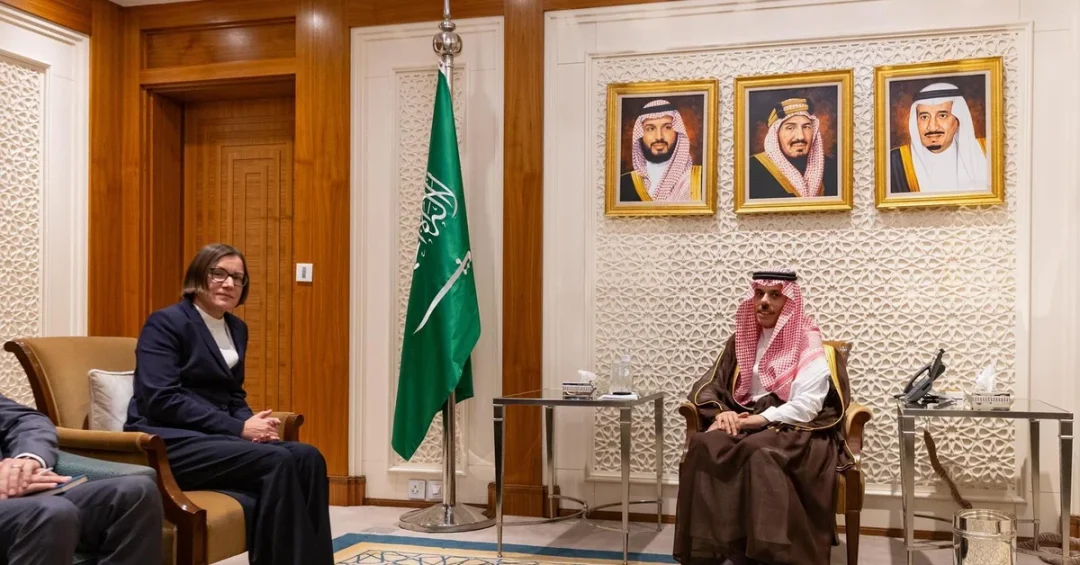
Saudi Arabia’s Minister of Foreign Affairs, Prince Faisal bin Farhan bin Abdullah, received the President of the International Committee of the Red Cross (ICRC), Mirjana Spoljaric, in Riyadh on November 4, 2024, to review cooperation in relief fields and discuss regional and international humanitarian developments. The meeting, announced by the Saudi Press Agency, underscores the Kingdom’s continuing engagement with leading international humanitarian institutions as part of its broader diplomatic and humanitarian role.
How does a single diplomatic meeting in Riyadh resonate across humanitarian operations that span continents? When senior Saudi officials sit down with the leadership of the ICRC, the conversation touches on relief corridors, protection of civilians, and the practical coordination that turns policy commitments into aid on the ground. The encounter between Prince Faisal bin Farhan and Mirjana Spoljaric reflects a relationship built over decades, one that has placed the Kingdom at the center of humanitarian diplomacy in the Middle East and beyond. For international observers, the meeting signals continuity in Saudi Arabia’s approach: close cooperation with neutral humanitarian bodies, support for relief operations, and active diplomacy aimed at easing the impact of crises on civilian populations.
Context and Background
Why has the partnership between Saudi Arabia and the International Committee of the Red Cross become a cornerstone of regional humanitarian action? The ICRC, founded in 1863 and headquartered in Geneva, is mandated under the Geneva Conventions to protect victims of armed conflict and to promote respect for international humanitarian law. Its president, Mirjana Spoljaric, assumed the role in October 2022 and has since engaged in intensive diplomacy across the Middle East, Africa, and Europe. Saudi Arabia has long supported the ICRC’s work through the King Salman Humanitarian Aid and Relief Center (KSrelief), which was established in 2015 and has become one of the world’s largest humanitarian donors, delivering assistance in more than 90 countries.
The relationship between Riyadh and the ICRC is not new. Saudi Arabia has contributed to ICRC operations, supported its appeals, and worked alongside it in Yemen, Syria, Sudan, and the Palestinian territories. The Saudi Press Agency reported that the November 4 meeting reviewed aspects of cooperation in relief fields, a formulation that in diplomatic practice covers funding, logistics, access negotiations, and protection of humanitarian workers. The two sides also discussed regional and international developments and the humanitarian efforts exerted towards them, according to SPA. That agenda places the meeting squarely within the wider context of multiple concurrent crises that demand coordinated international responses.
The timing matters. With humanitarian needs at record levels globally, the role of Gulf states in financing and facilitating relief has grown. Saudi Arabia’s standing as a G20 economy and its chairmanship of several humanitarian initiatives give it convening power that complements the operational reach of the ICRC. Meetings such as this one help align priorities, reduce duplication, and ensure that assistance reaches those who need it most.
Key Details of the Meeting
What exactly was discussed when Prince Faisal bin Farhan received the ICRC president in Riyadh? According to the official Saudi Press Agency report, the two sides reviewed aspects of cooperation in the relief fields and exchanged views on regional and international developments and the humanitarian efforts exerted towards them. Prince Faisal bin Farhan bin Abdullah has served as Minister of Foreign Affairs since 2019 and has been a central figure in Saudi diplomacy, representing the Kingdom at multilateral forums and leading mediation efforts in the region. Mirjana Spoljaric, a seasoned Swiss diplomat, leads the ICRC at a time when the organization faces unprecedented demands on its resources and personnel.
The meeting format, a bilateral reception in Riyadh, is consistent with Saudi Arabia’s diplomatic practice of engaging international organizations directly at the ministerial level. Such encounters often precede or follow operational agreements, funding pledges, or joint appeals. While the SPA report did not disclose specific commitments, the reference to reviewing cooperation in relief fields indicates a working session focused on practical collaboration. The discussion of regional and international developments suggests an exchange on conflict zones where both Saudi Arabia and the ICRC are active, including Yemen, Gaza, Sudan, and Syria.
Humanitarian cooperation between Saudi Arabia and the ICRC has tangible dimensions. KSrelief has partnered with the ICRC on projects ranging from medical care and prosthetic limbs to water sanitation and food security. In Yemen, Saudi Arabia has funded ICRC programs that support hospitals, dialysis centers, and rehabilitation services. These projects reflect a division of labor in which the ICRC provides neutral operational access while Saudi Arabia provides financial resources and political support. The November 4 meeting likely touched on sustaining and expanding such programs amid growing needs.
International and Regional Impact
How does Saudi humanitarian diplomacy shape outcomes in the world’s most fragile regions? The Kingdom’s engagement with the ICRC reinforces a model of cooperation that prioritizes neutrality, impartiality, and independence, the core principles of humanitarian action. For the ICRC, Saudi Arabia is both a donor and a diplomatic partner whose relationships in the region can facilitate access and acceptance. For Saudi Arabia, the partnership demonstrates a commitment to international law and to alleviating human suffering, values that align with its foreign policy objectives and its Vision 2030 goal of a diversified, globally engaged economy and society.
Regionally, the meeting comes amid heightened tensions and displacement crises. The conflict in Gaza has generated massive humanitarian needs, and both Saudi Arabia and the ICRC have called for unimpeded aid delivery and protection of civilians. In Sudan, the ICRC has been one of the few organizations able to operate across front lines, while Saudi Arabia has hosted peace talks and provided relief through KSrelief. In Yemen, years of conflict have left millions dependent on assistance, and Saudi Arabia remains a leading donor. Coordination between Riyadh and Geneva is therefore not abstract diplomacy but a practical necessity for millions of people.
Internationally, the meeting signals that Saudi Arabia continues to work through multilateral institutions even as it pursues its own diplomatic initiatives. This dual approach, combining bilateral mediation with support for established humanitarian bodies, gives the Kingdom flexibility and credibility. It also positions Saudi Arabia as a bridge between Western humanitarian institutions and regional stakeholders, a role that is increasingly valued in a fragmented global landscape.
Economic and Strategic Significance
Why should economic and strategic analysts pay attention to a humanitarian meeting? Saudi Arabia’s humanitarian spending is part of a broader strategy to project influence, build goodwill, and stabilize regions that matter to its economic interests. The Kingdom’s Vision 2030 reform agenda depends on a secure and prosperous neighborhood, and humanitarian investment is one tool for promoting stability. By working with the ICRC, Saudi Arabia leverages a respected international brand to ensure that its contributions are effective and reach intended beneficiaries.
Strategically, the partnership strengthens Saudi Arabia’s position in multilateral forums. The Kingdom has increasingly sought to shape global conversations on humanitarian law, development finance, and crisis response. Hosting and engaging ICRC leadership in Riyadh reinforces the city’s status as a diplomatic hub. It also complements Saudi efforts to attract international organizations, conferences, and headquarters, a goal that supports economic diversification through tourism, events, and services. The meeting thus carries significance beyond the immediate humanitarian file, touching on Saudi Arabia’s long-term economic and diplomatic ambitions.
For the ICRC, Saudi Arabia’s financial contributions and political support are vital. The organization’s budget relies on voluntary donations from states, and Gulf donors have become increasingly important. A strong relationship with Riyadh helps the ICRC plan operations with greater predictability and respond quickly to emerging crises. The November 4 meeting can be seen as an investment by both sides in a partnership that delivers results.
Vision 2030 Alignment
How does humanitarian diplomacy connect to Saudi Arabia’s Vision 2030? Vision 2030 is often associated with economic diversification, social reform, and mega-projects, but it also encompasses a vision of Saudi Arabia as a responsible global actor. The Kingdom’s humanitarian efforts, channeled through KSrelief and partnerships with organizations such as the ICRC, reflect the values of generosity and international cooperation that underpin its foreign policy. By receiving the ICRC president, Prince Faisal bin Farhan reinforces the message that Saudi Arabia is a reliable partner in addressing global challenges.
Vision 2030 aims to increase the Kingdom’s global competitiveness and influence, and humanitarian leadership is a component of that ambition. Saudi Arabia has set targets for nonprofit sector growth and international cooperation, and its humanitarian spending is a measurable expression of those goals. The meeting with Mirjana Spoljaric is a reminder that Saudi diplomacy operates on multiple tracks: political, economic, and humanitarian. As the Kingdom continues its transformation, its partnerships with institutions like the ICRC will remain essential to its role as a stabilizing force and a contributor to global well-being.
20 Questions
Q1. Who received the ICRC President in Riyadh?
A1. Saudi Arabia’s Minister of Foreign Affairs, Prince Faisal bin Farhan bin Abdullah, received Mirjana Spoljaric, President of the International Committee of the Red Cross, in Riyadh on November 4, 2024.
Q2. Who is Mirjana Spoljaric?
A2. Mirjana Spoljaric is the President of the International Committee of the Red Cross, a Swiss diplomat who assumed the role in October 2022 and leads the organization’s humanitarian diplomacy worldwide.
Q3. What was discussed at the meeting?
A3. According to the Saudi Press Agency, the two sides reviewed aspects of cooperation in relief fields and discussed regional and international developments and humanitarian efforts exerted towards them.
Q4. Where did the meeting take place?
A4. The meeting took place in Riyadh, the capital of the Kingdom of Saudi Arabia, as reported by the Saudi Press Agency on November 4, 2024.
Q5. What is the ICRC?
A5. The International Committee of the Red Cross is a Geneva-based humanitarian organization founded in 1863, mandated under the Geneva Conventions to protect victims of armed conflict and promote international humanitarian law.
Q6. How does Saudi Arabia cooperate with the ICRC?
A6. Saudi Arabia cooperates with the ICRC through funding, logistical support, and partnerships via the King Salman Humanitarian Aid and Relief Center (KSrelief), supporting relief operations in multiple countries.
Q7. What is KSrelief?
A7. KSrelief is the King Salman Humanitarian Aid and Relief Center, established in 2015, and is one of the world’s largest humanitarian donors, delivering assistance in more than 90 countries.
Q8. Why is this meeting significant?
A8. The meeting underscores Saudi Arabia’s active humanitarian diplomacy and its partnership with a leading international organization, reinforcing the Kingdom’s role in addressing regional and global humanitarian crises.
Q9. Which regions were likely discussed?
A9. Regional developments likely included Yemen, Gaza, Sudan, and Syria, where both Saudi Arabia and the ICRC are actively engaged in humanitarian efforts and relief coordination.
Q10. What are the core principles of ICRC operations?
A10. The ICRC operates on principles of neutrality, impartiality, and independence, which allow it to access conflict zones and provide assistance based on need alone.
Q11. How does Saudi Arabia support humanitarian law?
A11. Saudi Arabia supports international humanitarian law through its participation in multilateral forums, funding of relief operations, and cooperation with organizations like the ICRC.
Q12. What is the role of Prince Faisal bin Farhan?
A12. Prince Faisal bin Farhan bin Abdullah is Saudi Arabia’s Minister of Foreign Affairs, serving since 2019, and plays a central role in Saudi diplomacy and mediation efforts.
Q13. Did the meeting produce any agreements?
A13. The Saudi Press Agency report did not announce specific agreements, but the meeting reviewed cooperation in relief fields and exchanged views on humanitarian efforts.
Q14. How does this meeting align with Vision 2030?
A14. It aligns with Vision 2030 by showcasing Saudi Arabia as a responsible global actor, enhancing its international influence, and supporting humanitarian values that complement its economic and social transformation.
Q15. What is Saudi Arabia’s track record in humanitarian aid?
A15. Saudi Arabia is a leading humanitarian donor, with KSrelief implementing projects in health, food security, water, and education across dozens of countries, often in partnership with UN agencies and the ICRC.
Q16. Why is the ICRC important in conflict zones?
A16. The ICRC provides neutral and impartial assistance, visits detainees, reunites families, and promotes compliance with international humanitarian law, making it a trusted actor in conflict zones.
Q17. How does Saudi Arabia benefit from this partnership?
A17. The partnership enhances Saudi Arabia’s humanitarian credibility, ensures effective delivery of aid, and strengthens its diplomatic relationships with international organizations and donor nations.
Q18. What did SPA report about the meeting?
A18. SPA reported that Prince Faisal bin Farhan received Mirjana Spoljaric, reviewed cooperation in relief fields, and discussed regional and international developments and humanitarian efforts.
Q19. What happens next after such meetings?
A19. Follow-up typically includes operational coordination, funding decisions, and joint planning for relief activities, often implemented through KSrelief and ICRC field teams.
Q20. How can the international community support these efforts?
A20. The international community can support humanitarian efforts by contributing funds, respecting international humanitarian law, and facilitating access for aid organizations like the ICRC and KSrelief.
Reader Feedback
We value your thoughts. Please share your feedback on this article.
Your feedback helps us improve our coverage.
Related articles
 Arab Youth Center Launches 6th Round of Youth Solutions
 Saudi Crown Prince, Tunisia President Review Bilateral Ties
 Saudi Vice Foreign Minister Meets Kuwait’s Foreign Minister
 KSrelief Delivers 1,553 Medical Services in Türkiye
 OIC Chief Condemns Israeli Aggression, Urges Action
 GCC Chief Joins Kuwait Counter-Terrorism Conference