


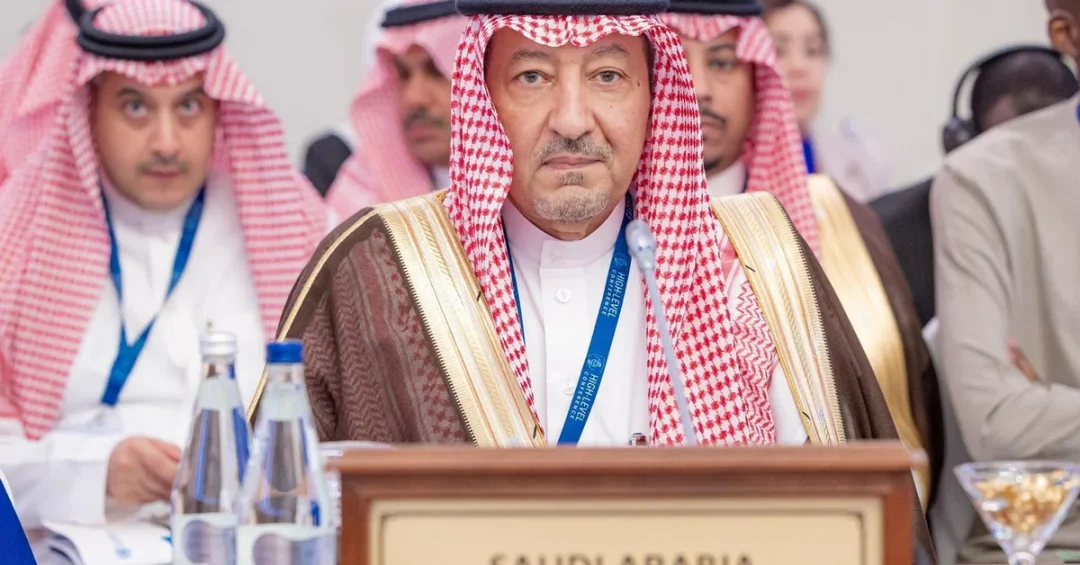
Saudi Arabia’s Vice Minister of Foreign Affairs, Eng. Waleed El-Khereiji, participated in the Fourth High-Level Conference on the Dushanbe Process, held in Kuwait on November 4, 2024, under the title “Strengthening International Counter-Terrorism Cooperation and Building Agile Border Security Mechanisms – The Kuwait Phase.” The conference, which convened senior officials and counter-terrorism experts from around the world, focused on enhancing global cooperation against terrorism and improving border security mechanisms. During the event, El-Khereiji delivered the Kingdom’s address, underscoring Saudi Arabia’s unwavering commitment to combating terrorism in all its forms and manifestations. His participation highlights the Kingdom’s active role in international efforts to promote security, stability, and prosperity, aligning with the directives of the Saudi leadership and the objectives of Vision 2030.
But what does this high-level gathering signify for the future of global counter-terrorism cooperation? The Dushanbe Process, launched in 2018 by Tajikistan and the United Nations, serves as a platform for dialogue and collaboration among countries in the region and beyond. The fourth conference, hosted by Kuwait, builds on previous phases held in Dushanbe, Vienna, and New York. It brings together representatives from Central Asia, the Middle East, Europe, and international organizations to address emerging threats and develop agile responses. Saudi Arabia’s active engagement in this process reflects its longstanding leadership in counter-terrorism and its dedication to fostering international peace and security. As the world faces evolving terrorist tactics and cross-border challenges, the Kingdom’s participation underscores the importance of collective action and shared responsibility in safeguarding communities and upholding the values of tolerance and moderation.
Context and Background
Why has Saudi Arabia consistently been at the forefront of global counter-terrorism efforts? Since the early 2000s, the Kingdom has implemented comprehensive strategies to combat terrorism, both domestically and internationally. These efforts are rooted in a deep understanding of the ideological, financial, and operational dimensions of terrorist organizations. Nationally, Saudi Arabia has established robust legal frameworks, enhanced intelligence sharing, and launched rehabilitation programs for individuals affected by extremist ideologies. The Kingdom’s approach emphasizes prevention, early intervention, and the promotion of moderate Islamic values. Internationally, Saudi Arabia has been a key partner in coalitions and initiatives aimed at disrupting terrorist networks and cutting off their funding sources. The Dushanbe Process is a testament to the Kingdom’s belief that security and stability are prerequisites for development and prosperity, and that no single nation can tackle terrorism alone.
The Dushanbe Process itself emerged from a recognition that terrorism knows no borders and requires a coordinated, multi-dimensional response. The first conference in 2018 resulted in the Dushanbe Declaration, which outlined a framework for international cooperation on counter-terrorism and border security. Subsequent conferences have expanded the scope to include emerging challenges such as cyber-terrorism, the use of new technologies by terrorist groups, and the nexus between terrorism and organized crime. The Kuwait Phase, as the fourth conference is known, focuses on strengthening border security mechanisms, which are critical in preventing the movement of terrorists and illicit goods. Saudi Arabia’s participation in this phase is particularly significant given its extensive experience in securing its own borders and its role in regional security architectures. By sharing its expertise and supporting international initiatives, the Kingdom reinforces its position as a responsible global actor committed to peace and stability.
Moreover, the conference comes at a time of heightened geopolitical tensions and evolving security threats in the Middle East and beyond. The resurgence of terrorist groups in conflict zones, the proliferation of extremist propaganda online, and the financing of terrorism through complex networks pose significant challenges. Saudi Arabia’s leadership in organizations such as the Islamic Military Counter Terrorism Coalition (IMCTC) and the Global Counterterrorism Forum (GCTF) demonstrates its proactive stance. The Kingdom’s Vice Minister of Foreign Affairs, Eng. Waleed El-Khereiji, brought this experience to the table in Kuwait, emphasizing the need for sustained international efforts and collective action. His address resonated with participants, reinforcing the conference’s goal of building agile and effective border security mechanisms.
Key Details
What specific measures and initiatives did Saudi Arabia highlight at the conference? In his address, Vice Minister El-Khereiji outlined the Kingdom’s multi-faceted approach to countering terrorism, which includes national measures, international cooperation, and youth engagement. He noted that Saudi Arabia was among the first countries to give paramount attention to countering terrorism at all levels. Nationally, the Kingdom has taken numerous measures to combat terrorist organizations and their criminal activities, including stringent laws, enhanced border controls, and financial regulations. These efforts have been complemented by deradicalization and rehabilitation programs that aim to reintegrate individuals into society. El-Khereiji emphasized that Saudi Arabia views youth as a central focus within Vision 2030, and efforts include protecting young people from ideological infiltration, extremism, and violence, while fostering strong religious and national values. This holistic approach addresses both the symptoms and root causes of terrorism.
On the international front, El-Khereiji highlighted the Kingdom’s active membership in the Financial Action Task Force (FATF), where it works to combat money laundering and terrorism financing. Saudi Arabia is also a founding member of the Global Counterterrorism Forum (GCTF), a platform for sharing best practices and building capacity. The Vice Minister mentioned several Saudi-led initiatives, most notably the establishment of the King Abdullah bin Abdulaziz International Centre for Interreligious and Intercultural Dialogue (KAICIID), the Ideological Warfare Center, and the formation of the Islamic Military Counter Terrorism Coalition (IMCTC) in 2015. These initiatives reflect the Kingdom’s commitment to addressing the ideological dimensions of terrorism and promoting moderate discourse. El-Khereiji also stressed the importance of enhancing cooperation in global efforts led by the United Nations, its specialized agencies, and relevant subcommittees. He pointed out that Saudi Arabia has established effective communication channels and close cooperation with international and regional organizations, as well as with friendly and brotherly countries, to exchange information and expertise in combating terrorism and transnational crimes.
The Vice Minister thanked the State of Kuwait for its warm reception and hospitality, and the Republic of Tajikistan for the kind invitation. He expressed hope that the conference would yield fruitful results reinforcing joint efforts and shared aspirations for building a safer and more stable future. The Kuwait Phase of the Dushanbe Process is expected to produce recommendations on enhancing border security, improving information sharing, and developing legal frameworks to counter terrorism. Saudi Arabia’s contributions to these discussions are likely to shape the outcomes and strengthen the global counter-terrorism architecture. The conference also provided an opportunity for bilateral meetings and side events, where Saudi officials could engage with counterparts from other countries and international organizations. These interactions are essential for building trust and fostering partnerships that can respond rapidly to emerging threats.
International and Regional Impact
How does Saudi Arabia’s participation in the Dushanbe Process influence regional and global security dynamics? The Kingdom’s active role in the conference sends a strong signal of its commitment to multilateralism and international cooperation. By engaging with countries from Central Asia, the Middle East, and Europe, Saudi Arabia helps bridge regional divides and promotes a unified approach to counter-terrorism. The Dushanbe Process is particularly important for Central Asia, a region that shares borders with Afghanistan and faces threats from terrorist groups operating in the area. Saudi Arabia’s support for border security mechanisms in this region contributes to broader stability and prevents the spillover of terrorism into other areas. Moreover, the Kingdom’s participation reinforces the message that terrorism is a global challenge that requires collective action, and that no country can afford to stand alone.
At the regional level, Saudi Arabia’s leadership in counter-terrorism is widely recognized. The Kingdom has played a pivotal role in the Arab coalition to restore legitimacy in Yemen, and it has been a key partner in the Global Coalition against Daesh. Its efforts to counter extremist ideologies through initiatives like the Ideological Warfare Center and KAICIID have been praised by international partners. The Dushanbe Process provides another platform for Saudi Arabia to share its expertise and learn from others. The conference’s focus on agile border security mechanisms is particularly relevant for the Middle East, where porous borders and conflict zones can be exploited by terrorist groups. By strengthening border security, countries can prevent the movement of fighters, weapons, and illicit funds, thereby disrupting terrorist operations. Saudi Arabia’s experience in securing its extensive borders and its advanced technological capabilities can serve as a model for other nations.
Furthermore, the conference underscores the importance of addressing the root causes of terrorism, including poverty, lack of education, and ideological extremism. Saudi Arabia’s Vision 2030 includes significant investments in education, economic diversification, and social development, which are essential for preventing radicalization. The Kingdom’s focus on youth is a key component of this strategy, as young people are often targeted by terrorist groups for recruitment. By promoting moderate values, providing economic opportunities, and fostering a sense of national pride, Saudi Arabia aims to build a resilient society that rejects extremism. These efforts align with the Dushanbe Process’s holistic approach, which recognizes that counter-terrorism requires not only military and security measures but also socio-economic development and ideological engagement. The Kuwait Phase is expected to emphasize these dimensions, and Saudi Arabia’s contributions will be invaluable in shaping a comprehensive strategy.
Economic and Strategic Significance
What are the economic and strategic implications of Saudi Arabia’s counter-terrorism efforts? Terrorism poses a direct threat to economic development by undermining investor confidence, disrupting trade routes, and diverting resources to security. For Saudi Arabia, which is pursuing an ambitious economic transformation under Vision 2030, combating terrorism is not only a security imperative but also an economic one. The Kingdom’s ability to attract foreign investment, expand its tourism sector, and diversify its economy depends on maintaining a stable and secure environment. By participating in international counter-terrorism initiatives like the Dushanbe Process, Saudi Arabia reinforces its reputation as a safe and reliable partner for business and investment. This, in turn, supports the goals of Vision 2030, which aims to reduce dependence on oil and create a vibrant, diversified economy.
Strategically, Saudi Arabia’s leadership in counter-terrorism enhances its influence in regional and global affairs. The Kingdom is a key player in the Middle East and a member of the G20, and its contributions to international security are widely acknowledged. By taking an active role in the Dushanbe Process, Saudi Arabia strengthens its ties with Central Asian countries, which are important partners in trade, energy, and security. The conference also provides a platform for Saudi Arabia to counter narratives that seek to link the Kingdom to extremism, showcasing instead its comprehensive and proactive approach. The Vice Minister’s address highlighted the Kingdom’s commitment to international cooperation and its willingness to share its experience and resources. This diplomatic engagement contributes to Saudi Arabia’s soft power and reinforces its position as a responsible global leader.
Moreover, the economic costs of terrorism are staggering, with global losses estimated in the billions of dollars annually. By preventing terrorist attacks and disrupting financing networks, Saudi Arabia and its partners can save lives and protect livelihoods. The Kingdom’s efforts to combat money laundering and terrorism financing through its membership in the FATF are particularly important, as they help to cut off the financial lifelines of terrorist organizations. Saudi Arabia’s financial intelligence units and regulatory bodies work closely with international counterparts to track and freeze illicit funds. These efforts not only enhance global security but also protect the integrity of the international financial system. The Dushanbe Process’s focus on border security complements these financial measures by preventing the physical movement of terrorists and their resources. Together, these initiatives create a comprehensive defense against terrorism that supports economic stability and growth.
Vision 2030 Alignment
How does Saudi Arabia’s counter-terrorism strategy align with the objectives of Vision 2030? Vision 2030, launched in 2016 by Crown Prince Mohammed bin Salman, is a comprehensive plan to transform Saudi Arabia into a diversified, innovative, and globally engaged economy. A key pillar of Vision 2030 is the creation of a safe and secure society that enables citizens and residents to thrive. Counter-terrorism is integral to this vision, as security is a prerequisite for economic development, social progress, and international cooperation. The Kingdom’s efforts to combat terrorism, as articulated by Vice Minister El-Khereiji in Kuwait, are directly linked to Vision 2030’s goals of enhancing quality of life, promoting moderate Islam, and empowering youth. By protecting young people from extremist ideologies and providing them with opportunities for education and employment, Saudi Arabia is building a resilient generation that contributes to the nation’s prosperity.
Furthermore, Vision 2030 emphasizes the importance of international partnerships and Saudi Arabia’s role as a bridge between cultures and economies. The Kingdom’s participation in the Dushanbe Process exemplifies this global engagement, as it works with countries from different regions to address shared challenges. Saudi Arabia’s leadership in counter-terrorism also enhances its reputation as a reliable ally in the fight against global threats, which in turn attracts investment and tourism. The Kingdom’s hosting of major events, such as Expo 2030 in Riyadh and the 2034 FIFA World Cup, depends on its ability to ensure security and stability. By continuously strengthening its counter-terrorism capabilities and collaborating with international partners, Saudi Arabia is laying the foundation for a prosperous future that aligns with Vision 2030. As the Kingdom continues to implement its transformative agenda, its commitment to global security will remain a cornerstone of its foreign policy and a key driver of its success on the world stage.
20 Questions
Q1. What was the Fourth High-Level Conference on the Dushanbe Process?
A1. The Fourth High-Level Conference on the Dushanbe Process was held in Kuwait on November 4, 2024, titled “Strengthening International Counter-Terrorism Cooperation and Building Agile Border Security Mechanisms – The Kuwait Phase.” It gathered international officials to enhance cooperation against terrorism and improve border security.
Q2. Who represented Saudi Arabia at the conference?
A2. Saudi Arabia was represented by Eng. Waleed El-Khereiji, the Vice Minister of Foreign Affairs. He delivered the Kingdom’s address, emphasizing Saudi Arabia’s commitment to international counter-terrorism efforts and the importance of collective action.
Q3. What is the Dushanbe Process?
A3. The Dushanbe Process is a platform launched in 2018 by Tajikistan and the United Nations to foster international cooperation on counter-terrorism and border security. It brings together countries from Central Asia, the Middle East, Europe, and beyond to address emerging threats.
Q4. Why is the Dushanbe Process important for global security?
A4. The Dushanbe Process is important because it facilitates dialogue and collaboration among nations to combat terrorism, which knows no borders. It focuses on practical measures like border security and information sharing, helping to prevent terrorist attacks and disrupt networks.
Q5. What did Vice Minister El-Khereiji emphasize in his address?
A5. El-Khereiji emphasized that achieving security, stability, development, and prosperity requires ongoing international efforts and collective action. He stressed the need to stand firmly against terrorism, uproot it, and dry up its funding sources.
Q6. What national measures has Saudi Arabia taken against terrorism?
A6. Saudi Arabia has implemented stringent laws, enhanced border controls, and financial regulations to combat terrorist organizations. It also runs deradicalization and rehabilitation programs, and focuses on protecting youth from extremist ideologies through education and moderate values.
Q7. How does Saudi Arabia view the role of youth in counter-terrorism?
A7. Saudi Arabia views youth as a central focus within Vision 2030. Efforts include protecting young people from ideological infiltration, extremism, and violence, while fostering strong religious and national values to build a resilient generation.
Q8. What international organizations does Saudi Arabia cooperate with?
A8. Saudi Arabia cooperates with the United Nations, its specialized agencies, the Financial Action Task Force (FATF), the Global Counterterrorism Forum (GCTF), and the Islamic Military Counter Terrorism Coalition (IMCTC), among others, to combat terrorism and transnational crimes.
Q9. What is the Financial Action Task Force (FATF)?
A9. The FATF is an intergovernmental organization that develops policies to combat money laundering and terrorism financing. Saudi Arabia is an active member, working to cut off financial lifelines of terrorist groups and protect the integrity of the global financial system.
Q10. What is the Global Counterterrorism Forum (GCTF)?
A10. The GCTF is a multilateral platform for sharing best practices and building capacity in counter-terrorism. Saudi Arabia is a founding member and uses it to promote international cooperation and develop effective strategies against terrorism.
Q11. What Saudi-led initiatives were mentioned at the conference?
A11. El-Khereiji mentioned the King Abdullah bin Abdulaziz International Centre for Interreligious and Intercultural Dialogue (KAICIID), the Ideological Warfare Center, and the Islamic Military Counter Terrorism Coalition (IMCTC), formed in 2015, as key Saudi-led initiatives.
Q12. How does Saudi Arabia cooperate with other countries on counter-terrorism?
A12. Saudi Arabia has established effective communication channels and close cooperation with international and regional organizations, as well as friendly and brotherly countries, to exchange information and expertise in combating terrorism and transnational crimes.
Q13. What is the significance of the Kuwait Phase?
A13. The Kuwait Phase focuses on strengthening border security mechanisms, which are critical to preventing the movement of terrorists and illicit goods. It builds on previous phases and aims to produce recommendations for enhancing international cooperation and security.
Q14. How does counter-terrorism relate to Saudi Arabia’s Vision 2030?
A14. Counter-terrorism is integral to Vision 2030, as security is a prerequisite for economic development, social progress, and international cooperation. It supports goals of enhancing quality of life, promoting moderate Islam, and empowering youth.
Q15. What economic benefits does counter-terrorism bring to Saudi Arabia?
A15. Counter-terrorism enhances investor confidence, protects trade routes, and allows resources to be directed toward development. It supports Vision 2030’s aim to diversify the economy and attract foreign investment by maintaining a stable and secure environment.
Q16. How does Saudi Arabia address the root causes of terrorism?
A16. Saudi Arabia addresses root causes through education, economic opportunities, and social development, as part of Vision 2030. It promotes moderate values, engages youth, and fosters national pride to prevent radicalization and build a resilient society.
Q17. What role does the United Nations play in counter-terrorism?
A17. The United Nations leads global counter-terrorism efforts, coordinating with specialized agencies and subcommittees. Saudi Arabia supports these efforts and emphasizes the importance of enhancing cooperation within the UN framework.
Q18. What are the expected outcomes of the Kuwait conference?
A18. The conference is expected to yield recommendations on enhancing border security, improving information sharing, and developing legal frameworks to counter terrorism. These outcomes will reinforce joint efforts for a safer and more stable future.
Q19. How does Saudi Arabia’s participation reflect its foreign policy?
A19. Saudi Arabia’s participation reflects its foreign policy of active engagement, multilateralism, and commitment to international peace and security. It reinforces the Kingdom’s role as a responsible global leader and partner in combating shared threats.
Q20. What message did Vice Minister El-Khereiji convey to the conference hosts?
A20. El-Khereiji thanked Kuwait for its hospitality and Tajikistan for the invitation. He expressed hope that the conference would yield fruitful results reinforcing joint efforts and shared aspirations for building a safer and more stable future.
Reader Feedback
We value your thoughts. Please share your feedback on this article.
Your feedback helps us improve our coverage.
Related articles
 Saudi, Indonesian FMs Discuss Gaza, Bilateral Ties
 Tabuk Governor Receives Bangladeshi Consul General
 Saudi Ministry, Hong Kong Delegation Discuss Innovation Cooperation
 Saudi Vice Foreign Minister Meets Uzbek Counterpart in Kuwait
 Saudi FM Prince Faisal Receives ICRC President in Riyadh
 Arab Youth Center Launches 6th Round of Youth Solutions