


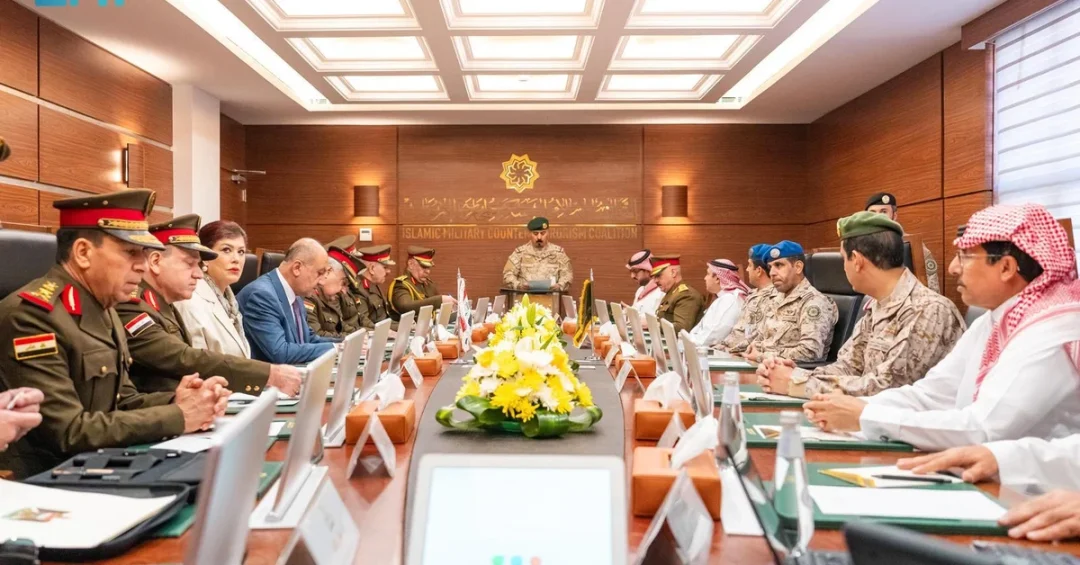
Secretary General of the Islamic Military Counter-Terrorism Coalition (IMCTC) Major General Pilot Mohammed bin Saeed Al-Moghedi received Iraqi Minister of Defense Thabet Muhammad Al-Abasi at the coalition’s headquarters in Riyadh on November 4, 2024, where the two leaders reviewed the coalition’s progress in combating terrorism across intellectual, media, financial, and military domains. The meeting, announced by the Saudi Press Agency, brought together senior military officials from both sides and underscored the coalition’s role as a platform for coordinating international efforts against extremism. How does such high-level engagement shape the future of regional security?
The visit reflects the IMCTC’s growing importance as a multilateral hub, with Iraq joining 42 allied nations in a shared mission to counter terrorism and violent extremism. The discussions focused on enhancing collaboration among member states, exchanging expertise, and unifying efforts to address evolving threats. Iraq’s participation in the coalition was specifically highlighted as mutually beneficial, enabling the exchange of international expertise and strengthening collective action. The meeting also served as an opportunity to commend Iraq’s ongoing efforts in its fight against terrorism and extremism, reinforcing the coalition’s commitment to supporting member states affected by such challenges.
Context and Background
What makes the Islamic Military Counter-Terrorism Coalition a unique model for international security cooperation? Established in 2015 and headquartered in Riyadh, the IMCTC is an intergovernmental organization that brings together 42 Muslim-majority countries to counter terrorism and violent extremism. Its mandate covers four key domains: intellectual, media, financial, and military. The coalition focuses on coordinating efforts, sharing best practices, and building capacity among member states. Since its inception, the IMCTC has been instrumental in facilitating dialogue, training, and joint operations, all aimed at degrading terrorist networks and preventing radicalization. Its leadership under Major General Pilot Mohammed bin Saeed Al-Moghedi has emphasized a comprehensive approach that addresses both the symptoms and root causes of extremism.
The Iraqi Minister of Defense, Thabet Muhammad Al-Abasi, was accompanied by several military officials, signaling the importance Iraq places on its partnership with the coalition. Iraq has been a frontline state in the fight against terrorism, particularly against ISIS, and its membership in the IMCTC allows it to benefit from the collective expertise of member nations. The meeting in Riyadh is part of a series of engagements that highlight Saudi Arabia’s leadership in fostering regional stability and security. The Kingdom’s role as host and founding member of the IMCTC underscores its commitment to Vision 2030’s goal of a secure and prosperous region. How does this collaboration align with broader efforts to promote peace and tolerance?
Key Details of the Meeting
During the meeting, a comprehensive presentation was given on the IMCTC’s progress and achievements in combating terrorism across various domains. The presentation focused on efforts to coordinate and enhance international collaboration among member states, with a particular emphasis on the intellectual and media aspects of counter-terrorism, which are crucial for countering extremist narratives and propaganda. The military and financial domains were also addressed, highlighting the coalition’s multifaceted strategy. Major General Al-Moghedi commended Iraq’s ongoing efforts in its fight against terrorism and extremism, acknowledging the sacrifices made by Iraqi forces and the progress achieved in stabilizing the country. He stressed that the IMCTC is fully committed to supporting member states affected by terrorism, noting that Iraq’s membership alongside 42 allied nations benefits both Iraq and the coalition by facilitating the exchange of international expertise and unifying and intensifying efforts in the fight against terrorism.
The Iraqi Defense Minister’s visit also included discussions on potential areas for further cooperation, such as joint training exercises, intelligence sharing, and capacity-building initiatives. The meeting underscored the importance of a united front against terrorism, with both leaders reiterating their commitment to the coalition’s objectives. The presence of several military officials from Iraq indicates a desire to deepen operational ties and learn from the coalition’s experiences. The IMCTC’s headquarters in Riyadh serves as a central hub for these activities, enabling member states to coordinate effectively. What concrete outcomes can be expected from such high-level dialogues?
International and Regional Impact
How does the IMCTC’s work resonate beyond its member states? The coalition’s efforts are part of a broader international campaign against terrorism, complementing the work of organizations like the United Nations and the Global Coalition against Daesh. By bringing together 42 nations, the IMCTC amplifies the voices of Muslim-majority countries in global counter-terrorism discourse, ensuring that their perspectives and experiences are considered. The meeting between Major General Al-Moghedi and Minister Al-Abasi sends a strong signal of unity and resolve, particularly in a region that has suffered greatly from terrorist violence. Iraq’s active participation in the coalition demonstrates the value of multilateral approaches to security challenges. The exchange of expertise between Iraq and other member states can lead to more effective strategies and improved outcomes on the ground.
Regionally, the collaboration between Saudi Arabia and Iraq within the IMCTC framework contributes to stability and reconciliation efforts. It builds trust and fosters cooperation among neighbors, which is essential for long-term peace. The coalition’s focus on intellectual and media domains is particularly relevant, as it aims to counter the ideological underpinnings of extremism. By promoting moderate narratives and tolerance, the IMCTC helps prevent radicalization and recruitment by terrorist groups. This approach aligns with Saudi Arabia’s Vision 2030, which seeks to build a diversified economy and a vibrant society rooted in moderation and openness. The meeting thus represents a step forward in a shared vision for a secure and prosperous Middle East.
Economic and Strategic Significance
What are the strategic implications of Iraq’s deepened engagement with the IMCTC? For Iraq, membership in the coalition provides access to a network of expertise and resources that can enhance its own counter-terrorism capabilities. It also strengthens its ties with Saudi Arabia and other Gulf states, which can lead to increased economic and political cooperation. For Saudi Arabia, hosting the IMCTC and leading its efforts reinforces its role as a regional leader and a responsible global actor. The Kingdom’s commitment to counter-terrorism is a key component of its foreign policy and its Vision 2030 objectives, which include fostering a secure environment for investment and development. The meeting between Al-Moghedi and Al-Abasi is therefore not just a symbolic gesture but a practical step toward achieving these goals.
Economically, stability and security are prerequisites for growth and investment. By combating terrorism, the IMCTC helps create an environment conducive to business and innovation. Saudi Arabia’s Vision 2030 aims to diversify the economy away from oil, and a secure region is essential for attracting foreign investment and promoting tourism, as seen in projects like NEOM and the Red Sea Project. The coalition’s efforts also protect critical infrastructure and trade routes, which are vital for global energy supplies and commerce. The partnership with Iraq, a country with significant economic potential, can open new avenues for trade and investment. Thus, the Riyadh meeting has implications that extend beyond security to encompass economic prosperity and regional integration.
Vision 2030 Alignment
How does the IMCTC’s mission intersect with Saudi Arabia’s Vision 2030? Vision 2030 is a comprehensive plan to transform Saudi Arabia into a diversified, innovative, and globally engaged nation. A core pillar of this vision is a secure and stable society, free from the scourge of terrorism and extremism. The IMCTC, led by Saudi Arabia, embodies this pillar by promoting international cooperation and countering extremist ideologies. The coalition’s work in the intellectual and media domains supports the vision’s emphasis on moderation, tolerance, and cultural exchange. By hosting the IMCTC and facilitating meetings like the one with Iraq’s Defense Minister, Saudi Arabia demonstrates its leadership in building a safer world, which in turn supports its economic and social goals.
Furthermore, the IMCTC’s efforts contribute to the vision’s objective of enhancing Saudi Arabia’s global standing and fostering partnerships. The Kingdom’s active role in the coalition showcases its commitment to peace and security, aligning with the vision’s aim to be a pivotal player in international affairs. The meeting with Iraq also highlights the importance of regional cooperation, which is essential for the success of Vision 2030 and the stability of the entire region. As Saudi Arabia continues to advance its reform agenda, the IMCTC remains a vital instrument for safeguarding the progress and ensuring a prosperous future for all. The collaboration between Saudi Arabia and Iraq within this framework is a testament to the power of collective action and a shared vision for a better tomorrow.
20 Questions
Q1. What is the Islamic Military Counter-Terrorism Coalition (IMCTC)?
A1. The IMCTC is an intergovernmental organization of 42 Muslim-majority countries, headquartered in Riyadh, founded in 2015 to counter terrorism and violent extremism through intellectual, media, financial, and military cooperation.
Q2. Who is the Secretary General of the IMCTC?
A2. Major General Pilot Mohammed bin Saeed Al-Moghedi serves as the Secretary General of the IMCTC, leading its efforts to coordinate international collaboration against terrorism.
Q3. Who is the Iraqi Minister of Defense?
A3. Thabet Muhammad Al-Abasi is the Iraqi Minister of Defense, responsible for overseeing Iraq’s military and defense policies.
Q4. When and where did the meeting take place?
A4. The meeting took place on November 4, 2024, at the IMCTC headquarters in Riyadh, Saudi Arabia.
Q5. What was the purpose of the meeting?
A5. The meeting aimed to review the IMCTC’s progress in combating terrorism and to discuss enhanced cooperation between Iraq and the coalition.
Q6. What domains does the IMCTC focus on?
A6. The IMCTC focuses on four domains: intellectual, media, financial, and military, to comprehensively counter terrorism and extremism.
Q7. How many nations are members of the IMCTC?
A7. The IMCTC comprises 42 allied nations, including Saudi Arabia and Iraq, working together to combat terrorism.
Q8. What did Major General Al-Moghedi commend Iraq for?
A8. He commended Iraq’s ongoing efforts in its fight against terrorism and extremism, acknowledging the country’s sacrifices and progress.
Q9. What benefits does Iraq gain from IMCTC membership?
A9. Iraq benefits from the exchange of international expertise, enhanced collaboration, and unified efforts in counter-terrorism alongside 42 nations.
Q10. How does the IMCTC support member states affected by terrorism?
A10. The IMCTC provides support through capacity building, intelligence sharing, and coordinated actions to help member states combat terrorism effectively.
Q11. What role does Saudi Arabia play in the IMCTC?
A11. Saudi Arabia is the founding host and a leading member, providing headquarters and strategic direction for the coalition’s activities.
Q12. How does the meeting align with Vision 2030?
A12. It supports Vision 2030’s goal of a secure and stable region, enhancing Saudi Arabia’s global standing and promoting moderation and tolerance.
Q13. What are the intellectual and media domains in counter-terrorism?
A13. These domains involve countering extremist ideologies and propaganda through education, dialogue, and positive messaging to prevent radicalization.
Q14. How does the IMCTC coordinate international collaboration?
A14. The IMCTC facilitates coordination through regular meetings, joint training, and sharing of best practices among member states.
Q15. What impact does the IMCTC have on regional stability?
A15. By uniting nations against terrorism, the IMCTC contributes to regional stability, fostering trust and cooperation among neighboring countries.
Q16. What economic benefits arise from counter-terrorism efforts?
A16. Security enables economic growth by attracting investment, promoting tourism, and protecting critical infrastructure and trade routes.
Q17. How does Iraq’s participation benefit the coalition?
A17. Iraq’s experience in fighting terrorism provides valuable insights and strengthens the coalition’s collective knowledge and effectiveness.
Q18. What are the next steps after this meeting?
A18. Both sides will likely continue to collaborate on joint initiatives, training, and intelligence sharing to further counter-terrorism goals.
Q19. How does the IMCTC engage with global counter-terrorism efforts?
A19. The IMCTC complements global efforts by coordinating with organizations like the UN and the Global Coalition against Daesh.
Q20. What is the significance of the IMCTC headquarters being in Riyadh?
A20. Riyadh’s central location and Saudi Arabia’s leadership make it an ideal hub for coordinating international counter-terrorism efforts.
Reader Feedback
We value your thoughts. Please share your feedback on this article.
Your feedback helps us improve our coverage.
Related articles
 Saudi Vice Foreign Minister Joins Kuwait Counter-Terrorism Conference
 Saudi, Indonesian FMs Discuss Gaza, Bilateral Ties
 Tabuk Governor Receives Bangladeshi Consul General
 Saudi Ministry, Hong Kong Delegation Discuss Innovation Cooperation
 Saudi Vice Foreign Minister Meets Uzbek Counterpart in Kuwait
 Saudi FM Prince Faisal Receives ICRC President in Riyadh