


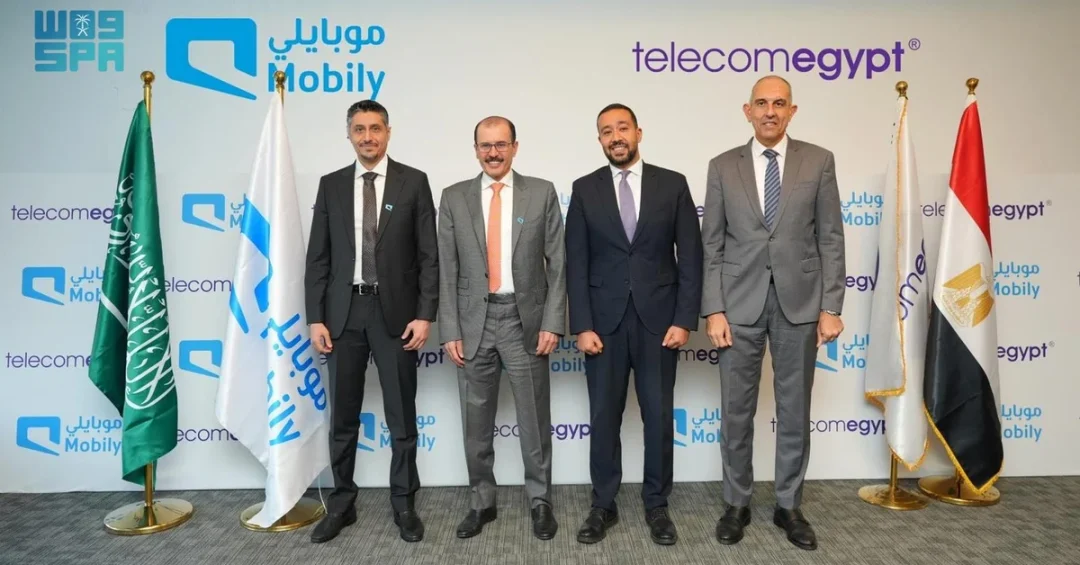
Etihad Etisalat (Mobily) and Telecom Egypt have signed a cooperation agreement to establish the first Saudi-owned submarine cable connecting Saudi Arabia and Egypt, a landmark infrastructure project that will run beneath the Red Sea and open new connectivity corridors toward Europe. The agreement, announced through the Saudi Press Agency (SPA), marks a significant expansion of the Kingdom’s international telecommunications infrastructure and reinforces its ambition to become a leading global hub for data traffic.
The new cable, wholly owned by Mobily, will be deployed between two landing stations on the Red Sea — one in Sharm El-Sheikh, Egypt, and the other in Duba, Saudi Arabia. This strategic route will enable Mobily to link the Arabian Gulf and neighboring countries to the Egyptian Red Sea station through its digital corridors, while also providing connectivity to various existing submarine cable systems extending toward Egypt and beyond. Could this development represent a turning point in how the region approaches digital infrastructure? The project signals Saudi Arabia’s determination to lead in an increasingly connected world.
Context and Background
How did Saudi Arabia arrive at this pivotal moment in its telecommunications evolution? The Kingdom has spent years investing heavily in digital infrastructure as part of its broader economic transformation. Mobily, formally known as Etihad Etisalat, has been a central player in this effort, consistently expanding its network of submarine cable systems and international infrastructure to accommodate growing communication traffic and meet increasing demand for local and international internet services.
The Red Sea has long served as a critical artery for global data flows, with numerous submarine cables passing through its waters to connect Europe, the Middle East, and Asia. However, Saudi Arabia’s ownership of a cable along this route represents a new chapter. Previously, the Kingdom relied on partnerships and consortium arrangements for much of its international connectivity. This agreement with Telecom Egypt, a state-owned telecommunications company with extensive experience in submarine cable operations, positions Mobily as a direct owner and operator of critical infrastructure.
The timing of this agreement reflects broader regional dynamics. Egypt has been positioning itself as a digital gateway between Africa, the Middle East, and Europe, while Saudi Arabia has accelerated its efforts to diversify its economy away from oil dependence. Telecommunications infrastructure sits at the intersection of these ambitions, enabling everything from cloud computing to artificial intelligence applications. What does it mean for a nation to own its digital pathways? For Saudi Arabia, it means greater control over its digital future and enhanced capacity to serve as a regional hub.
Key Details of the Agreement
What specific elements make this submarine cable project so significant? According to the announcement carried by SPA, the cable will be wholly owned by Mobily, distinguishing it from consortium-based projects where ownership and decision-making are shared among multiple parties. This full ownership structure gives Mobily greater flexibility in managing capacity, setting pricing, and responding to market demands.
The two landing stations — Sharm El-Sheikh in Egypt and Duba in Saudi Arabia — are strategically chosen. Sharm El-Sheikh, located at the southern tip of the Sinai Peninsula, already serves as a major landing point for multiple submarine cables connecting to Europe and Asia. Duba, on Saudi Arabia’s northwestern coast, is positioned to become a key digital gateway for the Kingdom, linking its internal networks to international routes. The cable’s route under the Red Sea will enable Mobily to connect the Arabian Gulf and neighboring countries to the Egyptian Red Sea station through Mobily’s digital corridors.
Salman Al-Badran, Chief Executive Officer of Mobily, emphasized the strategic importance of the project. “The new cable represents a significant step in strengthening the Kingdom’s position as a leading international hub for communications and data traffic, aligning with the goals of the Saudi Vision 2030,” he said. Al-Badran also indicated that signing this cooperation agreement reaffirms Mobily’s commitment to expanding its infrastructure and enhancing its capabilities regionally and internationally. His statements underscore the dual purpose of the project: commercial expansion and strategic positioning.
The agreement also provides connectivity to various existing submarine cable systems extending toward Egypt, effectively integrating the new cable into a broader network of international infrastructure. This integration ensures that the benefits of the new cable extend beyond the direct Saudi-Egypt route, enhancing redundancy and resilience for data traffic across the region. How often do we consider the physical infrastructure that enables our digital lives? Projects like this remind us that the internet is not invisible — it relies on cables beneath the sea and stations on the shore.
International and Regional Impact
What are the broader implications of this Saudi-Egypt telecommunications partnership? The agreement strengthens bilateral ties between two of the most influential nations in the Arab world. Egypt, with its control over the Suez Canal and extensive Mediterranean and Red Sea coastlines, has long been a crossroads for global trade and communication. Saudi Arabia, as the largest Arab economy and home to Islam’s holiest sites, brings significant financial resources and strategic vision to the partnership.
The cable also has implications for Europe, as it paves the way for expanded connectivity options toward the continent. By establishing a direct Saudi-owned route to Egypt, Mobily creates an alternative pathway for data traffic that can bypass congested or geopolitically sensitive routes. This redundancy is valuable for international businesses and cloud service providers that require reliable, low-latency connections between the Middle East and Europe.
For the wider region, the project reinforces Saudi Arabia’s role as a digital bridge between Asia, Africa, and Europe. The Kingdom’s digital corridors, mentioned in the announcement, represent a vision of seamless connectivity that transcends national borders. Neighboring countries in the Arabian Gulf can benefit from improved access to Egyptian and European networks through Mobily’s infrastructure. Does this signal a new era of regional cooperation in telecommunications? The agreement suggests that shared infrastructure can serve as a foundation for broader economic integration.
Economic and Strategic Significance
How does this project fit into Saudi Arabia’s economic diversification strategy? Telecommunications infrastructure is a foundational enabler of the digital economy. High-capacity, reliable connectivity attracts data centers, cloud providers, technology companies, and financial services firms — all of which create jobs and generate economic value. By owning a submarine cable, Mobily can offer competitive services that make Saudi Arabia a more attractive destination for international businesses seeking to establish regional operations.
The project also supports the growth of Saudi Arabia’s digital economy, which is a key pillar of Vision 2030. As the Kingdom expands its technology sector, including artificial intelligence, e-commerce, and fintech, the demand for international bandwidth will continue to rise. The new cable provides capacity to meet this demand, ensuring that Saudi businesses and consumers have access to the connectivity they need to participate in the global digital economy.
From a strategic perspective, owning critical infrastructure reduces dependence on foreign-owned or consortium-controlled cables. This ownership provides Saudi Arabia with greater control over its digital sovereignty — the ability to manage and protect data flows that are essential to national security and economic competitiveness. In an era when data is often described as the new oil, controlling the pipelines through which it flows is a matter of strategic importance. What nation would not want to secure its digital lifelines? Saudi Arabia’s move reflects a clear-eyed understanding of infrastructure as a tool of national strategy.
Vision 2030 Alignment
How does the Mobily-Telecom Egypt agreement advance the goals of Saudi Vision 2030? Vision 2030, launched in 2016 under the leadership of Crown Prince Mohammed bin Salman, seeks to transform Saudi Arabia into a diversified, knowledge-based economy. A central pillar of this vision is the development of world-class infrastructure, including telecommunications and digital networks, to support economic growth and improve quality of life for citizens and residents.
The submarine cable project directly supports several Vision 2030 objectives. It enhances Saudi Arabia’s position as a global investment hub by providing the connectivity that international companies require. It supports the growth of the private sector by enabling Mobily and other Saudi companies to compete in international markets. And it contributes to the development of a digital society by ensuring that Saudi citizens have access to fast, reliable internet services.
Moreover, the project exemplifies the kind of international cooperation that Vision 2030 encourages. By partnering with Telecom Egypt, Mobily demonstrates that Saudi companies can build strategic relationships across borders while maintaining ownership and control of critical assets. This balance of cooperation and sovereignty is a model that aligns with the Kingdom’s broader approach to international engagement.
As Saudi Arabia continues its transformation, projects like this submarine cable will serve as tangible evidence of progress. They connect the Kingdom to the world, enable economic opportunities, and lay the groundwork for future innovations. The agreement between Mobily and Telecom Egypt is not merely a commercial transaction — it is a statement of intent. Saudi Arabia is building the infrastructure of a connected, prosperous, and forward-looking nation. What will the Kingdom achieve next as it strengthens its digital foundations? The answer will unfold in the years ahead, cable by cable, connection by connection.
20 Questions
Q1. What is the main purpose of the agreement between Mobily and Telecom Egypt?
A1. The agreement aims to establish the first Saudi-owned submarine cable connecting Saudi Arabia and Egypt under the Red Sea, expanding Mobily’s international infrastructure and enhancing connectivity options toward Europe.
Q2. Which two landing stations will the new submarine cable connect?
A2. The cable will be deployed between Sharm El-Sheikh in Egypt and Duba in Saudi Arabia, providing a direct link between the two countries across the Red Sea.
Q3. Who will own the new submarine cable?
A3. The cable will be wholly owned by Mobily, distinguishing it from consortium-based projects and giving the company full control over capacity management and strategic decisions.
Q4. What did Mobily CEO Salman Al-Badran say about the project?
A4. Al-Badran stated that the cable represents a significant step in strengthening the Kingdom’s position as a leading international hub for communications and data traffic, aligning with Saudi Vision 2030 goals.
Q5. How does the cable benefit connectivity to Europe?
A5. The cable paves the way for expanded connectivity options toward Europe by providing a direct Saudi-owned route through Egypt, creating an alternative pathway for data traffic between the Middle East and Europe.
Q6. What are Mobily’s digital corridors mentioned in the announcement?
A6. Mobily’s digital corridors refer to the company’s network infrastructure that enables the connection of the Arabian Gulf and neighboring countries to the Egyptian Red Sea station, facilitating regional data traffic.
Q7. How does this project support Saudi Vision 2030?
A7. The project supports Vision 2030 by enhancing Saudi Arabia’s position as a global investment hub, enabling private sector growth, and developing a digital society with fast, reliable internet services.
Q8. What is the significance of Saudi Arabia owning its first submarine cable?
A8. Ownership provides Saudi Arabia with greater control over its digital sovereignty, reduces dependence on foreign-owned cables, and allows Mobily to offer competitive services in international markets.
Q9. How does the cable accommodate growing communication traffic?
A9. The cable expands Mobily’s network of submarine cable systems and international infrastructure, providing more reliable connectivity to meet increasing demand for local and international internet services.
Q10. What role does Telecom Egypt play in this partnership?
A10. Telecom Egypt, as a state-owned company with extensive submarine cable experience, partners with Mobily to facilitate the cable’s landing in Sharm El-Sheikh and connect to existing cable systems extending toward Egypt.
Q11. What are the economic benefits of this submarine cable project?
A11. The project attracts data centers, cloud providers, and technology companies, creates jobs, generates economic value, and supports the growth of Saudi Arabia’s digital economy as part of Vision 2030.
Q12. How does the cable enhance regional connectivity?
A12. The cable reinforces Saudi Arabia’s role as a digital bridge between Asia, Africa, and Europe, allowing neighboring Arabian Gulf countries to benefit from improved access to Egyptian and European networks.
Q13. What is the strategic importance of the Red Sea route?
A13. The Red Sea is a critical artery for global data flows, connecting Europe, the Middle East, and Asia. Saudi ownership of a cable along this route represents a new chapter in the Kingdom’s digital infrastructure.
Q14. How does the project contribute to Saudi Arabia’s digital sovereignty?
A14. By owning critical infrastructure, Saudi Arabia gains greater control over data flows essential to national security and economic competitiveness, reducing reliance on foreign-owned or consortium-controlled cables.
Q15. What existing cable systems will the new cable connect to?
A15. The cable will provide connectivity to various existing submarine cable systems extending toward Egypt, integrating into a broader network of international infrastructure for enhanced redundancy and resilience.
Q16. What does the agreement signify for Saudi-Egypt relations?
A16. The agreement strengthens bilateral ties between two influential Arab nations, combining Egypt’s strategic location and cable expertise with Saudi Arabia’s financial resources and Vision 2030 ambitions.
Q17. How does the cable support the growth of Saudi Arabia’s technology sector?
A17. The cable provides capacity to meet rising demand for international bandwidth, supporting AI, e-commerce, fintech, and other technology sectors that are key pillars of Vision 2030’s economic diversification goals.
Q18. What is the expected timeline for the cable’s deployment?
A18. The announcement did not specify a timeline, but the agreement marks the beginning of the project. Deployment will involve coordination between Mobily and Telecom Egypt for landing station construction and cable laying.
Q19. How does this project reflect Saudi Arabia’s broader infrastructure ambitions?
A19. The project exemplifies Saudi Arabia’s commitment to developing world-class infrastructure, including telecommunications and digital networks, as part of its transformation into a diversified, knowledge-based economy.
Q20. What does this development mean for international businesses operating in the region?
A20. International businesses gain access to more reliable, low-latency connections between the Middle East and Europe, making Saudi Arabia a more attractive destination for regional operations and investment.
Reader Feedback
We value your thoughts. Please share your feedback on this article.
Your feedback helps us improve our coverage.
Related articles
 Aramco Q3 2024 Net Income Exceeds SAR103 Billion
 Saudi Ambassador Meets Algiers Governor on Pharma Ties
 Monsha’at Signs MoU with Korean Franchise Association
 Monsha’at Partners with X to Boost SME Digital Transformation
 Monsha’at Signs Agreement with Estonian Business and Innovation Agency at Biban24
 Monsha’at Signs MoU with Korean Ministry of SMEs, Startups