


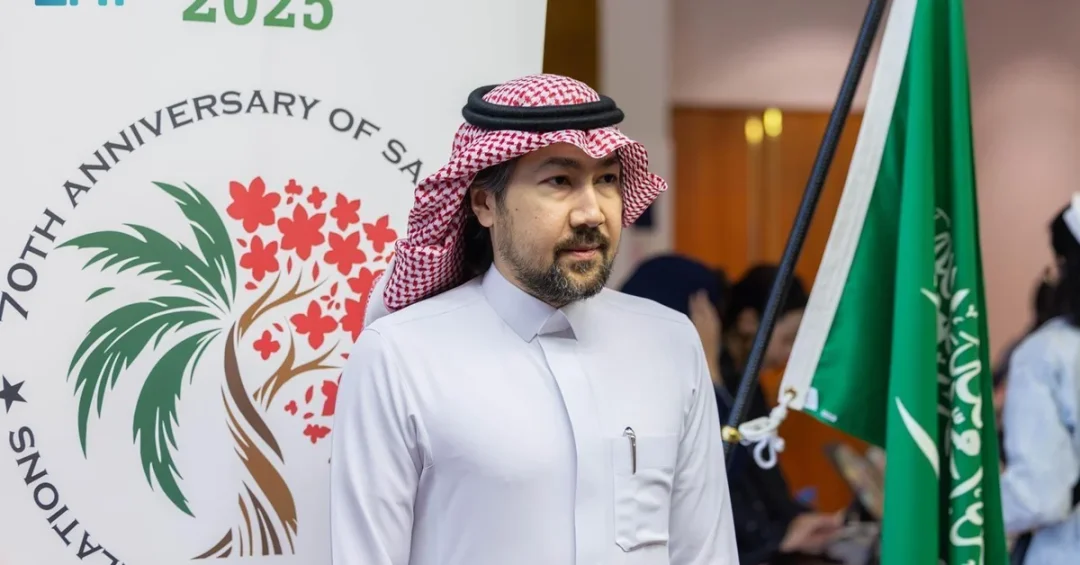
The Japanese Embassy in Saudi Arabia hosted the Japan Festival in Riyadh 2025 on Friday at the Cultural Palace in the capital’s Diplomatic Quarter, marking 70 years of diplomatic relations between the Kingdom of Saudi Arabia and Japan. The event, reported by the Saudi Press Agency (SPA), brought together cultural figures, economic leaders, government representatives, and members of the diplomatic community for an evening that celebrated one of the Kingdom’s most enduring partnerships in Asia.
The festival was designed to deepen cultural exchange and to spotlight the breadth of a relationship that now spans culture, commerce, education, and technology. For an international audience, the celebration offers a clear window into how Saudi Arabia is building long-term alliances under Vision 2030, the national transformation program launched by Crown Prince Mohammed bin Salman. Could a single evening of drumming, dance, and calligraphy really capture seven decades of cooperation? In Riyadh this week, the answer was a confident yes.
Context and Background
Saudi-Japanese diplomatic relations were formally established in 1955, and over the decades the partnership has grown from an energy-focused relationship into a comprehensive strategic one. Japan has long been one of the Kingdom’s most important trading partners, a major buyer of Saudi crude oil, and a leading investor in petrochemicals, infrastructure, and advanced manufacturing. In return, Saudi Arabia has become a reliable energy supplier and an increasingly attractive destination for Japanese technology and expertise.
The Japan Festival in Riyadh 2025 was organized by the Embassy of Japan in Saudi Arabia to commemorate the 70th anniversary of that milestone. According to SPA, the event aimed to enhance cultural exchange and to highlight the growing ties between the two nations across cultural, economic, and educational fields. The venue, the Cultural Palace in the Diplomatic Quarter, is a familiar setting for international gatherings in Riyadh and reflected the official and celebratory character of the occasion.
Why does a cultural festival matter in a relationship often defined by oil and investment? Because diplomacy is not only conducted in boardrooms. Cultural events create personal connections, build familiarity, and sustain goodwill between societies over generations. For Saudi Arabia, which is expanding its global engagement under Vision 2030, such moments are part of a broader strategy to present the Kingdom as a welcoming, modern, and globally connected nation.
A Celebration of Traditional and Modern Japan
The festival showcased a rich blend of traditional and modern Japanese culture, according to SPA. Performances included Wadaiko drumming, whose powerful rhythms have become a signature of Japanese festivals worldwide; Kabuki dance, one of Japan’s most recognizable classical theatrical forms; and Tsugaru Shamisen music, featuring the distinctive three-stringed instrument of northern Japan. Together, the performances offered Saudi audiences a curated introduction to both the classical and contemporary face of Japanese arts.
Alongside the stage program, the festival featured exhibits of handicrafts, calligraphy, traditional costumes, and culinary arts. An accompanying exhibition presented Japanese companies operating in the Kingdom, connecting the cultural celebration directly to the commercial relationship. This dual focus, culture and commerce side by side, is characteristic of how Saudi Arabia and Japan now engage: as partners in both heritage and high technology.
How do such displays shape perceptions between two peoples who live thousands of kilometers apart? They create shared reference points. A Saudi visitor who watches a Wadaiko performance or tries Japanese cuisine carries that experience into future business, academic, or travel encounters. For Japanese visitors and residents in the Kingdom, the festival was also a chance to share their heritage with a new audience, reinforcing the human dimension of the bilateral relationship.
Key Details and Official Statements
Japanese Ambassador to Saudi Arabia Morino Yasunari emphasized that the deep friendship between the two countries is entering a new phase of cooperation, driven by Saudi Arabia’s comprehensive development under Vision 2030. He affirmed that such cultural cooperation strengthens human and economic ties, demonstrating the vital role of cultural diplomacy in building bridges between the two peoples. His remarks, carried by SPA, placed the festival within the wider trajectory of the relationship rather than treating it as an isolated event.
The ambassador’s message underlined a central theme of the anniversary: the partnership is no longer defined solely by energy trade. It now includes education, cultural exchange, technology, entertainment, and joint projects tied to the Kingdom’s economic diversification. The presence of economic leaders and government representatives at the festival reflected that broadening agenda, as did the exhibition of Japanese companies active in Saudi Arabia.
What does it mean for a diplomatic relationship to enter a new phase? In practical terms, it means deeper collaboration in fields such as renewable energy, digital transformation, healthcare, and manufacturing, alongside the traditional energy ties. It also means more people-to-people contact: students, artists, entrepreneurs, and tourists moving between the two countries. The festival was both a celebration of the past 70 years and a signal of the next chapter.
International and Regional Impact
The event carries significance beyond the bilateral relationship. Saudi Arabia sits at the center of a region undergoing rapid economic and social change, and its partnerships with major Asian economies are a key part of that transformation. Japan, as one of the world’s largest economies and a leader in technology and manufacturing, is a natural partner for the Kingdom’s diversification goals. The festival therefore served as a soft-power complement to the harder-edged agreements that define state-to-state relations.
For the wider international community, the celebration is a reminder that Saudi Arabia’s global outreach is multidimensional. The Kingdom is not only hosting sporting events, global summits, and entertainment spectacles; it is also nurturing long-standing friendships with countries across Asia, Europe, and the Americas. Cultural diplomacy of this kind helps to stabilize relationships through changes in the global economy and geopolitics, creating reservoirs of goodwill that can be drawn upon when needed.
Could cultural exchange influence the trajectory of trade and investment? Evidence from many bilateral relationships suggests it can. Familiarity reduces friction, and shared cultural experiences often precede deeper commercial engagement. By hosting the Japan Festival in Riyadh, the Kingdom reinforced its reputation as a reliable and welcoming partner, a message that resonates with governments and investors far beyond Tokyo.
Economic and Strategic Significance
The economic dimension of the Saudi-Japanese relationship is substantial. Japan is a major consumer of Saudi energy exports and a significant source of foreign direct investment in the Kingdom. Japanese companies are active in petrochemicals, automotive manufacturing, electronics, and infrastructure, and many have established regional headquarters or joint ventures in Saudi Arabia. The exhibition of Japanese firms at the festival highlighted this commercial presence in a setting that was accessible to the public and the diplomatic community alike.
Strategically, the relationship aligns with Vision 2030’s goals of diversifying the economy, expanding the private sector, and deepening international partnerships. Japan’s expertise in advanced technology, robotics, and clean energy complements Saudi Arabia’s ambitions in NEOM, renewable energy, and smart manufacturing. Educational and cultural cooperation, meanwhile, supports the development of human capital, a central pillar of the Vision.
Why should global audiences pay attention to a cultural festival in Riyadh? Because it reflects a broader pattern: Saudi Arabia is systematically strengthening its ties with Asia’s leading economies, and those ties are increasingly comprehensive. The Japan Festival is one visible expression of a strategy that combines energy security, investment, technology transfer, and cultural understanding. For businesses and governments watching the Kingdom, such events signal stability and openness.
Vision 2030 Alignment
The Japan Festival in Riyadh 2025 aligns directly with Vision 2030’s emphasis on international engagement, cultural exchange, and economic diversification. By celebrating 70 years of friendship with Japan, Saudi Arabia underscored its commitment to building bridges with global partners and to presenting Saudi society as vibrant, open, and forward-looking. The event also supported the Vision’s quality-of-life objectives by bringing world-class cultural programming to Riyadh residents and visitors.
As the Kingdom continues its transformation, partnerships like the one with Japan will remain central. The next phase of cooperation, as Ambassador Morino Yasunari indicated, will be driven by Saudi Arabia’s comprehensive development and will encompass new fields alongside traditional ones. For international observers, the festival was more than a single evening of celebration: it was a demonstration of how Saudi Arabia is weaving culture, commerce, and diplomacy into a coherent strategy for the future. In a world of shifting alliances, the Saudi-Japanese partnership, now 70 years strong, stands as a model of enduring and mutually beneficial cooperation.
20 Questions
Q1. What was the Japan Festival in Riyadh 2025?
A1. The Japan Festival in Riyadh 2025 was a cultural event organized by the Japanese Embassy in Saudi Arabia at the Cultural Palace in Riyadh’s Diplomatic Quarter to celebrate 70 years of diplomatic relations between the two countries.
Q2. When and where did the festival take place?
A2. It took place on Friday, November 1, 2025, at the Cultural Palace in Riyadh’s Diplomatic Quarter, according to the Saudi Press Agency. The venue is a prominent location for international gatherings in the capital.
Q3. Who attended the Japan Festival in Riyadh 2025?
A3. The festival was attended by numerous cultural figures, economic leaders, government representatives, and members of the diplomatic community, reflecting the broad interest in Saudi-Japanese relations across multiple sectors.
Q4. What was the main purpose of the festival?
A4. The event aimed to enhance cultural exchange and highlight the growing relationship between Saudi Arabia and Japan across cultural, economic, and educational fields, according to official Saudi information.
Q5. What performances were featured at the festival?
A5. The festival showcased Wadaiko drumming, Kabuki dance, and Tsugaru Shamisen music, offering a blend of traditional and modern Japanese culture to Saudi and international audiences.
Q6. What exhibits were on display?
A6. Exhibits included Japanese handicrafts, calligraphy, traditional costumes, and culinary arts. An accompanying exhibition featured Japanese companies operating in the Kingdom, linking culture with commerce.
Q7. Who is the Japanese Ambassador to Saudi Arabia?
A7. Morino Yasunari is the Japanese Ambassador to Saudi Arabia. He emphasized that the deep friendship between the two nations is entering a new phase of cooperation driven by Saudi Arabia’s Vision 2030.
Q8. What did the Japanese Ambassador say about the relationship?
A8. Ambassador Morino Yasunari said the friendship is entering a new phase of cooperation driven by Saudi Arabia’s comprehensive development under Vision 2030, and that cultural cooperation strengthens human and economic ties.
Q9. How long have Saudi Arabia and Japan had diplomatic relations?
A9. Saudi Arabia and Japan established diplomatic relations in 1955, meaning the two countries marked 70 years of formal ties in 2025. The relationship has grown from energy trade to comprehensive cooperation.
Q10. Why is the 70th anniversary significant?
A10. The anniversary highlights seven decades of stable, mutually beneficial cooperation. It also marks the transition into a new phase focused on economic diversification, technology, education, and cultural exchange under Vision 2030.
Q11. What role does cultural diplomacy play in Saudi-Japanese relations?
A11. Cultural diplomacy builds bridges between peoples, creating familiarity and goodwill that support economic and political ties. The festival demonstrated how shared cultural experiences can strengthen a bilateral relationship over the long term.
Q12. How does the festival relate to Vision 2030?
A12. The festival aligns with Vision 2030’s goals of international engagement, cultural exchange, and economic diversification. It also supports quality-of-life objectives by bringing world-class cultural programming to Riyadh residents and visitors.
Q13. What economic ties exist between Saudi Arabia and Japan?
A13. Japan is a major buyer of Saudi energy exports and a significant investor in the Kingdom. Japanese companies are active in petrochemicals, automotive manufacturing, electronics, and infrastructure, with many joint ventures in Saudi Arabia.
Q14. Which Japanese companies operate in Saudi Arabia?
A14. Numerous Japanese companies operate in the Kingdom across energy, manufacturing, and technology sectors. An exhibition at the festival highlighted their presence, though specific firms were not named in the official SPA report.
Q15. What is Wadaiko drumming?
A15. Wadaiko is traditional Japanese drumming, known for its powerful rhythms and dynamic performances. It is a staple of Japanese festivals and was one of the cultural highlights at the Riyadh event.
Q16. What is Kabuki dance?
A16. Kabuki is a classical Japanese theatrical form combining dance, drama, and music. Its inclusion at the festival gave Saudi audiences a glimpse of one of Japan’s most celebrated cultural traditions.
Q17. What is Tsugaru Shamisen music?
A17. Tsugaru Shamisen is a style of music featuring the shamisen, a three-stringed Japanese instrument. It originated in northern Japan and is known for its energetic and percussive sound.
Q18. How does the festival benefit Saudi Arabia’s international image?
A18. The festival reinforces Saudi Arabia’s image as a welcoming, culturally open nation that values international partnerships. It supports the Kingdom’s broader public diplomacy efforts under Vision 2030.
Q19. What does the ‘new phase’ of cooperation mentioned by the Ambassador entail?
A19. The new phase involves deeper collaboration in renewable energy, technology, education, healthcare, and manufacturing, alongside traditional energy ties, driven by Saudi Arabia’s comprehensive development under Vision 2030.
Q20. What is the future outlook for Saudi-Japanese relations?
A20. The outlook is positive, with both countries committed to expanding cooperation across culture, economy, and education. The 70th anniversary celebration sets the stage for continued mutual growth and partnership.
Reader Feedback
We value your thoughts. Please share your feedback on this article.
Your feedback helps us improve our coverage.
Related articles
 Oil Lamp: Symbol of Saudi Heritage and Simplicity
 Madinah Joins UNESCO Creative Cities Network for Gastronomy
 Riyadh Joins UNESCO Design Cities, Boosts Innovation Hub Status
 Riyadh to Host International Translation Forum 2025
 Forty Winners Honored at Quran and Sunnah Memorization Competition in Brazil
 Museums Commission Announces Readiness to Open ‘Black Gold Museum