


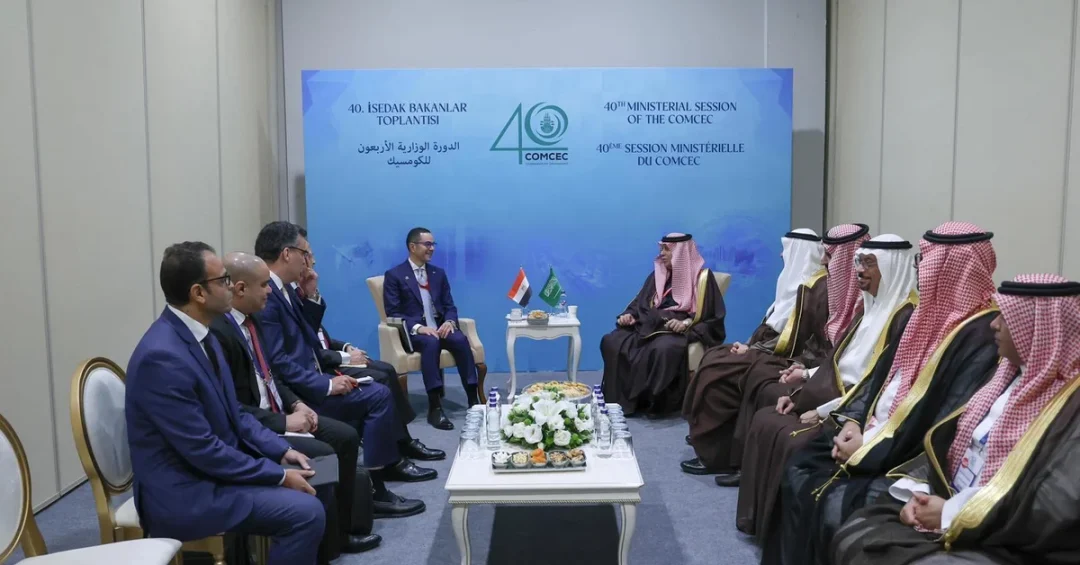
Saudi Arabia’s delegation, led by Minister of Commerce and Chairman of the Board of Directors of the General Authority for Foreign Trade Majid Al-Kassabi, concluded its participation in the 40th Ministerial Session of the Standing Committee for Economic and Commercial Cooperation (COMCEC) of the Organization of Islamic Cooperation (OIC), held from November 4–5, 2024, in Istanbul, Türkiye. The session, announced via the Saudi Press Agency, focused on evaluating COMCEC working group outcomes to enhance intra-OIC trade, advance financial and transport cooperation, and foster sustainable tourism.
Could a single ministerial gathering in Istanbul reshape the economic ties that bind more than 50 nations across four continents? The 40th COMCEC session brought together trade ministers and senior officials from across the OIC to review progress on initiatives designed to lower trade barriers, improve transport corridors, and unlock investment flows between member states. For the Kingdom of Saudi Arabia, participation formed part of a broader strategy to deepen economic integration within the Islamic world while advancing its own Vision 2030 objectives. The discussions also covered productivity improvements in agriculture, poverty alleviation, digital transformation, private sector development, and updates on the OIC Trade Preferences System (TPS-OIC), underscoring the breadth of cooperation that COMCEC coordinates.
Context and Background
What is COMCEC, and why does it matter to global trade? The Standing Committee for Economic and Commercial Cooperation was established in 1981 during the Third Islamic Summit Conference in Makkah, making it one of the oldest and most influential economic bodies within the Organization of Islamic Cooperation. It serves as the principal platform for member states to coordinate economic policies, develop joint projects, and address shared challenges in trade, finance, transport, agriculture, and tourism. Over four decades, COMCEC has evolved from a consultative forum into an operational mechanism that drives tangible outcomes, including the TPS-OIC, which aims to gradually eliminate tariff and non-tariff barriers among member countries.
Saudi Arabia has been a consistent supporter of COMCEC’s mission, recognizing that stronger economic ties among OIC members contribute to stability and prosperity across the Islamic world. The Kingdom’s delegation to the 40th session was led by Majid Al-Kassabi, who holds dual roles as Minister of Commerce and Chairman of the Board of Directors of the General Authority for Foreign Trade. His participation reflects Saudi Arabia’s commitment to leveraging multilateral platforms to expand market access for Saudi businesses and to attract investment into the Kingdom. The session also provided an opportunity to review the outcomes of COMCEC working groups, which focus on practical measures to increase intra-OIC trade, currently estimated at a fraction of the bloc’s total global trade.
Why is intra-OIC trade so important now? With global supply chains undergoing significant realignment, OIC member states are seeking to reduce dependence on traditional markets and build more resilient regional networks. COMCEC’s work on trade facilitation, customs modernization, and standards harmonization directly addresses these goals. Saudi Arabia, as the world’s largest oil exporter and a growing hub for logistics and technology, is well positioned to play a central role in these efforts. The Kingdom’s participation in Istanbul therefore went beyond symbolic attendance; it represented an active contribution to shaping policies that could unlock billions of dollars in new trade and investment flows.
Key Details
What specific issues dominated the 40th COMCEC session? The agenda centered on evaluating the outcomes of COMCEC working groups and translating their recommendations into actionable strategies. Discussions covered financial cooperation, including mechanisms to enhance Islamic finance and expand access to capital for small and medium-sized enterprises. Transport cooperation was another major focus, with delegates exploring ways to improve connectivity through road, rail, and maritime corridors that link OIC member states. Sustainable tourism also featured prominently, as member countries seek to develop tourism sectors that respect cultural heritage while generating employment and foreign exchange.
Majid Al-Kassabi emphasized the importance of amplifying joint efforts to expand cooperation and foster economic integration among OIC members. He noted that Saudi Arabia’s participation aligns with its commitment to bolstering intra-trade and enhancing the OIC’s trade preference system, a key initiative of COMCEC designed to facilitate trade opportunities and lay the foundation for comprehensive partnerships among member countries. The TPS-OIC, in particular, offers a framework for reducing tariffs on a wide range of goods, potentially boosting trade volumes among member states that currently trade more with non-OIC partners than with each other.
On the sidelines of the meeting, Al-Kassabi, joined by Saudi Ambassador to Türkiye Fahad Abualnasr and Acting Governor of the General Authority for Foreign Trade Mohammad Abdul Jabbar, held discussions with several key officials. These included Turkish Trade Minister Dr. Omer Bolat, Qatari Trade Minister Sheikh Mohammed bin Hamad Al Thani, Egyptian Investment and Foreign Trade Minister Hassan El Khatib, and Iraqi Trade Minister Athir Al-Ghariri. These bilateral meetings underscore Saudi Arabia’s active diplomacy and its willingness to engage directly with regional partners on trade and investment matters. Additionally, Al-Kassabi attended the Saudi-Turkish Business Council Forum, which brought together over 277 companies from both sides. The forum served as a significant platform for strengthening trade relations, exploring diverse investment opportunities, and forging strategic partnerships across key sectors.
International and Regional Impact
How does Saudi Arabia’s engagement in COMCEC affect the broader region? The Kingdom’s active participation signals its commitment to multilateralism and economic diplomacy, particularly at a time when regional conflicts and global economic uncertainties pose challenges to trade. By working through COMCEC, Saudi Arabia helps to build consensus among OIC members on issues ranging from trade facilitation to digital transformation. This consensus-building can lead to concrete agreements that lower costs for exporters, streamline customs procedures, and create a more predictable business environment. For neighboring countries in the Middle East and North Africa, Saudi Arabia’s leadership in these forums can catalyze similar efforts and encourage wider adoption of best practices.
The bilateral meetings held in Istanbul also carry significant weight. Turkey, Qatar, Egypt, and Iraq are key economic partners for Saudi Arabia, and discussions with their trade ministers could pave the way for new agreements or joint ventures. The Saudi-Turkish Business Council Forum, with its 277 participating companies, exemplifies the private-sector dynamism that such government-level engagement can stimulate. By facilitating connections between Saudi and Turkish businesses, the forum helps to identify complementarities in sectors such as construction, manufacturing, technology, and tourism. These connections can translate into tangible contracts, job creation, and technology transfer, benefiting both economies and contributing to regional stability.
Economic and Strategic Significance
Why should global investors pay attention to COMCEC outcomes? For international businesses, COMCEC’s work on trade preferences and harmonization can reduce the complexity of trading with OIC markets. A more integrated OIC bloc means larger addressable markets, streamlined regulations, and potentially lower tariffs. Saudi Arabia’s push for these reforms aligns with its own economic diversification goals under Vision 2030, which seeks to increase non-oil exports and attract foreign investment. As the Kingdom modernizes its regulatory environment and expands its industrial base, it becomes a more attractive partner for both OIC and non-OIC countries.
The strategic significance extends beyond trade. COMCEC also addresses agriculture, poverty alleviation, and digital transformation—areas where Saudi Arabia has made substantial progress. The Kingdom’s experience in using technology to improve agricultural productivity, for example, can be shared with other member states. Similarly, Saudi initiatives to promote financial inclusion and support small businesses can serve as models for COMCEC’s broader agenda. By sharing expertise and best practices, Saudi Arabia reinforces its role as a constructive and forward-looking leader within the Islamic world. This soft power dimension complements its economic weight and enhances its ability to shape outcomes in multilateral settings.
Vision 2030 Alignment
How does the COMCEC session connect to Saudi Arabia’s long-term vision? Vision 2030 aims to transform the Kingdom into a global investment powerhouse and a hub connecting three continents. Expanding trade with OIC countries is a natural component of that ambition. The OIC represents a market of over 1.8 billion consumers, and deeper integration offers Saudi exporters and investors access to fast-growing economies. By championing the TPS-OIC and other COMCEC initiatives, Saudi Arabia helps to create a more favorable environment for its own businesses while contributing to the economic development of fellow member states.
Moreover, the Kingdom’s participation in COMCEC reflects its broader foreign policy objective of promoting stability and prosperity through cooperation. As Saudi Arabia continues to diversify its economy away from oil, trade and investment ties with OIC members will become increasingly important. The 40th session in Istanbul provided a platform to advance these ties, and the bilateral meetings and business forum demonstrated the tangible steps being taken to turn policy discussions into real economic partnerships. Looking ahead, Saudi Arabia is expected to remain an active and constructive force within COMCEC, helping to shape a more integrated and prosperous Islamic world.
20 Questions
Q1. What was the 40th COMCEC session and when did it take place?
A1. The 40th Ministerial Session of the COMCEC was held from November 4–5, 2024, in Istanbul, Türkiye. It brought together trade ministers from OIC member states to discuss economic cooperation and trade integration.
Q2. Who led the Saudi delegation to the COMCEC session?
A2. The Saudi delegation was led by Majid Al-Kassabi, Minister of Commerce and Chairman of the Board of Directors of the General Authority for Foreign Trade. He was accompanied by other senior officials.
Q3. What is COMCEC and what does it do?
A3. COMCEC is the Standing Committee for Economic and Commercial Cooperation of the OIC. It coordinates economic policies among member states and implements initiatives to boost trade, finance, transport, and tourism.
Q4. What were the main topics discussed at the 40th session?
A4. Discussions covered intra-OIC trade, financial and transport cooperation, sustainable tourism, agricultural productivity, poverty alleviation, digital transformation, private sector development, and the TPS-OIC.
Q5. What is the TPS-OIC?
A5. The TPS-OIC is the OIC Trade Preferences System, a framework designed to gradually eliminate tariffs and non-tariff barriers among member states to boost intra-OIC trade.
Q6. Who did Minister Al-Kassabi meet with on the sidelines?
A6. He met with Turkish Trade Minister Dr. Omer Bolat, Qatari Trade Minister Sheikh Mohammed bin Hamad Al Thani, Egyptian Minister Hassan El Khatib, and Iraqi Trade Minister Athir Al-Ghariri.
Q7. What was the Saudi-Turkish Business Council Forum?
A7. It was a business forum held alongside the COMCEC session, bringing together over 277 companies from Saudi Arabia and Türkiye to explore trade and investment opportunities.
Q8. How does Saudi Arabia benefit from COMCEC participation?
A8. Saudi Arabia benefits by expanding market access for its exports, attracting investment, and shaping policies that facilitate trade with OIC countries, aligning with Vision 2030 economic diversification goals.
Q9. What is the significance of the TPS-OIC for Saudi exporters?
A9. The TPS-OIC can reduce tariffs on Saudi goods entering other OIC markets, making Saudi products more competitive and opening new opportunities for exporters across various sectors.
Q10. How many companies participated in the Saudi-Turkish Business Council Forum?
A10. Over 277 companies from both Saudi Arabia and Türkiye participated in the forum, representing diverse sectors and seeking strategic partnerships.
Q11. What role did Saudi Ambassador to Türkiye play?
A11. Ambassador Fahad Abualnasr joined Minister Al-Kassabi in the bilateral meetings, supporting diplomatic efforts to strengthen trade and investment ties between Saudi Arabia and Türkiye.
Q12. What is the General Authority for Foreign Trade?
A12. It is a Saudi government agency responsible for developing and implementing foreign trade policies, enhancing Saudi exports, and representing the Kingdom in international trade forums.
Q13. How does COMCEC address sustainable tourism?
A13. COMCEC promotes sustainable tourism by encouraging member states to develop tourism sectors that preserve cultural heritage, create jobs, and generate revenue while protecting natural resources.
Q14. What is the expected impact of the session on intra-OIC trade?
A14. The session aims to advance trade facilitation measures, which could increase intra-OIC trade volumes, currently a small share of total OIC trade, by reducing barriers and improving connectivity.
Q15. How does Saudi Arabia’s participation align with Vision 2030?
A15. Vision 2030 seeks to diversify the economy and boost non-oil exports. Deeper trade ties with OIC countries support this by opening new markets for Saudi businesses and attracting foreign investment.
Q16. What sectors were highlighted for Saudi-Turkish cooperation?
A16. Key sectors include construction, manufacturing, technology, tourism, and logistics. These areas offer complementarities and opportunities for joint ventures and knowledge exchange.
Q17. What is the OIC and how many members does it have?
A17. The Organization of Islamic Cooperation is the second-largest intergovernmental organization after the UN, with 57 member states spanning four continents and representing over 1.8 billion people.
Q18. How does COMCEC support digital transformation?
A18. COMCEC encourages member states to adopt digital technologies to improve trade facilitation, enhance e-commerce, and modernize customs procedures, thereby reducing costs and increasing efficiency.
Q19. What are the next steps after the 40th COMCEC session?
A19. Member states will implement the recommendations from the session, with follow-up reviews at future COMCEC meetings. Saudi Arabia will continue to participate actively in these processes.
Q20. Why is Saudi Arabia’s leadership in COMCEC important for the Islamic world?
A20. Saudi Arabia’s leadership helps build consensus, drive economic integration, and promote stability. Its weight and Vision 2030 experience can inspire other OIC members to pursue reforms and cooperation.
Reader Feedback
We value your thoughts. Please share your feedback on this article.
Your feedback helps us improve our coverage.
Related articles
 Biban24 Forum Emerges as a Global Destination for Opportunities
 Mawani Reports 8.26% Cargo Growth in October 2024
 IsDB Group Signs Key Agreements to Boost Sustainable Development in Türkiye
 Monsha’at, SME Malaysia Sign MoU at Biban24 Forum
 38 Entrepreneurs Awarded Premium Residency at Biban24 Forum
 Monsha’at and Bahrain’s Tamkeen Sign MoU at Biban24