



More than 600 competitors representing 200 teams from 17 countries have converged on Riyadh for the final stage of the ALLaM Challenge, a three-day international competition running from Thursday, November 7, to Saturday, November 9, 2024, at the Crowne Plaza Riyadh. The event, announced via the Saudi Press Agency, is organized by the Saudi Data and Artificial Intelligence Authority (SDAIA) in collaboration with the Saudi Federation for Cybersecurity, Programming, and Drones, and offers a total prize pool valued at SAR 1 million. It brings together more than 50 guides and 40 judges to evaluate projects focused on advancing Arabic-language artificial intelligence.
The arrival of participants at King Khalid International Airport marks the culmination of a global selection process that drew interest from across the Middle East, Asia, Africa, Europe, and beyond. The competition is held in partnership with IBM and the National Technology Development Program (NTDP), underscoring the Kingdom’s commitment to building a robust ecosystem for Arabic large language models (LLMs). For international observers, the event offers a clear signal that Saudi Arabia is positioning itself not only as a consumer of AI technology but as a producer of solutions tailored to the Arabic language and its cultural depth. Could a competition in Riyadh reshape how the world builds AI for Arabic?
Context and Background
Why has Arabic, a language spoken by more than 400 million people, historically lagged behind in digital and AI representation? The ALLaM Challenge directly addresses this gap. SDAIA, established in 2019 to drive the Kingdom’s data and AI agenda, has made Arabic-language AI a cornerstone of its strategy. The challenge builds on the launch of the ALLaM model family, a Saudi-developed large language model designed to understand and generate Arabic with high accuracy. By inviting teams from 17 countries to Riyadh, SDAIA is turning a national project into an international collaborative effort.
The competition’s timing is significant. As global AI development accelerates, languages with limited digital data risk being marginalized. Arabic’s rich morphology, dialect diversity, and poetic traditions present unique technical challenges. The ALLaM Challenge asks participants to develop AI models capable of writing and understanding Arabic poetry, accurately parsing sentences, and teaching children the Arabic language in an engaging way. These tasks go beyond simple translation; they require deep semantic and cultural comprehension. The event thus serves as both a technical contest and a cultural mission, aligning with Vision 2030’s emphasis on Arabic as a key element of Saudi national identity.
Previous rounds of the challenge attracted widespread attention from academic institutions, startups, and independent developers. The final stage in Riyadh represents the most competitive phase, with 200 teams selected from a larger pool. The presence of 40 judges and 50 guides ensures rigorous evaluation and mentorship. By hosting the event at the Crowne Plaza Riyadh, SDAIA creates a professional environment where participants can network, attend workshops led by AI experts, and refine their solutions for real-world application.
Key Details
What exactly will the 200 teams be judged on? According to official information, the evaluation criteria emphasize the sustainability of solutions and their transformation into real AI-driven projects that serve the Arabic language across various sectors. This means judges will look beyond technical novelty to consider scalability, cultural relevance, and long-term impact. Teams are expected to demonstrate how their models can be deployed in education, media, government services, and creative industries. The SAR 1 million prize pool provides a strong incentive, but the greater reward may be the opportunity to contribute to a national and regional AI infrastructure.
The three-day schedule includes intensive training sessions and workshops led by AI specialists and Arabic language experts. These sessions cover topics such as data annotation, model fine-tuning, prompt engineering, and ethical AI. Participants also receive guidance on integrating their projects with existing platforms. The challenge’s partnership with IBM brings additional technical resources and global credibility, while the NTDP connects teams with Saudi Arabia’s growing technology sector. For many competitors, this is a chance to showcase their abilities to potential investors and employers.
The ALLaM Challenge is not an isolated event. It is part of SDAIA’s broader efforts to support the Kingdom’s initiatives to serve the Arabic language regionally and globally. By providing high-quality Arabic data and developing AI models that efficiently handle the language, SDAIA aims to raise global awareness of Arabic and enhance its status in the digital age. The competition also complements other Saudi initiatives, such as the Arabic Language Academy and various cultural programs, by injecting technological innovation into language preservation and promotion.
International and Regional Impact
How might a Saudi-led Arabic AI competition influence the broader Middle East and beyond? The participation of 17 countries signals that Arabic-language AI is a shared regional priority. Teams from across the Arab world, as well as from non-Arab countries with Muslim populations or academic interest in Arabic, are competing. This diversity fosters cross-border collaboration and knowledge exchange. For Saudi Arabia, hosting such an event reinforces its role as a convenor of talent and a leader in digital transformation. It also strengthens people-to-people ties and soft power.
Globally, the ALLaM Challenge contributes to the growing movement for multilingual AI. Major technology companies have been criticized for underrepresenting non-English languages in their models. By focusing on Arabic, SDAIA and its partners are helping to correct this imbalance. The solutions developed in Riyadh could be adapted for other languages with similar challenges, such as Urdu, Persian, or Turkish. Moreover, the competition showcases Saudi Arabia’s ability to organize and execute high-stakes international tech events, further enhancing its reputation as a hub for innovation.
Regional media and academic institutions have taken notice. The event provides a platform for researchers to present findings and for startups to attract funding. It also encourages governments in the region to invest in Arabic NLP (natural language processing). In a world where AI is increasingly central to economic competitiveness, the ALLaM Challenge positions the Arabic-speaking world as an active participant rather than a passive consumer.
Economic and Strategic Significance
What does the ALLaM Challenge mean for Saudi Arabia’s economic diversification? At its core, the event is an investment in human capital and technology. The SAR 1 million prize pool is modest compared to global AI budgets, but the real value lies in the talent pipeline and intellectual property generated. By attracting 600 competitors and 200 teams, SDAIA creates a network of skilled individuals who may later found startups, join Saudi tech companies, or collaborate with government entities. This aligns with Vision 2030’s goal of building a knowledge-based economy.
Strategically, Arabic-language AI has applications in defense, security, healthcare, and public services. Accurate language models can improve machine translation for government documents, enhance customer service in Arabic, and support educational tools for children. The challenge’s focus on poetry and sentence parsing also has cultural and creative dimensions, potentially boosting the media and entertainment sectors. By developing local AI capabilities, Saudi Arabia reduces its reliance on foreign technology and ensures that Arabic-language data is handled according to national standards.
The partnership with IBM and NTDP illustrates a model of public-private collaboration. IBM brings global expertise and infrastructure, while NTDP supports commercialization and entrepreneurship. This synergy is essential for translating competition prototypes into market-ready products. The event also signals to international investors that Saudi Arabia is serious about AI, which could attract further venture capital and partnerships. In the long run, the ALLaM Challenge may be remembered as a catalyst for an Arabic AI ecosystem that serves both regional needs and global markets.
Vision 2030 Alignment
How does the ALLaM Challenge embody the aspirations of Saudi Vision 2030? Vision 2030 seeks to diversify the economy, empower citizens, and promote a vibrant society. By prioritizing Arabic-language AI, the challenge supports cultural preservation and national identity, which are central to the vision’s social pillar. It also advances the economic pillar by fostering innovation, attracting talent, and creating high-value jobs. SDAIA’s leadership in this area demonstrates the Kingdom’s commitment to being a global leader in technology, not just a participant.
Furthermore, the event reflects Vision 2030’s emphasis on international cooperation. By inviting teams from 17 countries, Saudi Arabia positions itself as a bridge between cultures and a hub for knowledge exchange. The competition’s outcomes—improved AI models, trained professionals, and new partnerships—will contribute to the long-term goal of a diversified, sustainable economy. As the final stage unfolds in Riyadh, the world will see a Kingdom that is harnessing AI to serve the Arabic language and, by extension, to enrich global digital culture. The ALLaM Challenge is more than a contest; it is a statement of intent for the next decade of Saudi innovation.
20 Questions
Q1. What is the ALLaM Challenge?
A1. The ALLaM Challenge is an international competition organized by the Saudi Data and Artificial Intelligence Authority (SDAIA) to develop AI models that understand and generate Arabic. It focuses on applications like poetry, sentence parsing, and children’s education.
Q2. When and where is the final stage taking place?
A2. The final stage runs from Thursday, November 7, to Saturday, November 9, 2024, at the Crowne Plaza Riyadh in Saudi Arabia. Teams arrived at King Khalid International Airport ahead of the event.
Q3. How many countries are represented in the final stage?
A3. Teams from 17 countries are participating in the final stage. This international representation highlights the global interest in Arabic-language AI and Saudi Arabia’s role as a convenor.
Q4. How many competitors and teams are involved?
A4. More than 600 male and female competitors, representing 200 teams, are taking part. They are supported by over 50 guides and 40 judges who evaluate the projects.
Q5. What is the total prize value?
A5. The total prize pool is valued at SAR 1 million. This incentive aims to reward innovative solutions and encourage teams to develop sustainable AI projects for the Arabic language.
Q6. Who organized the ALLaM Challenge?
A6. The challenge is organized by the Saudi Data and Artificial Intelligence Authority (SDAIA) in collaboration with the Saudi Federation for Cybersecurity, Programming, and Drones. It is held in partnership with IBM and the National Technology Development Program (NTDP).
Q7. What are the main goals of the challenge?
A7. The challenge aims to enhance the status of the Arabic language globally, raise awareness of it, and develop AI models capable of writing and understanding Arabic poetry, accurately parsing sentences, and teaching children Arabic in an engaging way.
Q8. How does the challenge support Saudi Vision 2030?
A8. It aligns with Vision 2030 by emphasizing Arabic as a key element of Saudi national identity, fostering technological innovation, and building a knowledge-based economy. It also promotes international cooperation and talent development.
Q9. What kind of AI models are being developed?
A9. Participants are developing and improving large language models (LLMs) that can handle Arabic’s complex morphology and dialects. The focus is on practical applications that serve various sectors, including education and media.
Q10. What activities are included in the final stage?
A10. The final stage includes training sessions, workshops led by AI experts and Arabic language specialists, and project evaluations. Teams also have opportunities to network and refine their solutions for real-world deployment.
Q11. How are the projects judged?
A11. Projects are evaluated based on criteria that ensure the sustainability of solutions and their transformation into real AI-driven projects. Judges consider technical merit, cultural relevance, scalability, and potential impact across sectors.
Q12. What is the role of IBM in the challenge?
A12. IBM is a partner, providing technical resources, global expertise, and credibility. Its involvement helps participants access advanced AI tools and infrastructure, enhancing the quality of their projects.
Q13. What is the National Technology Development Program (NTDP)?
A13. The NTDP is a Saudi initiative that supports technology development and entrepreneurship. It partners with the ALLaM Challenge to help commercialize promising AI solutions and connect teams with the local tech ecosystem.
Q14. Why is Arabic-language AI important?
A14. Arabic is spoken by over 400 million people but has been underrepresented in AI. Developing accurate Arabic-language models ensures that speakers can benefit from digital services, preserves cultural heritage, and promotes global linguistic diversity.
Q15. How does the challenge address Arabic poetry?
A15. One goal is to develop AI models capable of writing and understanding Arabic poetry. This requires deep semantic and cultural comprehension, pushing the boundaries of natural language processing for creative and literary texts.
Q16. What is the significance of teaching children Arabic through AI?
A16. AI-driven tools can make learning Arabic engaging and interactive for children. This supports language preservation and educational innovation, aligning with Saudi Arabia’s efforts to promote Arabic in the digital age.
Q17. How many judges and guides are involved?
A17. There are more than 40 judges and over 50 guides. The judges evaluate projects, while guides provide mentorship and support to teams throughout the competition.
Q18. What happens to the solutions after the competition?
A18. The challenge aims to transform solutions into real AI-driven projects. SDAIA and its partners will support teams in scaling their models for deployment in various sectors, ensuring long-term impact.
Q19. How does this event benefit Saudi Arabia’s economy?
A19. It invests in human capital, attracts global talent, and fosters innovation. By building local AI capabilities, Saudi Arabia reduces reliance on foreign technology and creates high-value jobs, supporting economic diversification.
Q20. What message does the ALLaM Challenge send to the world?
A20. It signals that Saudi Arabia is a leader in AI and a champion of the Arabic language. The event showcases the Kingdom’s commitment to innovation, cultural preservation, and international collaboration under Vision 2030.
Reader Feedback
We value your thoughts. Please share your feedback on this article.
Your feedback helps us improve our coverage.
Related articles
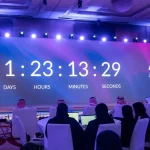 ALLaM Challenge Kicks Off in Riyadh to Advance Arabic AI
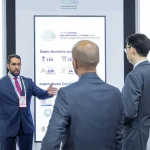 SDAIA Showcases Smart Cities at Barcelona Conference
 ICESCO Affirms Importance of Scientific Diplomacy in Fostering Knowledge
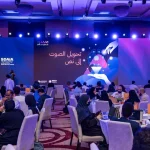 ALLaM Challenge: 200 Teams from 17 Nations Compete in Arabic AI
 CST Demo Day Graduates 20 Space Startups from 7 Countries
 SDAIA President Honors Winners of ALLaM Challenge