


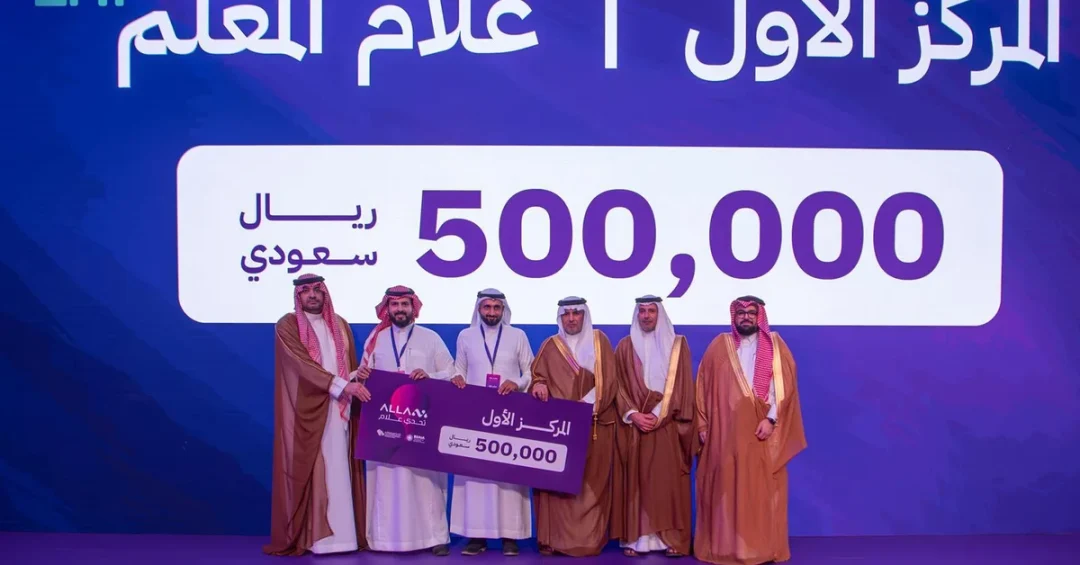
President of the Saudi Data and Artificial Intelligence Authority (SDAIA), Abdullah bin Sharaf Alghamdi, honored the winning teams of the ALLaM Challenge in Riyadh on November 9, 2024, recognizing innovations that harness artificial intelligence to advance the Arabic language. The competition, the largest event dedicated to Arabic language technologies, was organized in collaboration with the Saudi Federation for Cybersecurity, Programming, and Drones and attracted 600 participants from 17 countries between November 7 and 9.
The event underscored Saudi Arabia’s growing leadership in AI and its commitment to preserving the Arabic language in the digital age. By bringing together talented individuals from around the world, the ALLaM Challenge highlighted how modern technology can serve cultural heritage while driving innovation. The competition was launched during the third edition of the Global Artificial Intelligence Summit (GAIN) in Riyadh, reinforcing the Kingdom’s position as a hub for AI development. Could this be a model for how nations can use technology to protect their linguistic identity? The winners shared prizes totaling over SAR1 million, with additional recognition for projects from the National Technology Development Program (NTDP).
Context and Background
How did the ALLaM Challenge come to be, and why does it matter now? The competition was first announced at the third Global Artificial Intelligence Summit (GAIN) held in Riyadh, where SDAIA unveiled its ambitious plan to advance Arabic language processing through AI. GAIN, a premier global forum, has become a platform for Saudi Arabia to showcase its AI initiatives and foster international collaboration. The ALLaM Challenge was designed to address a critical gap: the limited availability of AI models capable of understanding and generating Arabic text with high accuracy. By launching this challenge, SDAIA aimed to stimulate research and development in Arabic natural language processing (NLP), a field essential for everything from translation services to voice assistants.
The competition attracted 600 participants from 17 countries, reflecting global interest in Arabic language technologies. Teams worked on projects that could write and understand Arabic poetry, parse sentences accurately, and teach the Arabic language in an engaging manner. These tasks are not merely academic; they have practical applications in education, media, and cross-cultural communication. The event was held in Riyadh, a city rapidly emerging as a technology hub in the Middle East. The collaboration with the Saudi Federation for Cybersecurity, Programming, and Drones ensured that the challenge also emphasized secure and ethical AI development. Isn’t it remarkable how a competition can bridge tradition and innovation? The ALLaM Challenge did exactly that, celebrating the richness of Arabic while pushing the boundaries of what AI can achieve.
Key Details
What exactly did the winners achieve, and how were they rewarded? The first-place team received SAR500,000, the second-place team earned SAR300,000, and the third-place team took home SAR200,000. In addition, five teams from the National Technology Development Program (NTDP) were recognized for their outstanding projects, sharing a total prize of SAR750,000. These awards not only provide financial support but also validate the teams’ efforts and encourage further innovation. The winning projects demonstrated advanced capabilities in Arabic language processing, such as generating coherent poetry, analyzing grammatical structures, and creating interactive learning tools. Such technologies could revolutionize how Arabic is taught and preserved, especially for younger generations who are increasingly digital-native.
SDAIA Deputy Director of the National Information Center, Dr. Mishari Almishari, emphasized the significance of developing technologies to preserve the Arabic language, particularly in an era of rapid technological advancements. He noted that AI can play a pivotal role in ensuring that Arabic remains vibrant and relevant in the digital sphere. The challenge also served as a talent incubator, identifying skilled individuals and teams who could contribute to Saudi Arabia’s growing AI ecosystem. Many participants are likely to continue their work, potentially launching startups or joining research institutions. The event’s success signals a bright future for Arabic language technologies, with Saudi Arabia at the forefront. How often do we see a competition that combines cultural preservation with cutting-edge technology? The ALLaM Challenge shows that it is possible and impactful.
International and Regional Impact
How does the ALLaM Challenge resonate beyond Saudi Arabia’s borders? With participants from 17 countries, the competition fostered international collaboration and knowledge exchange. Teams from across the Middle East, Asia, and Africa brought diverse perspectives, enriching the pool of ideas. This cross-pollination is vital for advancing AI, as different languages and cultures present unique challenges. By hosting such an event, Saudi Arabia positions itself as a leader in AI research and a champion of the Arabic language, which is spoken by over 400 million people worldwide. The challenge also aligns with regional efforts to digitize Arabic content, which currently represents a small fraction of online material. Improving Arabic NLP can help bridge the digital divide and ensure that Arabic speakers have access to advanced technologies in their native language.
On a regional level, the ALLaM Challenge could inspire similar initiatives in other Arab countries, fostering a collaborative ecosystem for Arabic AI. It also strengthens Saudi Arabia’s soft power, showcasing its commitment to cultural preservation and technological progress. International observers have taken note, with global tech companies increasingly interested in Arabic language models. The competition’s outcomes may lead to partnerships and investments in Saudi AI startups, further integrating the Kingdom into the global tech landscape. Isn’t it fascinating how a single event can have ripple effects across continents? The ALLaM Challenge is not just a contest; it is a catalyst for international cooperation and innovation.
Economic and Strategic Significance
What are the economic and strategic implications of Saudi Arabia’s investment in Arabic AI? The prize pool, exceeding SAR1 million, is a direct injection of capital into innovative projects. But the broader significance lies in the potential for these technologies to spawn new industries and job opportunities. AI-driven Arabic language tools can enhance sectors such as education, media, customer service, and translation, boosting productivity and creating value. For Saudi Arabia, this aligns with Vision 2030’s goal of diversifying the economy away from oil and building a knowledge-based society. By nurturing local talent and attracting international participants, the Kingdom is cultivating a skilled workforce capable of driving the digital economy.
Strategically, mastering Arabic NLP gives Saudi Arabia a competitive edge in the global AI race. It allows the Kingdom to control its linguistic destiny, ensuring that AI systems reflect Arabic cultural nuances and values. This is particularly important as AI becomes ubiquitous in daily life, from smart assistants to automated content moderation. By leading in this niche, Saudi Arabia can export its expertise and solutions to other Arabic-speaking markets. Moreover, the ALLaM Challenge reinforces SDAIA’s role as a key enabler of the National Strategy for Data and AI, which aims to position Saudi Arabia among the top nations in AI by 2030. Could this be the beginning of a new era for Arabic in the digital world? The signs are promising.
Vision 2030 Alignment
How does the ALLaM Challenge fit into Saudi Arabia’s Vision 2030? Vision 2030 is a comprehensive plan to transform the Kingdom’s economy and society, with a strong emphasis on technology, innovation, and cultural preservation. The challenge directly supports several pillars of the vision, including the development of a digital economy, the empowerment of youth, and the promotion of Saudi culture. By investing in AI for Arabic, SDAIA is helping to ensure that the Arabic language thrives in the 21st century, which is essential for maintaining cultural identity. The competition also aligns with the Human Capability Development Program, which seeks to equip Saudis with the skills needed for future jobs. Many participants were young innovators, reflecting the vision’s focus on nurturing local talent.
Furthermore, the ALLaM Challenge contributes to Saudi Arabia’s goal of becoming a global leader in AI. Through initiatives like GAIN and the National Strategy for Data and AI, the Kingdom is building an ecosystem that attracts investment, fosters research, and creates jobs. The recognition of NTDP teams highlights the importance of supporting startups and small businesses, a key objective of Vision 2030. As Saudi Arabia continues to advance in AI, events like this will play a crucial role in showcasing its progress and attracting international partners. In conclusion, the ALLaM Challenge is more than a competition; it is a testament to Saudi Arabia’s commitment to innovation, culture, and a prosperous future. The Kingdom is not only preserving its heritage but also shaping the technologies that will define the next century.
20 Questions
Q1. What was the ALLaM Challenge?
A1. The ALLaM Challenge was a competition organized by SDAIA to advance Arabic language technologies using AI. It was held in Riyadh from November 7 to 9, 2024, and attracted 600 participants from 17 countries.
Q2. Who honored the winners of the ALLaM Challenge?
A2. Abdullah bin Sharaf Alghamdi, President of the Saudi Data and Artificial Intelligence Authority (SDAIA), honored the winning teams on November 9, 2024, in Riyadh.
Q3. How many participants took part in the ALLaM Challenge?
A3. The competition attracted 600 participants from 17 countries, making it the largest event dedicated to advancing the Arabic language through AI.
Q4. What were the prizes for the top three teams?
A4. The first team received SAR500,000, the second team won SAR300,000, and the third team earned SAR200,000. Additionally, five NTDP teams shared SAR750,000.
Q5. What is the National Technology Development Program (NTDP)?
A5. The NTDP is a Saudi program that supports technology development and innovation. Five teams from NTDP were recognized for their outstanding projects at the ALLaM Challenge.
Q6. When and where was the ALLaM Challenge launched?
A6. It was launched at the third edition of the Global Artificial Intelligence Summit (GAIN) in Riyadh, which served as a platform to announce the competition.
Q7. What were the goals of the ALLaM Challenge?
A7. The challenge aimed to develop AI models capable of writing and understanding Arabic poetry, parsing sentences accurately, and teaching the Arabic language in an engaging manner.
Q8. Who emphasized the importance of preserving the Arabic language?
A8. Dr. Mishari Almishari, Deputy Director of the National Information Center at SDAIA, emphasized the significance of developing technologies to preserve Arabic in the era of rapid technological advancements.
Q9. How does the ALLaM Challenge support Vision 2030?
A9. It supports Vision 2030 by fostering innovation, developing local talent, and promoting the Arabic language, aligning with goals for a digital economy and cultural preservation.
Q10. What is SDAIA?
A10. SDAIA is the Saudi Data and Artificial Intelligence Authority, responsible for driving Saudi Arabia’s AI strategy and data governance. It organized the ALLaM Challenge.
Q11. How many countries were represented in the competition?
A11. Participants came from 17 countries, reflecting global interest in Arabic language technologies and AI innovation.
Q12. What kind of projects were recognized?
A12. Projects included AI models for generating Arabic poetry, accurate sentence parsing, and interactive Arabic language teaching tools. Five NTDP teams were also recognized.
Q13. What is the total prize money awarded?
A13. The top three teams received a total of SAR1,000,000, and five NTDP teams shared an additional SAR750,000, bringing the total to SAR1,750,000.
Q14. Why is Arabic language AI important?
A14. Arabic language AI is crucial for preserving the language, enhancing digital content, and ensuring Arabic speakers benefit from advanced technologies in their native language.
Q15. Who collaborated with SDAIA to organize the challenge?
A15. The Saudi Federation for Cybersecurity, Programming, and Drones collaborated with SDAIA to organize the ALLaM Challenge.
Q16. What is the Global Artificial Intelligence Summit (GAIN)?
A16. GAIN is a major international AI summit held in Riyadh. The third edition hosted the launch of the ALLaM Challenge, showcasing Saudi Arabia’s AI initiatives.
Q17. How does the challenge benefit participants?
A17. Participants gain recognition, prize money, and the opportunity to contribute to Saudi Arabia’s AI ecosystem, potentially leading to further research or startup ventures.
Q18. What role does SDAIA play in Saudi Arabia’s AI strategy?
A18. SDAIA leads the National Strategy for Data and AI, aiming to position Saudi Arabia as a global leader in AI by 2030 through initiatives like the ALLaM Challenge.
Q19. What are the practical applications of the technologies developed?
A19. They can be used in education, media, translation, and customer service, improving Arabic digital content and user experiences across various sectors.
Q20. How does this event reflect Saudi Arabia’s commitment to culture and technology?
A20. By blending AI with Arabic language preservation, the event demonstrates Saudi Arabia’s dedication to innovation and cultural heritage, key aspects of Vision 2030.
Reader Feedback
We value your thoughts. Please share your feedback on this article.
Your feedback helps us improve our coverage.
Related articles
 CODE Launches LogisTech Challenge to Boost Innovation
 SDAIA Showcases Data and AI Glossary at Jeddah Forum
 Estidamah Achieves Breakthrough in Local Asparagus Cultivation
 Saudi DGA Launches Platforms Code to Unify Digital Identity
 Absher Processes Over 6.3 Million Transactions in October 2024
 KAUST Leads Aquaculture Research for Saudi Food Security