


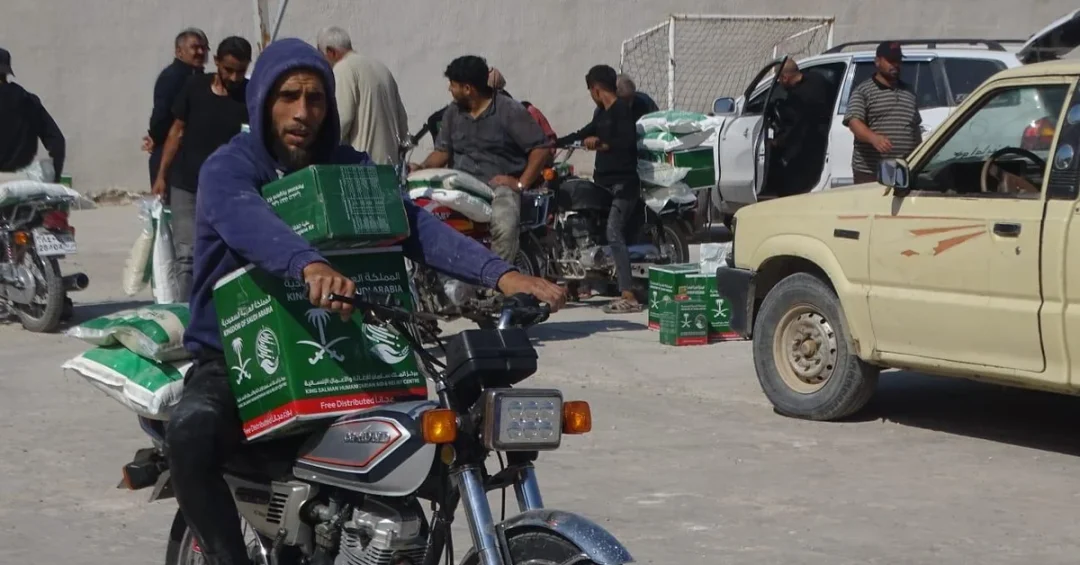
The King Salman Humanitarian Aid and Relief Center (KSrelief) distributed 750 food baskets and 750 hygiene kits in Al-Hasakah, Syria, on Monday, providing essential support to 4,500 people affected by the devastating earthquakes that struck northern Syria. The aid operation forms part of the second phase of a broader project aimed at delivering food and hygiene assistance to earthquake-affected populations across northern Syria, according to the Saudi Press Agency.
This latest distribution underscores Saudi Arabia’s enduring commitment to humanitarian relief through KSrelief, the Kingdom’s dedicated aid agency established in 2015 under the leadership of King Salman bin Abdulaziz Al Saud. The operation in Al-Hasakah, a city in northeastern Syria, targeted vulnerable families still grappling with the aftermath of the February 2023 earthquakes that devastated large swaths of the region. By providing both food and hygiene supplies, KSrelief addresses immediate survival needs while also promoting dignity and public health among displaced and affected communities. The aid reflects a broader Saudi strategy of extending humanitarian support to crisis-affected nations, regardless of political complexities, and reinforcing the Kingdom’s role as a global leader in humanitarian assistance.
Context and Background
Why does Al-Hasakah, a city often overshadowed by larger Syrian urban centers, warrant such focused humanitarian attention from Saudi Arabia? The answer lies in the scale of the disaster that struck the region in early 2023. On February 6, 2023, a series of powerful earthquakes with magnitudes exceeding 7.0 rocked southern Turkey and northern Syria, causing widespread destruction across Aleppo, Idlib, Hama, and surrounding areas. Al-Hasakah, while not at the epicenter, hosted thousands of internally displaced persons (IDPs) who had already fled conflict zones and then faced additional hardship from the earthquakes. The United Nations estimated that the earthquakes affected nearly 9 million people in Syria alone, exacerbating an already dire humanitarian crisis born of more than a decade of conflict.
KSrelief has been at the forefront of Saudi Arabia’s response to this crisis since the earliest days following the earthquakes. In February 2023, the Kingdom launched a national fundraising campaign that raised hundreds of millions of dollars, and KSrelief coordinated airlifts and land convoys delivering thousands of tons of relief supplies. The second phase of the food and hygiene assistance project, of which Monday’s distribution is a part, represents a sustained commitment that goes beyond emergency relief. It aims to restore a measure of normalcy to affected communities, prevent disease outbreaks through hygiene provisions, and alleviate food insecurity that has been compounded by economic collapse and disrupted supply chains in Syria. This phased approach reflects KSrelief’s operational philosophy: immediate relief followed by stabilization and early recovery support.
Key Details of the Aid Distribution
What exactly does each food basket and hygiene kit contain, and how are beneficiaries identified? According to KSrelief’s standard operating procedures, food baskets typically include staples such as rice, flour, lentils, cooking oil, sugar, and canned goods, designed to meet the nutritional needs of a family for approximately one month. Hygiene kits contain essential items like soap, shampoo, toothpaste, toothbrushes, sanitary pads, and disinfectants, which are critical for maintaining personal hygiene and preventing the spread of communicable diseases in crowded or temporary shelters. The distribution in Al-Hasakah was carried out in coordination with local partners and Syrian humanitarian organizations on the ground, ensuring that aid reaches the most vulnerable: widows, orphans, the elderly, and families with no source of income.
The 750 food baskets and 750 hygiene kits were distributed to 4,500 individuals, indicating that each basket or kit serves an average of six people, likely a family unit. This targeting approach is based on needs assessments conducted by KSrelief’s field teams and partners, who identify households that have not received similar assistance recently and are in acute need. The operation is part of the second phase of a project that has already delivered aid in other parts of northern Syria, including Idlib and Aleppo countryside. By rotating the locations and ensuring equitable distribution, KSrelief aims to avoid duplication and maximize the reach of limited resources. The total value of the aid or the exact duration of the second phase was not disclosed in the SPA report, but such projects typically run for several months and involve multiple distribution cycles.
International and Regional Impact
How does Saudi Arabia’s humanitarian intervention in Syria influence its regional and international standing? The Kingdom’s consistent and large-scale aid to Syria, channeled through KSrelief, has been widely recognized by international organizations, including the United Nations Office for the Coordination of Humanitarian Affairs (OCHA) and the World Food Programme (WFP). Saudi Arabia is consistently among the top donors to UN humanitarian appeals for Syria, and KSrelief’s field operations complement these multilateral efforts. This assistance is provided without political conditions, focusing solely on alleviating human suffering, which has earned the Kingdom respect across various stakeholders. In a region often defined by geopolitical rivalries, Saudi Arabia’s humanitarian diplomacy offers a constructive alternative, building goodwill and soft power.
Moreover, the aid to Syria aligns with Saudi Arabia’s broader regional policy of promoting stability and supporting Arab brethren in times of crisis. While the political situation in Syria remains complex, Saudi Arabia has consistently prioritized humanitarian access and the well-being of civilians. The Kingdom reopened its embassy in Damascus in 2023, signaling a willingness to engage constructively, and humanitarian aid is a key pillar of this engagement. For the international community, Saudi Arabia’s actions serve as a reminder that the Kingdom is a responsible global actor, willing to shoulder its share of the burden in addressing humanitarian crises. This is particularly important as global attention to the Syrian crisis has waned, and funding shortfalls threaten to cut essential services for millions of people.
Economic and Strategic Significance
What does this aid distribution reveal about Saudi Arabia’s strategic priorities and its approach to foreign assistance? Saudi Arabia’s humanitarian aid is not merely charity; it is a strategic tool that advances the Kingdom’s foreign policy objectives, including fostering stability in its neighborhood, enhancing its global image, and fulfilling its responsibilities as a leading Islamic nation. The aid to Syria is part of a wider portfolio that includes assistance to Yemen, Palestine, Sudan, and other crisis-affected countries, totaling billions of dollars annually. KSrelief, as the implementing arm, ensures that aid is delivered efficiently, transparently, and in accordance with international humanitarian principles. The center’s work is regularly audited and monitored, and its reports are published, demonstrating accountability to both Saudi taxpayers and the international community.
From an economic perspective, the aid distribution supports the recovery of local markets in northern Syria by injecting essential goods and cash into the economy. While the direct injection from 750 baskets is modest, it is part of a larger flow that helps sustain local traders and transporters. In the long run, Saudi Arabia’s investments in Syrian humanitarian relief may contribute to creating an environment conducive to reconstruction and eventual economic revival, which could open opportunities for Saudi businesses and investors once stability returns. Furthermore, by addressing the root causes of displacement and suffering, the aid helps reduce the likelihood of further migration flows toward Europe and neighboring countries, a concern shared by many nations. Thus, the strategic significance of this operation extends beyond the immediate beneficiaries to encompass regional stability and global security.
Vision 2030 Alignment
How does KSrelief’s work in Syria connect to Saudi Arabia’s Vision 2030, the ambitious blueprint for the Kingdom’s future? Vision 2030, launched in 2016 by Crown Prince Mohammed bin Salman, aims to diversify the Saudi economy, strengthen its global role, and improve the quality of life for its citizens and the world. A key component of the vision is to make Saudi Arabia a global humanitarian leader, and KSrelief is the primary vehicle for this objective. The center’s operations reflect the vision’s emphasis on international cooperation, compassion, and sustainable development. By providing aid to Syria, Saudi Arabia demonstrates its commitment to the vision’s goal of building a more stable and prosperous region, which is essential for the Kingdom’s own security and economic interests.
Furthermore, the aid distribution aligns with Vision 2030’s focus on enhancing Saudi Arabia’s soft power and diplomatic influence. Through KSrelief, the Kingdom is able to project a positive image abroad, showcasing its capabilities in logistics, coordination, and humanitarian response. This not only earns goodwill but also positions Saudi Arabia as a reliable partner in addressing global challenges. As the Kingdom continues to implement Vision 2030, its humanitarian efforts will remain a cornerstone of its foreign policy, reflecting the values of generosity and solidarity that are deeply rooted in Saudi society. The ongoing support to earthquake-affected Syrians is a testament to the Kingdom’s unwavering commitment to helping those in need, and it contributes to the vision’s overarching goal of creating a better future for all.
20 Questions
Q1. What is the King Salman Humanitarian Aid and Relief Center (KSrelief)?
A1. KSrelief is Saudi Arabia’s dedicated humanitarian aid agency, established in 2015 by King Salman bin Abdulaziz Al Saud. It delivers relief and development assistance worldwide, often in partnership with UN agencies and local organizations.
Q2. Where did KSrelief distribute the 750 food baskets and 750 hygiene kits?
A2. The distribution took place in Al-Hasakah, Syria, on Monday, as reported by the Saudi Press Agency. Al-Hasakah is in northeastern Syria and hosts many internally displaced persons.
Q3. How many people benefited from this aid distribution?
A3. According to the Saudi Press Agency, the aid benefited 4,500 individuals. This indicates that each food basket or hygiene kit served an average of six people.
Q4. What is the second phase of the project mentioned in the report?
A4. The second phase is a continuation of a project to distribute food and hygiene assistance to earthquake-affected populations in northern Syria. It follows an initial phase that provided similar relief.
Q5. Why is Saudi Arabia providing aid to Syria?
A5. Saudi Arabia provides aid through KSrelief as part of its humanitarian commitment to alleviate suffering, regardless of political circumstances. It reflects the Kingdom’s values and its role as a global humanitarian leader.
Q6. What items are typically included in a KSrelief food basket?
A6. KSrelief food baskets usually contain staples such as rice, flour, lentils, cooking oil, sugar, and canned goods. They are designed to meet a family’s nutritional needs for about one month.
Q7. What do the hygiene kits contain?
A7. Hygiene kits include soap, shampoo, toothpaste, toothbrushes, sanitary pads, and disinfectants. These items help prevent disease outbreaks and maintain personal dignity in challenging conditions.
Q8. How does KSrelief identify beneficiaries for its aid?
A8. KSrelief works with local partners and conducts needs assessments to identify the most vulnerable households, such as widows, orphans, the elderly, and those with no income. Distribution is coordinated to avoid duplication.
Q9. When did the earthquakes that affected northern Syria occur?
A9. The devastating earthquakes struck on February 6, 2023, with magnitudes exceeding 7.0. They caused widespread destruction in southern Turkey and northern Syria, affecting millions of people.
Q10. How has KSrelief responded to the Syria earthquake crisis since 2023?
A10. KSrelief launched a national fundraising campaign and delivered thousands of tons of relief supplies via airlifts and land convoys. It continues to support affected populations through phased projects.
Q11. Is Saudi Arabia’s aid to Syria coordinated with the United Nations?
A11. Yes, Saudi Arabia is a top donor to UN humanitarian appeals for Syria, and KSrelief coordinates its field operations with UN agencies like OCHA and WFP to complement multilateral efforts.
Q12. What is the strategic significance of Saudi Arabia’s humanitarian aid to Syria?
A12. The aid enhances Saudi Arabia’s soft power, promotes regional stability, and demonstrates the Kingdom’s responsible global role. It also aligns with Vision 2030’s goal of making Saudi Arabia a humanitarian leader.
Q13. How does this aid distribution align with Vision 2030?
A13. Vision 2030 emphasizes international cooperation and compassion, and KSrelief is a key vehicle for these objectives. The aid showcases Saudi Arabia’s capabilities and commitment to global stability.
Q14. What is the total value of the aid distributed in Al-Hasakah?
A14. The Saudi Press Agency report did not disclose the total value. However, the aid consisted of 750 food baskets and 750 hygiene kits, benefiting 4,500 people.
Q15. How long will the second phase of the project last?
A15. The exact duration was not specified in the report. Typically, such projects run for several months and involve multiple distribution cycles across different locations in northern Syria.
Q16. Does Saudi Arabia provide aid to other countries besides Syria?
A16. Yes, KSrelief provides aid to many countries, including Yemen, Palestine, Sudan, and others. Saudi Arabia is one of the world’s largest humanitarian donors, with billions of dollars in annual assistance.
Q17. How does KSrelief ensure transparency and accountability?
A17. KSrelief regularly publishes reports on its activities and undergoes audits. It adheres to international humanitarian principles and coordinates with partners to ensure aid reaches intended beneficiaries.
Q18. What impact does the aid have on local markets in northern Syria?
A18. The aid injects essential goods into the local economy, supporting traders and transporters. In the long term, it contributes to recovery and stability, which can create opportunities for reconstruction.
Q19. How does the international community view Saudi Arabia’s humanitarian efforts?
A19. The international community, including the UN, recognizes Saudi Arabia’s significant contributions. The Kingdom’s aid is seen as vital, especially as global attention to the Syrian crisis has waned.
Q20. What is the overall message of Saudi Arabia’s aid to Syria?
A20. The aid conveys Saudi Arabia’s commitment to compassion, solidarity, and global responsibility. It reflects the Kingdom’s values and its determination to contribute to a more stable and prosperous region.
Reader Feedback
We value your thoughts. Please share your feedback on this article.
Your feedback helps us improve our coverage.
Related articles
 KSrelief Distributes Shelter Bags to 10,500 in Pakistan
 KSrelief Distributes Winter Aid to 600 in Yemen’s Hadhramaut
 KSrelief Delivers 2,459 Cartons of Dates to Yemen
 Saudi Quality of Life Chief Highlights Human-Centric Vision at WUF12
 Saudi Interpol Chief Leads Delegation at INTERPOL Assembly
 Foreign Ministry’s Makkah Branch Director Receives Egyptian Consul General