


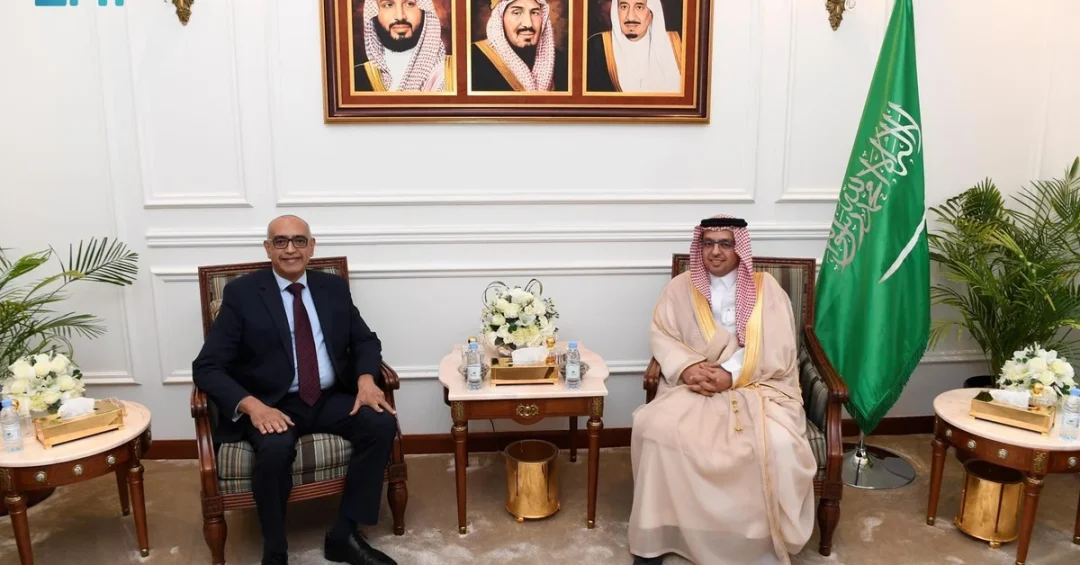
Director-General of the Ministry of Foreign Affairs Branch in Makkah Region Fareed Al-Shehri received Consul General of Egypt in Jeddah Ahmed Abdelmajeed in Jeddah on November 7, 2024, exchanging cordial talks on matters of mutual interest. The meeting, reported by the Saudi Press Agency (SPA), underscores the enduring diplomatic and fraternal ties between the Kingdom of Saudi Arabia and the Arab Republic of Egypt, two pivotal nations whose partnership continues to shape regional stability and economic cooperation.
How does a simple diplomatic courtesy call between two officials in Jeddah carry significance for millions across the Middle East? In the context of Saudi-Egyptian relations, such encounters are rarely merely ceremonial. They serve as routine yet vital touchpoints that keep communication channels open, align consular services for citizens abroad, and reaffirm the strategic alignment that has characterized Riyadh-Cairo relations for decades. The Ministry of Foreign Affairs Branch in Makkah Region plays a unique role in this dynamic, given the region’s centrality to Saudi Arabia’s religious, economic, and diplomatic life, hosting the holy city of Makkah and the international gateway of Jeddah.
Context and Background
What makes the Makkah Region branch of the Ministry of Foreign Affairs a particularly important diplomatic hub? The branch oversees foreign affairs matters in a region that includes Jeddah, the Kingdom’s second-largest city and historic diplomatic capital, as well as Makkah, the holiest city in Islam. It is responsible for coordinating with consulates, managing protocol for visiting dignitaries, and facilitating the many international interactions that flow through the region, especially during Hajj and Umrah seasons when millions of pilgrims arrive from around the world.
Fareed Al-Shehri, as Director-General of the branch, is a seasoned diplomat whose responsibilities include maintaining robust relations with the numerous consular missions stationed in Jeddah. His meeting with Ahmed Abdelmajeed, Egypt’s Consul General, reflects the routine yet essential diplomatic engagement that sustains the bilateral relationship. Egypt maintains one of the largest and most active consular presences in Jeddah, reflecting the deep people-to-people ties, the significant Egyptian expatriate community in Saudi Arabia, and the shared strategic interests between the two nations.
The Saudi-Egyptian relationship is anchored in decades of cooperation, from the founding of the Arab League to contemporary coordination on regional security, economic development, and cultural exchange. Both countries are members of the G20, with Saudi Arabia as the only Arab member, and Egypt frequently participates in expanded summit formats. Their partnership has been a cornerstone of Arab and Islamic world diplomacy, and meetings like this one help ensure that the day-to-day mechanics of that partnership function smoothly.
Key Details of the Meeting
What specific outcomes might have emerged from this cordial exchange? While the SPA report described the meeting as involving “cordial talks,” such diplomatic encounters typically cover a range of consular and bilateral issues. These can include the welfare of Egyptian nationals residing in Saudi Arabia, facilitation of travel and residency procedures, preparations for seasonal pilgrimage traffic, and coordination on cultural and educational exchanges. The Makkah Region branch is often the first point of contact for consulates seeking to resolve administrative matters or plan high-level visits.
Egypt’s Consul General in Jeddah, Ahmed Abdelmajeed, represents a community of hundreds of thousands of Egyptian expatriates who contribute significantly to the Saudi economy, particularly in education, healthcare, engineering, and technical fields. The consulate’s work in Jeddah is therefore substantial, involving passport and document services, assistance to Egyptian citizens, and liaison with Saudi authorities on labor and residency matters. Regular meetings with the Ministry of Foreign Affairs branch help streamline these operations and address any emerging issues promptly.
The meeting also occurs against the backdrop of broader Saudi-Egyptian coordination on regional issues, including the situations in Gaza, Sudan, and the Red Sea, where both countries have aligned positions on stability and humanitarian access. While the SPA report did not detail specific topics discussed, the exchange of cordial talks is consistent with the frequent high-level consultations between Riyadh and Cairo, including leadership summits and ministerial meetings.
International and Regional Impact
How do routine diplomatic meetings in Jeddah resonate beyond the Kingdom’s borders? Saudi Arabia and Egypt together represent a significant portion of the Arab world’s population, economic output, and military capacity. Their coordination serves as a stabilizing force in a region often marked by volatility. When officials from both countries meet, even for cordial talks, it reinforces a message of continuity and mutual respect that reassures allies and partners from Washington to Brussels to Beijing.
For the international community, the Saudi-Egyptian axis is a key channel for addressing issues ranging from counterterrorism to energy security to maritime navigation in the Red Sea. The Makkah Region branch’s engagement with the Egyptian consulate is a microcosm of this macro-level partnership. It ensures that the logistical and human dimensions of the relationship, such as the treatment of expatriate workers and the facilitation of pilgrimage travel, are managed efficiently, which in turn supports the broader strategic dialogue.
Moreover, Egypt’s role as a gateway to Africa and the Mediterranean complements Saudi Arabia’s position as a bridge between Asia and Europe. Their cooperation on infrastructure, trade routes, and digital connectivity aligns with global efforts to diversify supply chains and enhance economic resilience. Meetings at the consular level help translate these grand strategies into practical cooperation on the ground.
Economic and Strategic Significance
What economic threads tie together the Kingdom and the Arab Republic of Egypt? Saudi Arabia is one of Egypt’s largest investors and trading partners, with billions of dollars in deposits, investments, and development funding flowing into Egyptian infrastructure, energy, and tourism projects. The Saudi-Egyptian Investment Council and the Egyptian-Saudi Business Council work to expand private-sector collaboration, and many Egyptian companies operate in the Kingdom while Saudi firms invest in Egypt’s growing market.
The presence of a large Egyptian workforce in Saudi Arabia is a vital economic link. Egyptian professionals contribute to Vision 2030 projects, from NEOM to the Red Sea development, and their remittances support families back home. The consulate’s ability to provide efficient services depends on constructive engagement with Saudi authorities, making meetings like the one between Al-Shehri and Abdelmajeed operationally important. Smooth consular relations reduce friction for workers and employers alike, enhancing productivity and mutual trust.
Strategically, the two countries share an interest in securing the Red Sea corridor, combating extremism, and promoting moderate Islam. Saudi Arabia’s Vision 2030 and Egypt’s Vision 2030 (Egypt’s sustainable development strategy) both emphasize economic diversification, youth empowerment, and technological modernization. Diplomatic touchpoints in Jeddah help align these parallel national agendas, creating opportunities for joint ventures and knowledge exchange.
Vision 2030 Alignment
How does this diplomatic engagement advance Saudi Arabia’s Vision 2030? Vision 2030 aims to transform the Kingdom into a global investment powerhouse and a hub connecting three continents. Strong, well-managed relationships with key Arab partners like Egypt are essential to that vision. By maintaining open lines of communication at the regional level, the Ministry of Foreign Affairs ensures that Saudi Arabia remains an attractive destination for Egyptian talent, investment, and tourism, while also facilitating the flow of Saudi capital and expertise into Egypt.
The meeting also reflects Vision 2030’s emphasis on efficient governance and citizen-centric services. The Ministry of Foreign Affairs Branch in Makkah Region supports the smooth operation of consulates, which in turn serve the hundreds of thousands of Egyptian residents who contribute to the Saudi economy. Their well-being and productivity are part of the broader social and economic fabric that Vision 2030 seeks to strengthen. As Saudi Arabia continues to open up to the world, such diplomatic courtesy calls are small but meaningful steps in building a prosperous, interconnected future.
In conclusion, the cordial meeting between Fareed Al-Shehri and Ahmed Abdelmajeed is a testament to the enduring friendship between Saudi Arabia and Egypt. It highlights the routine yet vital work of Saudi diplomacy in the Makkah Region, a region that is both the spiritual heart of the Islamic world and a dynamic commercial hub. As the Kingdom marches toward Vision 2030, these diplomatic interactions will continue to pave the way for deeper cooperation, mutual prosperity, and regional stability.
20 Questions
Q1. Who received the Egyptian Consul General in Jeddah?
A1. Fareed Al-Shehri, Director-General of the Ministry of Foreign Affairs Branch in Makkah Region, received the Egyptian Consul General.
Q2. When did the meeting take place?
A2. The meeting took place on November 7, 2024, according to the Saudi Press Agency.
Q3. What was the purpose of the meeting?
A3. The meeting involved cordial talks and likely covered consular and bilateral matters of mutual interest.
Q4. Who is Ahmed Abdelmajeed?
A4. Ahmed Abdelmajeed is the Consul General of Egypt in Jeddah, representing Egyptian interests in the region.
Q5. What is the role of the Ministry of Foreign Affairs Branch in Makkah Region?
A5. It manages foreign affairs in the Makkah Region, including consular relations and diplomatic protocol, especially in Jeddah and Makkah.
Q6. Why is Jeddah an important diplomatic location?
A6. Jeddah hosts many consulates and is a historic diplomatic gateway, as well as the main entry point for pilgrims heading to Makkah.
Q7. How many Egyptian expatriates live in Saudi Arabia?
A7. Hundreds of thousands of Egyptians reside in Saudi Arabia, contributing to various sectors of the economy.
Q8. What topics are typically discussed in such meetings?
A8. Consular services, expatriate welfare, pilgrimage facilitation, and bilateral cooperation are common topics.
Q9. What is the significance of Saudi-Egyptian relations?
A9. They are a cornerstone of Arab and Islamic diplomacy, promoting regional stability and economic cooperation.
Q10. Does this meeting relate to Vision 2030?
A10. Yes, it supports Vision 2030 by ensuring smooth diplomatic and consular relations that facilitate investment and talent exchange.
Q11. What did the Saudi Press Agency report about the meeting?
A11. SPA reported that the two officials exchanged cordial talks during the meeting in Jeddah.
Q12. How often do such diplomatic meetings occur?
A12. Such meetings are routine and occur regularly to maintain strong bilateral ties and address consular matters.
Q13. What is the Makkah Region’s role in Saudi diplomacy?
A13. It is a key diplomatic hub due to its religious significance and the presence of Jeddah’s consular corps.
Q14. Are there economic ties between Saudi Arabia and Egypt?
A14. Yes, Saudi Arabia is a major investor in Egypt, and Egyptian workers contribute significantly to the Saudi economy.
Q15. What is the Egyptian consulate’s main function in Jeddah?
A15. It provides consular services to Egyptian citizens and facilitates relations between Egypt and Saudi Arabia.
Q16. How does this meeting affect Egyptian expatriates?
A16. It helps ensure efficient consular services and addresses any issues affecting their welfare and residency.
Q17. What is the strategic importance of the Red Sea to both countries?
A17. The Red Sea is a vital trade route, and both nations cooperate on maritime security and economic development there.
Q18. Did the meeting produce any agreements?
A18. The SPA report did not mention any specific agreements, describing the talks as cordial.
Q19. How does this meeting reflect Saudi Arabia’s diplomatic approach?
A19. It demonstrates Saudi Arabia’s commitment to maintaining strong, respectful ties with Arab and Islamic nations.
Q20. What future cooperation might result from such talks?
A20. Enhanced consular services, deeper economic ties, and continued coordination on regional issues are likely outcomes.
Reader Feedback
We value your thoughts. Please share your feedback on this article.
Your feedback helps us improve our coverage.
Related articles
 KSrelief Delivers Food and Hygiene Kits to Syria’s Idlib
 Sayma Platform Wins BroadcastPro ME Innovative Project of the Year
 Saudi Arabia Chairs Arab Statistics Committee in Jeddah
 AUDI and Egypt’s HBRC Sign Urban Development Protocol
 Monsha’at, Estonia’s Miltton CIO World Sign Deal to Boost Innovation
 RDIA to Organize Sustainability Innovation Week During UNCCD COP16