


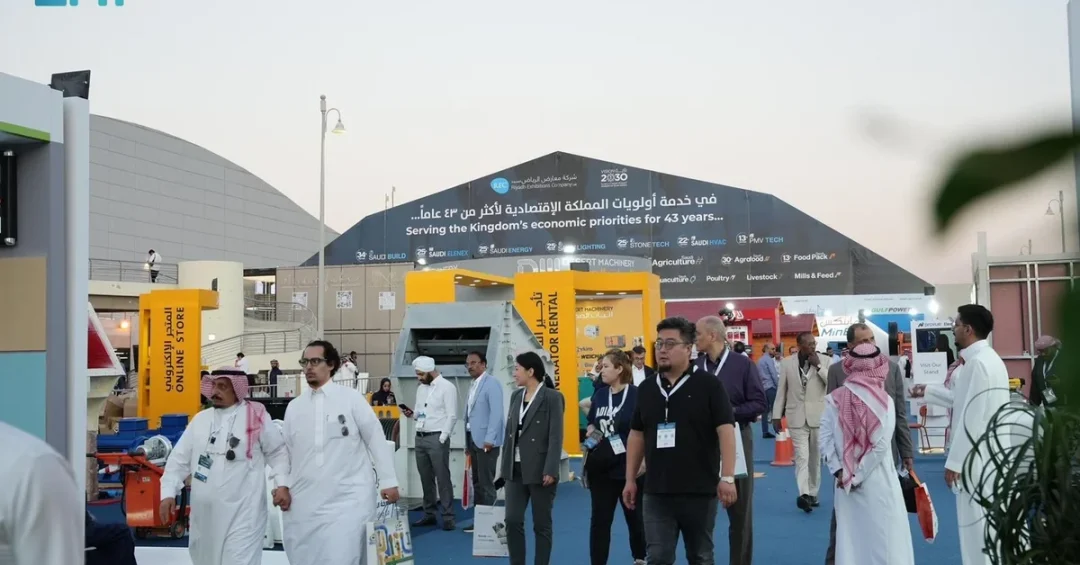
The Saudi Building Exhibition 2024 concluded in Riyadh on November 7 with more than 30,000 visitors, a 30 percent increase over the previous edition, according to the Saudi Press Agency. Held under the patronage of the Ministry of Municipalities and Housing from November 4 to 7 at the Riyadh International Convention and Exhibition Center, the event drew around 600 companies from 31 countries, cementing its reputation as one of the region’s most important gatherings for construction and sustainable infrastructure. The four-day exhibition was not merely a showcase of products; it was a working platform where government bodies, global firms, and local innovators signed strategic agreements and debated the future of smart cities. For an international audience, the record turnout offers a clear signal: Saudi Arabia’s construction sector is expanding rapidly, and the Kingdom is inviting the world to participate in building the next generation of urban environments.
Why does a single trade exhibition matter so much? Because in Saudi Arabia, construction is not just an industry; it is the physical expression of Vision 2030. The Kingdom is investing hundreds of billions of dollars in new cities, transportation networks, renewable energy, and housing, and events like the Saudi Building Exhibition serve as a marketplace where those plans meet the companies that can deliver them. The 30 percent growth in attendance reflects rising global confidence in the Saudi market and the effectiveness of official efforts to attract foreign investment and expertise. It also demonstrates how the Ministry of Municipalities and Housing is using such platforms to align international best practices with national sustainability standards, ensuring that the built environment of tomorrow is efficient, resilient, and environmentally responsible.
Context and Background
What made the 2024 edition different from previous years? The scale and the diversity of participants. With around 600 exhibitors from 31 countries, the exhibition transformed the Riyadh International Convention and Exhibition Center into a global village of construction technology, building materials, and design innovation. The presence of companies from Asia, Europe, the Middle East, and North America underscored Saudi Arabia’s growing role as a hub for trade and knowledge exchange in the sector. The event was organized under the patronage of the Ministry of Municipalities and Housing, a clear indication that the government views the construction industry as a strategic partner in achieving national development goals. The ministry’s involvement also ensured that discussions remained focused on practical solutions that comply with Saudi regulations and support the objectives of Vision 2030.
Historically, the Saudi Building Exhibition has served as a barometer for the Kingdom’s construction pipeline. When attendance rises sharply, it usually reflects an uptick in project announcements and investor interest. This year’s 30 percent increase is therefore more than a statistical curiosity; it is evidence that the pipeline is not only full but accelerating. The exhibition also provided a stage for small and medium-sized Saudi enterprises to connect with international suppliers and buyers, helping to localize knowledge and create jobs. By bringing together government decision-makers, engineers, architects, and financiers, the event facilitated the kind of cross-sector collaboration that is essential for delivering complex projects on time and to high standards. In this sense, the exhibition was both a mirror of current activity and a catalyst for future deals.
Key Details and Strategic Agreements
What concrete outcomes emerged from the four days of activity? The exhibition witnessed the signing of several strategic agreements covering various sectors, all aimed at enhancing cooperation, exchanging expertise, accelerating digital transformation, supporting innovation, and developing solutions in sustainable construction and smart infrastructure. While the specific terms of these agreements were not disclosed in the official announcement, their scope indicates a broad push toward integrating advanced technologies into every stage of the building lifecycle, from design and procurement to operation and maintenance. Such agreements often pave the way for joint ventures, technology transfer, and pilot projects that can later be scaled across the Kingdom. For international companies, these signings represent tangible entry points into a market that is actively seeking partners.
The closing day featured discussion sessions that addressed modern trends in sustainable lighting and smart housing. In the first session, experts reviewed advanced lighting solutions, focusing on issues such as light pollution and its impact on night sky visibility, as well as lighting design principles that consider human adaptation, color perception, and visual sequencing. Speakers highlighted the importance of controlling brightness and contrast to highlight important points in public spaces, a subtle but critical aspect of urban design that affects safety, aesthetics, and energy consumption. The second session shifted to smart housing, exploring business opportunities and the close relationship between smart homes and clean energy. Participants discussed the need to adopt green energy technologies and the challenges facing investors, emphasizing that innovation must be linked to marketable solutions. The sessions reflected a holistic approach to construction that values both technological sophistication and human well-being.
Another highlight was the emphasis on the Saudi Building Code, which imposes stringent sustainability standards. Speakers noted that the Ministry of Energy aims to achieve a 50 percent renewable energy target by 2030, and they pointed to successful examples of transition, such as the replacement of traditional streetlights with energy-efficient LED lights in numerous cities. These examples show that the Kingdom is not waiting for the future; it is already implementing changes on the ground. The exhibition thus served as a showcase for practical achievements as well as a forum for debating next steps. For visitors, the message was clear: Saudi Arabia is serious about sustainable construction, and it has the regulatory framework and the political will to make it happen.
International and Regional Impact
How does the record turnout at a Riyadh exhibition resonate beyond Saudi borders? For the region, it reinforces the Kingdom’s position as a leading market for construction and infrastructure development. Neighboring countries and global firms alike look to Saudi Arabia to gauge demand for building materials, engineering services, and smart city technologies. The presence of 600 companies from 31 countries means that the exhibition has become a meeting point for supply and demand on a truly international scale. This is particularly significant as the Gulf region undergoes a period of economic diversification, with Saudi Arabia often setting the pace. The deals signed and the contacts made in Riyadh will likely translate into procurement decisions and partnerships that extend far beyond the exhibition halls.
For international investors, the event offered a transparent view of Saudi Arabia’s regulatory environment and project pipeline. The active participation of the Ministry of Municipalities and Housing and the focus on the Saudi Building Code gave attendees confidence that projects will be executed according to clear, enforceable standards. This predictability is a key factor in attracting long-term capital. Moreover, the emphasis on digital transformation and innovation aligns with global trends toward smart cities and green building, making Saudi Arabia an attractive partner for companies specializing in these fields. The exhibition also provided a platform for cultural exchange and professional networking, helping to build the personal relationships that underpin successful international business. In a world where supply chains are being rethought, Saudi Arabia is positioning itself as a reliable and forward-looking hub.
Economic and Strategic Significance
Why should the global business community pay attention to the numbers? The 30 percent increase in visitors and participants is a direct indicator of economic momentum. Construction is a major contributor to Saudi Arabia’s non-oil GDP, and the sector’s growth is central to the Kingdom’s efforts to diversify its economy. The exhibition’s success demonstrates that government spending on mega-projects and housing is translating into real demand for goods and services, from cement and steel to software and consulting. It also shows that the private sector, both local and international, is responding. For companies considering entering the Saudi market, the exhibition provided a low-risk opportunity to test the waters, meet potential partners, and understand the competitive landscape. The strategic agreements signed during the event are likely to have multiplier effects, creating jobs and fostering innovation across the supply chain.
From a strategic perspective, the exhibition supports Saudi Arabia’s goal of becoming a logistics and commercial hub connecting three continents. By attracting global players to Riyadh, the Kingdom strengthens its soft power and its ability to influence industry standards. The focus on sustainable construction and smart infrastructure also aligns with global climate goals, enhancing Saudi Arabia’s reputation as a responsible global citizen. The Ministry of Energy’s 50 percent renewable energy target by 2030 is a bold commitment that will require significant investment in new technologies and materials. Exhibitions like this one help to create the market conditions for that investment by bringing together the key stakeholders. In essence, the Saudi Building Exhibition is not just a trade fair; it is a strategic instrument for economic transformation and international engagement.
Vision 2030 Alignment
How does the Saudi Building Exhibition 2024 connect to Vision 2030? At its core, Vision 2030 is about building a diversified, sustainable, and globally connected economy, and the construction sector is a primary vehicle for achieving that. The exhibition’s record-breaking turnout reflects the enthusiasm and commitment of both the public and private sectors to turn the vision into reality. The Ministry of Municipalities and Housing’s patronage underscores the government’s hands-on role in guiding the sector toward higher standards and greater efficiency. The discussions on smart housing, clean energy, and sustainable lighting directly support Vision 2030 objectives related to quality of life, environmental sustainability, and economic diversification. The agreements signed will help accelerate the adoption of digital technologies and innovative solutions, which are essential for creating the smart cities of the future.
Looking ahead, the Saudi Building Exhibition is set to remain a pivotal event on the regional calendar. As the Kingdom continues to roll out giga-projects and upgrade its infrastructure, the demand for cutting-edge construction solutions will only grow. The 2024 edition has set a new benchmark, and the 30 percent growth in attendance signals that the world is paying attention. For Saudi Arabia, this is not just about numbers; it is about building a legacy of sustainable development that will benefit generations to come. The exhibition concluded with a clear message: the Kingdom is open for business, committed to innovation, and determined to lead the way in sustainable construction. As Vision 2030 progresses, events like this will continue to play a vital role in connecting Saudi ambitions with global expertise, ensuring that the built environment of tomorrow is worthy of the Kingdom’s aspirations.
20 Questions
Q1. What was the Saudi Building Exhibition 2024?
A1. The Saudi Building Exhibition 2024 was a four-day trade event held in Riyadh from November 4 to 7, showcasing construction and building sector innovations under the patronage of the Ministry of Municipalities and Housing.
Q2. How many visitors attended the exhibition?
A2. The exhibition attracted over 30,000 visitors, marking a 30 percent increase compared to the previous year and setting a new record for the event.
Q3. Where was the exhibition held?
A3. It took place at the Riyadh International Convention and Exhibition Center in Riyadh, Saudi Arabia.
Q4. How many companies participated?
A4. Around 600 companies from 31 countries participated, representing a wide range of construction and sustainable infrastructure specialties.
Q5. Who patronized the exhibition?
A5. The exhibition was held under the patronage of the Ministry of Municipalities and Housing, highlighting government support for the construction sector.
Q6. What types of agreements were signed?
A6. Several strategic agreements were signed covering cooperation, expertise exchange, digital transformation, innovation, and sustainable construction solutions.
Q7. What topics were discussed in the closing sessions?
A7. The closing sessions focused on sustainable lighting and smart housing, including light pollution, lighting design, and clean energy integration.
Q8. What is the significance of the 30 percent growth?
A8. The growth indicates rising global interest in Saudi Arabia’s construction market and the effectiveness of Vision 2030 initiatives in attracting investment.
Q9. What is the Saudi Building Code?
A9. The Saudi Building Code is a set of regulations that impose stringent sustainability standards on construction projects across the Kingdom.
Q10. What renewable energy target did the Ministry of Energy mention?
A10. The Ministry of Energy aims to achieve a 50 percent renewable energy target by 2030, supporting sustainable development goals.
Q11. What example of energy transition was highlighted?
A11. The replacement of traditional streetlights with energy-efficient LED lights in numerous cities was cited as a successful example of transition.
Q12. How does the exhibition support Vision 2030?
A12. It aligns with Vision 2030 by promoting economic diversification, sustainability, innovation, and international partnerships in the construction sector.
Q13. What is the role of smart housing in the exhibition?
A13. Smart housing was a key theme, focusing on business opportunities, clean energy integration, and overcoming investor challenges.
Q14. Why is light pollution a concern in lighting design?
A14. Light pollution affects night sky visibility and human health, making it important to design lighting that controls brightness and contrast.
Q15. What does the exhibition mean for international investors?
A15. It provides a platform to explore opportunities, meet partners, and understand Saudi Arabia’s regulatory environment and project pipeline.
Q16. How does the exhibition promote innovation?
A16. By facilitating agreements and discussions on digital transformation, smart cities, and green building, the event accelerates the adoption of innovative solutions.
Q17. What was the duration of the exhibition?
A17. The exhibition ran for four days, from November 4 to November 7, 2024.
Q18. What sectors were represented by the participating companies?
A18. Companies represented construction, building materials, sustainable infrastructure, smart technology, lighting, and renewable energy sectors.
Q19. How does the exhibition contribute to Saudi Arabia’s economy?
A19. It stimulates business deals, attracts foreign investment, creates jobs, and supports the growth of the non-oil sector.
Q20. What is the outlook for future editions?
A20. With record turnout and growing interest, future editions are expected to expand further, reinforcing Saudi Arabia’s role as a regional construction hub.
Reader Feedback
We value your thoughts. Please share your feedback on this article.
Your feedback helps us improve our coverage.
Related articles
 CEDA Reviews Global and Local Economic Developments
 Saudi Central Bank Cuts Repo and Reverse Repo Rates
 Saudi Arabia on Verge of Promising Industrial Future: Minister Alkhorayef at Biban24
 Biban24 Forum Highlights Digital Innovation, E-Commerce
 Monsha’at and Mukatafa Sign MoU to Boost Saudi Retail Sector
 SOCPA Chief Dr. Al-Maghames Appointed to IFAC Board