


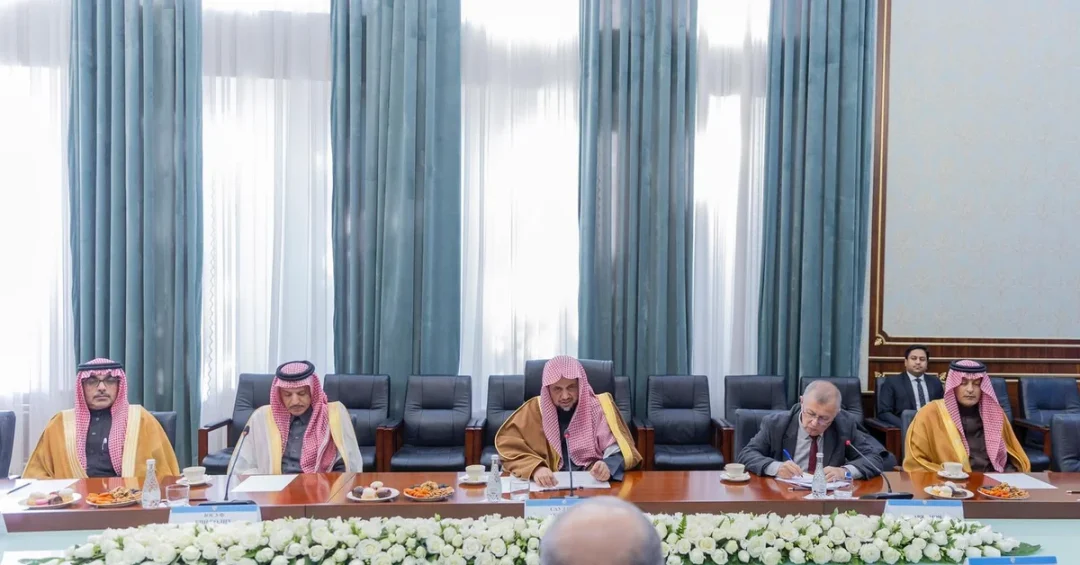
Saudi Attorney General Sheikh Saud bin Abdullah Al-Mujib met with Uzbek General Prosecutor Nigmatilla Yuldashev in Tashkent on Thursday, signing a memorandum of cooperation between the Public Prosecution offices of Saudi Arabia and Uzbekistan. The agreement, announced via the Saudi Press Agency, establishes a formal framework for joint efforts in criminal investigations, particularly those related to terrorism, terrorist financing, money laundering, and organized crime. The meeting was also attended by Saudi Ambassador to Uzbekistan Yousef Saleh Algahrah, underscoring the diplomatic weight of the occasion. The memorandum aims to facilitate information sharing, foster cooperation in legal research, and organize joint scientific and practical sessions between the two prosecution offices.
The visit builds on the strong and growing relations between the Kingdom of Saudi Arabia and the Republic of Uzbekistan, two nations that have steadily deepened their ties across political, economic, and cultural domains. For Saudi Arabia, the agreement represents another step in its broader strategy of international judicial engagement, a strategy that aligns with the Kingdom’s Vision 2030 objectives of enhancing global cooperation and promoting security and stability. But what does this development reveal about Saudi Arabia’s expanding role in international legal affairs, and why does it matter now?
Context and Background
How did Saudi-Uzbek relations evolve to the point where such a high-level judicial agreement became possible? The foundation was laid over years of consistent diplomatic and economic engagement. Uzbekistan, a Central Asian republic with a rich history and a strategically important location, has been a key partner for Saudi Arabia in the region. The two countries have cooperated in areas ranging from trade and investment to cultural exchange and counterterrorism. The visit by Attorney General Sheikh Saud bin Abdullah Al-Mujib is the latest in a series of high-level exchanges that signal mutual trust and shared priorities.
The Saudi Public Prosecution, under the leadership of Sheikh Saud, has increasingly sought to build bridges with counterparts around the world. This is not an isolated initiative but part of a coordinated effort to strengthen international judicial communication, harmonize legal practices, and combat transnational crime. The agreement with Uzbekistan focuses on some of the most pressing global challenges: terrorism, its financing, and money laundering. These are areas where no single country can succeed alone, and where international cooperation is not just beneficial but essential.
The memorandum also emphasizes legal research and joint scientific and practical sessions, indicating a long-term commitment to capacity building and knowledge exchange. By institutionalizing cooperation, Saudi Arabia and Uzbekistan are setting an example for how nations can work together to uphold justice and security. This approach reflects the Kingdom’s broader vision of a stable, prosperous region connected by shared values and mutual interests.
Key Details of the Agreement
What exactly does the memorandum entail, and how will it translate into action? The agreement centers on criminal investigations related to crimes, with a particular focus on terrorism, terrorist financing, and money laundering, especially in the context of organized crime. It provides a framework for the two prosecution offices to share information in mutual areas of interest, which could include intelligence on criminal networks, best practices in investigation, and legal precedents. The memorandum also calls for cooperation in legal research, which may involve joint studies, publications, and the exchange of legal experts.
Furthermore, the agreement includes provisions for organizing joint scientific and practical sessions. These sessions could take the form of workshops, conferences, or training programs designed to enhance the skills of prosecutors and investigators in both countries. By pooling their expertise, Saudi Arabia and Uzbekistan can develop more effective strategies to counter emerging threats. The presence of Saudi Ambassador Yousef Saleh Algahrah at the signing ceremony highlights the diplomatic significance of the agreement, reinforcing the message that this is a state-level priority.
The signing took place in Tashkent, the capital of Uzbekistan, a city with a storied past as a crossroads of civilizations. The choice of location symbolizes the bridging of regions and the potential for further collaboration. While the memorandum is bilateral, its implications extend beyond the two nations, contributing to global efforts to combat crime and terrorism. The agreement is a concrete outcome of the visit, but it also sets the stage for future cooperation in other areas of mutual concern.
International and Regional Impact
How will this agreement resonate beyond Saudi Arabia and Uzbekistan? In an interconnected world, judicial cooperation between countries is a cornerstone of international security. Terrorism and money laundering are transnational threats that require coordinated responses. By formalizing their partnership, Saudi Arabia and Uzbekistan are strengthening the global legal architecture. This sends a clear signal that both nations are committed to upholding the rule of law and protecting their citizens and the international community.
Regionally, the agreement could serve as a model for other countries in Central Asia and the Middle East. It demonstrates that despite differences in legal systems and cultures, nations can find common ground in the fight against crime. For Saudi Arabia, this is part of a broader outreach to Central Asia, a region of growing strategic importance. The Kingdom has been expanding its diplomatic and economic footprint in the region, and judicial cooperation is a natural complement to these efforts. It also aligns with Saudi Arabia’s role as a responsible global actor, contributing to peace and security.
From an international perspective, the memorandum supports the objectives of various United Nations conventions against terrorism and organized crime. It reflects a shared commitment to multilateralism and the rule of law. As such, it is likely to be welcomed by the international community as a positive step. The agreement also enhances the reputation of both countries as reliable partners in the fight against global challenges.
Economic and Strategic Significance
What are the economic and strategic benefits of this cooperation? While the agreement is primarily legal in nature, it has significant economic implications. Money laundering and terrorist financing can undermine financial systems, deter investment, and destabilize economies. By cooperating to combat these crimes, Saudi Arabia and Uzbekistan are protecting their financial sectors and creating a more secure environment for business and investment. This is particularly important as both countries seek to attract foreign direct investment and diversify their economies.
Strategically, the agreement reinforces the growing partnership between Saudi Arabia and Uzbekistan. It builds trust and opens doors for further collaboration in areas such as trade, energy, and infrastructure. Uzbekistan is a key player in Central Asia, and Saudi Arabia’s engagement there is part of its Vision 2030 goal to strengthen its global economic and political ties. The memorandum also supports the Kingdom’s efforts to promote stability in its wider neighborhood, which is essential for economic prosperity.
Moreover, the exchange of legal expertise and best practices can lead to more efficient and transparent legal systems, which are attractive to international investors. By enhancing the capacity of their prosecution offices, both countries are investing in good governance and the rule of law. This, in turn, can boost investor confidence and facilitate economic growth. The agreement is thus a strategic investment in long-term prosperity and security.
Vision 2030 Alignment
How does this agreement align with Saudi Arabia’s Vision 2030? Vision 2030 is a comprehensive plan to transform the Kingdom’s economy and society, and a key pillar is strengthening international partnerships. The memorandum with Uzbekistan is a concrete example of this pillar in action. It enhances Saudi Arabia’s global engagement, promotes security, and supports the rule of law, all of which are essential for achieving the Vision’s ambitious goals. A stable and secure environment is a prerequisite for economic diversification and social development.
Furthermore, Vision 2030 emphasizes the importance of a robust and efficient justice system. By cooperating with international partners, the Saudi Public Prosecution can adopt best practices and modernize its operations. This contributes to the Kingdom’s overall efforts to improve governance and transparency. The agreement also reflects the Vision’s focus on youth and education, as joint scientific and practical sessions can provide valuable training opportunities for young legal professionals.
In the final analysis, the signing of this memorandum is more than a diplomatic formality; it is a step toward a safer, more prosperous future for both nations and the world. As Saudi Arabia continues to pursue its Vision 2030 objectives, such international collaborations will be vital in building a resilient and forward-looking Kingdom. The partnership with Uzbekistan exemplifies the positive impact of Saudi Arabia’s global outreach and its commitment to justice and security.
20 Questions
Q1. Who signed the memorandum of cooperation between Saudi Arabia and Uzbekistan?
A1. Saudi Attorney General Sheikh Saud bin Abdullah Al-Mujib and Uzbek General Prosecutor Nigmatilla Yuldashev signed the memorandum in Tashkent on Thursday.
Q2. Where did the meeting take place?
A2. The meeting took place in Tashkent, the capital of Uzbekistan.
Q3. Who else attended the meeting?
A3. Saudi Ambassador to Uzbekistan Yousef Saleh Algahrah attended the meeting.
Q4. What is the main focus of the agreement?
A4. The agreement focuses on criminal investigations related to crimes, including terrorism, its financing, and money laundering, particularly in organized crime.
Q5. What are the other objectives of the memorandum?
A5. It aims to facilitate information sharing, foster cooperation in legal research, and organize joint scientific and practical sessions between the two offices.
Q6. What does the visit aim to strengthen?
A6. The visit aims to strengthen international judicial communication between Saudi Arabia’s Public Prosecution and its Uzbek counterpart.
Q7. How does the agreement enhance crime prevention?
A7. By enabling information sharing and joint efforts, it enhances efforts in crime prevention and promotes best international legal practices.
Q8. What is the significance of the agreement for Saudi-Uzbek relations?
A8. It builds on the strong relations between the two nations and deepens cooperation in the legal and security fields.
Q9. What types of crimes are specifically mentioned in the agreement?
A9. Terrorism, terrorist financing, money laundering, and organized crime are specifically mentioned.
Q10. How will information sharing be conducted?
A10. The memorandum facilitates information sharing in mutual areas of interest, though specific mechanisms are not detailed.
Q11. What are joint scientific and practical sessions?
A11. These are likely workshops, conferences, or training programs for legal professionals from both countries.
Q12. Why is international judicial cooperation important?
A12. It is crucial for combating transnational crimes like terrorism and money laundering that cross borders.
Q13. How does this agreement align with Saudi Vision 2030?
A13. It supports Vision 2030 by enhancing international partnerships, promoting security, and improving governance.
Q14. What economic benefits could result from this cooperation?
A14. It can protect financial systems, deter illicit finance, and create a more secure environment for investment.
Q15. What is the role of the Saudi Ambassador in this context?
A15. The ambassador’s attendance highlights the diplomatic importance of the agreement and supports bilateral relations.
Q16. How does this agreement benefit Uzbekistan?
A16. It strengthens Uzbekistan’s legal capacity, enhances security, and fosters closer ties with Saudi Arabia.
Q17. Will this agreement lead to other collaborations?
A17. It sets a foundation for further cooperation in legal, economic, and security areas.
Q18. What is the Saudi Public Prosecution’s role in international cooperation?
A18. It actively seeks partnerships to combat crime and promote the rule of law globally.
Q19. How does this agreement reflect Saudi Arabia’s global role?
A19. It demonstrates Saudi Arabia’s commitment to international security and its proactive approach to global challenges.
Q20. What are the next steps after signing the memorandum?
A20. Implementation will involve information sharing, joint sessions, and ongoing collaboration between the two prosecution offices.
Reader Feedback
We value your thoughts. Please share your feedback on this article.
Your feedback helps us improve our coverage.
Related articles
 Mayor of Riyadh Region Meets with UN-Habitat Director
 King Salman Congratulates Azerbaijan on Victory, Flag Days
 Crown Prince Congratulates Azerbaijan on Victory, Flag Days
 Typhoon Yinxing Damages Airports, Ports in Philippines
 Saudi FM, U.S. Secretary of State Discuss Regional Developments
 21st Saudi Relief Plane Departs for Lebanon