


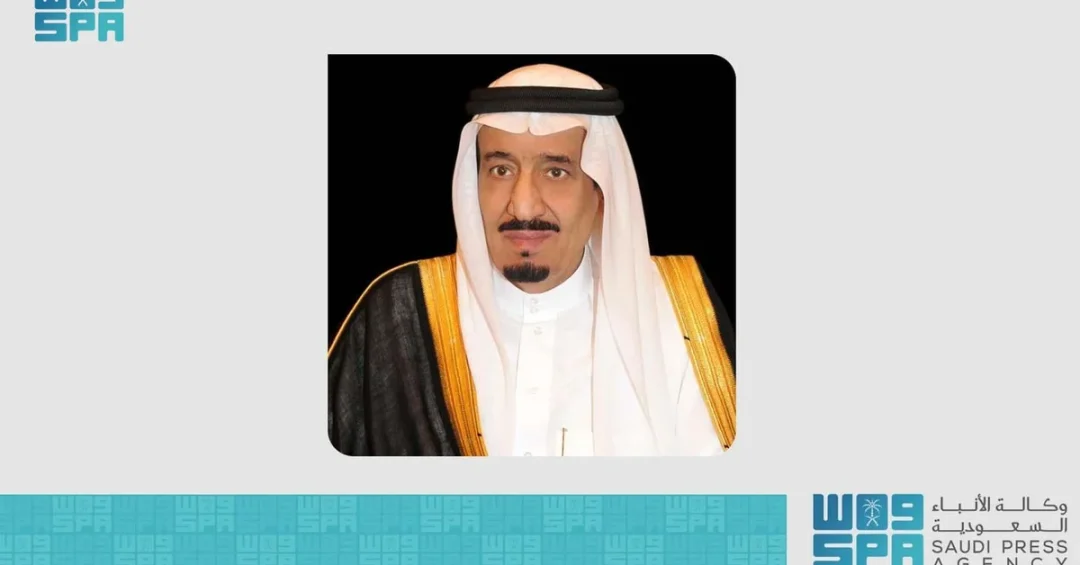
Custodian of the Two Holy Mosques King Salman bin Abdulaziz Al Saud has sent a formal cable of congratulations to President Ilham Heydar Aliyev of the Republic of Azerbaijan on the occasions of Azerbaijan’s Victory Day and Flag Day, according to the Saudi Press Agency. The message, released through official Saudi channels, conveyed the King’s best wishes for the president’s continued good health and happiness, and for the government and people of Azerbaijan steady progress and prosperity. The gesture reflects the warm and steadily deepening relationship between the Kingdom of Saudi Arabia and Azerbaijan, two nations whose ties now span energy, investment, diplomacy, culture, and tourism.
The congratulatory cable is more than a routine diplomatic courtesy. It signals the importance Riyadh attaches to Azerbaijan as a partner in the Caucasus and the wider region, a relationship that has grown notably under Saudi Vision 2030 and its emphasis on international engagement, economic diversification, and strategic connectivity. For observers of Saudi foreign policy, such messages are carefully calibrated instruments of statecraft that reinforce trust between leaderships and open the way for practical cooperation. How does a simple cable of congratulations fit into a broader strategy of partnership? In the Saudi approach, personal diplomacy between leaders is often the first thread from which larger agreements are woven, and this message to Baku is a clear example of that method in action.
Context and Background
Why do Saudi Arabia and Azerbaijan place such value on their bilateral relationship today? The two countries have built a partnership that reaches across several strategic domains. Azerbaijan, located at the crossroads of Europe and Asia along the Caspian Sea, is a significant energy producer and a key node in emerging trade corridors. Saudi Arabia, as the world’s leading oil exporter and the home of the two holy mosques, brings global weight, financial depth, and diplomatic reach. Together, their interests intersect in energy market stability, transport connectivity, and regional security.
Victory Day in Azerbaijan commemorates the country’s military success in 2020, while Flag Day celebrates the national tricolor. These are occasions of deep national pride, and recognition from the Custodian of the Two Holy Mosques carries particular weight. Saudi Arabia’s congratulations underscore respect for Azerbaijan’s sovereignty and achievements, and they reaffirm the Kingdom’s consistent approach of honoring the national milestones of friendly states. The message also reflects the personal rapport between King Salman and President Aliyev, a relationship strengthened through reciprocal visits and high-level contacts in recent years.
The timing of the cable, issued in November 2024, places it within a period of intensified Saudi diplomacy across the Caucasus and Central Asia. Riyadh has been expanding its network of partnerships along the Middle Corridor, the trade route that links China and Central Asia to Europe via the Caspian Sea and the South Caucasus. Azerbaijan sits at the heart of that corridor, making it a natural partner for a Kingdom seeking to diversify its economic relationships and secure new avenues for non-oil trade and investment.
Key Details of the Royal Message
What exactly did the Custodian of the Two Holy Mosques convey to President Aliyev? According to the Saudi Press Agency, the cable expressed congratulations on both Victory Day and Flag Day. King Salman wished the president continued good health and happiness, and extended his hopes for the government and people of Azerbaijan steady progress and prosperity. The language is traditional Saudi diplomatic phrasing, but its consistency and sincerity are notable: Riyadh uses these messages to affirm friendship and to signal readiness for further cooperation.
The cable was transmitted through official Saudi channels and reported by the Saudi Press Agency, the Kingdom’s authoritative state news outlet. This matters for transparency and trust. Readers can treat the content as verified, coming directly from the Royal Court rather than from speculation or unconfirmed reports. The message follows a pattern of regular exchanges between Riyadh and Baku on national occasions, including Azerbaijan’s independence day and other state celebrations, as well as Saudi national days.
Beyond the formal words, the cable carries an implicit diplomatic message: Saudi Arabia values Azerbaijan as a reliable partner and welcomes its stability and development. For a country like Azerbaijan, which balances relationships among several regional powers, recognition from the Custodian of the Two Holy Mosques reinforces its international standing. For Saudi Arabia, the message is part of a wider effort to build a network of friends who share its interest in stability, energy security, and economic growth.
International and Regional Impact
How does this diplomatic exchange resonate beyond the two capitals? The Caucasus region has become a focal point of international competition and cooperation, with energy pipelines, transport routes, and security arrangements all in play. Saudi Arabia’s engagement with Azerbaijan contributes to a multipolar diplomatic environment in which Gulf states play an increasingly active role. By congratulating President Aliyev on Victory Day, Riyadh aligns itself with a partner that controls key infrastructure linking the Caspian to European markets.
The message also reinforces the broader trend of Gulf-Caucasus engagement. In recent years, Saudi Arabia, the United Arab Emirates, and Qatar have all deepened their ties with Azerbaijan, investing in energy, tourism, and infrastructure. This collective Gulf interest gives Azerbaijan additional options and strengthens its position as a bridge between regions. For Saudi Arabia, good relations with Baku complement its ties with Turkey, Georgia, and the Central Asian republics, creating a coherent arc of partnership across a strategically vital geography.
At the same time, the cable is consistent with Saudi Arabia’s principled foreign policy of non-interference and respect for national occasions. The Kingdom does not attach conditions to such messages, which helps explain why they are received positively across diverse capitals. In a world of shifting alliances, this consistency is a source of Saudi soft power and a reason why Riyadh is increasingly seen as a constructive global actor.
Economic and Strategic Significance
What economic interests underpin the Saudi-Azerbaijan relationship? Energy cooperation is central. Azerbaijan is a significant producer of oil and natural gas, and its Southern Gas Corridor is a key alternative supply route for Europe. Saudi Arabia, as the leading force in OPEC+ and a global energy stabilizer, shares with Azerbaijan an interest in balanced markets and predictable prices. Dialogue between Riyadh and Baku on energy matters has grown in importance as both countries navigate the transition to cleaner energy systems.
Investment is another pillar. Saudi Arabia’s Public Investment Fund and its corporate champions, including Saudi Aramco and ACWA Power, have shown interest in renewable energy and infrastructure projects across the Caucasus and Central Asia. Azerbaijan’s ambitious plans for solar and wind power, as well as its reconstruction of liberated territories, offer opportunities for Saudi capital and expertise. The congratulations cable helps maintain the political goodwill that makes such commercial ventures possible.
Trade and connectivity are also in focus. The Middle Corridor, which passes through Azerbaijan, promises to reduce transit times between Asia and Europe. Saudi Arabia’s logistics and transport strategies under Vision 2030 aim to position the Kingdom as a global hub connecting three continents. Cooperation with Azerbaijan on customs, shipping, and digital trade could yield mutual benefits, and the diplomatic warmth expressed in the royal cable provides a foundation for these practical discussions.
Vision 2030 Alignment
How does this diplomatic gesture connect to Saudi Vision 2030? Vision 2030 is an ambitious national transformation plan designed to diversify the Saudi economy, strengthen its global partnerships, and enhance its role as a bridge between regions. A core element of the vision is international engagement: building alliances that support trade, investment, tourism, and cultural exchange. The congratulations to President Aliyev fits squarely within this framework, as it sustains a relationship that can deliver economic and strategic dividends.
Tourism and cultural ties are part of the picture. Azerbaijan’s citizens are increasingly traveling to Saudi Arabia for pilgrimage and leisure, and Saudi tourists are discovering Azerbaijan’s rich heritage and landscapes. People-to-people connections of this kind support Vision 2030’s goal of welcoming millions of international visitors and showcasing the Kingdom’s cultural and religious significance. The royal cable, while brief, reinforces the mutual respect that makes such exchanges flourish.
Finally, the message demonstrates the Kingdom’s commitment to responsible and forward-looking diplomacy under the leadership of the Custodian of the Two Holy Mosques and His Royal Highness the Crown Prince. By honoring Azerbaijan’s national days, Saudi Arabia strengthens a partnership that contributes to regional stability, economic opportunity, and the success of Vision 2030 on the world stage. In a changing global order, such gestures are small but meaningful building blocks of a more connected and prosperous future.
20 Questions
Q1. Who sent the cable of congratulations to the President of Azerbaijan?
A1. The Custodian of the Two Holy Mosques, King Salman bin Abdulaziz Al Saud, sent the cable, as reported by the Saudi Press Agency.
Q2. Who is the President of Azerbaijan that received the message?
A2. President Ilham Heydar Aliyev, the leader of the Republic of Azerbaijan, received the congratulatory cable from King Salman.
Q3. What two occasions prompted the royal message?
A3. The message was sent on the occasions of Azerbaijan’s Victory Day and Flag Day, both significant national celebrations in the country.
Q4. What did King Salman wish for President Aliyev?
A4. King Salman wished the president continued good health and happiness, and extended his hopes for the government and people of Azerbaijan.
Q5. What did the King wish for the people of Azerbaijan?
A5. The King wished the government and people of Azerbaijan steady progress and prosperity in the years ahead.
Q6. Which Saudi agency reported the cable?
A6. The Saudi Press Agency, the Kingdom’s official news outlet, reported the cable of congratulations.
Q7. When was the cable sent according to the report?
A7. The report was dated November 8, 2024, placing the message in the context of recent Saudi diplomatic activity.
Q8. Why is Victory Day important in Azerbaijan?
A8. Victory Day commemorates Azerbaijan’s military success in 2020 and is a major national holiday celebrated with pride across the country.
Q9. What does Flag Day celebrate in Azerbaijan?
A9. Flag Day honors the national tricolor of Azerbaijan, a symbol of sovereignty and national identity celebrated annually.
Q10. How does this cable reflect Saudi foreign policy?
A10. It reflects Saudi Arabia’s consistent approach of honoring friendly nations’ milestones and building trust through personal diplomacy between leaders.
Q11. What is the significance of Saudi-Azerbaijan relations today?
A11. The relationship spans energy, investment, trade, and tourism, with both countries seeking stability and economic diversification in a changing region.
Q12. How does Azerbaijan’s location benefit Saudi partnerships?
A12. Azerbaijan sits at the crossroads of Europe and Asia along the Caspian Sea, making it a key node for trade and energy corridors.
Q13. What role does energy play in Saudi-Azerbaijan ties?
A13. Both are significant energy producers, and they share an interest in stable markets and dialogue on the global energy transition.
Q14. Are there investment opportunities for Saudi Arabia in Azerbaijan?
A14. Yes, Saudi funds and companies have shown interest in renewable energy, infrastructure, and reconstruction projects in Azerbaijan.
Q15. What is the Middle Corridor and why does it matter?
A15. The Middle Corridor is a trade route linking Asia to Europe via the Caspian and South Caucasus, and Azerbaijan is central to it.
Q16. How does this cable align with Saudi Vision 2030?
A16. Vision 2030 emphasizes international engagement and economic diversification, and strong ties with Azerbaijan support trade, investment, and tourism goals.
Q17. What message does the cable send to the international community?
A17. It signals Saudi Arabia’s commitment to constructive diplomacy, respect for sovereignty, and partnership with stable, forward-looking nations.
Q18. How do such messages affect people-to-people ties?
A18. They reinforce mutual respect, encouraging tourism, cultural exchange, and pilgrimage travel between Saudi Arabia and Azerbaijan.
Q19. Does the cable include any political conditions?
A19. No, the message is a traditional diplomatic courtesy with no conditions, reflecting Saudi Arabia’s principled and respectful foreign policy.
Q20. What does this development mean for the future of Saudi-Azerbaijan relations?
A20. It strengthens a growing partnership that promises deeper cooperation in energy, trade, investment, and regional stability in the years ahead.
Reader Feedback
We value your thoughts. Please share your feedback on this article.
Your feedback helps us improve our coverage.
Related articles
 Crown Prince Congratulates Azerbaijan on Victory, Flag Days
 Typhoon Yinxing Damages Airports, Ports in Philippines
 Saudi FM, U.S. Secretary of State Discuss Regional Developments
 21st Saudi Relief Plane Departs for Lebanon
 Monsha’at Graduates 12 Startups at Biban24 Forum
 Indonesian President’s Representative Arrives in Riyadh