


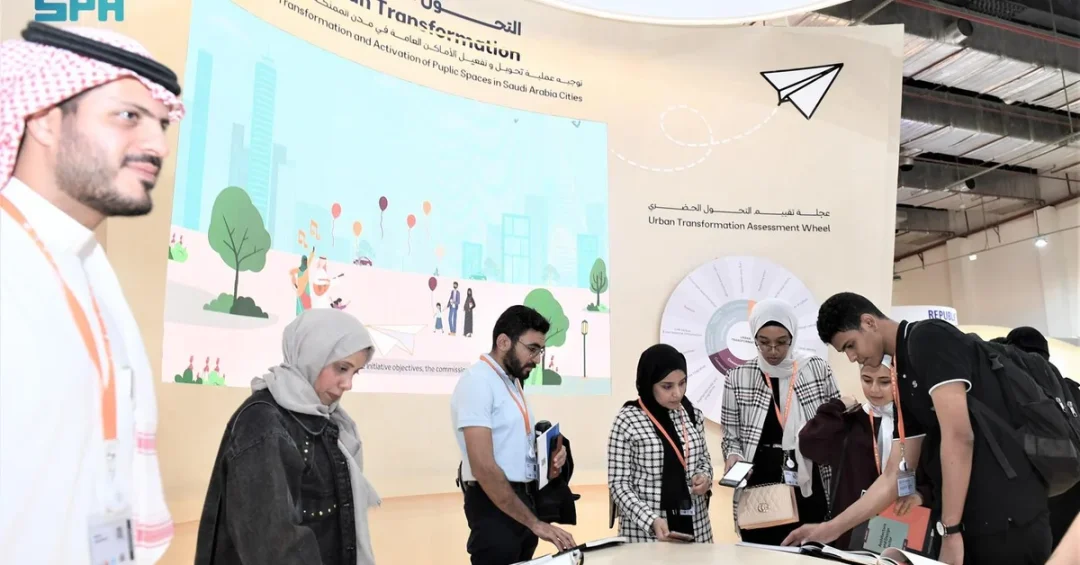
The Saudi Pavilion at the 12th World Urban Forum (WUF12) in Cairo drew substantial attendance from visitors and experts eager to learn about the Kingdom’s endeavors toward achieving sustainable urban development, according to the Saudi Press Agency (SPA). The forum, hosted in the Egyptian capital from November 4 to 8, 2024, brought together broad Arab and international participation, with the Saudi Pavilion serving as a prominent platform for showcasing national initiatives aimed at bolstering environmental sustainability and fostering digital transformation in the urban design sector. The pavilion was led by the Ministry of Municipalities and Housing, which brought together more than 30 national government and private entities specializing in urban development, underscoring the Kingdom’s comprehensive approach to reshaping its cities in line with Vision 2030.
The strong turnout at the Saudi Pavilion reflects growing international interest in how the Kingdom is addressing the complex challenges of rapid urbanization, housing, transportation, energy, and climate change. Throughout the forum, numerous national entities engaged in dialogues and workshops that shed light on Saudi Arabia’s qualitative urban development strategies and projects. These conversations highlighted Saudi experiences, innovations, and pioneering solutions in reshaping Saudi cities into inclusive, adaptable, and sustainable urban communities. The participation of more than 30 government and private entities demonstrates the depth of institutional coordination behind the Kingdom’s urban transformation agenda, a hallmark of the Vision 2030 framework that seeks to diversify the economy and improve quality of life for citizens and residents alike.
Context and Background
What makes the World Urban Forum such a critical venue for Saudi Arabia’s urban development narrative? The World Urban Forum, convened by UN-Habitat, is the premier global conference on sustainable urbanization, and the 12th edition in Cairo attracted thousands of participants from governments, civil society, academia, and the private sector. For Saudi Arabia, participation in WUF12 represents a strategic opportunity to share its unique urban journey with a global audience while learning from international best practices. The Kingdom’s urban landscape is undergoing a historic transformation, driven by a youthful population, rapid economic diversification, and ambitious national projects that are redefining how cities are planned, built, and managed. The Saudi Pavilion at WUF12 thus served as a window into this transformation, offering visitors a comprehensive view of the policies, technologies, and partnerships driving change.
The Ministry of Municipalities and Housing has been at the forefront of this urban transformation, implementing policies that promote sustainable growth, improve municipal services, and enhance the livability of Saudi cities. Under Vision 2030, the Ministry has launched numerous initiatives aimed at increasing homeownership, modernizing urban infrastructure, and integrating smart city technologies. The participation of more than 30 national entities at WUF12, ranging from government ministries to private sector companies and research institutions, reflects the whole-of-government approach that characterizes Saudi Arabia’s development model. This coordinated effort ensures that urban development is not pursued in isolation but is aligned with broader economic, social, and environmental goals. The Kingdom’s presence at the forum also underscores its commitment to international cooperation and knowledge exchange, positioning Saudi Arabia as a proactive contributor to global discussions on sustainable urbanization.
Key Details
What specific initiatives and projects did the Saudi Pavilion showcase to international visitors? The pavilion featured a wide array of exhibits and presentations focused on environmental sustainability and digital transformation in urban design. Visitors learned about Saudi Arabia’s efforts to develop green building standards, expand renewable energy use in cities, and implement smart mobility solutions. The Kingdom’s urban development strategies emphasize compact, mixed-use development that reduces car dependency and promotes public transportation, walking, and cycling. Digital transformation was another key theme, with demonstrations of how artificial intelligence, big data, and the Internet of Things are being used to improve municipal services, optimize energy consumption, and enhance urban planning. These technologies are central to the Kingdom’s vision of creating smart cities that are efficient, responsive, and sustainable.
The forum also provided a platform for Saudi entities to engage in dialogues and workshops on urban challenges concerning housing, transportation, energy, and climate change. These sessions highlighted Saudi Arabia’s experiences and innovations in addressing these challenges, from affordable housing programs to integrated public transit systems and renewable energy projects. The Kingdom’s pioneering solutions in reshaping Saudi cities into inclusive, adaptable, and sustainable urban communities were presented as models that could inspire other countries facing similar urbanization pressures. The exchange of ideas at WUF12 reinforced Saudi Arabia’s role as a leader in the region and a committed partner in global efforts to achieve the Sustainable Development Goals, particularly SDG 11 on sustainable cities and communities. The Ministry of Municipalities and Housing led the delegation, ensuring that Saudi Arabia’s message of sustainable urban development was conveyed clearly and effectively.
International and Regional Impact
How does Saudi Arabia’s participation in WUF12 influence regional and international perceptions of the Kingdom’s urban agenda? The substantial attendance at the Saudi Pavilion demonstrates that there is significant global interest in the Kingdom’s approach to urbanization. By sharing its experiences and innovations, Saudi Arabia is contributing to a broader understanding of how rapidly growing cities can achieve sustainability while improving quality of life. The forum also provided an opportunity for Saudi delegates to build partnerships and exchange knowledge with counterparts from other countries, fostering collaboration that can accelerate progress on shared urban challenges. In the Arab region, Saudi Arabia’s leadership in sustainable urban development serves as an inspiration and a source of technical expertise for neighboring countries embarking on similar journeys.
The international impact of Saudi Arabia’s participation extends beyond the forum itself. The connections made and the ideas exchanged at WUF12 will inform ongoing urban projects in the Kingdom and potentially lead to new collaborations with international organizations, research institutions, and private companies. Saudi Arabia’s commitment to sustainable urbanization aligns with global efforts to combat climate change, reduce pollution, and create more equitable cities. By actively engaging in international platforms like the World Urban Forum, the Kingdom reinforces its position as a responsible global stakeholder and a key player in shaping the future of urban living. The positive reception of the Saudi Pavilion at WUF12 is a testament to the relevance and quality of the Kingdom’s urban development vision, which balances economic growth with environmental stewardship and social inclusion.
Economic and Strategic Significance
What economic and strategic benefits does Saudi Arabia’s urban transformation agenda deliver? The Kingdom’s urban development initiatives are not only about improving living conditions but also about driving economic diversification and creating new opportunities for investment and job creation. The construction and real estate sectors are major contributors to non-oil GDP, and projects aimed at modernizing cities generate demand for skilled labor, advanced materials, and innovative technologies. The participation of private sector entities at WUF12 highlights the role of business in delivering urban solutions, from smart building systems to sustainable infrastructure. By showcasing these capabilities on an international stage, Saudi companies can attract foreign investment and forge partnerships that support the growth of the national economy.
Strategically, sustainable urban development is essential for managing the Kingdom’s demographic growth and ensuring that cities remain vibrant, competitive, and resilient. As Saudi Arabia continues to diversify away from oil dependence, its cities must become engines of innovation and productivity. The Vision 2030 framework recognizes this, with numerous programs targeting urban quality of life, environmental sustainability, and economic competitiveness. The Ministry of Municipalities and Housing plays a central role in implementing these programs, working closely with other government agencies and the private sector. The knowledge and relationships gained at WUF12 will help accelerate the deployment of best practices and technologies, ensuring that Saudi cities are well-positioned to meet future challenges and seize emerging opportunities. The Kingdom’s active participation in global forums also strengthens its diplomatic and economic ties, reinforcing its status as a pivotal player in the region and beyond.
Vision 2030 Alignment
How does the Saudi Pavilion’s success at WUF12 reflect the broader objectives of Vision 2030? Vision 2030 aims to transform Saudi Arabia into a diversified, sustainable, and globally connected economy, and urban development is a cornerstone of this transformation. The Kingdom’s participation in the World Urban Forum directly supports Vision 2030 goals related to improving quality of life, promoting environmental sustainability, and fostering international cooperation. The initiatives showcased at the pavilion, from green building standards to smart city technologies, are concrete manifestations of the Vision’s commitment to creating world-class cities that attract talent, investment, and tourism. By engaging with global experts and sharing its own experiences, Saudi Arabia demonstrates its readiness to lead in sustainable urbanization and to contribute to global progress.
The forward-looking conclusion is clear: Saudi Arabia’s presence at WUF12 signals its long-term commitment to building inclusive, adaptable, and sustainable urban communities that serve as models for the region and the world. The Ministry of Municipalities and Housing, along with its many partners, will continue to drive this agenda forward, ensuring that Saudi cities are not only economically dynamic but also environmentally responsible and socially inclusive. As the Kingdom advances toward Vision 2030, its urban transformation will remain a central pillar of national development, enhancing the well-being of citizens and residents while reinforcing Saudi Arabia’s role as a global leader in sustainable development. The substantial attendance at the Saudi Pavilion is a strong endorsement of this vision and a promising indication of the impact that Saudi urban innovations will have on the global stage.
20 Questions
Q1. What was the Saudi Pavilion at WUF12?
A1. The Saudi Pavilion was an exhibition space at the 12th World Urban Forum in Cairo, led by the Ministry of Municipalities and Housing, showcasing Saudi Arabia’s sustainable urban development initiatives and bringing together over 30 national entities.
Q2. Where and when did WUF12 take place?
A2. The 12th World Urban Forum took place in Cairo, Egypt, from November 4 to 8, 2024, with broad Arab and global participation, focusing on sustainable urbanization challenges and solutions.
Q3. Which Saudi ministry led the pavilion?
A3. The Ministry of Municipalities and Housing led the Saudi Pavilion, coordinating the participation of more than 30 government and private entities specialized in urban development.
Q4. How many entities participated in the Saudi Pavilion?
A4. More than 30 national government and private entities specializing in urban development participated in the Saudi Pavilion, demonstrating broad institutional collaboration.
Q5. What themes were highlighted at the Saudi Pavilion?
A5. The pavilion highlighted environmental sustainability and digital transformation in urban design, including green building, smart mobility, renewable energy, and smart city technologies.
Q6. What urban challenges were discussed?
A6. Discussions covered housing, transportation, energy, and climate change, with Saudi entities sharing experiences and innovations in addressing these challenges through sustainable urban planning.
Q7. How does Saudi Arabia’s participation align with Vision 2030?
A7. Participation aligns with Vision 2030 goals of improving quality of life, promoting environmental sustainability, and fostering international cooperation in urban development.
Q8. What is the World Urban Forum?
A8. The World Urban Forum is a premier global conference convened by UN-Habitat to examine sustainable urbanization, bringing together governments, experts, and stakeholders from around the world.
Q9. Why was the Saudi Pavilion well attended?
A9. The pavilion drew substantial attendance because visitors and experts were keen to learn about Saudi Arabia’s pioneering solutions and strategies for sustainable urban development.
Q10. What role did Saudi private entities play at WUF12?
A10. Saudi private entities showcased innovative urban solutions, from smart building systems to sustainable infrastructure, and explored partnerships that support economic diversification.
Q11. What are some examples of Saudi urban innovations?
A11. Examples include smart city technologies, green building standards, integrated public transit, and digital platforms for municipal services, all aimed at creating inclusive and sustainable communities.
Q12. How does Saudi Arabia’s urban development benefit the economy?
A12. Urban development drives non-oil GDP growth, creates jobs, attracts investment, and fosters innovation, supporting the Kingdom’s economic diversification under Vision 2030.
Q13. What international partnerships were fostered at WUF12?
A13. Saudi delegates engaged with international counterparts to exchange knowledge and build partnerships that can accelerate progress on shared urban challenges and sustainable development goals.
Q14. How does Saudi Arabia address climate change in urban planning?
A14. Saudi Arabia integrates renewable energy, energy-efficient building codes, and green spaces into urban planning to reduce carbon footprints and enhance climate resilience.
Q15. What is the significance of the Saudi Pavilion’s attendance?
A15. The strong attendance reflects global interest in Saudi Arabia’s urban transformation and reinforces the Kingdom’s role as a leader in sustainable development and international cooperation.
Q16. What are the goals of Saudi Arabia’s urban development strategy?
A16. The strategy aims to create inclusive, adaptable, and sustainable urban communities that improve quality of life, support economic growth, and protect the environment.
Q17. How does the Ministry of Municipalities and Housing contribute to Vision 2030?
A17. The Ministry implements policies and projects that modernize urban infrastructure, increase homeownership, and integrate smart technologies, directly supporting Vision 2030 objectives.
Q18. What lessons can other countries learn from Saudi Arabia’s urban development?
A18. Other countries can learn about integrated planning, public-private collaboration, and the use of technology to address urban challenges, as demonstrated by Saudi Arabia’s experience.
Q19. What future steps will Saudi Arabia take after WUF12?
A19. Saudi Arabia will continue to implement its urban development agenda, leveraging insights from WUF12 to enhance policies, projects, and international partnerships.
Q20. How does WUF12 participation reflect Saudi Arabia’s global role?
A20. It demonstrates Saudi Arabia’s commitment to global cooperation, knowledge sharing, and sustainable development, reinforcing its position as a responsible and influential international actor.
Reader Feedback
We value your thoughts. Please share your feedback on this article.
Your feedback helps us improve our coverage.
Related articles
 Saudi Attorney General Signs Cooperation Agreement with Uzbekistan
 Mayor of Riyadh Region Meets with UN-Habitat Director
 King Salman Congratulates Azerbaijan on Victory, Flag Days
 Crown Prince Congratulates Azerbaijan on Victory, Flag Days
 Typhoon Yinxing Damages Airports, Ports in Philippines
 Saudi FM, U.S. Secretary of State Discuss Regional Developments