


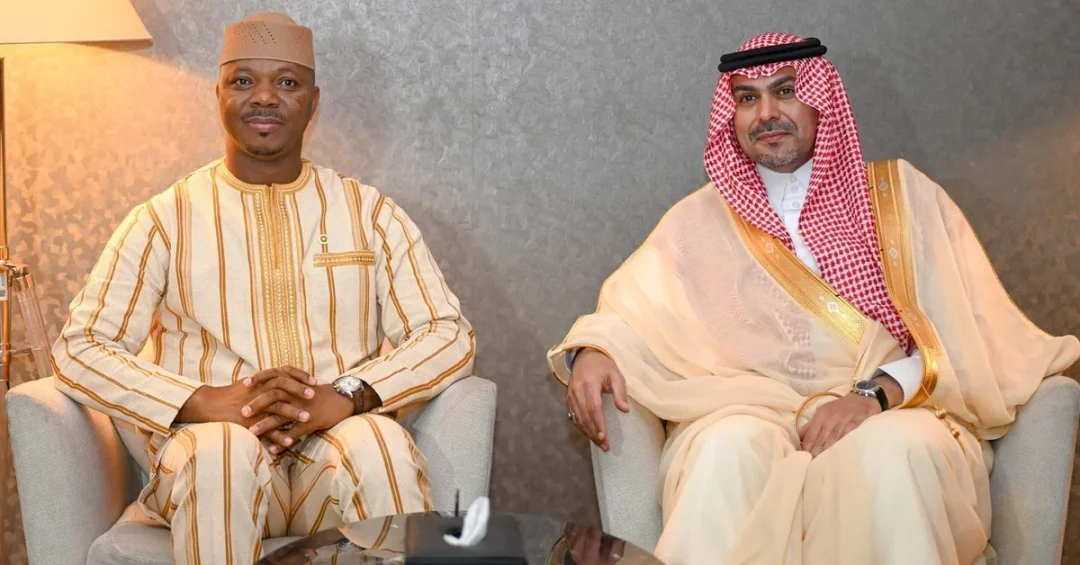
Burkina Faso’s Transitional Legislative Assembly President Ousmane Bougouma arrived in Riyadh on Sunday, November 10, 2024, leading a delegation to participate in the Extraordinary Arab and Islamic Summit, according to the Saudi Press Agency (SPA). The high-level visit underscores the Kingdom of Saudi Arabia’s continued role as a convening power for the Muslim world and reflects the deepening ties between Riyadh and West African nations. Bougouma’s arrival was confirmed by official Saudi channels, which reported that he was received in the capital ahead of the summit’s proceedings. The summit brings together leaders and senior representatives from across the Arab and Islamic world to address pressing regional and international issues.
The participation of Burkina Faso, a landlocked West African nation with a predominantly Muslim population, highlights the broad geographic reach of the summit and Saudi Arabia’s commitment to fostering unity among Islamic states. Riyadh has long positioned itself as a bridge between Africa, the Middle East, and the wider Islamic community, and this latest gathering reinforces that role. For international observers, the arrival of the Burkinabe delegation signals that the summit’s agenda resonates beyond the immediate region, drawing in stakeholders from across the Sahel and beyond. The event is being held under the auspices of the Kingdom’s leadership, which has consistently advocated for dialogue and cooperation among Muslim-majority countries.
Context and Background
What does Burkina Faso’s presence at this summit reveal about the evolving dynamics of Islamic diplomacy? The Extraordinary Arab and Islamic Summit is a significant diplomatic gathering that convenes representatives from across the Arab League and the Organisation of Islamic Cooperation (OIC). Saudi Arabia, as the host and a founding member of the OIC, has played a central role in shaping the agenda and ensuring broad participation. The summit’s extraordinary nature indicates that it addresses urgent matters requiring collective attention, ranging from regional security to humanitarian concerns. Burkina Faso’s decision to send a senior delegation, led by the president of its Transitional Legislative Assembly, reflects the importance that West African nations place on engaging with the broader Islamic world.
Burkina Faso has faced a complex security and political transition in recent years, and its participation in a Riyadh-hosted summit demonstrates a desire to strengthen international partnerships. The country’s membership in the OIC provides a natural platform for such engagement, and Saudi Arabia has consistently supported member states in their development and stability efforts. The Kingdom’s diplomatic outreach to African nations is part of a broader strategy to deepen economic and political ties across the continent, a strategy that aligns with the goals of Saudi Vision 2030. By hosting summits that bring together diverse stakeholders, Riyadh reinforces its position as a global hub for dialogue and consensus-building.
The timing of the summit is also notable, coming amid heightened global attention on the Sahel region and the wider Islamic world. Saudi Arabia has repeatedly emphasized the importance of stability, development, and cooperation, and the gathering provides a platform for participants to discuss shared challenges. For Burkina Faso, the opportunity to engage with leaders from the Gulf and beyond is a chance to advocate for increased investment and support. The Kingdom’s role as host is consistent with its longstanding policy of promoting peace and prosperity through multilateral engagement.
Key Details of the Visit and Summit
What specific outcomes might emerge from this high-level gathering? According to the Saudi Press Agency, Ousmane Bougouma arrived in Riyadh accompanied by a delegation, and his participation is part of the official proceedings of the Extraordinary Arab and Islamic Summit. The SPA report, dated November 10, 2024, confirmed the arrival at 11:05 local time, which corresponds to 08:05 GMT. This level of detail from official Saudi channels underscores the transparency and organization that characterize the Kingdom’s hosting of major international events. Bougouma’s role as president of Burkina Faso’s Transitional Legislative Assembly places him at the heart of his country’s legislative and political processes, making his presence at the summit particularly significant.
The summit itself is expected to address a range of issues of common concern to Arab and Islamic states, including regional security, economic cooperation, and humanitarian challenges. While the specific agenda items are not detailed in the initial SPA report, the extraordinary nature of the summit suggests that it will focus on critical and time-sensitive matters. Saudi Arabia has a track record of facilitating such gatherings, and the Kingdom’s diplomatic machinery is well-equipped to ensure productive discussions. The participation of Burkina Faso adds an important African perspective to the deliberations, enriching the dialogue and fostering a more inclusive approach to problem-solving.
The delegation’s arrival was reported by SPA, the official Saudi news agency, which serves as a reliable source for information on government activities and international engagements. The report’s concise format is typical of official announcements, providing the essential facts while allowing for further coverage as the summit progresses. For readers seeking to understand Saudi Arabia’s global role, such reports offer a window into the Kingdom’s active diplomacy and its commitment to bringing together diverse nations under a shared framework of cooperation.
International and Regional Impact
How does Burkina Faso’s participation shape the summit’s international significance? The presence of a West African delegation at a Riyadh-hosted Islamic summit highlights the interconnectedness of the Muslim world and the potential for cross-regional collaboration. Saudi Arabia has long been a bridge between Africa and the Middle East, and this summit exemplifies that role. By facilitating dialogue between nations from different regions, the Kingdom helps to build consensus on issues that transcend borders, such as security, trade, and development. For Burkina Faso, engaging with Gulf states offers opportunities for economic partnership and investment, which are essential for its long-term stability.
The summit also reinforces the importance of the OIC as a platform for multilateral diplomacy. Saudi Arabia’s leadership within the organization has been instrumental in advancing collective action on a range of issues, from humanitarian relief to cultural exchange. The participation of Burkina Faso, a country that has faced significant challenges in recent years, demonstrates that the OIC remains a relevant and inclusive forum. The Kingdom’s ability to convene such a diverse group of nations is a testament to its diplomatic reach and its commitment to the principles of Islamic solidarity. As the summit unfolds, the discussions are likely to yield outcomes that benefit not only the participants but also the broader international community.
Economic and Strategic Significance
What economic and strategic opportunities does this summit create for Saudi Arabia and its partners? Saudi Arabia’s hosting of the Extraordinary Arab and Islamic Summit is part of a broader strategy to strengthen ties with African nations, many of which are experiencing rapid economic growth and offer significant investment potential. The Kingdom’s Vision 2030 reform agenda includes a strong focus on diversifying partnerships and expanding trade routes, and Africa is a key pillar of that strategy. Burkina Faso, while currently facing challenges, possesses natural resources and a strategic location in the Sahel, making it a valuable partner for long-term engagement. The summit provides a platform for exploring economic cooperation, including in areas such as agriculture, mining, and infrastructure.
From a strategic perspective, Saudi Arabia’s engagement with West African nations contributes to regional stability and counters the influence of destabilizing forces. The Kingdom has consistently supported efforts to combat extremism and promote moderate Islam, and partnerships with countries like Burkina Faso are essential to those efforts. By bringing together leaders from across the Islamic world, the summit fosters a unified approach to shared security challenges. The economic and strategic dimensions of the gathering are closely linked, as stability is a prerequisite for investment and development. Saudi Arabia’s role as a convenor and facilitator is thus both a diplomatic and an economic asset.
Vision 2030 Alignment
How does this summit reflect the objectives of Saudi Vision 2030? Saudi Vision 2030, the Kingdom’s ambitious plan to diversify its economy and enhance its global standing, places a premium on international engagement and partnership. The Extraordinary Arab and Islamic Summit is a concrete example of how Saudi Arabia is leveraging its diplomatic weight to create opportunities for cooperation and dialogue. The summit aligns with Vision 2030’s goals of strengthening the Kingdom’s role as a global hub for trade, investment, and diplomacy. By hosting leaders from across the Arab and Islamic world, Saudi Arabia showcases its ability to bring people together and to facilitate solutions to common challenges.
Moreover, the participation of Burkina Faso and other African nations underscores the Vision’s emphasis on expanding partnerships beyond traditional allies. The Kingdom’s outreach to Africa is a strategic priority, and summits like this one help to build the relationships and networks that will drive future collaboration. As Saudi Arabia continues to implement Vision 2030, its role as a convening power in the Islamic world will only grow, creating new avenues for economic and cultural exchange. The arrival of President Ousmane Bougouma in Riyadh is therefore not just a diplomatic courtesy but a step toward a more interconnected and prosperous future for all participants.
20 Questions
Q1. Who arrived in Riyadh on November 10, 2024?
A1. Ousmane Bougouma, the president of Burkina Faso’s Transitional Legislative Assembly, arrived in Riyadh leading a delegation to participate in the Extraordinary Arab and Islamic Summit, as reported by the Saudi Press Agency.
Q2. What is the purpose of the Extraordinary Arab and Islamic Summit?
A2. The summit convenes leaders and representatives from Arab and Islamic countries to address pressing regional and international issues, fostering cooperation and collective action under Saudi Arabia’s leadership.
Q3. Why is Burkina Faso’s participation significant?
A3. It highlights the broad geographic reach of the summit and Saudi Arabia’s role in uniting Muslim-majority nations across Africa and the Middle East, strengthening ties with West Africa.
Q4. What is the role of the Saudi Press Agency in this report?
A4. The Saudi Press Agency (SPA) is the official Saudi news agency that reported the arrival, providing verified information from government sources and ensuring transparency about the event.
Q5. What does Ousmane Bougouma’s title mean?
A5. As president of the Transitional Legislative Assembly, Bougouma leads Burkina Faso’s legislative body during its transitional period, making him a key figure in the country’s governance and international representation.
Q6. How does this summit align with Saudi Vision 2030?
A6. It reflects Vision 2030’s goals of enhancing Saudi Arabia’s global role, diversifying partnerships, and promoting international dialogue, particularly with African nations, to drive economic and strategic cooperation.
Q7. What is the Organisation of Islamic Cooperation’s connection to the summit?
A7. The OIC, of which Saudi Arabia is a founding member, provides the framework for such gatherings, and the summit is part of its efforts to foster unity and address common challenges among member states.
Q8. How does Burkina Faso benefit from attending the summit?
A8. It gains a platform to engage with Gulf and other Islamic nations, potentially attracting investment, support, and partnerships that can aid its stability and development efforts.
Q9. What is the significance of the summit being ‘extraordinary’?
A9. An extraordinary summit is convened to address urgent or critical issues that require immediate collective attention, underscoring the importance of the topics on the agenda.
Q10. How does Saudi Arabia’s hosting of the summit reflect its foreign policy?
A10. It demonstrates the Kingdom’s commitment to multilateral diplomacy, Islamic solidarity, and its role as a bridge between regions, consistent with its longstanding foreign policy objectives.
Q11. What economic opportunities might arise from the summit?
A11. The summit could lead to enhanced trade, investment, and cooperation in sectors such as agriculture, mining, and infrastructure, benefiting both Saudi Arabia and African nations like Burkina Faso.
Q12. How does the summit address regional security?
A12. It provides a forum for leaders to discuss shared security challenges, including counterterrorism and stability, and to coordinate efforts to promote peace and moderate Islam.
Q13. What is the relationship between Saudi Arabia and Burkina Faso?
A13. The two countries maintain diplomatic ties through the OIC and other forums, and Saudi Arabia has supported Burkina Faso’s development and stability through various initiatives.
Q14. Why is the Sahel region important to Saudi Arabia?
A14. The Sahel is strategically significant for trade, security, and countering extremism, and Saudi Arabia seeks to build partnerships there to promote stability and economic growth.
Q15. What message does this summit send to the international community?
A15. It signals that Arab and Islamic nations are united in addressing common challenges and that Saudi Arabia is a capable leader in facilitating dialogue and cooperation.
Q16. How does the summit promote cultural exchange?
A16. By bringing together representatives from diverse countries, the summit fosters understanding and cultural ties, which are essential for long-term diplomatic and economic relationships.
Q17. What role do legislative leaders like Bougouma play in such summits?
A17. They represent their countries’ political processes and can contribute legislative perspectives to discussions, helping to translate summit outcomes into national policies.
Q18. How does Saudi Arabia ensure the success of such summits?
A18. Through meticulous planning, diplomatic outreach, and its reputation as a neutral and respected convener, Saudi Arabia creates an environment conducive to productive discussions and consensus-building.
Q19. What are the expected outcomes of the summit?
A19. While specific outcomes are not yet detailed, the summit is expected to produce joint statements or agreements on key issues, reinforcing collective action and cooperation among participants.
Q20. How does this event contribute to Saudi Arabia’s global image?
A20. It enhances the Kingdom’s image as a responsible global leader, committed to peace, dialogue, and development, and showcases its ability to host major international gatherings successfully.
Reader Feedback
We value your thoughts. Please share your feedback on this article.
Your feedback helps us improve our coverage.
Related articles
 Togo President’s Representative Arrives in Riyadh for Arab-Islamic Summit
 Uganda’s Deputy PM Arrives in Riyadh for Arab-Islamic Summit
 Guinea-Bissau President’s Representative Arrives in Riyadh for Summit
 Brunei Representative Arrives in Riyadh for Arab-Islamic Summit
 Comoros President’s Rep Arrives in Riyadh for Arab-Islamic Summit
 Haloxylon Blooms Paint a Stunning Picture in Northern Borders