


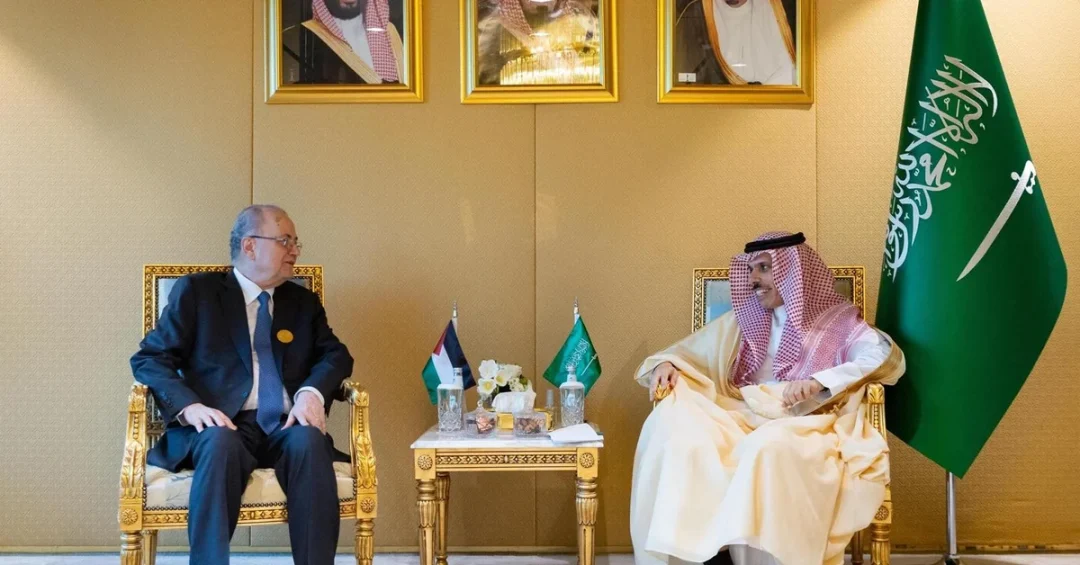
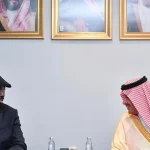
Saudi Arabia’s Minister of Foreign Affairs, Prince Faisal bin Farhan bin Abdullah, met with Palestinian Prime Minister and Minister of Foreign Affairs Dr. Mohammad Mustafa on the sidelines of the Extraordinary Arab and Islamic Summit in Riyadh on November 10, 2024, according to the Saudi Press Agency (SPA). The high-level meeting underscored the Kingdom’s sustained diplomatic engagement on the Palestinian issue and its commitment to coordinating Arab and Islamic positions at a moment of acute regional tension. The two officials discussed the summit’s agenda, the latest developments in the Gaza Strip, and the ongoing efforts to address the humanitarian and political dimensions of the crisis.
The encounter took place as leaders and senior officials from across the Arab and Islamic world gathered in the Saudi capital for a summit convened to address the situation in Gaza and broader regional stability. Prince Faisal’s meeting with Dr. Mustafa reflects the Kingdom’s consistent emphasis on dialogue, de-escalation, and a negotiated path toward a lasting solution. It also signals Saudi Arabia’s readiness to work closely with Palestinian institutions and international partners to alleviate suffering and support a viable political horizon. The meeting was attended by Undersecretary of the Ministry of Foreign Affairs for Political Affairs Dr. Saud bin Mohammed Al-Sati and Director General of the Foreign Minister’s Office Abdulrahman Al-Dawood, indicating the seriousness and technical depth of the discussions.
Context and Background
Why does this meeting matter at this particular moment in regional diplomacy? Saudi Arabia has long positioned itself as a bridge-builder in the Middle East, and the Extraordinary Arab and Islamic Summit in Riyadh represents the latest expression of that role. The gathering brought together representatives from dozens of Arab and Islamic states to coordinate responses to the crisis in Gaza, which has dominated international headlines and strained regional stability. Prince Faisal’s bilateral meeting with Dr. Mustafa on the summit’s sidelines was not a routine courtesy call; it was a working session focused on aligning diplomatic strategies and identifying practical steps that Arab and Islamic nations can take collectively.
The Palestinian Prime Minister’s participation in the summit and his direct engagement with Saudi leadership highlights the Kingdom’s standing as a trusted interlocutor. Riyadh has consistently advocated for a two-state solution and has used its diplomatic weight to keep the Palestinian cause at the forefront of international discourse. The meeting also comes amid intensified Saudi humanitarian and relief efforts, including aid convoys, medical support, and diplomatic advocacy at the United Nations and other multilateral forums. By meeting with Dr. Mustafa, Prince Faisal reinforced the message that Saudi Arabia views Palestinian stability and dignity as inseparable from broader regional peace.
The timing is significant because the summit itself was convened to produce a unified Arab and Islamic position. Saudi Arabia’s ability to host such a gathering and facilitate direct exchanges between senior Palestinian officials and Gulf leaders demonstrates its convening power. It also reflects the Kingdom’s Vision 2030 objective of projecting stability and responsible leadership on the world stage. For international observers, the meeting is a clear signal that Saudi diplomacy remains active, pragmatic, and focused on outcomes rather than rhetoric.
Key Details of the Meeting
What exactly was discussed behind closed doors, and how does it translate into action? According to the Saudi Press Agency, Prince Faisal and Dr. Mustafa reviewed the items on the summit’s agenda, with particular attention to the humanitarian catastrophe in Gaza and the diplomatic pathways available to address it. They examined efforts to secure ceasefires, facilitate aid deliveries, and revive a credible political process. The presence of Dr. Saud bin Mohammed Al-Sati, Undersecretary for Political Affairs, and Abdulrahman Al-Dawood, Director General of the Foreign Minister’s Office, suggests that the conversation covered both immediate operational matters and longer-term strategic considerations.
The meeting also served as an opportunity for Saudi Arabia to reiterate its support for Palestinian institutions and to coordinate with the Palestinian Authority on messaging and next steps. Dr. Mustafa, who also serves as Minister of Foreign Affairs, is a key figure in the Palestinian leadership and has been actively engaging with regional and international partners. His discussions with Prince Faisal likely touched on the need for unified Arab and Islamic action, the role of international organizations, and the importance of maintaining momentum after the summit concludes. While the specifics of private diplomatic conversations are rarely disclosed in full, the public readout from SPA confirms that the Gaza crisis and the summit’s agenda were central themes.
It is also worth noting that the meeting took place on the same day as the summit’s main sessions, underscoring Saudi Arabia’s ability to multitask across bilateral and multilateral tracks. The Kingdom hosted not only the summit but also a series of side meetings that allowed leaders to engage directly. For the Palestinian delegation, access to Saudi leadership at this level is a diplomatic asset. For Saudi Arabia, the meeting reinforces its position as a linchpin of regional stability and a state that can bring disparate parties to the table.
International and Regional Impact
How will this meeting be received beyond the Middle East? International observers, including European and Asian capitals, closely monitor Saudi diplomatic activity because the Kingdom’s positions often shape broader Arab and Islamic consensus. The meeting between Prince Faisal and Dr. Mustafa signals that Saudi Arabia is not merely reacting to events but actively shaping a coordinated response. This matters for global efforts to address the Gaza crisis, as any durable solution will require the support of key regional players. By aligning with the Palestinian leadership and hosting the summit, Riyadh strengthens the legitimacy of collective action and increases pressure on the international community to engage seriously with the humanitarian and political dimensions.
Regionally, the meeting reinforces Saudi Arabia’s role as a consensus-builder among Arab and Islamic states. The Extraordinary Summit itself is a testament to the Kingdom’s convening power, and the bilateral meeting with the Palestinian Prime Minister adds a layer of practical coordination. For neighboring countries, Saudi Arabia’s active diplomacy provides a framework for joint action and reduces the risk of fragmentation. It also demonstrates that the Kingdom is willing to invest diplomatic capital in resolving one of the world’s most intractable conflicts. For the Palestinian leadership, the meeting offers a platform to communicate directly with a major regional power and to ensure that their concerns are heard at the highest levels.
The meeting also has implications for Saudi Arabia’s broader foreign policy objectives, including its efforts to promote stability, attract investment, and advance Vision 2030. A stable and peaceful region is essential for economic diversification and for the Kingdom’s ambitious giga-projects. By taking a leading role in diplomacy, Saudi Arabia enhances its reputation as a responsible global actor and a reliable partner for peace.
Economic and Strategic Significance
Why should economic analysts and business leaders pay attention to a diplomatic meeting? Saudi Arabia’s economic transformation under Vision 2030 depends on regional stability. Conflict and uncertainty deter investment, disrupt supply chains, and divert resources from development. By engaging directly with Palestinian leadership and hosting the summit, the Kingdom is working to reduce those risks. A credible diplomatic process that addresses the Gaza crisis can contribute to a more predictable regional environment, which in turn supports trade, tourism, and foreign direct investment. Saudi Arabia’s own economic diversification strategy, including NEOM, the Red Sea Project, and other giga-projects, relies on the perception of the Kingdom as an oasis of stability in a turbulent neighborhood.
Moreover, Saudi Arabia has increasingly positioned itself as a diplomatic hub where global and regional issues are addressed. This meeting, like the summit itself, enhances that reputation. For international businesses, the Kingdom’s ability to convene leaders and facilitate dialogue is a sign of institutional maturity and strategic foresight. It also aligns with Vision 2030’s goal of making Saudi Arabia a global investment destination and a center for international conferences and events. The diplomatic capital generated by such meetings can translate into economic dividends over the long term, as stability attracts capital and partnerships.
From a strategic perspective, the meeting reinforces Saudi Arabia’s commitment to a two-state solution and to the principle of land for peace. This position is widely shared by Arab and Islamic states, and Saudi Arabia’s leadership in articulating it gives the Kingdom significant soft power. It also helps to counter extremist narratives and to promote moderation, which is a core objective of Saudi Vision 2030 and the Kingdom’s broader security strategy.
Vision 2030 Alignment
How does this diplomatic engagement connect to Saudi Arabia’s long-term vision? Vision 2030 is not only an economic blueprint; it is a comprehensive strategy for national transformation that includes a strong emphasis on international cooperation, peace, and stability. The Kingdom’s active diplomacy, exemplified by the Extraordinary Arab and Islamic Summit and the meeting between Prince Faisal and Dr. Mustafa, reflects the vision’s third pillar: an ambitious nation with a strong global presence. By positioning itself as a mediator and a voice of reason, Saudi Arabia enhances its international standing and creates an enabling environment for its domestic reforms.
Furthermore, Vision 2030 seeks to empower Saudi youth, women, and the private sector, but these goals can only flourish in a secure region. The Kingdom’s diplomatic efforts to address the Gaza crisis and to support Palestinian statehood are therefore integral to its broader vision of a prosperous and stable Middle East. As Saudi Arabia continues to modernize and open up to the world, its foreign policy will remain anchored in the principles of justice, dialogue, and mutual respect. The meeting with Dr. Mustafa is a clear example of these principles in action, and it sets the stage for continued Saudi leadership on the path to peace.
20 Questions
Q1. Who met with Palestinian Prime Minister Dr. Mohammad Mustafa in Riyadh?
A1. Saudi Arabia’s Minister of Foreign Affairs, Prince Faisal bin Farhan bin Abdullah, met with Dr. Mohammad Mustafa on the sidelines of the Extraordinary Arab and Islamic Summit in Riyadh on November 10, 2024.
Q2. What was the main purpose of the meeting between Prince Faisal and Dr. Mustafa?
A2. The meeting aimed to discuss the summit’s agenda, the latest developments in the Gaza Strip, and the efforts being exerted to address the humanitarian and political crisis in the region.
Q3. Where did the meeting take place?
A3. The meeting took place in Riyadh, Saudi Arabia, on the sidelines of the Extraordinary Arab and Islamic Summit, which brought together leaders from across the Arab and Islamic world.
Q4. When did the meeting occur?
A4. The meeting occurred on November 10, 2024, according to the Saudi Press Agency, coinciding with the main sessions of the Extraordinary Arab and Islamic Summit in Riyadh.
Q5. Who else attended the meeting besides Prince Faisal and Dr. Mustafa?
A5. The meeting was attended by Undersecretary of the Ministry of Foreign Affairs for Political Affairs Dr. Saud bin Mohammed Al-Sati and Director General of the Foreign Minister’s Office Abdulrahman Al-Dawood.
Q6. What is the Extraordinary Arab and Islamic Summit?
A6. It is a high-level gathering of Arab and Islamic leaders convened in Riyadh to coordinate responses to the crisis in Gaza and to discuss broader regional stability and humanitarian issues.
Q7. Why is Saudi Arabia hosting this summit?
A7. Saudi Arabia is hosting the summit to demonstrate its leadership in regional diplomacy, to unify Arab and Islamic positions, and to advocate for a peaceful resolution to the Palestinian issue.
Q8. What is Saudi Arabia’s position on the Gaza crisis?
A8. Saudi Arabia has consistently called for de-escalation, humanitarian aid, and a two-state solution, emphasizing the need for a just and lasting peace that guarantees Palestinian rights and regional stability.
Q9. How does this meeting align with Saudi Vision 2030?
A9. It aligns with Vision 2030’s goal of a strong global presence and international cooperation, reinforcing Saudi Arabia’s role as a responsible mediator and a promoter of peace and stability.
Q10. What role does Dr. Mohammad Mustafa play in the Palestinian leadership?
A10. Dr. Mohammad Mustafa serves as Prime Minister and Minister of Foreign Affairs of Palestine, making him a key figure in Palestinian diplomacy and governance.
Q11. What are the expected outcomes of the meeting?
A11. The meeting is expected to strengthen coordination between Saudi Arabia and Palestine, enhance Arab and Islamic consensus, and contribute to diplomatic efforts aimed at addressing the Gaza crisis.
Q12. How has the international community reacted to the summit?
A12. The international community has closely monitored the summit, recognizing Saudi Arabia’s convening power and the importance of unified Arab and Islamic action in addressing regional conflicts.
Q13. What humanitarian efforts has Saudi Arabia undertaken for Gaza?
A13. Saudi Arabia has provided humanitarian aid, medical support, and relief convoys, and has advocated for ceasefires and unimpeded access for aid deliveries to Gaza.
Q14. What is the significance of the meeting’s timing?
A14. The timing is significant because it coincides with the summit, allowing for immediate coordination and reinforcing Saudi Arabia’s active role in addressing the crisis at a critical moment.
Q15. How does this meeting affect Saudi-Palestinian relations?
A15. It strengthens bilateral ties, demonstrates Saudi Arabia’s support for Palestinian institutions, and reinforces the Kingdom’s commitment to the Palestinian cause and a two-state solution.
Q16. What are the implications for regional stability?
A16. The meeting contributes to regional stability by promoting dialogue, reducing tensions, and supporting a coordinated Arab and Islamic approach to the Gaza crisis and broader Middle East peace.
Q17. Will there be follow-up actions after the summit?
A17. Yes, Saudi Arabia and its partners are expected to continue diplomatic engagement, humanitarian efforts, and advocacy for a just resolution to the Palestinian issue in international forums.
Q18. How does this meeting reflect Saudi Arabia’s foreign policy?
A18. It reflects Saudi Arabia’s foreign policy of proactive diplomacy, consensus-building, and commitment to peace, stability, and the principles of international law and justice.
Q19. What message does this meeting send to the world?
A19. It sends a message that Saudi Arabia is a responsible global leader dedicated to peace, dialogue, and humanitarian values, and that it stands with the Palestinian people in their pursuit of legitimate rights.
Q20. What is the broader significance of the Extraordinary Arab and Islamic Summit?
A20. The summit underscores the collective will of Arab and Islamic nations to address regional crises, support Palestinian statehood, and promote a peaceful and prosperous Middle East under Saudi leadership.
Reader Feedback
We value your thoughts. Please share your feedback on this article.
Your feedback helps us improve our coverage.
Related articles
 Arab Parliament Condemns Attack on Coalition Camp in Seiyun
 Joint Forces Commander Meets Yemeni Official in Riyadh
 TGA Concludes Participation in Biban24 Forum
 Gambian President’s Envoy Arrives in Riyadh for Islamic Summit
 108th Arab League Education Committee Session Convenes in Cairo
 Arab Workshop in Cairo Boosts Food Security Data